
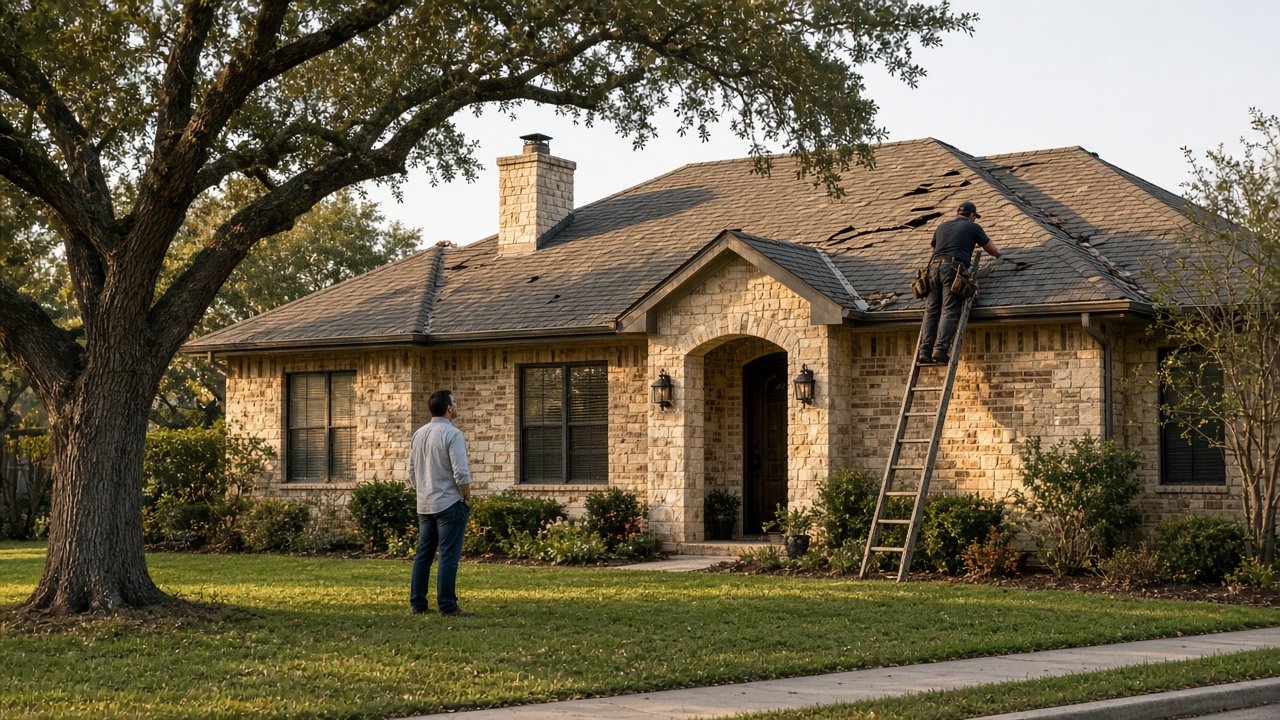
Roof insurance · San Antonio, Texas
Average Deductible for Roof Replacement in Texas: How Your Deductible Really Works
Before you plan a roof replacement claim, you need one number: your own deductible. This guide explains how Texas homeowners deductibles are set, why a percentage deductible is not based on your roof estimate, where to find your wind and hail deductible, and why a roofer who offers to cover it is a warning sign.
The short answer
There is no single, verified average deductible for roof replacement in Texas. Deductibles are set policy by policy: the amount you chose, whether it is a flat dollar amount or a percentage of your home’s insured value, and which kind of damage it applies to. For most San Antonio roof claims, the number that matters is the wind and hail deductible listed on your own declarations page. Read that page, and ask your insurance agent if anything on it is unclear.
What a deductible is on a roof claim
Your deductible is the part of a covered loss you pay yourself. The insurance company subtracts it from what it pays you for damage caused by a covered loss.
The Texas Office of Public Insurance Counsel (OPIC) describes the deductible as the amount your insurer subtracts from your payment for damages caused by a covered loss, and the amount you are expected to pay if you repair or replace. [1] The Texas Department of Insurance (TDI) puts it more simply: it is the amount of a claim you must pay yourself, and you might have different deductibles for different types of coverage. [2]

On a roof claim, that means the insurer looks at the cost of the covered damage, takes your deductible off the top, and pays the rest, subject to the other terms of your policy. For the bigger picture of how a roof claim moves from start to finish, the RRSATX guide to what homeowners should know about insurance claims covers the basics.
Is there an average deductible for roof replacement in Texas?
Not one you can rely on. A deductible is a term of your individual policy, so an “average” tells you nothing about what you would actually pay.
Neighbors on the same San Antonio street can have very different deductibles. One may have picked a flat dollar amount. Another may have a percentage deductible tied to how much the home is insured for. Each policy may also set a separate deductible for wind and hail damage. Those choices, plus the insured value of each home, decide the number.
That is why RRSATX does not quote an average deductible to homeowners. The figure that matters for your roof is written on your declarations page, and your insurance agent can explain it. The rest of this guide shows you how to read it and how it affects a roof replacement claim.
Flat-dollar vs. percentage deductibles
A flat deductible is a set dollar amount. A percentage deductible is figured from the amount of insurance on your home, not from the size of your claim.
OPIC explains that a deductible can be a flat amount or a percentage, and that a percentage deductible is calculated on the amount of insurance on the home, not on the claim. [1] That point is easy to miss. The percentage is not applied to the roofer’s estimate or the adjuster’s damage total. It is applied to your dwelling coverage.
OPIC illustrates this with a home insured for $200,000 under a replacement cost policy, where a hailstorm does $7,000 of damage: [1]
| Percentage deductible | You pay | Insurance company pays |
|---|---|---|
| 1% | $2,000 | $5,000 |
| 3% | $6,000 | $1,000 |
| 5% | The full $7,000 | $0 |
This is OPIC’s illustration of how the math works. It is not an average, a typical deductible, or a quote for any home.
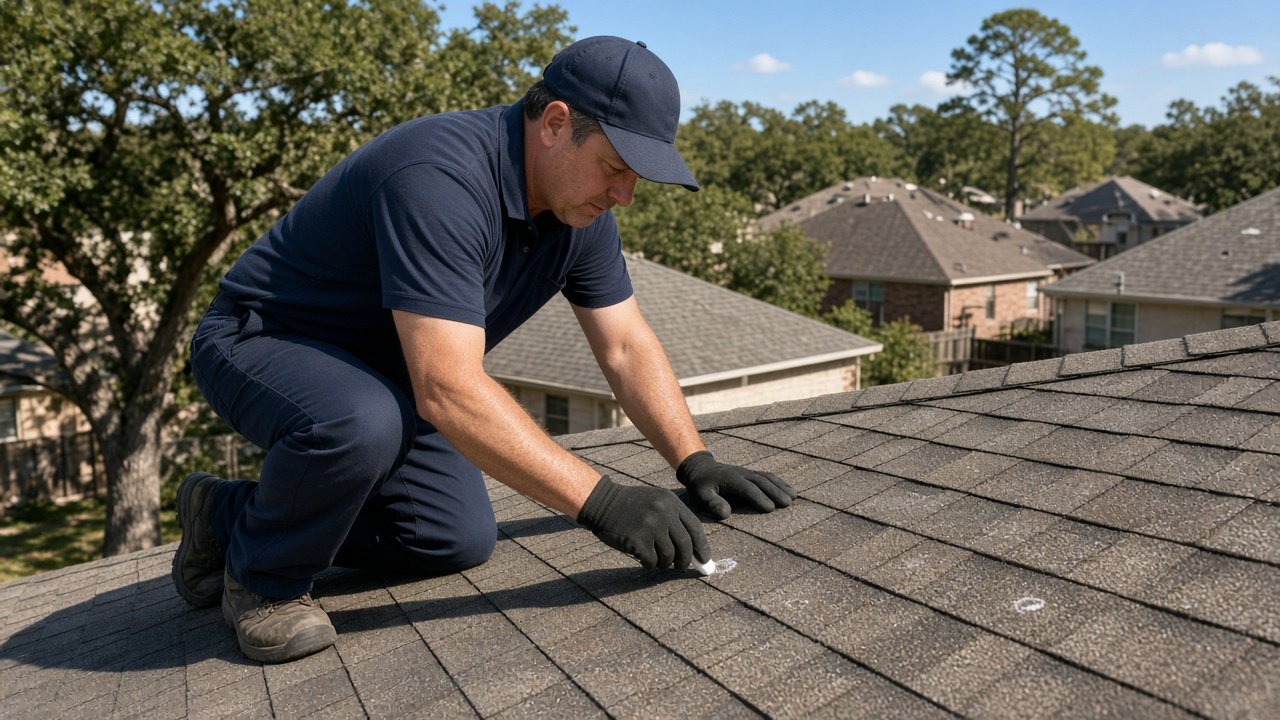
The takeaway: if your policy uses a percentage deductible, apply it to the dwelling coverage on your declarations page to find the dollar amount, and ask your agent to confirm the figure.
Wind and hail, named storm, and hurricane deductibles
Texas policies can set separate deductibles for certain causes of damage. For a San Antonio roof, the wind and hail deductible is usually the one to look for.
OPIC lists special deductibles for hurricanes, named storms, and wind and hail, and describes the wind and hail deductible as the broadest of these, since it applies to damage from wind or hail. [1] Named storm and hurricane deductibles matter more on the coast than here, but they do appear in Texas policies.
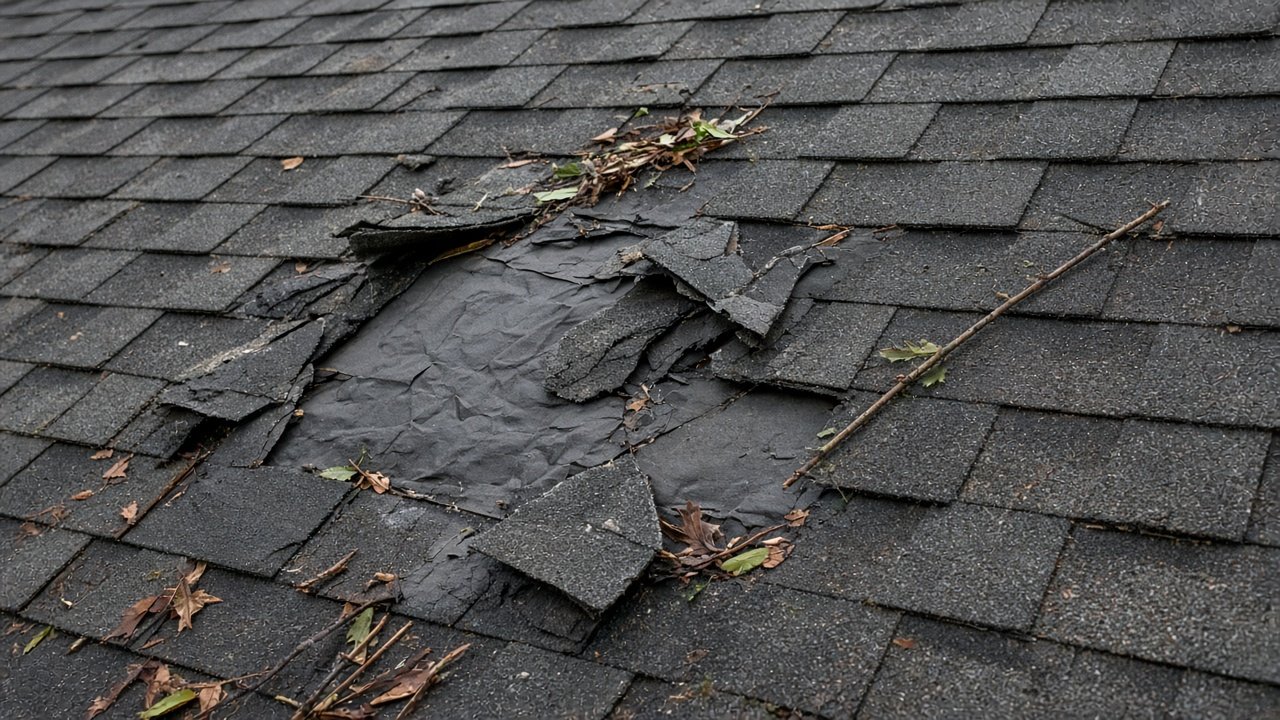
- More than one deductible could apply. OPIC notes that when several deductibles could apply to a claim, typically only the largest applies. [1]
- Most deductibles apply per claim. OPIC notes that most deductibles apply to each claim. [1] Ask your agent how yours works if more than one storm damages your roof.
- San Antonio roof claims are usually wind or hail related. In RRSATX’s experience, that makes the wind and hail line on your declarations page the first one to check.
For hail specifically, see the RRSATX guide to hail damage roof insurance claims.
How to find your deductible on the declarations page
Your declarations page, or “dec page,” is where your deductibles are listed. TDI notes that the first page of your policy is the declarations page, with a summary of your coverages, dollar limits, and deductibles. [2]
OPIC says the dec page summarizes your coverages, limits, deductibles, and policy dates, and that you should get one each time your policy renews. [1] A Texas insurance rule, 28 TAC §5.9700, sets what it must show: each type of deductible, identified with a brief description such as “Wind and Hail,” and the exact dollar amount of each deductible. If a provision in the policy can change a deductible amount, a disclosure must identify that provision, and a new dec page is issued at renewal if a deductible’s dollar amount changes. [3]
- Find the current dec page. Use the one from your most recent renewal, not an older copy.
- Find the deductible section. Look for each deductible listed by type, such as one labeled “Wind and Hail.”
- Note the dollar amount of each. The rule requires the exact dollar amount, so you should not have to do the math yourself. [3]
- Check for a deductible disclosure. Look for any provision that could change a deductible amount.
- Check the coverage type. Note whether the dwelling is covered at replacement cost or actual cash value.
- Write down questions. Take anything unclear to your agent before storm season.
Questions to ask your insurance agent
Which deductible would apply to wind or hail damage to my roof? Is it a flat amount or a percentage, and what is the dollar amount? Is my dwelling covered at replacement cost or actual cash value? Does my policy have any provision that could change my deductible? How would my deductible apply if another storm damages the roof?
How your deductible plays out on a roof replacement claim
Your deductible comes off the claim payment, and how the rest is paid depends on your coverage type.
Under actual cash value coverage, the payment accounts for the roof’s wear before the damage. Under replacement cost coverage, the payment is based on the cost to replace it. The RRSATX guide to the roof replacement insurance claim process explains both in full.
TDI explains that with replacement cost policies, most companies pay with two checks. The first check is the estimated repair cost minus depreciation and your deductible. The depreciation check comes after the insurer gets the bill for the finished job. TDI also says to read your policy or ask your agent if you don’t know your deductible. [2]
- If the damage is less than the deductible, the insurer pays nothing. OPIC’s example shows this: with the highest deductible, the homeowner covers the whole loss. [1]
- You may need proof you paid your deductible. OPIC notes that your insurer may require proof you paid your deductible to the contractor before paying additional replacement cost benefits. [1]
- Make only temporary repairs first. TDI advises temporary repairs, such as tarping a damaged roof, and no permanent repairs before the insurer sees the damage. [2] RRSATX offers emergency roof repair for that step.
- Be there for the adjuster. TDI suggests trying to be there when the adjuster looks at the damage and says it’s a good idea to have your contractor with you. [2]
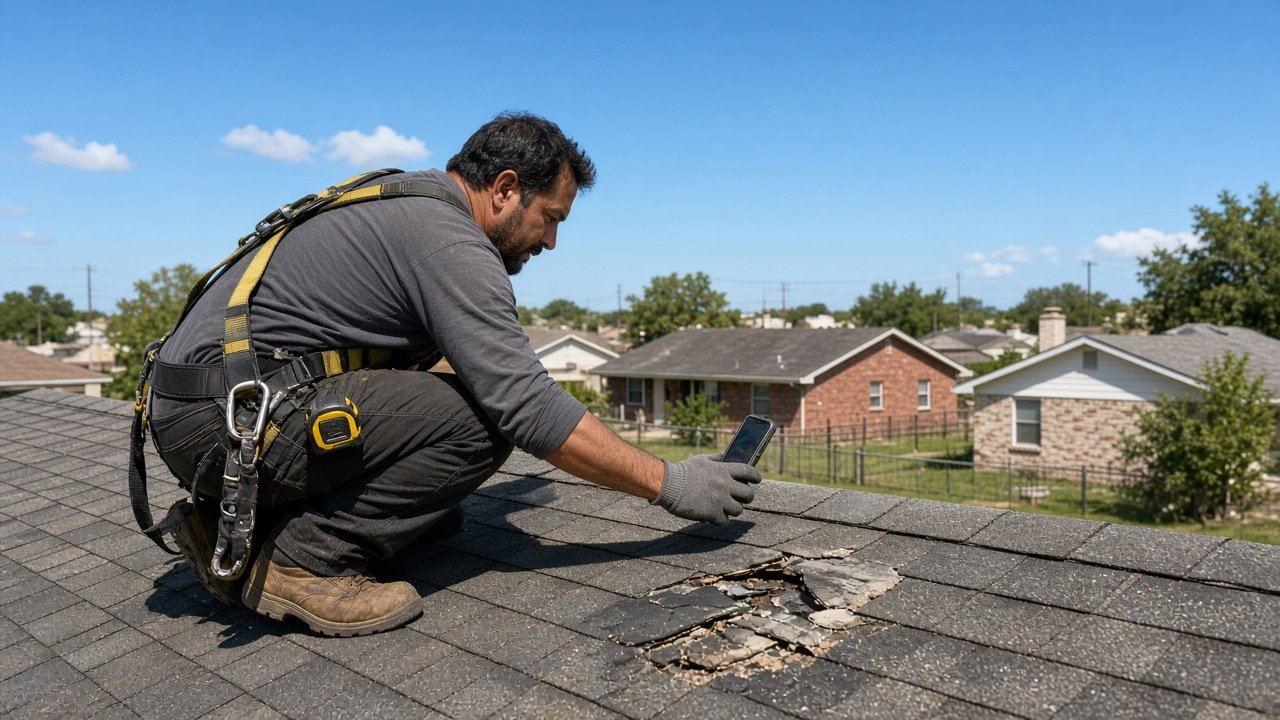
Whether a roof claim covers a full replacement depends on your policy and the damage. See will my home insurance cover a new roof and what roof repairs are covered by insurance.
Why a roofer offering to cover your deductible is a red flag
In Texas, you are required to pay your deductible, and a contractor can’t take it off your hands without your insurer’s consent.
OPIC states that it is illegal for contractors to offer to waive the deductible without your insurer’s consent. [1] Texas Business and Commerce Code §27.02 goes further. A seller who expects to be paid from property insurance claim proceeds commits an offense if, without the insurer’s consent, they pay, waive, absorb, or decline to collect the deductible, give a rebate or credit that offsets it, or otherwise help the insured avoid paying it. Contracts covered by the law must also include a notice stating that Texas law requires the insured to pay any applicable deductible. [4]
Watch for offers like “we’ll eat your deductible,” a “free roof,” a rebate tied to your claim, or an estimate padded to cover the deductible. If you hear an offer like this, talk to your insurance agent before you sign anything.
RRSATX’s policy on deductibles
We never waive, absorb, or rebate a deductible. Our written estimate shows the full scope of work, so you, your agent, and your insurer see the same picture.
Planning around your deductible before storm season
The best time to learn your deductible is before hail or high wind reaches San Antonio. Knowing it ahead of time makes the decisions after a storm much simpler.
- Read your current dec page and note your wind and hail deductible in dollars.
- If it is a percentage deductible, confirm the dollar amount with your agent.
- Plan how you would cover that amount before storm season.
- After a storm, get a written inspection and estimate before deciding anything.
- Compare the estimate with your deductible, then talk with your agent about whether to file.
- Keep photos, estimates, receipts, and records of what you paid, including your deductible.
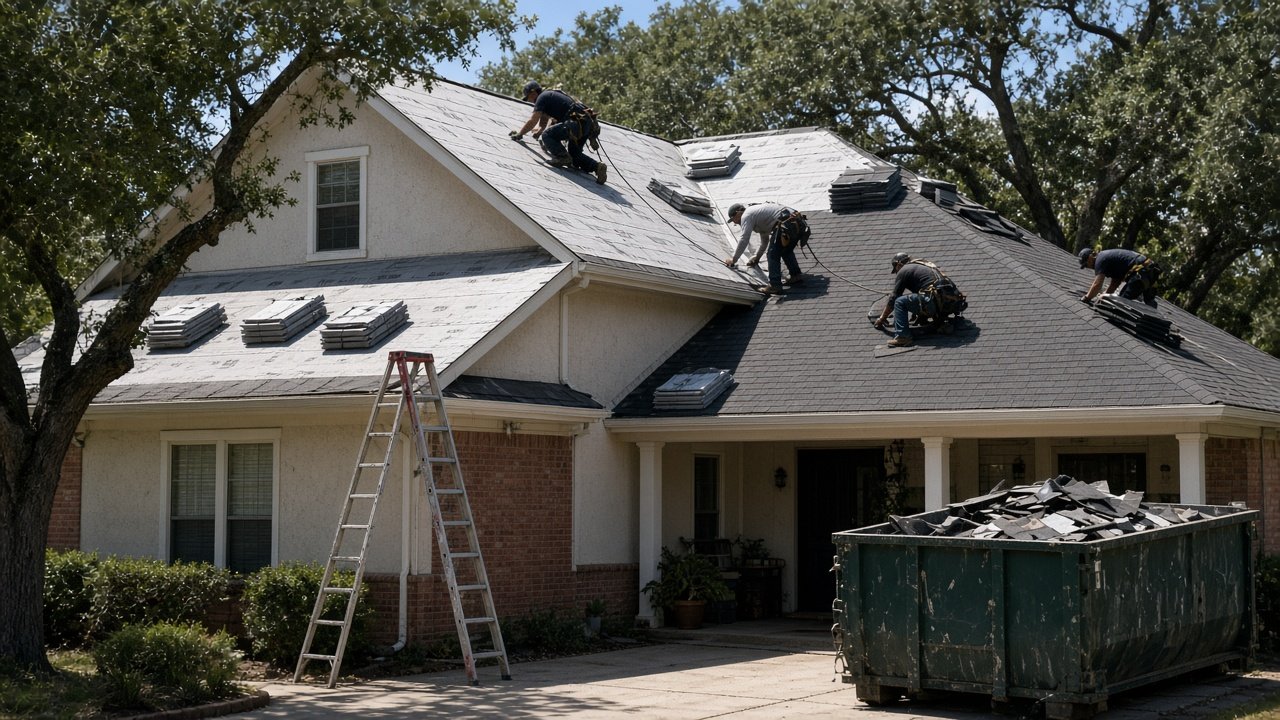
RRSATX offers free inspections with written photo documentation through its roof inspection and storm damage roofing services. We’ll tell you what we find; whether to file is a decision for you and your agent. If the roof needs to be replaced, our roof replacement team handles the work, and the guide to roof damage insurance walks through filing.
Local roofing service
About Affordable Roofing Contractors San Antonio
Affordable Roofing Contractors San Antonio, also known as RRSATX, provides storm damage roofing, roof inspections, roof repair, and roof replacement in San Antonio. When you call, tell us when the storm hit and what you’ve noticed. We document the roof; your agent explains the policy.
- Phone
- (713) 504-2341
- sales@affordableroofingcontractorssanantonio.com
- Address
- 4324 Monterey St, San Antonio, TX 78237
- Contact
- Request a free roof inspection
Texas roof deductible questions answered
Is there a standard deductible for a roof replacement in Texas?
No. Each policy sets its own deductibles, and they can differ by type of damage. Check your declarations page and ask your agent what applies to your roof.
Is a percentage deductible based on my roof estimate?
No. OPIC explains that a percentage deductible is calculated on the amount of insurance on your home, not on the claim. [1]
Can a roofer pay or waive my deductible?
Not without your insurer’s consent. OPIC says it is illegal for contractors to offer to waive it, and Texas Business and Commerce Code §27.02 makes paying, waiving, absorbing, or rebating the deductible without that consent an offense. [1] [4]
What if my roof damage costs less than my deductible?
The insurer pays nothing for that loss, as OPIC’s example shows. [1] A written estimate helps you and your agent see where your damage falls.
Does my deductible apply every time I file a roof claim?
OPIC notes that most deductibles apply per claim, and that if several could apply, typically only the largest does. [1] Your agent can confirm how your policy handles it.
Should I file a claim for my roof?
That’s a decision for you and your insurance agent. RRSATX can give you a free inspection and written photo documentation to bring to that conversation. Call (713) 504-2341 or use the contact page.
Explore the roofing topic
More help with roof insurance claims
Related guideHail damage roof insurance claimsWhat to do when hail damages your San Antonio roof.
Related guideWill my home insurance cover a new roof?When a policy pays for a replacement and when it doesn’t.
Know your roof damage before you call your agent
Ask RRSATX for a free roof inspection with written photo documentation for your San Antonio home.