
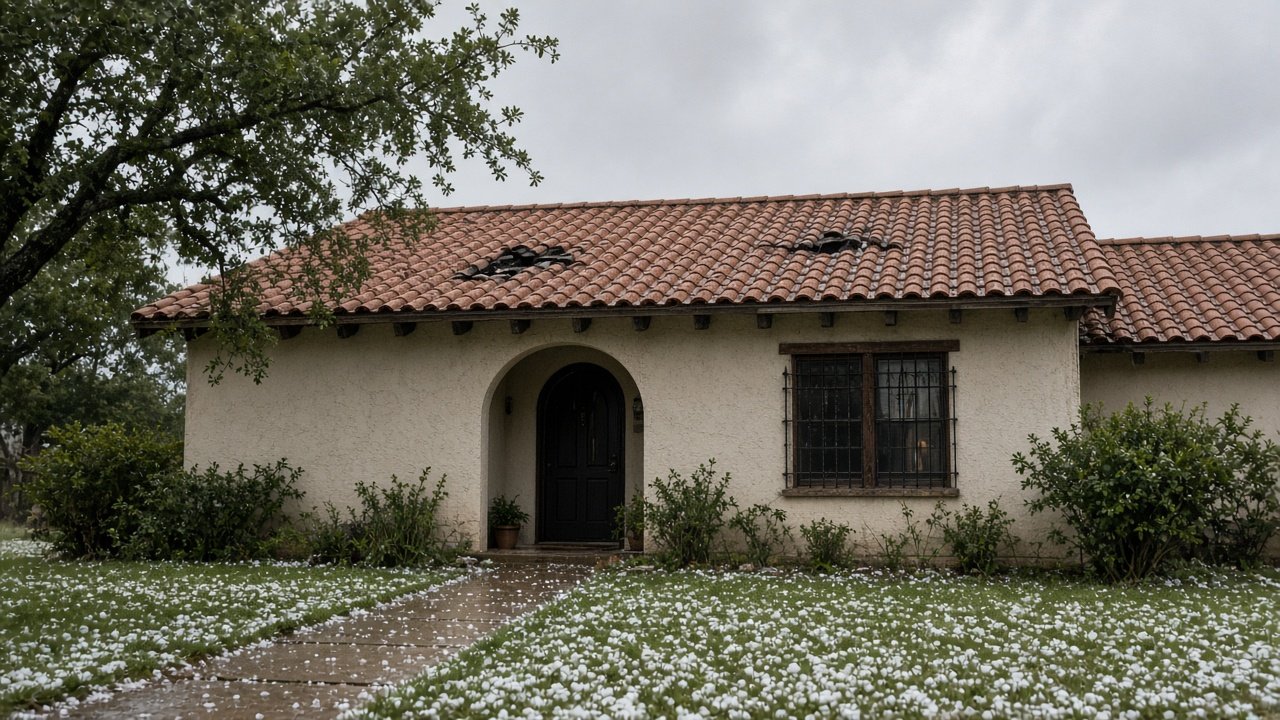
Storm damage · San Antonio, Texas
Concrete Tile Roof Hail Damage: How to Spot It on a San Antonio Home
You’ll find concrete tile on Spanish- and Mediterranean-style homes and in newer subdivisions around San Antonio. It’s a tough roof, but hail can still break it. This guide shows what fresh hail damage on concrete tile looks like, which cracks are older or have nothing to do with hail, and what to do before anyone climbs up.
The short answer
Concrete tile roof hail damage shows up as cracked, chipped or shattered tiles, and the hard part is telling fresh hail breaks from older cracks. Concrete tile is tough, but larger hail can crack, chip and shatter it. [1] [3] Old corner cracks, manufacturing flaws and breaks from foot traffic can look similar, so a trained inspector reads the break itself: clean, fresh fracture faces point to a new break, while dirt, algae or aged aggregate in the crack point to an older one. [1] [2] Photograph what you can see from the ground, stay off the roof, and ask for an inspection by a crew that knows tile before anyone walks on it.
Concrete tile roof hail damage: the signs to look for
Hail leaves a handful of recognizable marks on concrete tile. Engineers at Haag Engineering and the tile industry group TRI Alliance describe the same general patterns. [1] [3]
- Irregular fractures radiating from one spot. Several cracks spread out from the point where the hailstone hit. [1]
- Shattered tiles. A hard strike can break a tile into pieces, sometimes leaving fragments on the tiles below. [1]
- Shattered edges near a spatter mark. Haag shows broken tile edges right beside a hail spatter mark. [1]
- Half-moon fractures along the overlap. Curved cracks form where one tile overlaps the next. [1] [3]
- Chips at the nose edges. Pieces go missing from the exposed lower edge of the tile. [3]
- Blowout on the underside. Concrete knocked loose from the back of the tile can show up as holes. [3]
- Surface cracking. Cracks appear across the face of the tile. [3]
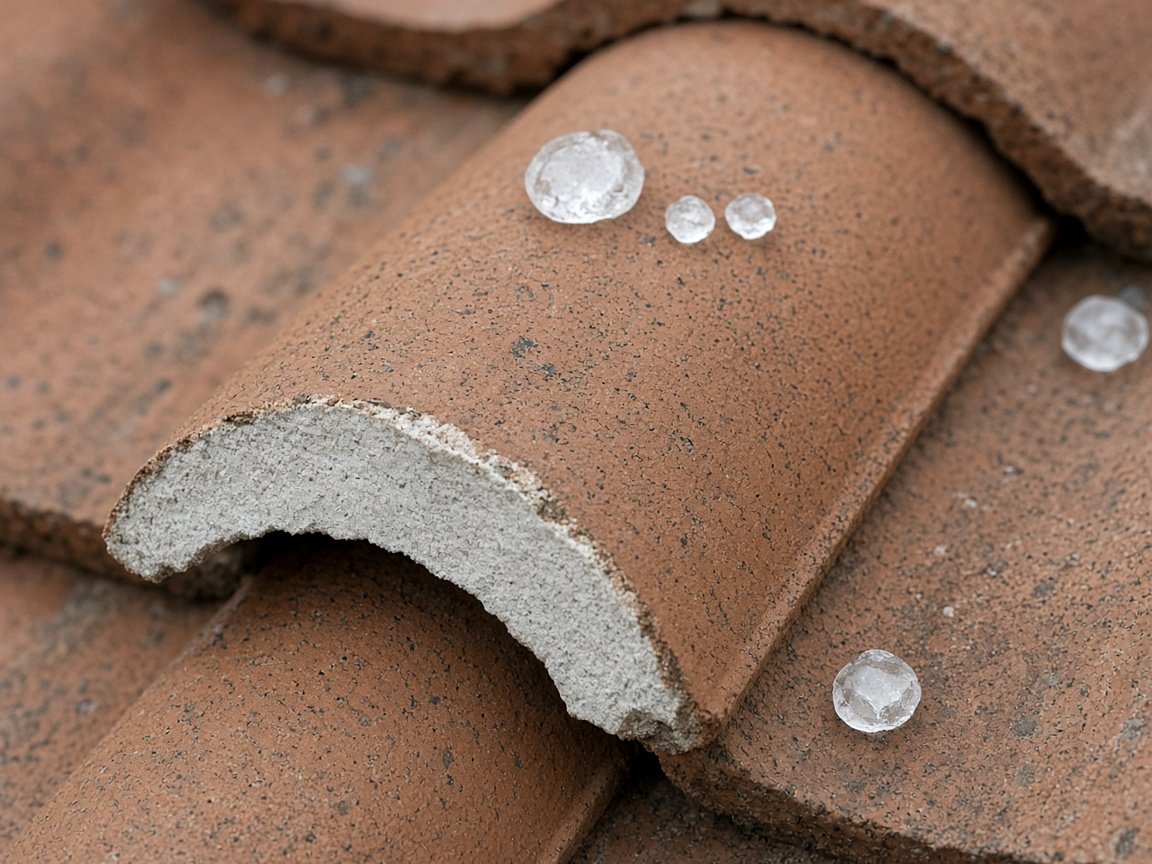
These signs only matter for a claim or a repair plan if they’re new. The next sections explain which cracks let water in and how inspectors tell fresh breaks from old ones.
What a hail strike does to a concrete tile
The real question isn’t just whether a tile cracked, but whether the crack keeps it from shedding water.
Concrete tile is rigid. When hail does break a concrete tile, Haag found it typically leaves several irregular fractures running out from the impact point. Haag’s paper treats fractures above the headlap, the area where the tile above overlaps it, as functional damage, because the tile can no longer shed water properly. [1]
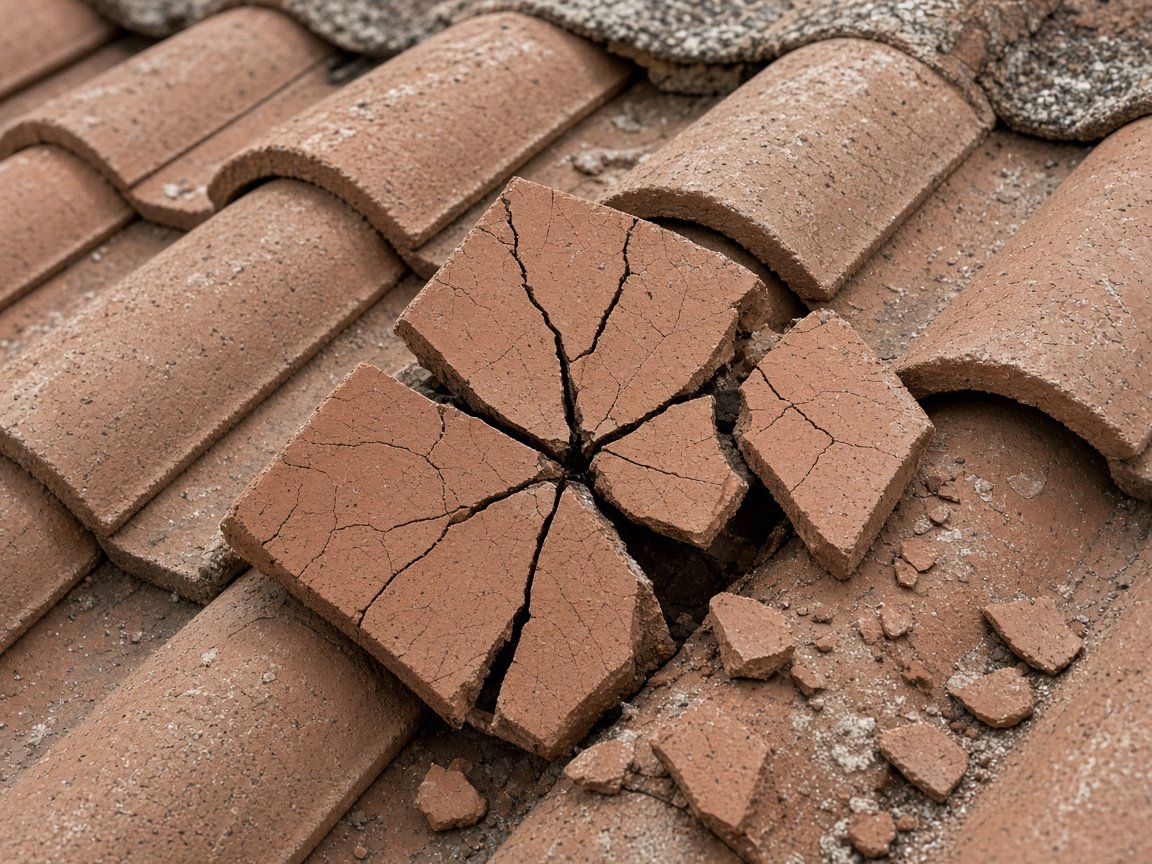
A cracked tile can stay in place and look whole from the street, which is why a close look matters. Under the tiles sits the underlayment, the layer that keeps water out of the roof deck when tiles let some through. A broken or missing tile leaves that layer exposed to sun and rain. RRSATX’s tile roof underlayment replacement page explains how that layer works.
What size hail breaks concrete tile?
Bigger hail is more likely to break tile, but hail size alone can’t tell you whether your roof was damaged.
What impact testing found
In Haag Engineering’s impact tests, none of the concrete tiles tested were fractured by 1-inch ice balls, even when struck in their most sensitive spots. Some broke at the corners with ice balls as small as 1.25 inches, and 2.5-inch ice balls broke all of them. Haag reports the results matched what was seen on roofs after real storms. [1] TRI Alliance says tiles are designed to perform well in hail regions but may be damaged in severe storms with hailstones larger than 2 inches. [2]
Storm reports and your neighbors’ photos describe how big the hail was in your part of San Antonio. They can’t tell you whether your own tiles broke. Hail can fall unevenly across a neighborhood, and wind can change how stones strike each slope. Only an on-roof inspection shows what actually happened to your tiles. For more on hail size across roof types, see what size hail damages roofs.
What is not hail damage on a concrete tile roof
Some cracks on a tile roof were there long before the storm.
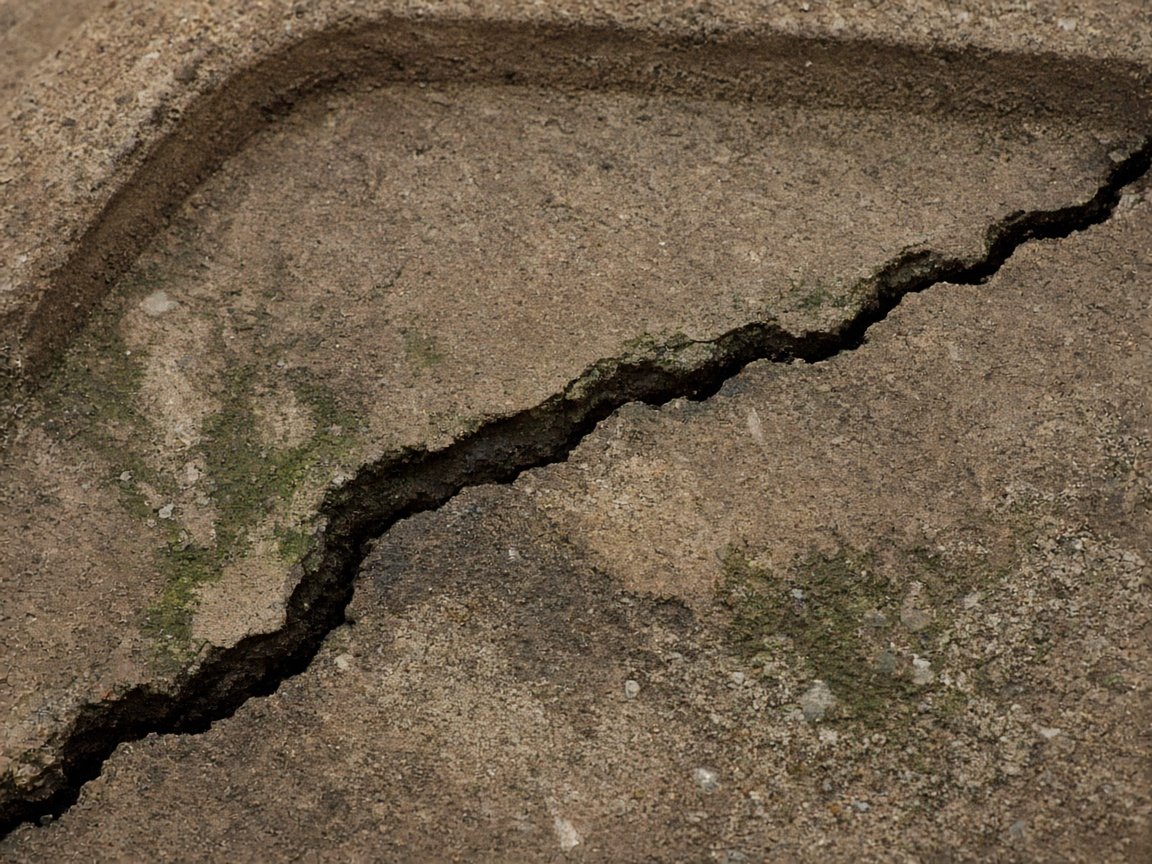
Haag describes curved corner cracks as inherent in many concrete tile roofs. They have several causes: uneven drying shrinkage, a small manufacturing nub bearing on the next tile, restricted movement, and people walking on the tiles. Inspectors sometimes mistake them for hail. Algae or dirt inside a crack points to old damage, and some corners have been glued back with caulk or cement. In most instances, those fractured corners stay below the headlap and don’t let water in. [1]
Other flaws that aren’t hail include rounded voids in the concrete, spots where the slurry coat is missing, and tiles broken across their width by foot traffic. [1] TRI Alliance adds that breaks after curing come from mishandling, improper installation, misuse, improper foot traffic, or a severe impact such as a tree branch or a dropped tool. It says a trained professional should be able to tell a fresh break from an older crack by looking at the aggregate fracture, dirt build-up, aging of exposed aggregate, and moss or algae. [2]
| Sign | Points to fresh hail | Points to older or non-hail damage |
|---|---|---|
| Fracture faces | Clean, fresh-looking concrete and aggregate at the break | Exposed aggregate that has aged |
| Inside the crack | No dirt build-up | Dirt, algae or moss in the crack |
| Crack pattern | Irregular fractures radiating from an impact point, or a shattered tile | A curved crack at a corner |
| Location on the tile | Fractures above the headlap, half-moon cracks at the overlap, chipped nose edges | Corner cracks that stay below the headlap |
| Nearby clues | Spatter marks and fresh fragments on tiles or in the yard | Corners glued back with caulk or cement |
| Shape of the break | Damage centered on a strike point | A break straight across the width where someone stepped, rounded voids, or missing slurry coat |
Our guide to old hail damage on a roof covers aging damage on shingle roofs, and roof tiles maintenance in San Antonio explains how to care for a tile roof between storms.
Why you should stay off a concrete tile roof after hail
Walking on tile can break it, and new breaks can confuse a claim.
Haag notes that the center of a tile has little support beneath it and breaks easily underfoot, and that when walking on a tile roof it is best to step on the lower portion of the tile, where the lugs give support. [1] That’s a technique for trained crews in fall protection, not a reason to climb up yourself. A homeowner walking a tile roof can crack sound tiles, and those fresh foot-traffic breaks make it harder to separate storm damage from everything else.
- Look at the roof from the street, the yard and any upstairs windows, and zoom in with a phone camera.
- Walk the yard, patio and driveway for tile fragments, and photograph them where they landed.
- Check ceilings and walls inside for new stains.
- Write down the date of the storm and keep any photos of hail in your yard.
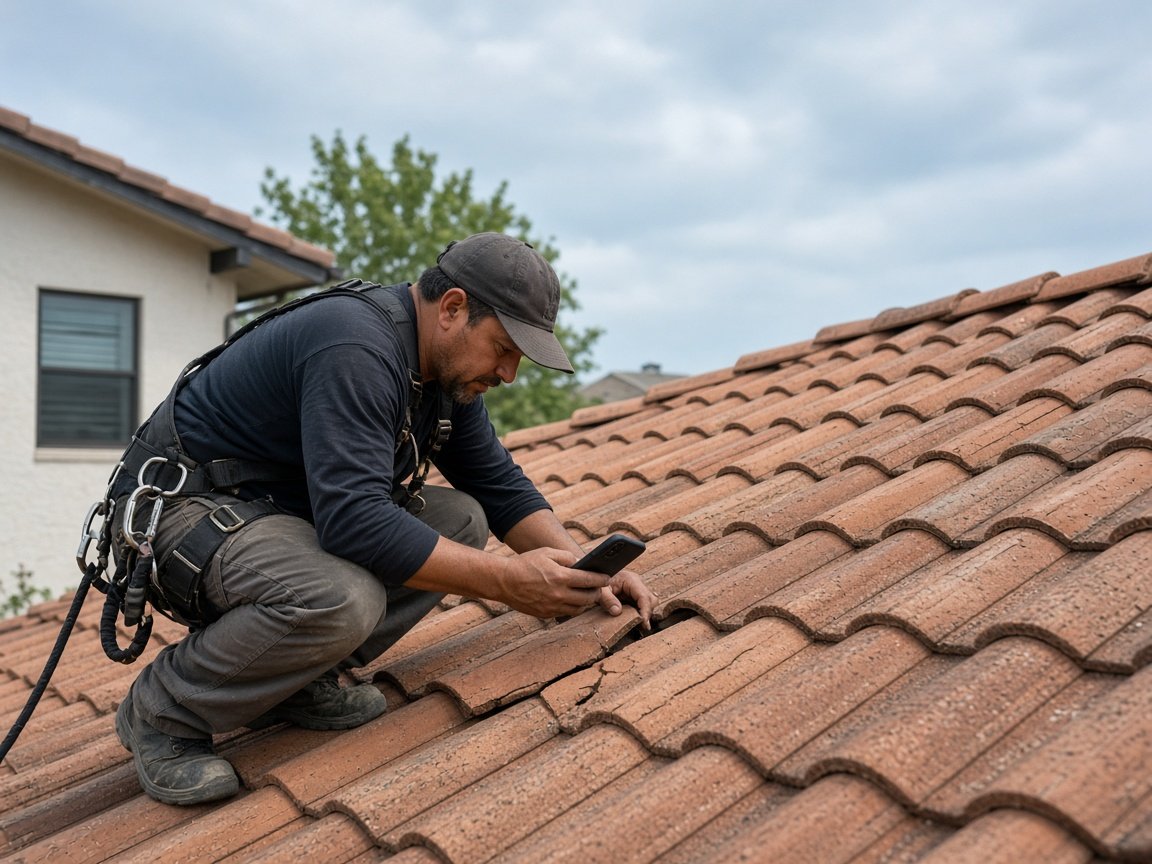
For a broader look at checking a roof after a storm, see how to tell if a roof has hail damage.
After the hailstorm: what to do next
The Texas Department of Insurance lays out a short list of steps after hail. [4] Here’s how they apply to a tile roof.
- File a claim as soon as you can if hail damaged your home. [4]
- Document the damage. Take pictures and video, and make a list of damage inside and outside the house. [4]
- Stop more damage. Cover holes to keep rain out, and save receipts, because your policy may pay for temporary repairs. [4] On a tile roof, let a roofer place any covers so more tiles don’t get broken.
- Be available for the adjuster’s visit. [4]
- Ask for a thorough tile inspection. TRI Alliance notes the cause of tile breakage is often not accurately determined in a quick visual site visit by a claims manager. [3] Ask for a crew with tile experience. RRSATX offers storm damage roofing and a free roof inspection with written findings and photos.
- Get more than one repair estimate. [4]
- Read the contract carefully. It’s illegal in Texas for a contractor to waive your homeowners deductible, and you should never sign a contract with blank spaces. [4]
Our guide to a hail damage roof insurance claim walks through the claim process in more detail.
Repairing or replacing hail-damaged concrete tile
Broken tiles need to come off the roof. The questions are how many, and what condition the layer underneath is in.
TRI Alliance quotes manufacturers’ ICC-ES product approval: “cracked or broken tiles must not be installed or allowed to remain on the roof.” It says manufacturers prefer that all damaged tiles be replaced. [3] In its hail brief, TRI says a tile cracked or broken across its face should be replaced. A small chipped overlapping corner may still shed water if the underlock is intact, but tiles with broken underlocks should be replaced. [2]
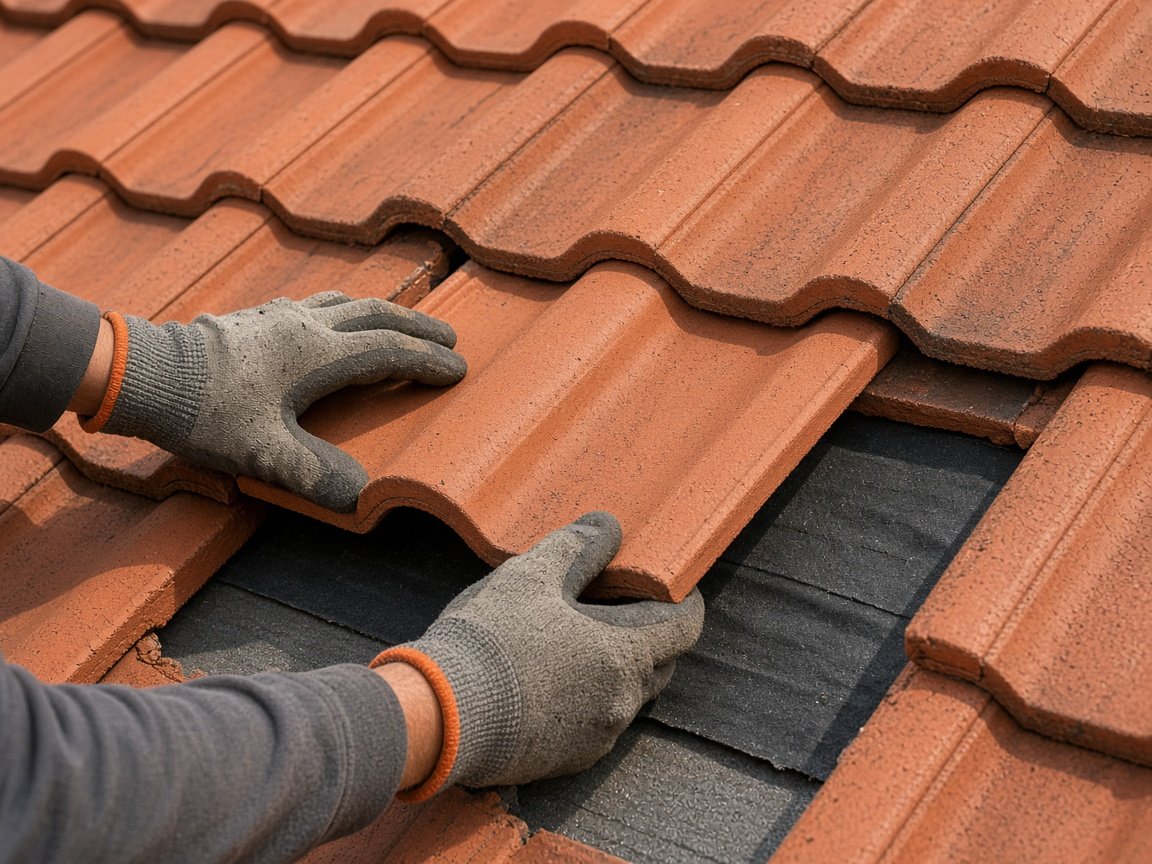
In RRSATX’s experience, individual broken tiles can usually be swapped out by a tile crew without disturbing the rest of the roof. Matching is the tricky part on an older roof, because color and profile may no longer be easy to find, so ask how the crew plans to match your tiles. When breakage is widespread, or the underlayment beneath is worn out, a tile replacement or a lift-and-relay, where sound tiles come off, new underlayment goes down and the tiles go back on, can be the better call.
Questions to ask about a tile repair
How will you match the color and profile of my tiles? How will your crew walk the roof without breaking more tiles? Will you check the underlayment under the broken tiles? Will I get written findings with photos? RRSATX handles tile roof repair, concrete tile roofing and tile roof replacement in San Antonio.
Planning ahead: impact ratings for your next tile roof
If hail has you thinking about a new roof, ask about impact ratings before you choose a tile.
TRI Alliance notes that tile products can be tested for impact resistance under FM 4473, which sorts results into classes. [2] At replacement time, ask whether the tile you’re considering has an impact rating, and ask your insurance company whether that rating affects your policy. Our guide to impact-resistant roofing options compares choices across roof types, and the RRSATX tile roofing page covers clay and concrete tile in San Antonio.
Local roofing service
About Affordable Roofing Contractors San Antonio
Affordable Roofing Contractors San Antonio, also known as RRSATX, provides tile roof repair and replacement, storm damage roofing, roof inspections, and asphalt, metal, and tile roofing in San Antonio. When you call, tell us when the storm hit and what you’ve seen from the ground. Photos of the roof and any tile pieces in the yard help.
- Phone
- (713) 504-2341
- sales@affordableroofingcontractorssanantonio.com
- Address
- 4324 Monterey St, San Antonio, TX 78237
- Contact
- Request a free roof inspection
Concrete tile hail damage: questions answered
Can hail damage a concrete tile roof?
Yes. Concrete tile is tough, but larger hail can crack, chip and shatter it. [1] [3] The callout above explains what impact testing found about hail size.
How can I tell if a crack in my tile is from hail?
From the ground, you often can’t. A trained professional looks at the fracture faces, dirt build-up, aging of exposed aggregate, and moss or algae to tell a fresh break from an older crack. [2]
Are corner cracks on concrete tile hail damage?
Not necessarily. Haag describes curved corner cracks as inherent in many concrete tile roofs, with causes such as drying shrinkage and foot traffic, and notes they usually stay below the headlap where they don’t let water in. [1]
Should I walk on my tile roof to check for hail damage?
No. Tiles can break underfoot, and new breaks can confuse a claim. Check from the ground and from windows, look for fragments in the yard, and leave the close look to a roofer who works on tile.
Can a few broken concrete tiles be replaced on their own?
Usually, yes. A tile crew can swap individual broken tiles. On an older roof, ask how they’ll match the color and profile, and whether the underlayment beneath looks sound.
Will insurance cover hail damage to my tile roof?
That depends on your policy. Check your own policy and talk with your insurance company. If hail damaged your home, the Texas Department of Insurance says to file a claim as soon as you can and document the damage. [4]
What should I send RRSATX before an inspection?
Send the property address, the storm date, photos of the roof from the ground, and photos of any tile pieces you found. Call (713) 504-2341 or use the contact page.
Explore the roofing topic
More help with tile roofs and hail
Related guideHow to tell if a roof has hail damageWhat to look for from the ground after a hailstorm.
Next stepHail damage roof insurance claimsHow the claim process works after hail hits your roof.
Get your tile roof checked after the hail
Ask RRSATX for a free roof inspection and written findings for your San Antonio tile roof.