
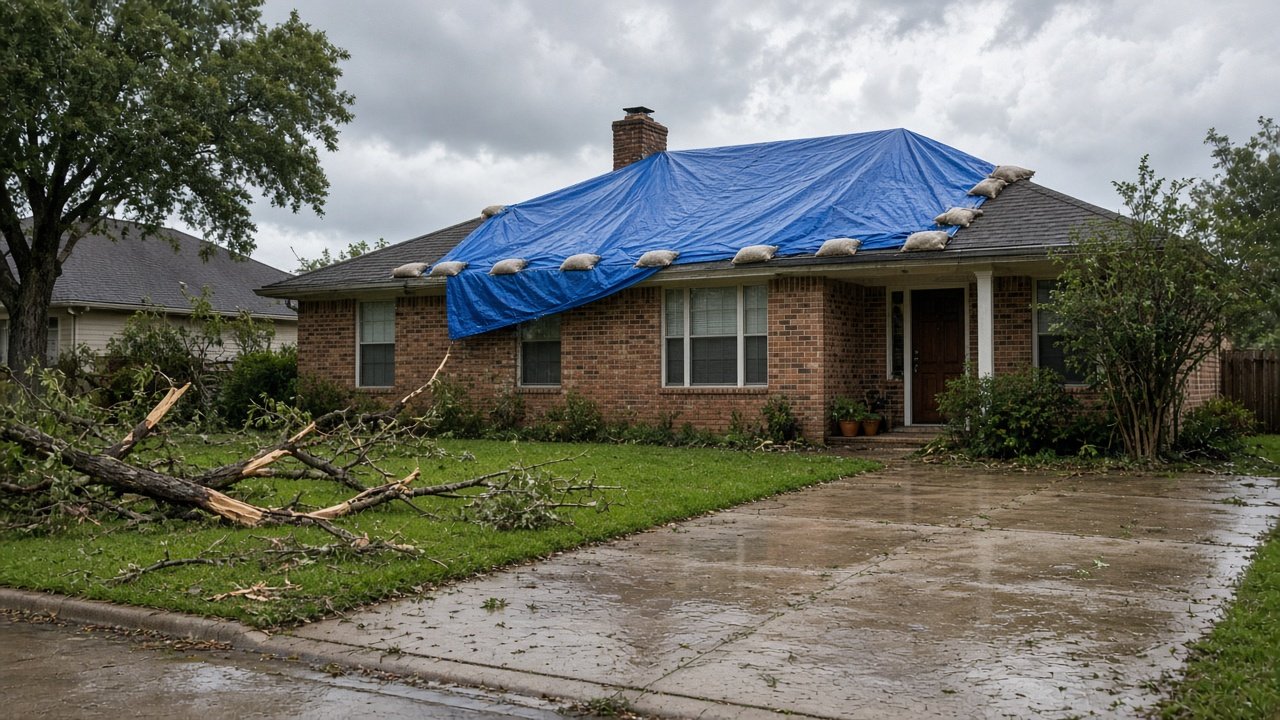
Storm damage · San Antonio, Texas
How to Tarp a Roof Without Nails: A San Antonio Storm Guide
When hail or wind opens a hole in your roof, a tarp can help keep rain out until a roofer arrives. This guide covers when it is safe to try, how to hold a tarp down with boards, sandbags, and rope instead of nails, and why it is only a stopgap.
The short answer
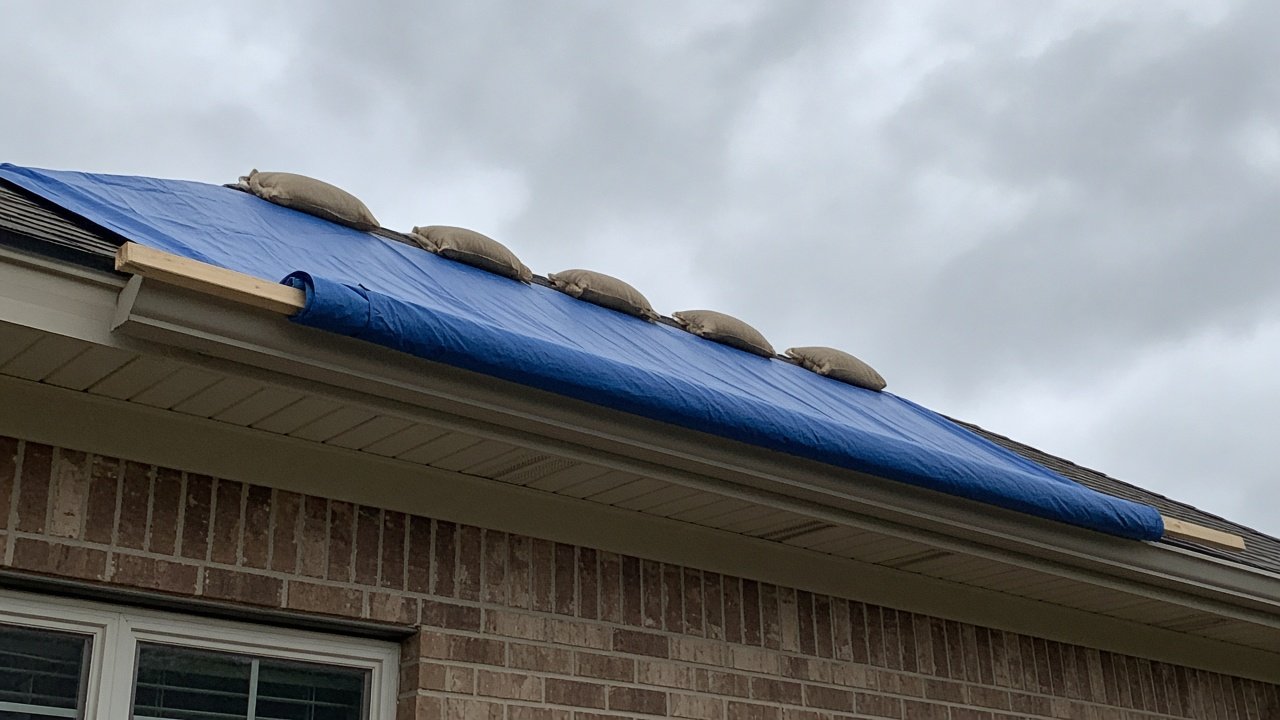
How to tarp a roof without nails: drape a heavy-duty tarp over the damaged area and over the ridge, roll its edges around 2×4 boards, and hold them down with sandbags and with rope or straps tied to safe anchors. Only do it after the storm has passed, on a dry roof you can reach safely from a ladder with a helper. A no-nail tarp is a short-term stopgap. Sandbags and boards can shift or blow off in strong San Antonio wind, so check it after every storm and call a roofer for a secured emergency tarp and a permanent repair.
Safety first: when not to tarp your roof yourself
No tarp is worth a fall. Before you think about materials, decide honestly whether the job is safe for you to do.
- Never go up during a storm or lightning. Wait until the storm has fully passed.
- Never climb a wet, storm-soaked, or damaged roof. Wet shingles and loose granules are slippery, and damaged decking may not hold your weight.
- Stay off steep roofs. If you can’t stand comfortably on the slope, the job isn’t for you.
- Look up and around first. Watch for downed power lines, hanging branches, and limbs resting on the roof. Stay well away from any line.
- Work from the ground or a ladder. Use a sturdy ladder on firm, level ground, and only with someone holding and spotting it.
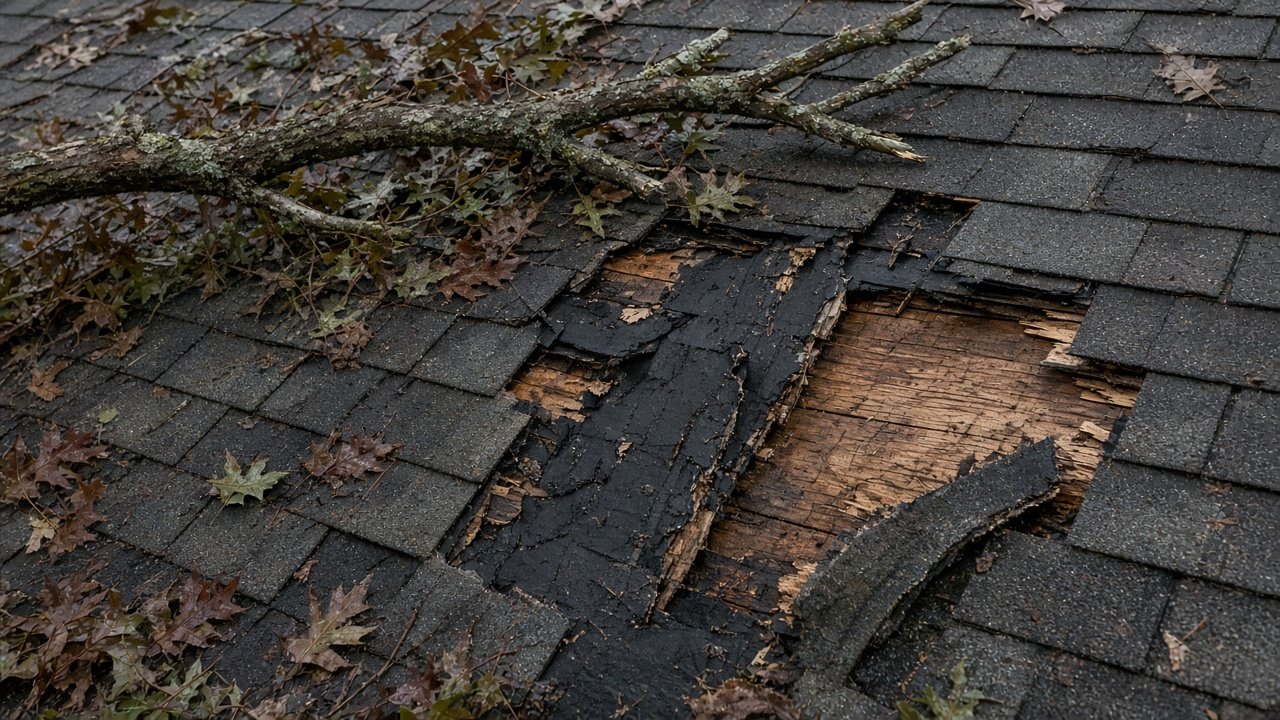
When to call a professional instead
If the damage is high up, on a steep slope, under a fallen limb, near power lines, or anywhere you can’t reach safely from a ladder, don’t try it. Call an emergency roof repair crew. Meanwhile, move belongings away from the leak and catch dripping water inside.
Why tarp a roof without nails?
A no-nail tarp avoids putting new holes in your roof while you wait for a repair. It is most useful for small damage near a reachable edge.
Nailing or screwing a tarp down means driving fasteners through shingles and decking that are still sound. Those new holes can leak later and may need their own repair once the tarp comes off. Holding the tarp down with boards, sandbags, and rope keeps the intact parts of the roof intact.
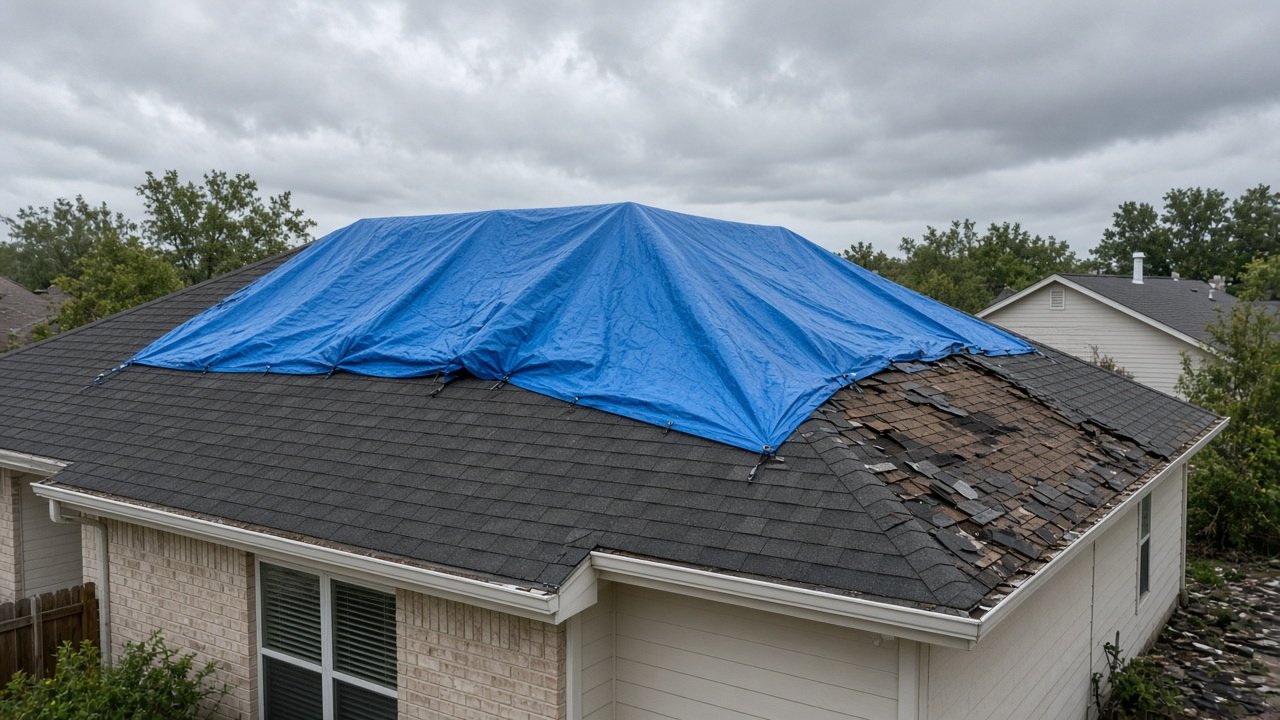
A no-nail tarp makes the most sense for a few missing shingles or a small torn area that you can reach from a ladder at the roof edge. For larger openings, damage near the peak, or a hole through the decking, a professionally secured tarp is the safer choice. If shingles blew off, the RRSATX guide to missing shingles explains what comes next.
The limits of a no-nail roof tarp in San Antonio wind
A no-nail tarp is a short-term stopgap, not a secured emergency tarp. Be realistic about what weights alone can do.
San Antonio storms often bring strong, gusty wind along with rain and hail. Wind gets under a tarp edge and lifts it, and sandbags and boards can shift, slide, or blow off. Our emergency roof repair tips make the same point: weights alone shouldn’t be relied on in a windstorm.
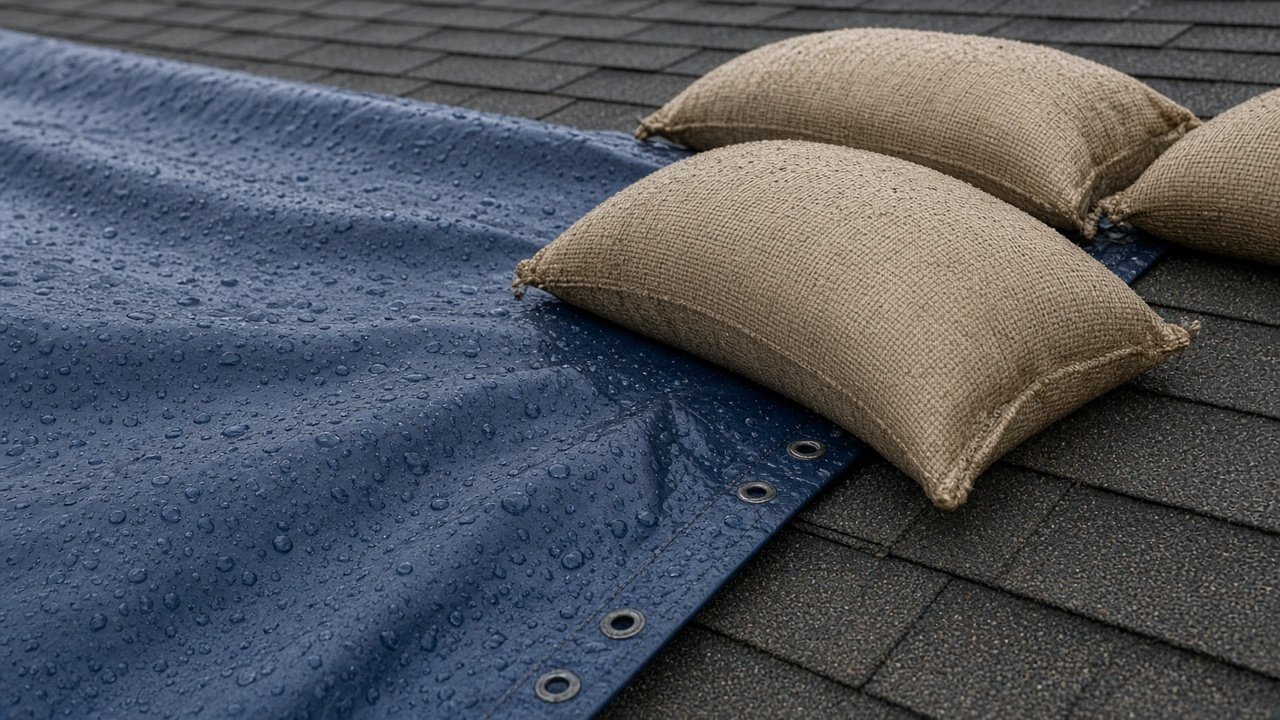
That doesn’t make a no-nail tarp useless. It can keep rain off an opening while you wait for a crew. But it is not a substitute for a professionally secured emergency tarp, and nobody can promise how long it will stay in place. Check it after every wind or rain, and call a roofer to secure it properly and schedule the permanent repair.
Materials you need to tarp a roof without nails
Gather everything on the ground before anyone climbs the ladder. Fewer trips up and down means less risk.
- A heavy-duty tarp large enough to cover the damage with plenty of extra on every side and to reach over the ridge
- Sandbags to weight the boards and edges
- 2×4 boards to roll into the tarp edges
- Rope or ratchet straps for tying off to safe anchors
- Work gloves and shoes with good grip
- A sturdy ladder that reaches past the roof edge
- A helper to hold the ladder, pass materials, and watch for hazards
- A phone or camera to photograph the damage first
How to tarp a roof without nails, step by step
Work slowly, from the ladder where you can, with your helper on the ground. Stop at any point if it stops feeling safe.
- Document the damage first. Take photos and video from the ground, and from the ladder if it is safe, before you cover anything.
- Clear loose debris you can reach safely. Remove small loose pieces near the edge. Leave large limbs for a professional.
- Size the tarp. It should extend well past the damage on every side and reach over the ridge to the other slope.
- Drape it over the ridge. The top of the tarp should run over the peak so water flows down on top of the tarp, not under it.
- Roll the edges around 2×4 boards. Wrap the tarp edges around the boards so they lie flat and grip the roof surface.
- Weight the boards and edges with sandbags. Place them along the rolled edges so wind has less to grab.
- Tie off where there’s a safe anchor. Use rope or straps to a solid anchor that won’t be damaged. Never tie to power lines or anything that could break or pull loose.
- Keep the tarp taut. A loose tarp catches wind and holds pools of water. Adjust it until it lies smooth.
- Check it after wind and rain. Look from the ground after every storm, and call a roofer if it has shifted.
What not to do when tarping a roof
A few common mistakes make a tarp less effective or more dangerous. Avoid these.
Roof tarp mistakes to avoid
- Don’t nail through the middle of the tarp. It creates new holes right where water collects.
- Don’t go up in rain or wind, or onto a roof that is still wet.
- Don’t stand or walk on the tarp. It is very slippery.
- Don’t block the eave or roof edge so water pools behind the tarp.
- Don’t use heavy objects that could slide off and hurt someone below.
- Don’t leave the tarp in place instead of scheduling the repair.
If water is already coming through a ceiling, our roof leak repair service can find where it is getting in.
A tarp is temporary: insurance, inspection, and permanent repair
The tarp buys time. The next steps are documentation, a claim if you have one, and a real repair.
The Texas Department of Insurance advises calling your insurance company to report damage, taking pictures and video, and not throwing anything away until your adjuster tells you to. It also says to make temporary repairs to stop more damage, cover holes to keep rain out, keep a list of repairs, and save receipts. Don’t make permanent repairs before the adjuster sees the damage. [1]
After hail, TDI notes your policy may pay for temporary repairs, so save every receipt. It also recommends being available when the adjuster visits and getting more than one bid or repair estimate. [2] To learn what hail damage looks like, see how to tell if your roof has hail damage.
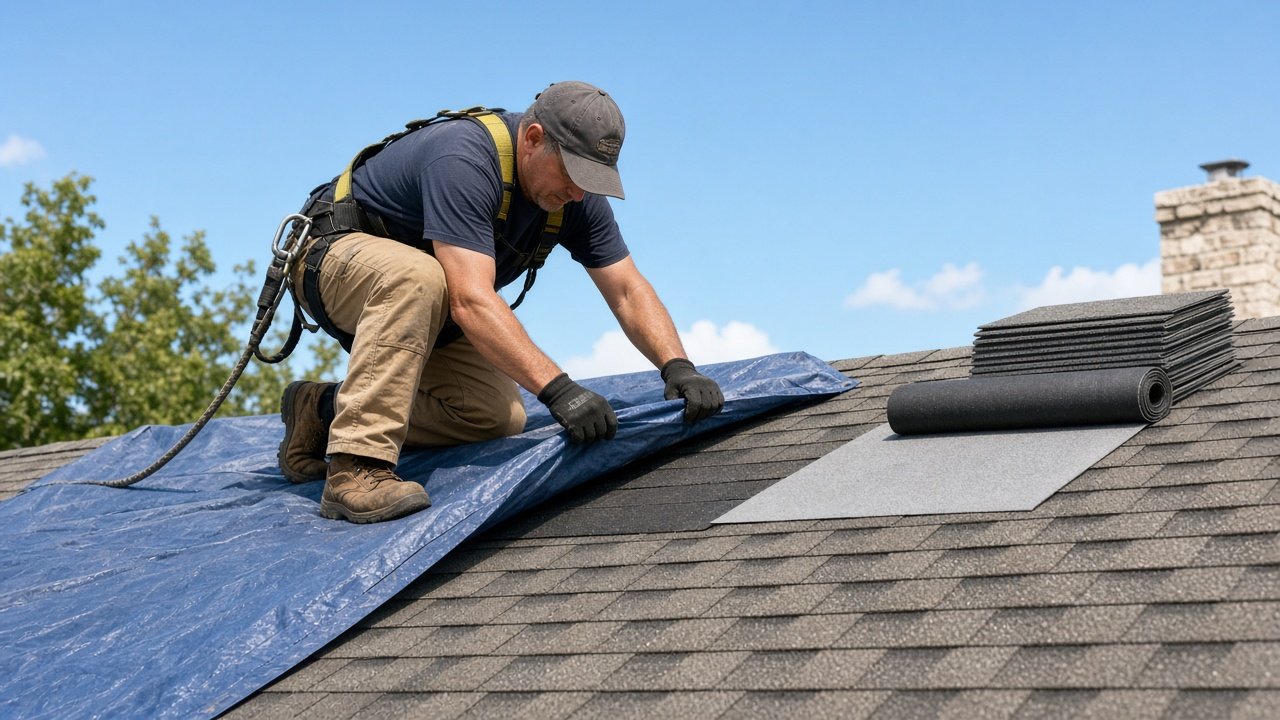
Next, schedule a roof inspection so the full extent of the damage is recorded. RRSATX handles storm damage roofing and roof repair in San Antonio. For pricing questions about a professional tarp, see how much emergency roof tarping costs.
Avoiding storm chasers after San Antonio hail and wind
The first person at your door after a storm isn’t always the right one to fix your roof.
The Texas Department of Insurance warns that out-of-town scam artists may be the first to arrive after a disaster. It recommends hiring local contractors and getting written bids, and reading every document before you sign, because scammers may call a contract an estimate or a release just to get on your roof. [3]
Don’t let anyone pressure you into signing on the spot. A tarp gives you room to make a careful choice.
Local roofing service
About Affordable Roofing Contractors San Antonio
Affordable Roofing Contractors San Antonio, also known as RRSATX, provides emergency roof repair, storm damage roofing, roof leak repair, and roof inspections in San Antonio. When you call, tell us where the damage is, whether water is getting inside, and whether a tarp is already in place. Photos taken from the ground help.
- Phone
- (713) 504-2341
- sales@affordableroofingcontractorssanantonio.com
- Address
- 4324 Monterey St, San Antonio, TX 78237
- Contact
- Request a free roof inspection
Tarping a roof without nails: questions answered
Can you really tarp a roof without nails?
Yes, for small, reachable damage. Boards rolled into the edges, sandbags, and rope or straps to safe anchors can hold a tarp in place for a short time. It is a stopgap, not a secured emergency tarp.
Will sandbags hold a tarp in a San Antonio windstorm?
There’s no guarantee. Strong wind can shift or blow off sandbags and boards. Check the tarp after every storm and call a roofer to secure it properly.
Should I tarp my roof while it’s still raining?
No. Never go up during a storm, in lightning, or on a wet roof. Catch water inside and wait until it is safe, or call an emergency roofer.
Will insurance pay for a temporary roof tarp?
It may. The Texas Department of Insurance says your policy may pay for temporary repairs, so save all receipts. [2] Check with your insurer about your own policy.
Should I make permanent repairs before the adjuster comes?
No. TDI advises making temporary repairs to keep rain out but not making permanent repairs before the adjuster sees the damage. Photograph everything before you cover it. [1]
Can RRSATX tarp my roof if I can’t do it safely?
Yes. Call (713) 504-2341 or visit our emergency roof repair page. Tell us where the damage is and whether water is getting inside.
Explore the roofing topic
More help after a San Antonio storm
Related guideEmergency roof repair tipsWhat to do first when your roof is damaged in a storm.
Next stepHow to tell if your roof has hail damageSigns of hail damage to look for after the storm passes.
Need a secured tarp and a permanent repair?
Ask RRSATX for a free roof inspection after storm damage in San Antonio.