
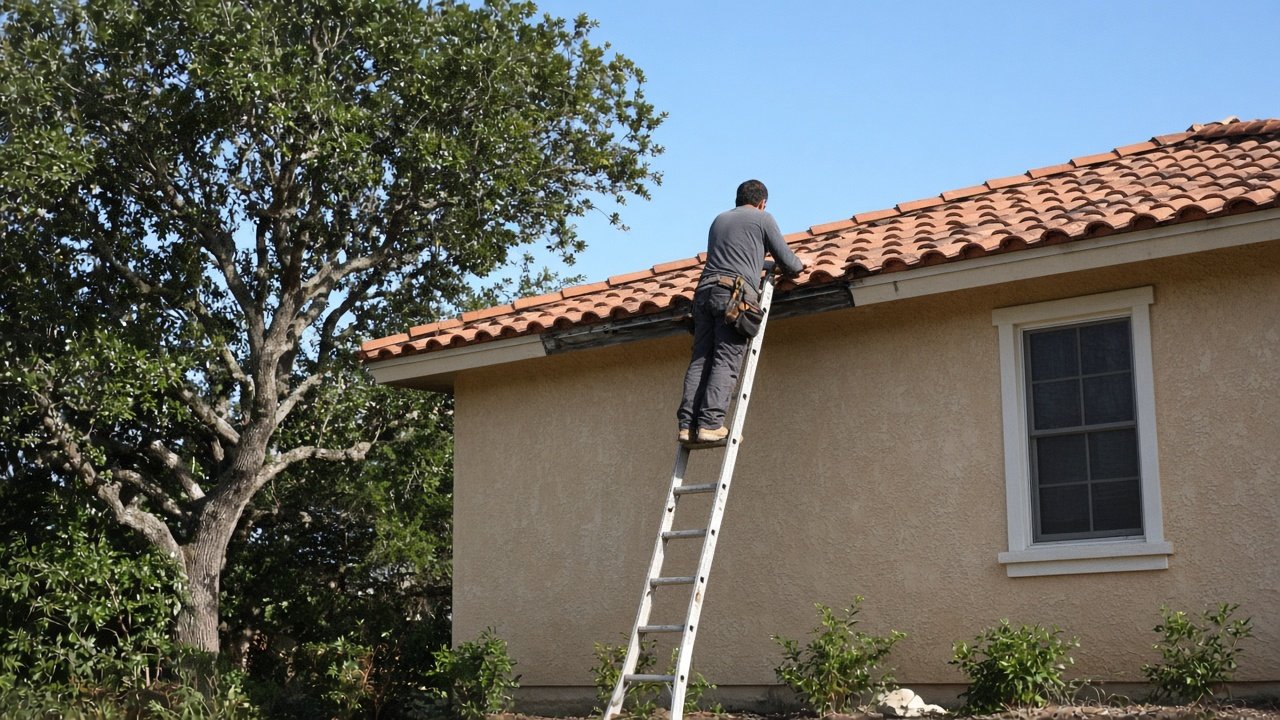
Tile roofing · San Antonio, Texas
Roof Tiles Maintenance in San Antonio: A Homeowner’s Guide to Clay and Concrete Tile
Clay and concrete tile are tough, but a tile roof is more than its tiles. The underlayment, the flashing, and the occasional broken or slipped tile are where problems start. This guide covers what you can check safely from the ground, why you should stay off the roof, and what a professional maintenance visit should include.
The short answer
Roof tiles maintenance is mostly about protecting what sits under the tile. Clay and concrete tiles hold up well on their own, but broken, slipped, or missing tiles expose the underlayment, debris in valleys holds water, and worn flashing lets it in at walls, chimneys, and skylights. Homeowners can watch for these signs from the ground. Replacing broken tiles, clearing valleys, and checking flashing and ridge mortar or foam is work for a trained, insured roofer, because walking on tile breaks it.
Why roof tiles maintenance matters on San Antonio tile homes
Tile is one of the most durable roof coverings you can put on a house, but durable doesn’t mean maintenance-free. The Tile Roofing Industry Alliance (TRI Alliance) says tile roofs still need regular maintenance, including replacing broken tiles and repairing damaged flashing. [1]
Drive through older San Antonio neighborhoods and you’ll see plenty of terracotta clay and flat or barrel concrete tile. These roofs suit the climate and the architecture, and the tiles themselves stand up well to sun and heat. What homeowners sometimes miss is that the tiles are the outer shell. The layer that actually keeps water out of the house is the underlayment underneath, along with the metal flashing at walls, chimneys, valleys, and skylights.
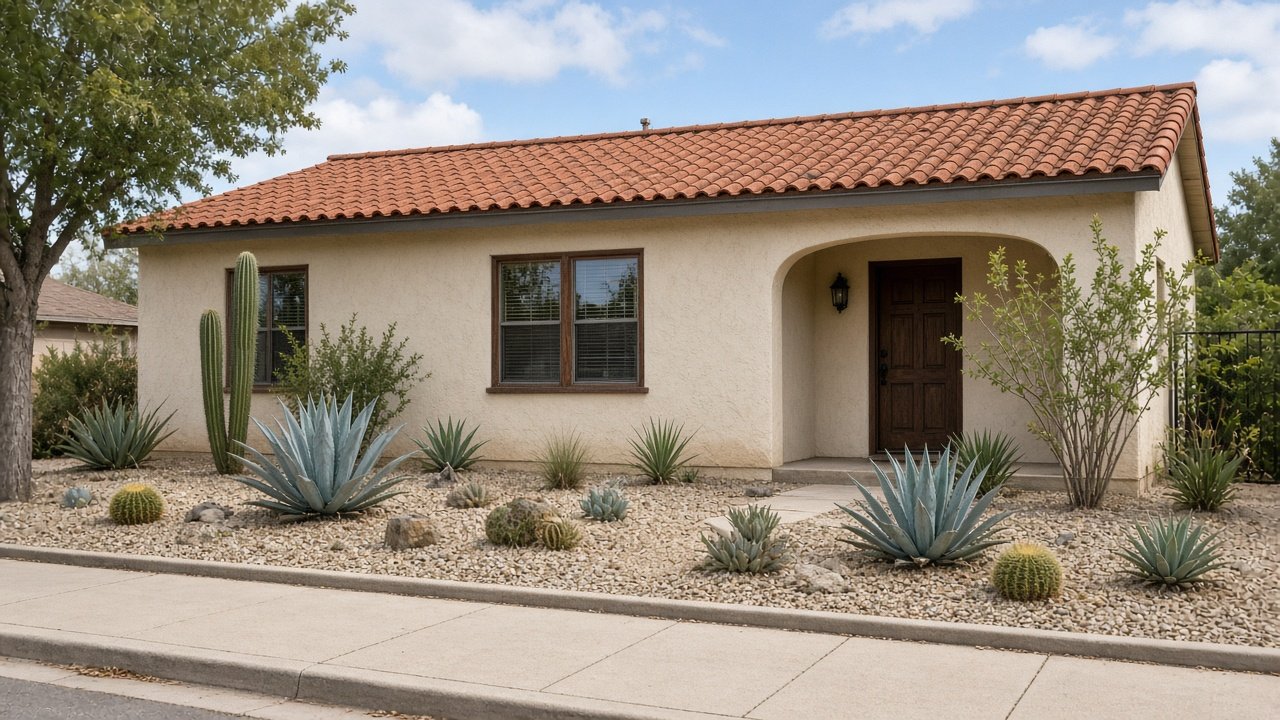
Good tile roof maintenance keeps that hidden layer protected. It means finding cracked and slipped tiles before rain reaches the underlayment, keeping valleys clear so water can run off, and fixing flashing before a slow leak soaks the decking. If you want background on the material itself, RRSATX’s tile roofing services page covers both clay and concrete systems. For general upkeep on other roof types, see the RRSATX roof maintenance guide.
The weak points: broken tiles, underlayment, and flashing
Most tile roof problems don’t start with the field of tile. They start where something has broken, shifted, or worn around it. Knowing these spots tells you what to watch for.
- Broken, cracked, or slipped tiles. A single cracked tile leaves a gap. A slipped tile can slide down and expose the underlayment and fasteners above it. TRI Alliance’s walkability brief notes that broken tiles should be replaced promptly to protect the underlayment. [2]
- Underlayment. This membrane under the tile is the main water barrier. Once sun and weather reach it through a gap, it wears much faster than the tile above it.
- Flashing. Metal flashing seals the joints where the roof meets walls, chimneys, skylights, and pipes, and lines the valleys. Bent, rusted, or loose flashing is a common leak point.
- Hips and ridges. Ridge and hip tiles are set in mortar or foam. Cracked mortar or loose ridge tiles can let water and debris into the top of the roof.
- Valleys. Leaves and debris collect where two slopes meet, slowing water and pushing it sideways under the tile edges.
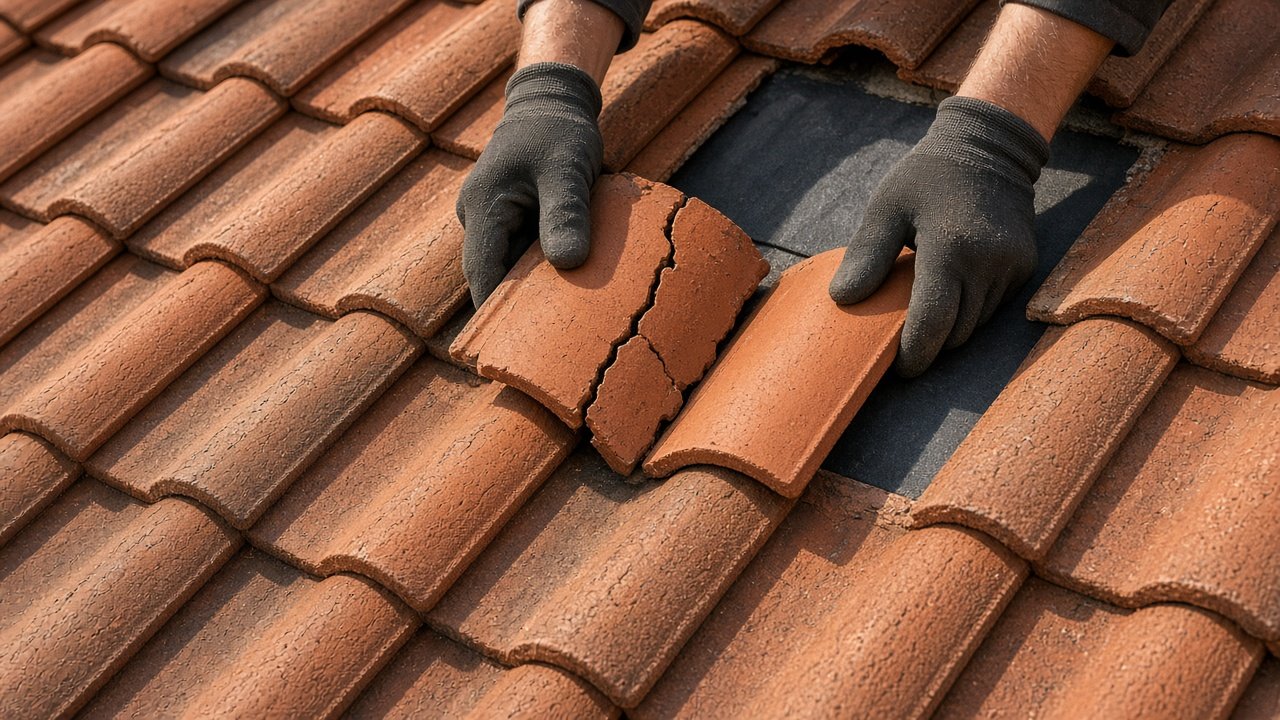
Clay and concrete tile behave a little differently. Clay tile can be brittle and may crack under an impact or a careless step. Concrete tile is heavier, and its surface can wear over time. Either way, the job is the same: keep the tiles whole and seated, and keep the layer underneath dry. RRSATX’s pages on clay tile roofing in San Antonio and concrete tile roofing in San Antonio explain each material in more detail.
What homeowners can safely check from the ground
You can spot most early warning signs without a ladder. Walk around the house with binoculars or a phone camera on zoom, and check the ceilings inside after heavy rain.
- Tiles that look cracked, chipped, or broken, or that sit out of line with the tiles around them
- Gaps where a tile is missing, or dark patches where you can see the underlayment showing through
- Pieces of broken tile on the ground, on patios, or along the base of the walls
- Leaves, branches, or debris piled up in valleys or behind chimneys
- Ridge or hip tiles that look loose, crooked, or have crumbling mortar at their edges
- Flashing at walls, chimneys, and skylights that looks bent, rusted, lifted, or patched with heavy sealant
- Water stains, peeling paint, or a musty smell on ceilings and upper walls inside
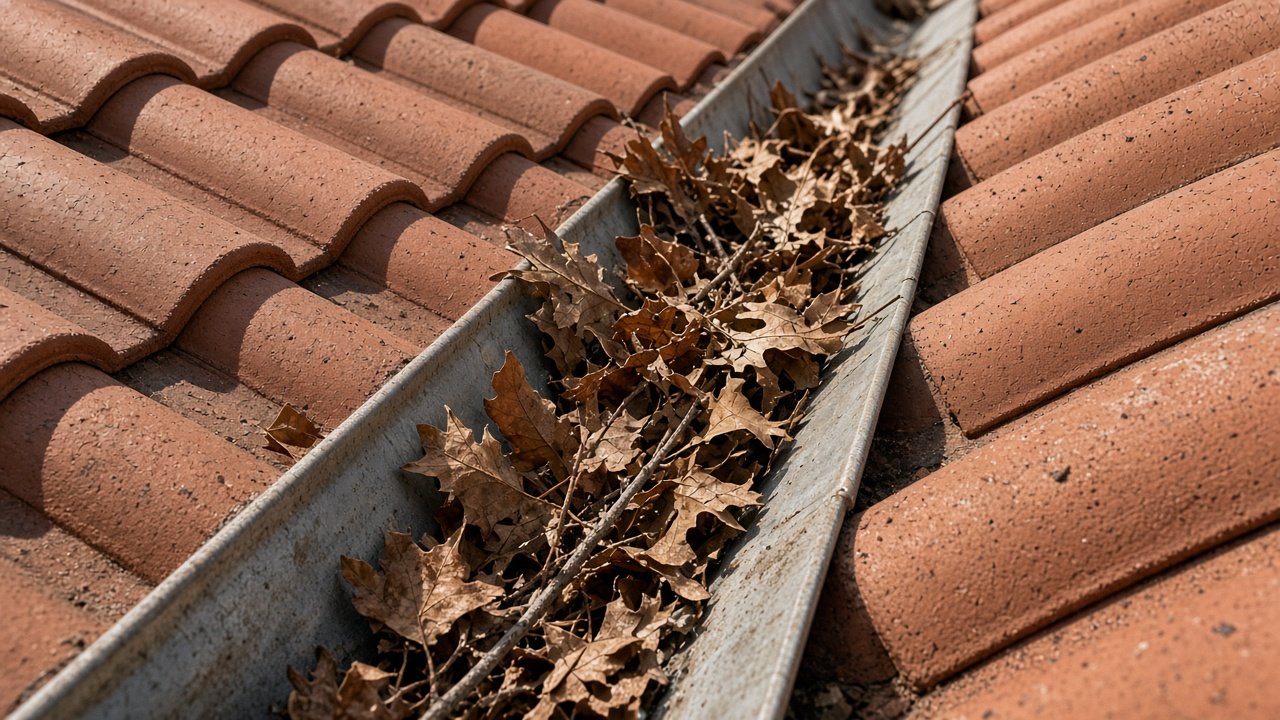
Take photos and note the date whenever you see something new. If a ceiling stain grows after each storm, write that down too. These notes help an inspector trace water back to where it enters, which on a tile roof is often some distance from where the stain appears.
Why you shouldn’t walk on a tile roof
The easiest way to damage a tile roof is to walk on it. TRI Alliance advises that only trained, insured professionals should walk on a tile roof, and its walkability brief notes that foot traffic can break tiles. [1] [2]
Tiles are designed to shed water, not to carry a person’s weight in the wrong spot. A step in the middle of an unsupported tile, or on the curved top of a barrel tile, can crack it without any sound or visible sign. That crack may not leak right away, but it gives water a path to the underlayment. Well-meaning homeowners, satellite installers, and holiday-light hangers have all caused tile damage this way.
Keep other trades off the tiles too
If someone needs to work on or near your roof, such as a solar, antenna, or chimney crew, ask how they plan to protect the tile and who will replace any tiles they break. Ask for that answer in writing before the work starts.
Trained roofers know where tile can bear weight and where it can’t, and they carry spare tiles to replace any that crack during the visit. That’s the safer route for both you and the roof.
What a professional tile roof maintenance visit covers
A maintenance visit should leave the tile whole, the water paths clear, and the joints sealed. Here’s what RRSATX recommends asking any roofer to include.
- Replace broken and cracked tiles. Remove damaged pieces and fit matching tiles, then reseat any that have slipped.
- Clear valleys and debris. Remove leaves and debris from valleys, behind chimneys, and in other spots where water collects.
- Check flashing. Look at wall, chimney, skylight, pipe, and valley flashing for rust, gaps, lifting, or failed sealant.
- Check hips and ridges. Look for cracked mortar, loose foam, or ridge tiles that have shifted.
- Look for exposed underlayment. Note any spot where the underlayment can be seen or where it looks brittle or torn at the edges.
- Document it. Give you photos and written findings, so you know what was done and what still needs attention.
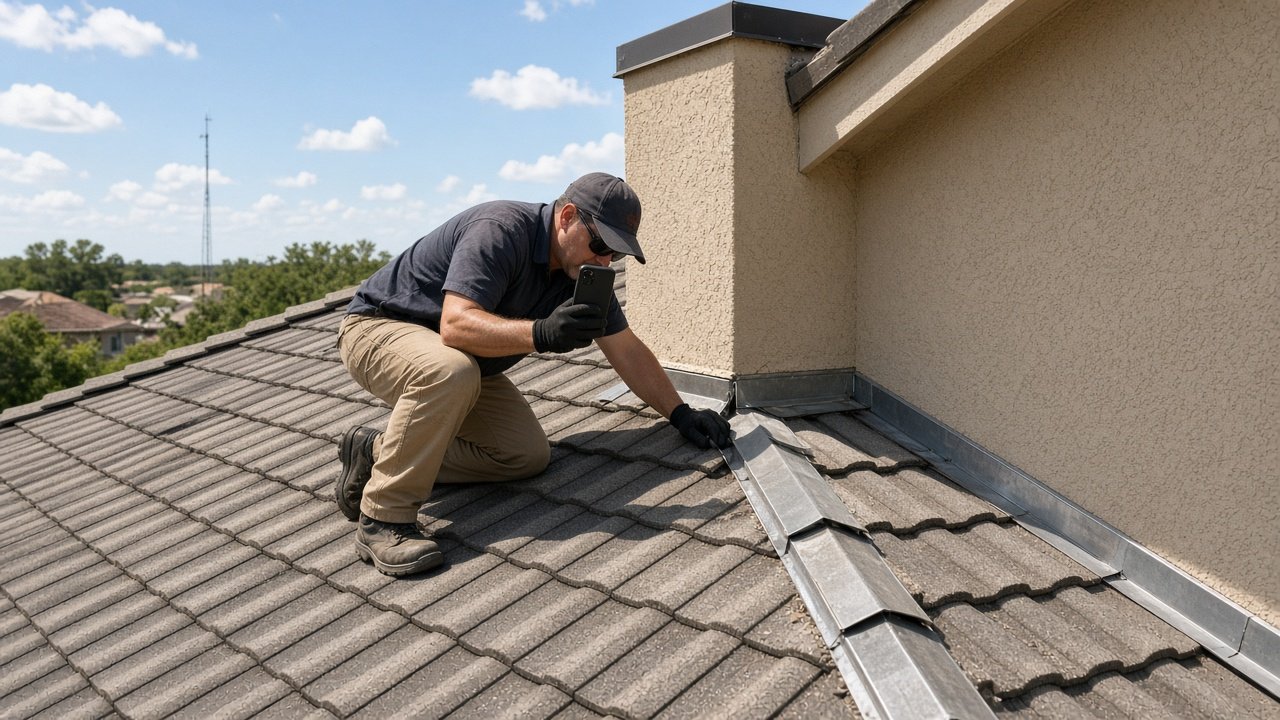
RRSATX’s roof inspection covers these points and gives you written findings. If the visit turns up broken tiles or worn flashing, our tile roof repair service in San Antonio can handle the fix.
Tile roof checks after hail and high wind
Hail and strong wind are the most common reasons a sound tile roof suddenly needs attention. San Antonio’s spring storms can crack tile or lift it out of place in a single afternoon.
After a storm passes, walk around the house and look for the same signs listed above, paying extra attention to broken tile on the ground and tiles that look out of line along the eaves, hips, and ridges. Hail damage on tile can be hard to see from below, since a crack may be hairline or on the hidden part of the tile. Wind can lift edge and ridge tiles and loosen the mortar or foam that holds them.
Stay off the roof, take photos from the ground, and call a roofer to check it. If you plan to file an insurance claim, ask for a written report with photos of every damaged area. Leaving cracked tiles in place through the next round of storms gives rain a direct path to the underlayment.
When tile roof maintenance turns into a repair or underlayment replacement
Maintenance handles small, scattered problems. Repair or underlayment work is needed when water has already reached the layer underneath. The table below shows how RRSATX thinks about the difference.
| What you see | Usually means | Likely next step |
|---|---|---|
| A few cracked or slipped tiles, no leaks inside | Normal wear or a minor impact | Maintenance: replace and reseat tiles, check flashing |
| Debris in valleys, flashing that looks worn | Water paths are slowed or joints are starting to fail | Maintenance or a small flashing repair |
| Ceiling stains below one area | Water is getting past the tile and underlayment at one spot | Targeted repair after the leak is traced |
| Brittle or torn underlayment seen at several gaps | The underlayment is wearing out across the roof | Underlayment lift-and-relay |
| Leaks in several places, recurring after repairs | The water barrier under the tile has failed broadly | Full assessment of underlayment and decking |
A lift-and-relay means the crew removes the tiles, replaces the underlayment and any damaged flashing or decking, and then reinstalls the original tiles where they’re still sound. Because the tiles often outlast the underlayment, this can be a practical way to renew a tile roof. RRSATX explains the process on its tile roof underlayment replacement page.
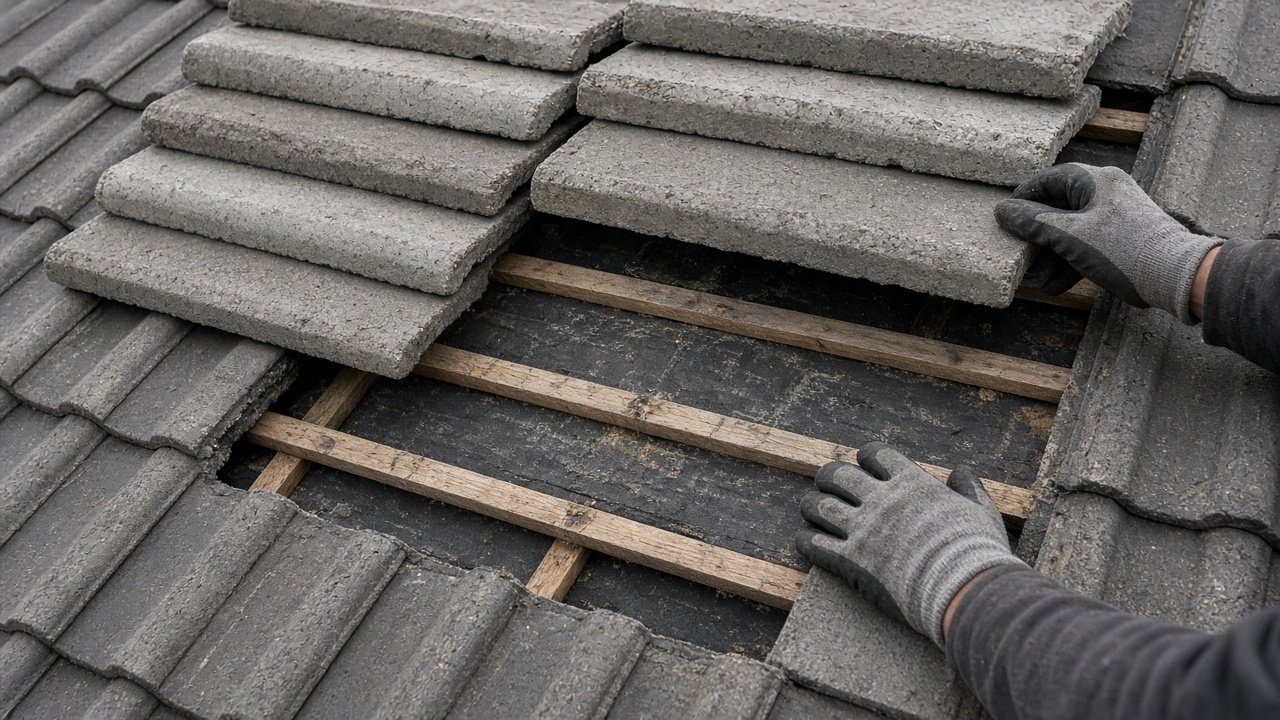
For a sense of what drives the price of tile work, see the RRSATX guide to the cost of tile roofs. Any quote for your roof should come after someone has looked at it.
Hiring a roofer for tile roof maintenance
Tile work rewards experience, so choose the roofer carefully. TRI Alliance recommends getting bids in writing and checking a contractor’s licensing and insurance. If your roof is still under the original installer’s warranty, it suggests contacting that installer first. [1]
The Texas Department of Insurance gives similar advice for any home repair: get written bids, read the contract before you sign, and don’t pay a large amount up front. [3] Ask each roofer how they walk tile without breaking it, whether they carry matching replacement tiles, and how they’ll show you the work with photos.
Local roofing service
About Affordable Roofing Contractors San Antonio
Affordable Roofing Contractors San Antonio, also known as RRSATX, provides tile roof repair, tile underlayment replacement, roof inspections, and clay and concrete tile roofing in San Antonio. When you call, tell us what you’ve noticed, such as broken tile on the ground, debris in valleys, or stains inside, and send photos taken from a safe spot.
- Phone
- (713) 504-2341
- sales@affordableroofingcontractorssanantonio.com
- Address
- 4324 Monterey St, San Antonio, TX 78237
- Contact
- Request a free roof inspection
Tile roof maintenance in San Antonio: questions answered
What does roof tiles maintenance include?
It usually includes replacing broken or cracked tiles, reseating slipped tiles, clearing valleys, checking flashing at walls, chimneys, and skylights, and checking the mortar or foam at hips and ridges. A good visit also notes any spot where the underlayment is exposed.
Can I clean or inspect my tile roof myself?
You can look for warning signs from the ground and inside the house. TRI Alliance advises that only trained, insured professionals should walk on a tile roof, because foot traffic can break tiles. [1]
Is one cracked tile worth fixing?
Yes. A cracked or missing tile lets sun and rain reach the underlayment, and TRI Alliance notes that broken tiles should be replaced promptly to protect it. [2] Replacing one tile is a small job compared with repairing water damage underneath.
How do I know if my tile roof needs new underlayment?
Leaks in more than one place, leaks that return after repairs, or underlayment that looks brittle or torn where tiles are missing are signs to ask about. An inspection that lifts a few tiles can confirm the condition.
Does maintenance differ for clay and concrete tile?
The checklist is the same: whole tiles, clear valleys, sound flashing, and secure ridges. Clay tile can be more brittle, so it needs careful handling. Concrete tile is heavier, and its surface can show wear. Matching replacement tiles matters for both.
What should I send RRSATX before a tile roof visit?
Send the property address, photos of any broken tiles, debris, or ceiling stains, and whether the roof is still under the original installer’s warranty. Call (713) 504-2341 or use the contact page.
Explore the roofing topic
More help with tile roofs
Related serviceTile roof underlayment replacementLift-and-relay work that renews the water barrier under your existing tile.
Related guideCost of tile roofsWhat drives the price of tile roofing work in San Antonio.
Keep your tile roof protected from the top down
Ask RRSATX for a free roof inspection and written findings for your San Antonio tile roof.