
[et_pb_section fb_built=”1″ admin_label=”section” _builder_version=”4.16″ global_colors_info=”{}”][et_pb_row admin_label=”row” _builder_version=”4.16″ background_size=”initial” background_position=”top_left” background_repeat=”repeat” global_colors_info=”{}”][et_pb_column type=”4_4″ _builder_version=”4.16″ custom_padding=”|||” global_colors_info=”{}” custom_padding__hover=”|||”][et_pb_code _builder_version=”4.27.6″ _module_preset=”default” global_colors_info=”{}”]
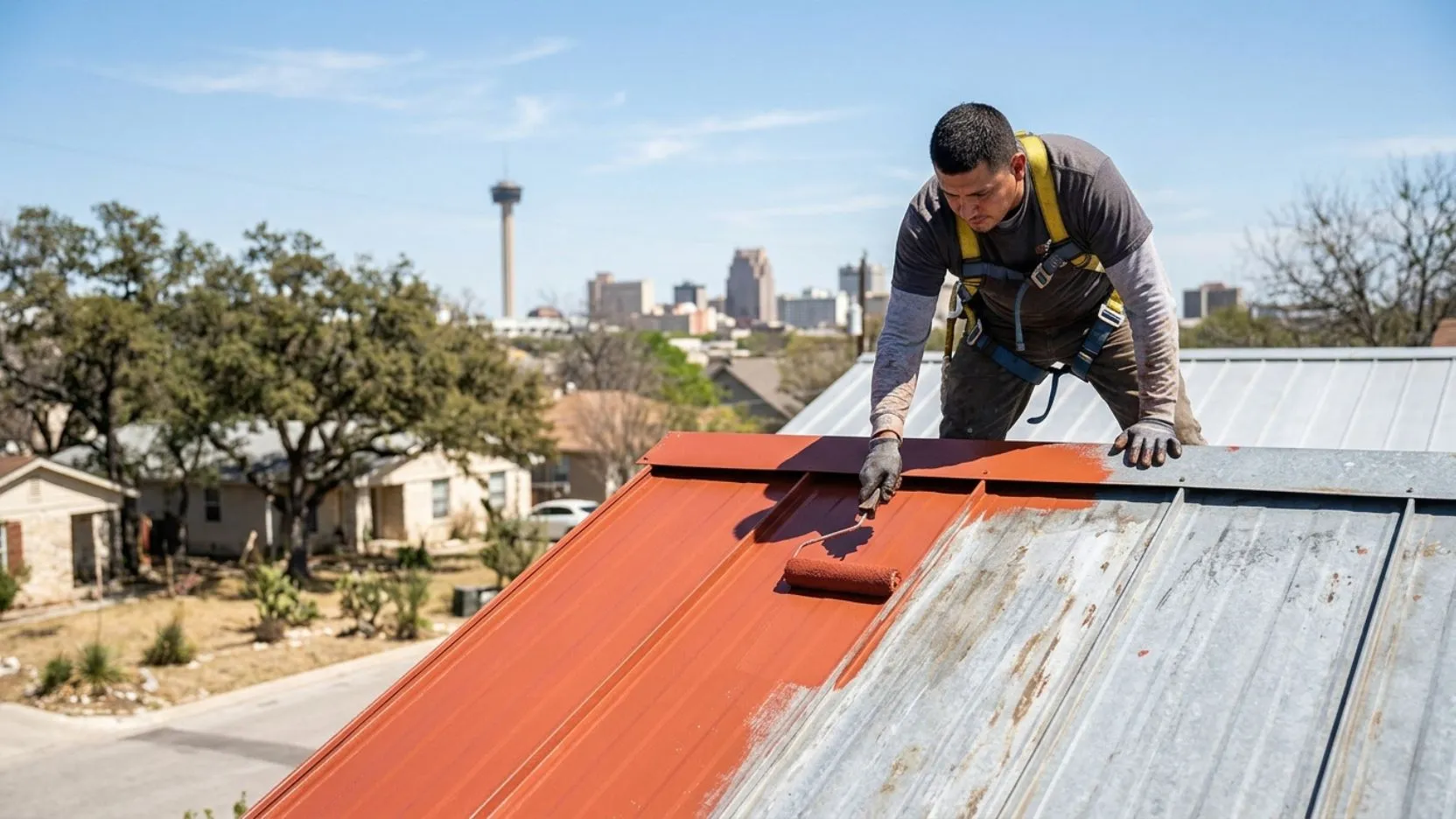
Yes, you can paint a metal roof and in San Antonio’s climate, doing it right can extend the life of your roof, cut your cooling costs, and improve your home’s curb appeal. But the prep work and the paint you choose matter more than almost anything else.
San Antonio homeowners with metal roofs ask this question for several different reasons. Some have an aging roof where the original factory coating is fading or chalking and they want to restore its appearance without replacing it. Some want to switch from a dark panel color to a lighter one to reduce summer heat absorption. Others have a metal roof showing early surface rust and want to know if paint can stop it from getting worse.
The short answer is yes metal roofs can absolutely be painted, and done correctly, a fresh coat of the right product can add 10 to 15 years of service life to a roof that would otherwise need replacement within the next several years. But the word “correctly” carries a lot of weight. Metal roof painting fails more often because of inadequate surface preparation and the wrong product selection than for any other reason. This guide covers everything San Antonio homeowners need to know before picking up a brush or calling a contractor.
Surface preparation is 80 percent of a successful metal roof paint job. No amount of premium coating product will compensate for a surface that was not properly cleaned, treated for rust, and primed before the topcoat was applied. This is the most common mistake both DIY homeowners and inexperienced contractors make, and it is the reason so many painted metal roofs in San Antonio peel, bubble, or delaminate within the first few years. Every step in this guide matters, but none matters more than prep.
Assessment
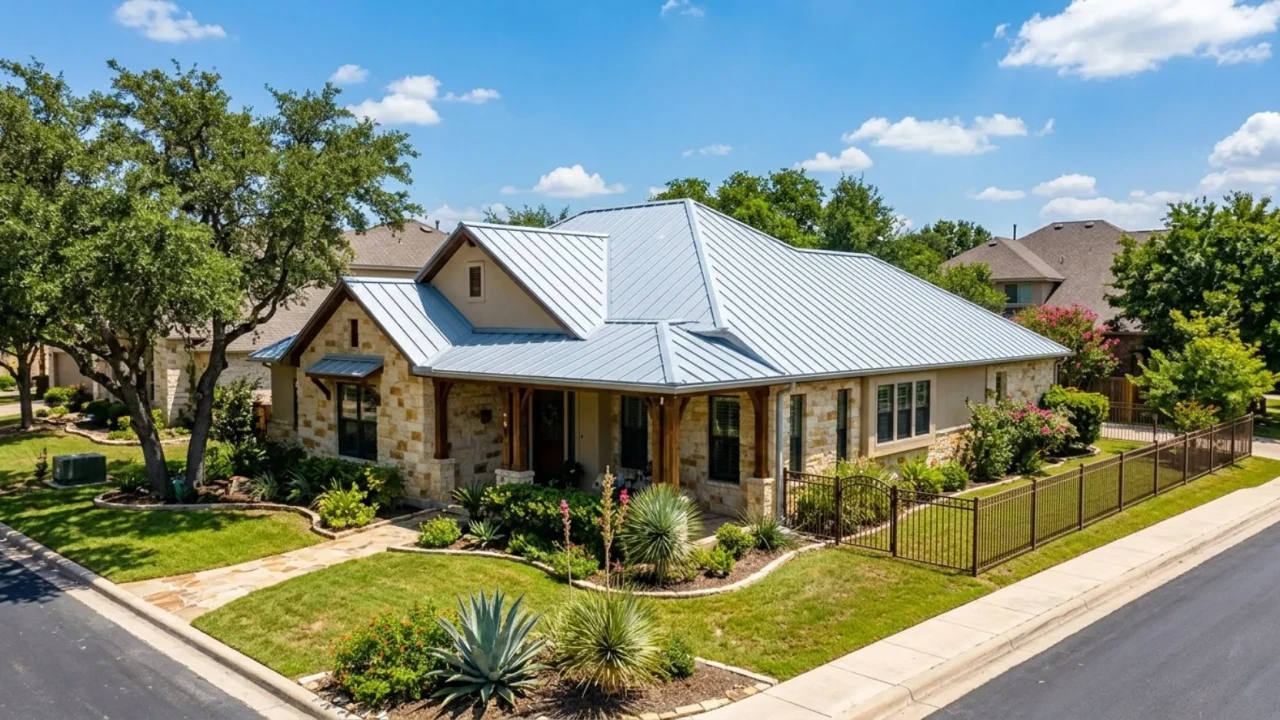
Before committing to a paint or coating project, a basic condition assessment of your metal roof is essential. Painting over a roof that has structural problems, severe corrosion, or panel damage will not fix those issues it will only hide them temporarily while they continue to get worse underneath the coating.
A metal roof that is a good candidate for painting has the following characteristics: the panels are structurally sound with no significant denting, buckling, or separation at the seams; surface rust is present on less than 25 percent of the surface and has not penetrated through the panel; the fasteners are tight and in good condition; and the roof has at least 10 to 15 years of remaining service life if the coating is applied correctly and maintained.
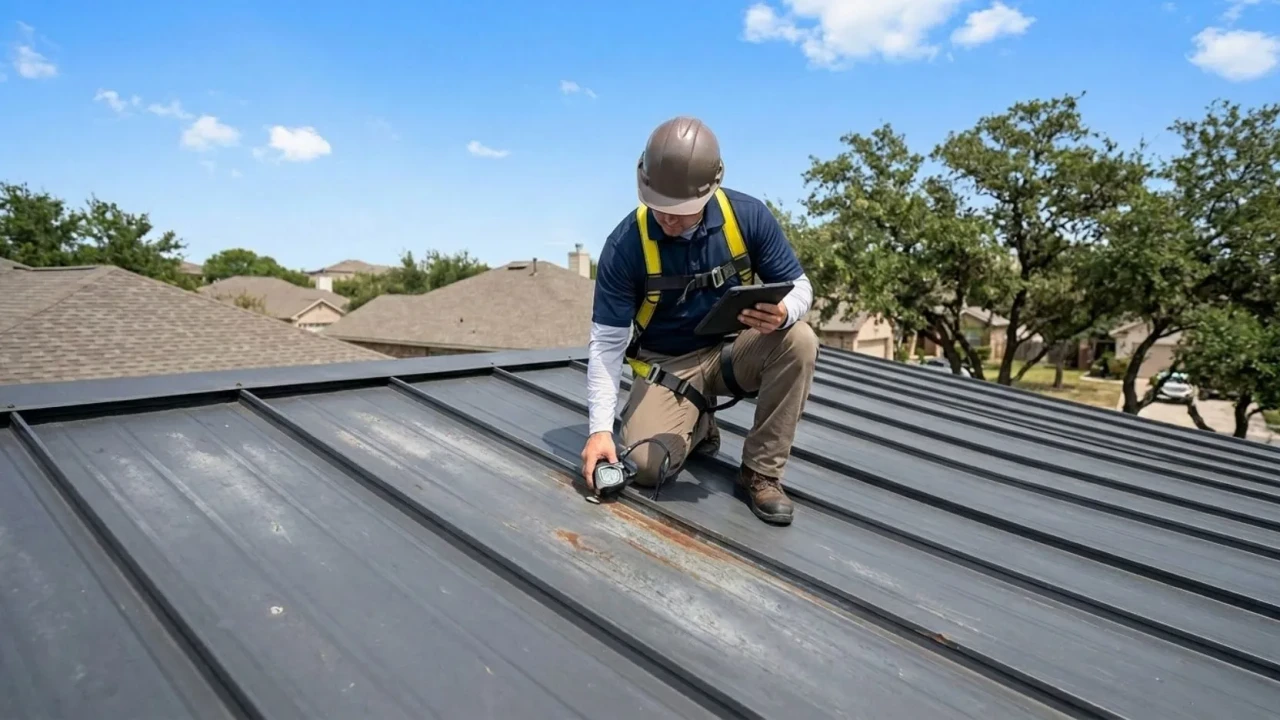
Good candidate for painting: Faded or chalking factory finish, light surface rust on less than 25 percent of the surface, panels structurally intact, no active leaks, fasteners in good condition, and roof age of 5 to 25 years old depending on the original product.
Poor candidate for painting: Widespread rust that has eaten through panels, multiple active leaks, severely dented or buckled panels, fastener holes that have enlarged or stripped, or a roof so old that the base metal has thinned significantly. In these cases, replacement is the more cost-effective decision.
If your metal roof is more than 30 years old and has never been recoated, have a licensed roofing contractor walk it before you invest in a paint job. Metal roofs in San Antonio’s hail corridor take more impact damage over three decades than those in milder climates. What looks like surface-level wear from the ground may include panel corrosion or fastener fatigue that a paint job will not address. A professional inspection typically costs nothing with a reputable San Antonio contractor and gives you a clear picture of whether painting or replacing makes more financial sense for your specific roof.
- All panels walked and inspected for structural integrity, not just viewed from the ground
- Rust coverage estimated: under 25 percent surface rust is the threshold for a paint project to make sense
- All fasteners checked: backed-out or corroded screws repaired before painting begins
- Active leaks identified and repaired before any coating is applied
- Seams and flashings inspected: failing sealant addressed before the topcoat goes on
- Remaining service life estimated by a professional: paint adds life, it does not create it
Surface Prep
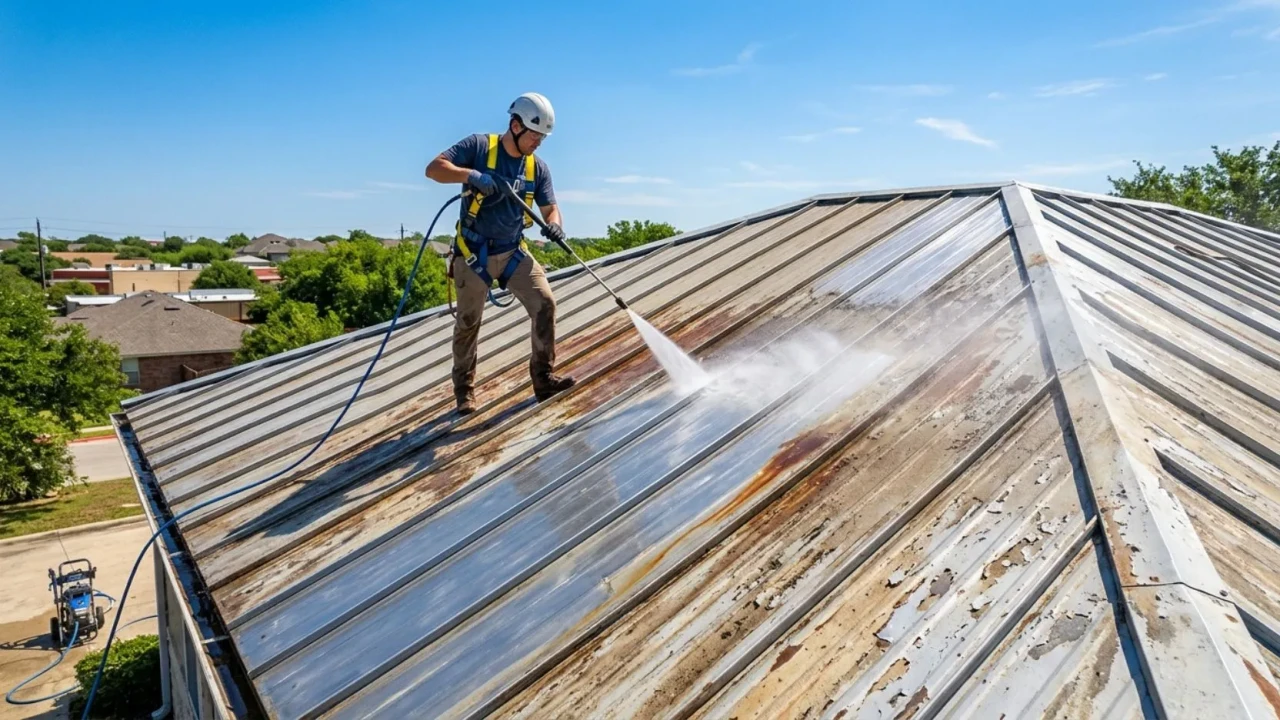
Surface preparation is where most failed metal roof paint jobs go wrong. A coat of paint applied to a dirty, chalky, or rusty metal surface will not bond properly, regardless of the product used. In San Antonio, where summer temperature swings can exceed 100 degrees on the roof surface and the paint film expands and contracts with the metal every day, a coating that was not properly bonded to begin with will start peeling or blistering within one to two seasons.
The preparation sequence for a metal roof has four stages that must be completed in order: cleaning, rust treatment, spot priming, and full-surface priming. Skipping or shortcutting any of these stages dramatically reduces the adhesion of the topcoat and shortens the life of the entire paint job.
- Entire roof surface pressure washed with a metal-safe cleaner not just rinsed with a garden hose
- Chalky oxidation layer fully removed: a clean rag rubbed on the surface should not pick up white residue
- All rust mechanically removed back to bare metal before rust converter is applied
- Rust converter applied per manufacturer instructions and allowed to cure before priming
- All bare metal areas spot primed with a metal-specific primer product
- Full-surface prime coat applied and allowed to cure completely before topcoat application
- Application weather conditions verified: no rain in forecast, surface temp under 110 degrees, humidity under 85%
Paint Selection
Not all paint products are appropriate for metal roofs, and in San Antonio’s climate, choosing the wrong product is one of the fastest ways to get a coating that looks good for one summer and then begins peeling. The heat exposure a metal roof experiences in San Antonio surface temperatures of 150 to 165 degrees Fahrenheit on dark panels in July requires a product specifically engineered for high-temperature flexibility and UV resistance.
There are three product categories that work well on metal roofs in San Antonio’s climate, each suited to different situations and performance expectations. Understanding the differences helps you make the right choice for your specific roof and budget.
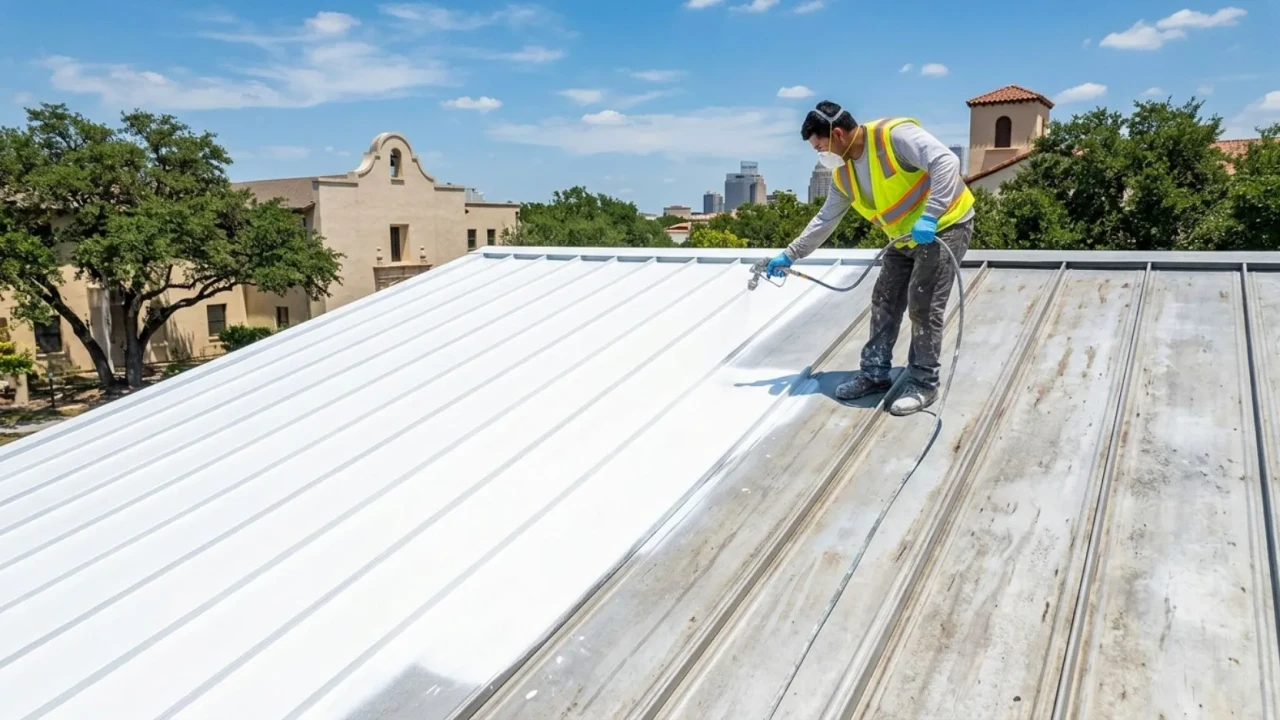
Acrylic latex metal roof paint: Water-based, flexible, and available in a wide range of colors including Energy Star-rated reflective finishes. Good adhesion to properly prepared metal surfaces. Expected lifespan of 8 to 12 years on a San Antonio roof with good prep. The most common choice for residential metal roofs where appearance and a moderate budget are both priorities.
Elastomeric roof coating: Thicker than standard paint, with rubber-like flexibility that accommodates the significant thermal expansion and contraction of a metal roof in Texas. Also provides a waterproofing layer in addition to UV protection. Expected lifespan of 10 to 15 years. The preferred product for maximum performance and longevity on San Antonio metal roofs.
| Product type | Best for | Expected lifespan (San Antonio) | Approximate material cost |
|---|---|---|---|
| Acrylic latex (metal-specific) | Color change, appearance restoration, residential roofs | 8 to 12 years with proper prep | $30 to $60 per gallon |
| Elastomeric roof coating | Maximum longevity, waterproofing, high-performance restoration | 10 to 15 years with proper prep | $50 to $90 per gallon |
| Silicone roof coating | Flat or low-slope metal roofs with ponding water risk | 15 to 20 years | $60 to $100 per gallon |
| Oil-based alkyd | Not recommended for metal roofs in Texas | 2 to 4 years before peeling | Lower cost but poor ROI |
| Standard exterior latex | Not appropriate for metal roofing | 1 to 3 years before failure | Lowest cost, worst outcome |
Look for the Energy Star label on any metal roof coating product you are considering. Energy Star-rated roofing products meet specific solar reflectance and thermal emittance standards that translate directly into cooling cost savings in San Antonio’s climate. A light-colored Energy Star-rated coating can reduce roof surface temperature by 50 to 70 degrees Fahrenheit compared to a dark uncoated metal panel, which reduces attic heat buildup and lowers the load on your air conditioning system during the months when you need it most.
- Product is specifically labeled for metal roofing not general exterior or masonry use
- Product is acrylic-based or elastomeric: oil-based products are not appropriate for Texas metal roofs
- Energy Star rating confirmed if energy savings are a goal: look for high solar reflectance index (SRI) values
- Primer compatibility confirmed: topcoat and primer are from the same manufacturer or are verified compatible
- Application temperature range checked: most metal roof coatings require surface temps between 50 and 95 degrees F for proper curing
- Coverage rate reviewed: elastomeric coatings are applied at a heavier mil thickness than standard paint
Color and Energy
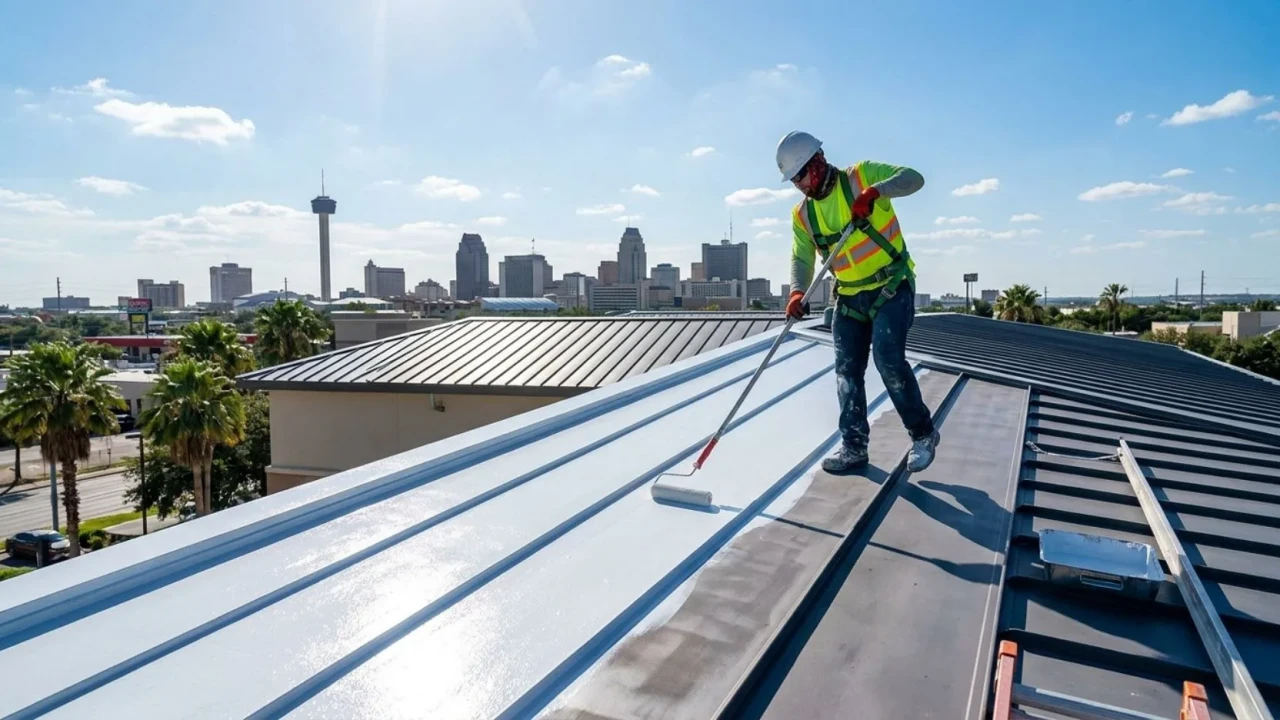
In most of the country, metal roof color is primarily an aesthetic decision. In San Antonio, it is also an energy decision with measurable consequences every summer month. The difference in surface temperature between a dark charcoal or black metal roof and a white or light gray reflective coating can exceed 70 degrees Fahrenheit on a July afternoon. That temperature difference translates directly into attic heat load, which translates into how long your air conditioning system runs each day.
If you are repainting a metal roof in San Antonio and you currently have a dark panel color, switching to a lighter reflective coating is one of the highest-return changes you can make to the energy profile of your home without touching the HVAC system. Studies on Texas homes consistently show cooling cost reductions of 15 to 25 percent after switching from a dark to a light reflective roof surface.
- HOA and deed restriction guidelines reviewed before finalizing color selection
- Solar reflectance index (SRI) value checked for any color being considered: higher SRI means more reflective
- Energy Star rating confirmed for white and light-colored products where energy savings are a priority
- Neighborhood context considered: color should complement the home’s architecture and surrounding properties
- Attic insulation level noted: homes with poor insulation gain the most from switching to a reflective coating
- Sample swatch requested from the contractor or paint supplier before committing to a full-roof application
DIY vs Pro
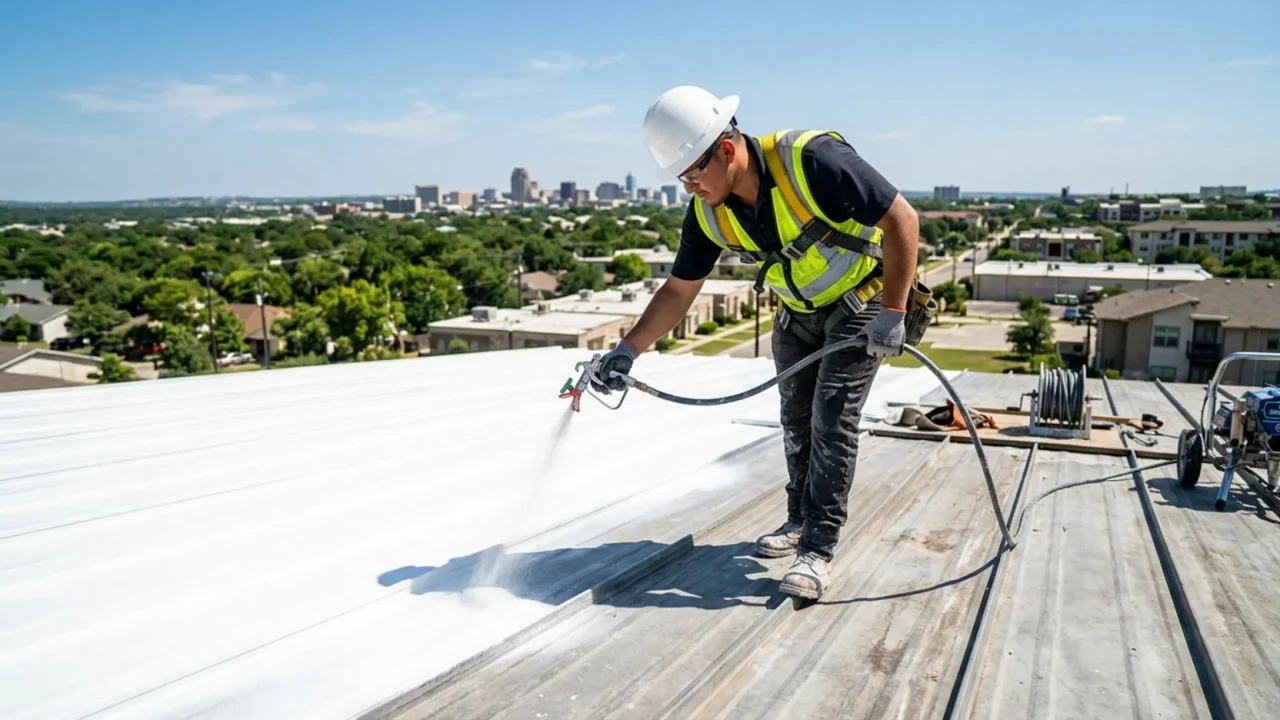
Metal roof painting is one of those projects where the DIY vs professional decision deserves careful thought. It is not technically impossible for a homeowner to paint their own metal roof, and some do so successfully. But the barriers to a successful outcome are higher than they appear from the ground: working safely on a metal roof that becomes extremely slippery when wet or even just damp, applying coating products correctly at the right thickness and in the right weather conditions, and completing the prep work thoroughly enough that the paint actually bonds and lasts.
The most honest framing is this: the materials cost for a DIY metal roof paint project is roughly $600 to $1,500 for a standard San Antonio home, depending on roof size and the products chosen. A professional application on the same home runs $1,500 to $3,500 or more. The difference in labor cost needs to be weighed against the risk of a DIY prep job that was not thorough enough and produces a paint job that peels in two years instead of lasting twelve.
| Factor | DIY approach | Professional approach |
|---|---|---|
| Total cost (materials only vs full project) | $600 to $1,500 in materials | $1,500 to $3,500 complete |
| Expected result lifespan | 5 to 10 years if prep is thorough; 2 to 4 years if prep is rushed | 10 to 15 years with proper prep and application |
| Safety risk | Significant: metal roofs are extremely slippery, especially when damp or coated with oxidation | Contractor carries liability insurance and uses fall protection equipment |
| Equipment needed | Pressure washer rental, airless sprayer rental, safety harness, ladders | All supplied by contractor |
| Warranty on the work | None: you own the outcome entirely | Reputable contractors provide a workmanship warranty of 2 to 5 years |
| Best suited for | Experienced homeowners with roofing and painting experience, low-pitch roofs, good physical condition | Most San Antonio homeowners: better results, safer process, contractor accountability |
A metal roof becomes extremely slippery when it is wet, when it has a layer of oxidation on the surface, or when it is freshly primed. Falls from roofs are one of the leading causes of serious injury and death in home improvement accidents. If you decide to pursue a DIY metal roof paint project, a proper safety harness anchored to a ridge-mounted anchor point is not optional. Work boots with non-slip rubber soles rated for metal roofing are required. And never work on a metal roof in San Antonio from mid-morning to late afternoon in summer: the surface temperature will be too high for safe footing and the coating will not cure correctly at those temperatures.
- Do they have specific experience painting metal roofs, not just general exterior painting?
- Can they provide references from metal roof painting jobs completed in the San Antonio area?
- Is their quote itemized to show prep, primer, and topcoat steps separately?
- What product brands and specific product names are they quoting, and can you verify those products are appropriate for metal?
- Do they carry general liability insurance and workers compensation? Request the certificates before work starts.
- What workmanship warranty do they provide on the completed paint job?
These price ranges reflect real San Antonio market rates in 2026 for professional metal roof painting projects. Costs vary based on roof size, pitch, existing surface condition, and the product specified. All estimates should be confirmed in writing before work begins.
| Project scope | Typical cost range (San Antonio) | What is included | Expected lifespan |
|---|---|---|---|
| Basic clean and one coat (small roof) | $800 to $1,200 | Pressure wash, one coat elastomeric or acrylic over existing finish in good condition | 5 to 8 years |
| Full prep and two-coat application (standard home) | $1,500 to $2,500 | Full prep sequence, primer, two topcoats on a 1,500 to 2,000 sq ft roof | 10 to 15 years |
| Full prep and two-coat (larger or complex roof) | $2,500 to $3,500+ | Same scope on 2,000 to 3,500 sq ft roof, or steep pitch with more complex prep and access | 10 to 15 years |
| Rust treatment and painting (moderate rust) | $1,800 to $3,000 | Full rust treatment across significant portions of the roof before primer and topcoat | 8 to 12 years |
| DIY materials only (standard home) | $600 to $1,500 | Cleaning products, rust treatment, metal primer, two coats of topcoat labor is your own | 5 to 12 years depending on prep quality |
| Pre-painting repairs (fasteners, sealant, minor rust) | $300 to $700 | Fastener replacement, flashing re-sealing, localized rust repair before painting begins | N/A repair only |
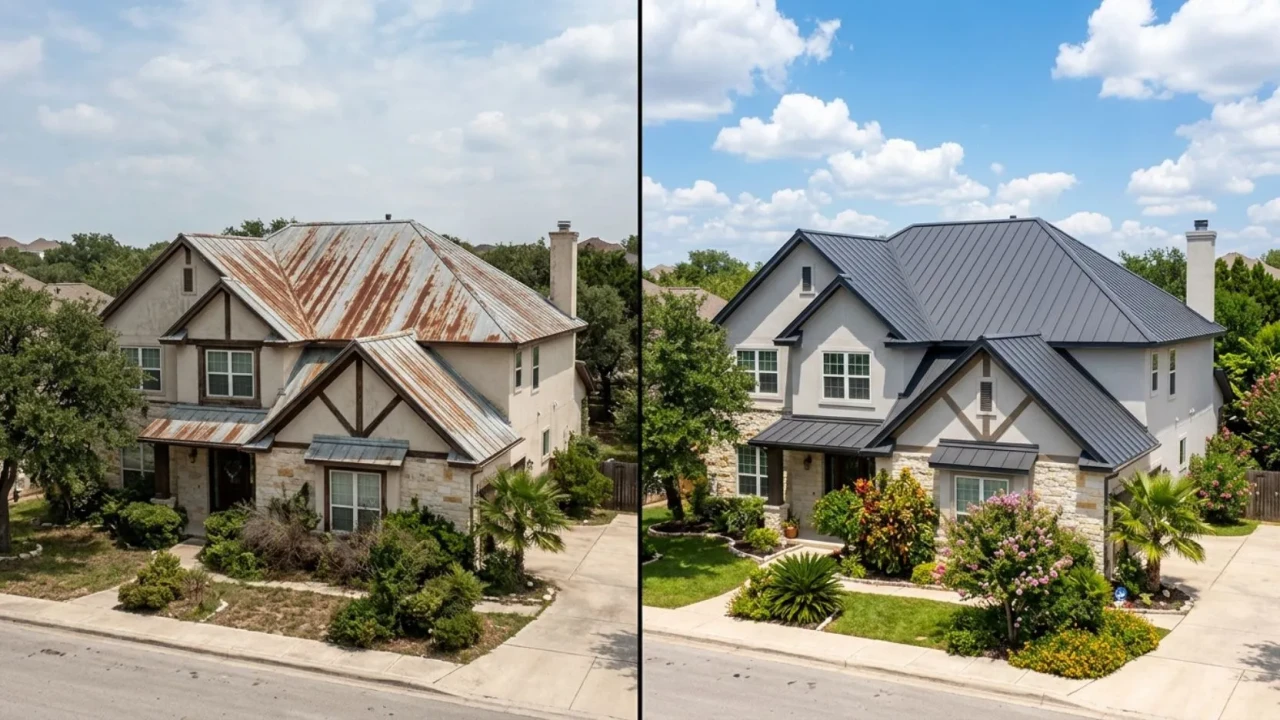
- Roof condition assessed by a professional: confirm painting is appropriate and replacement is not needed
- All active leaks repaired and re-inspected before painting is scheduled
- Failed fasteners replaced and sealant refreshed at all flashings and penetrations
- Rust coverage assessed: under 25 percent surface rust is the guideline for painting to make financial sense
- Color selected and HOA guidelines confirmed before any materials are ordered
- Product selection finalized: metal-specific acrylic or elastomeric, Energy Star-rated where applicable
- Full pressure wash with metal-safe cleaner completed and surface confirmed clean before priming
- All rust mechanically removed back to bare metal and rust converter applied and cured
- Spot primer applied to all bare metal areas and allowed to cure per manufacturer instructions
- Full-surface prime coat applied and cured completely before topcoat application begins
- Weather conditions verified at each application stage: no rain forecast, surface temp under 110 degrees, humidity under 85%
- Two full topcoat applications at the correct mil thickness not a single heavy coat
- Completed work inspected before final payment: uniform coverage, no missed areas, no runs or sags
- Warranty document received from contractor with coverage period and contact information
- Product data sheets and application records kept on file for future reference
- Next inspection date noted: painted metal roofs in San Antonio should be visually inspected every two to three years
- Any areas of concern noted during inspection addressed before the next rainy season
Can you paint a metal roof yourself in San Antonio?
How much does it cost to paint a metal roof in San Antonio?
What is the best paint for a metal roof in Texas?
How long does paint on a metal roof last in San Antonio?
Can you paint a rusty metal roof?
Will painting a metal roof reduce my energy bills in San Antonio?
Get a free metal roof inspection in San Antonio
Not sure if your metal roof is a good candidate for painting or needs replacement? We will walk it, assess the condition, and give you an honest answer – along with a written estimate for whichever option makes more sense for your home.
[/et_pb_code][/et_pb_column][/et_pb_row][/et_pb_section]