
[et_pb_section fb_built=”1″ admin_label=”section” _builder_version=”4.16″ global_colors_info=”{}”][et_pb_row admin_label=”row” _builder_version=”4.16″ background_size=”initial” background_position=”top_left” background_repeat=”repeat” global_colors_info=”{}”][et_pb_column type=”4_4″ _builder_version=”4.16″ custom_padding=”|||” global_colors_info=”{}” custom_padding__hover=”|||”][et_pb_code _builder_version=”4.27.6″ _module_preset=”default” hover_enabled=”0″ sticky_enabled=”0″]
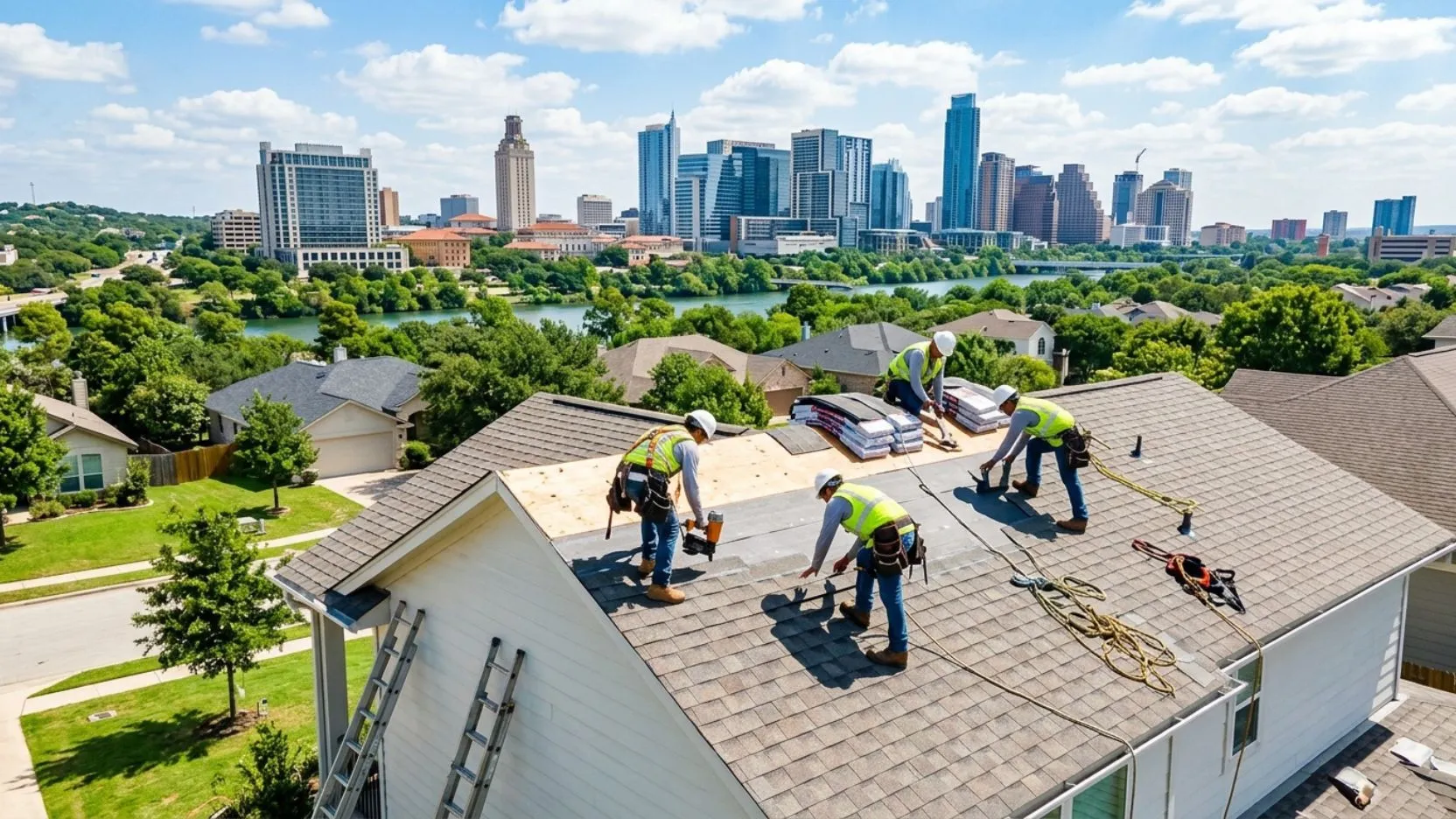
When a storm rolls through Central Texas, the contractor you call matters as much as the roof itself. This guide breaks down the five biggest benefits of hiring a local Austin roofing contractor, from faster storm response to warranties that actually get honored, so you can hire with confidence.
Austin homeowners have plenty of roofing companies to choose from, and after a big hail event the choices multiply overnight as out-of-town crews flood into Central Texas. So the real question is not just whether to repair or replace your roof. It is who you trust to put hands on it. The answer matters more than most people realize, because the contractor you hire affects the quality of the work, how fast you get help, whether your permit clears, and whether anyone is around to stand behind the warranty in five years.
This guide covers the five most important benefits of hiring a local Austin roofing contractor. These are the practical, real-world advantages that show up when a storm hits, when the city inspector arrives, and when you need someone to answer the phone long after the job is done. If you are weighing a local company against a national brand or a storm-chasing crew, this is what tips the scale.
The most expensive roofing mistake Austin homeowners make is signing with whoever knocks on the door first after a hailstorm. Out-of-state storm chasers move fast, collect deposits, and are gone before the first warranty callback. A roof installed by a crew you can find again is worth far more than a slightly cheaper one installed by a company with no local address. Before you sign anything, ask one question: where is your office, and will you be here if this roof leaks in two years?
Local Expertise
Austin sits in the heart of one of the most active hail and severe weather regions in the country. Roofs here take a beating that roofs in milder climates never see: large spring hail, blistering summer UV exposure, sudden downbursts, and the wide daily temperature swings that come with Hill Country weather. A local contractor has inspected hundreds of Austin-area roofs and knows exactly where the damage tends to hide and which materials hold up to it.
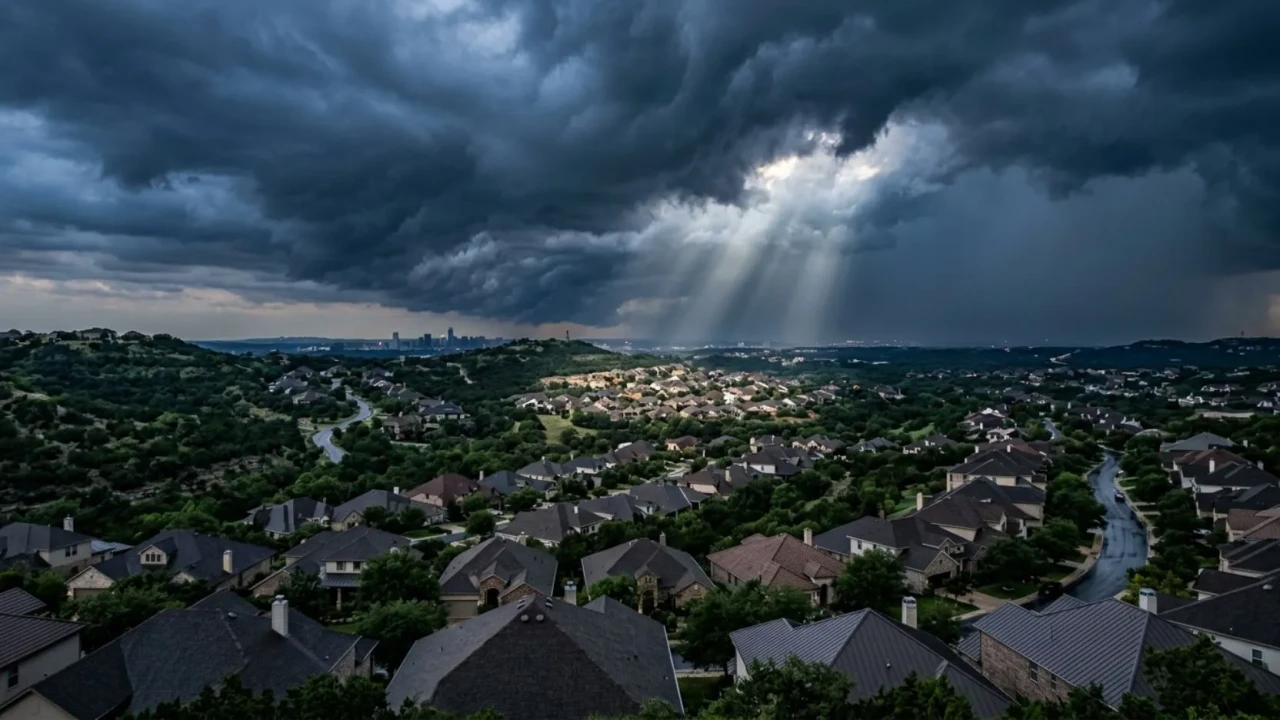
Hail is the headline threat: Central Texas regularly sees hail large enough to bruise shingles, crack tiles, and dent metal panels. A local roofer knows the difference between cosmetic and functional hail damage, which is exactly what an insurance adjuster will scrutinize.
Heat and UV do the slow damage: Austin summers cook asphalt shingles, drying out the oils that keep them flexible. A local contractor recommends materials and ventilation built for this heat, not a spec sheet written for a cooler climate.
- Contractor inspects on the roof, not just from the ground or the driveway
- Damage assessment notes hail size and storm date for the insurance file
- Material recommendations account for Austin heat, UV, and hail exposure
- Ventilation reviewed, since poor attic ventilation shortens roof life in this climate
- Tree and debris risks flagged for trimming before they cause the next puncture
Fast Response
When water is coming through your ceiling, response time is everything. A local Austin roofing contractor is already in the area, with crews, trucks, and materials nearby. That means an emergency tarp can go up within a day, often the same day, before interior damage spreads to drywall, insulation, and flooring. An out-of-town company has to route a crew to Central Texas, and after a major storm that wait can stretch into weeks.
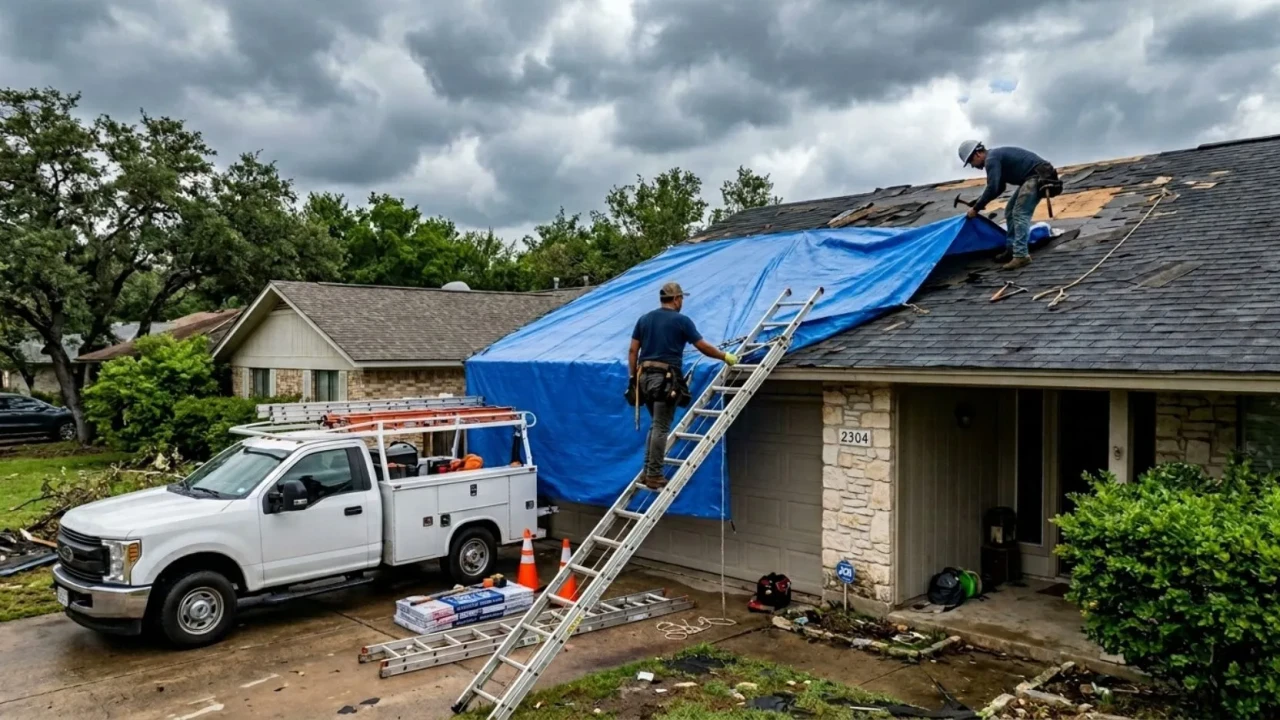
Emergency tarping: Stopping water intrusion in the first 24 hours is the difference between a minor repair and a major interior rebuild. Local crews can move that fast because there is no travel lag.
Easier scheduling: Need a follow-up, a second look, or a small fix? A local contractor can swing by. A company headquartered three states away cannot, and small callbacks fall through the cracks.
Be cautious of crews that appear in your neighborhood within hours of a hailstorm with out-of-state plates. Storm chasers follow weather systems across the country and target areas right after damage. They can do acceptable work, but the risk is what happens afterward. By the time a warranty issue shows up, they have moved on to the next storm in another state. A local contractor stakes their reputation on the roofs they leave behind in Austin, because they have to drive past them every day.
- Contractor offers same-day or next-day emergency tarping for active leaks
- Local phone number and Austin-area address, not just a national call center
- Realistic timeline given in writing, even during a busy post-storm period
- A named point of contact you can reach directly for follow-up
- Willingness to return for small callbacks without a travel surcharge
Permits and Codes
Roofing work in the Austin area often requires a permit and a passing inspection, and the rules are not the same in every jurisdiction. The City of Austin, Travis County, Williamson County, and the surrounding suburbs each have their own requirements. On top of that, many Austin neighborhoods are governed by an HOA that controls which materials and colors are allowed, and a few central districts have historic guidelines. A local contractor handles all of this every week and knows how to keep your project clean.
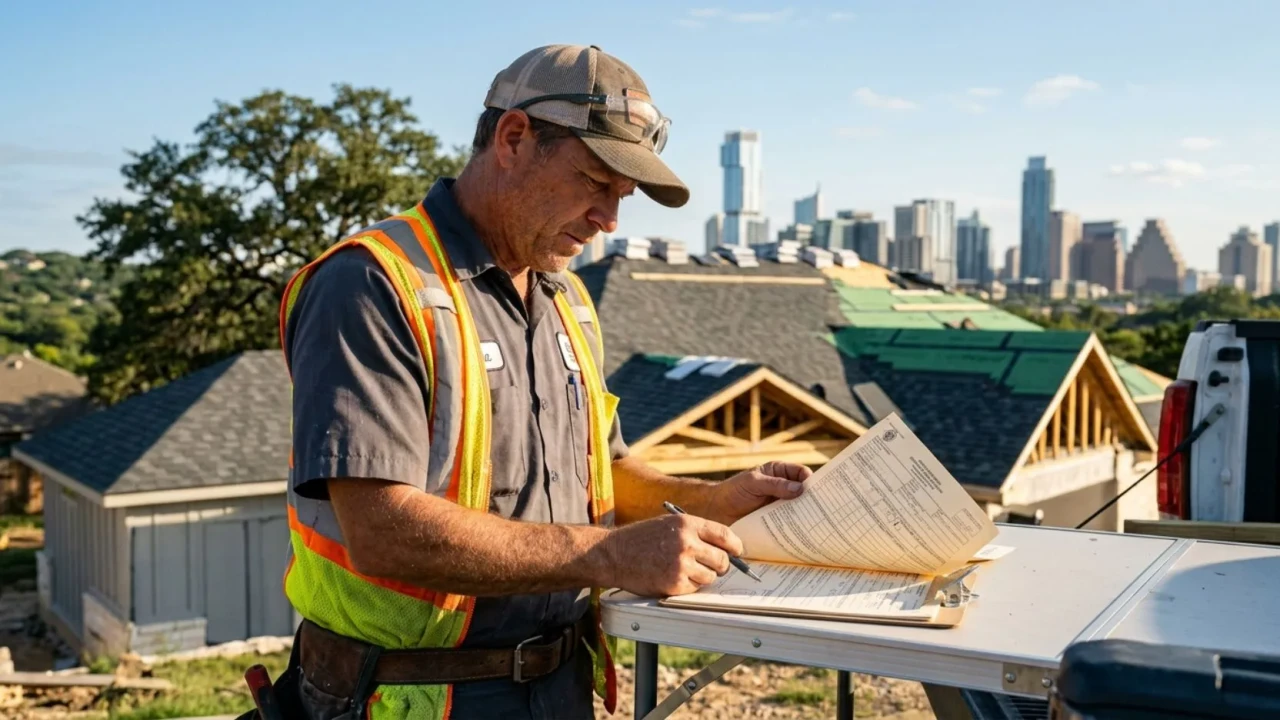
Permits and inspections: A local contractor pulls the correct permit, schedules the inspection, and makes sure the finished roof passes. Skipping this step can lead to fines and serious problems when you sell.
HOA and material rules: Many Austin subdivisions restrict shingle color and type. A local crew knows which products are pre-approved and saves you a rejected application or a forced redo.
- Contractor confirms whether your address needs a city or county permit
- Permit pulled in the contractor name, with the inspection scheduled
- Materials verified against current Texas building and energy code
- HOA submittal handled or guided before work begins, where required
- Final inspection sign-off documented and provided to you in writing
Trust and Accountability
The biggest difference between a local contractor and a transient crew is accountability. A local roofing company has a reputation in Austin that took years to build and would take one bad job to damage. They depend on referrals from neighbors, repeat business, and reviews that are tied to real local addresses. That gives you something a storm chaser can never offer: a track record you can check before you hand over a deposit.
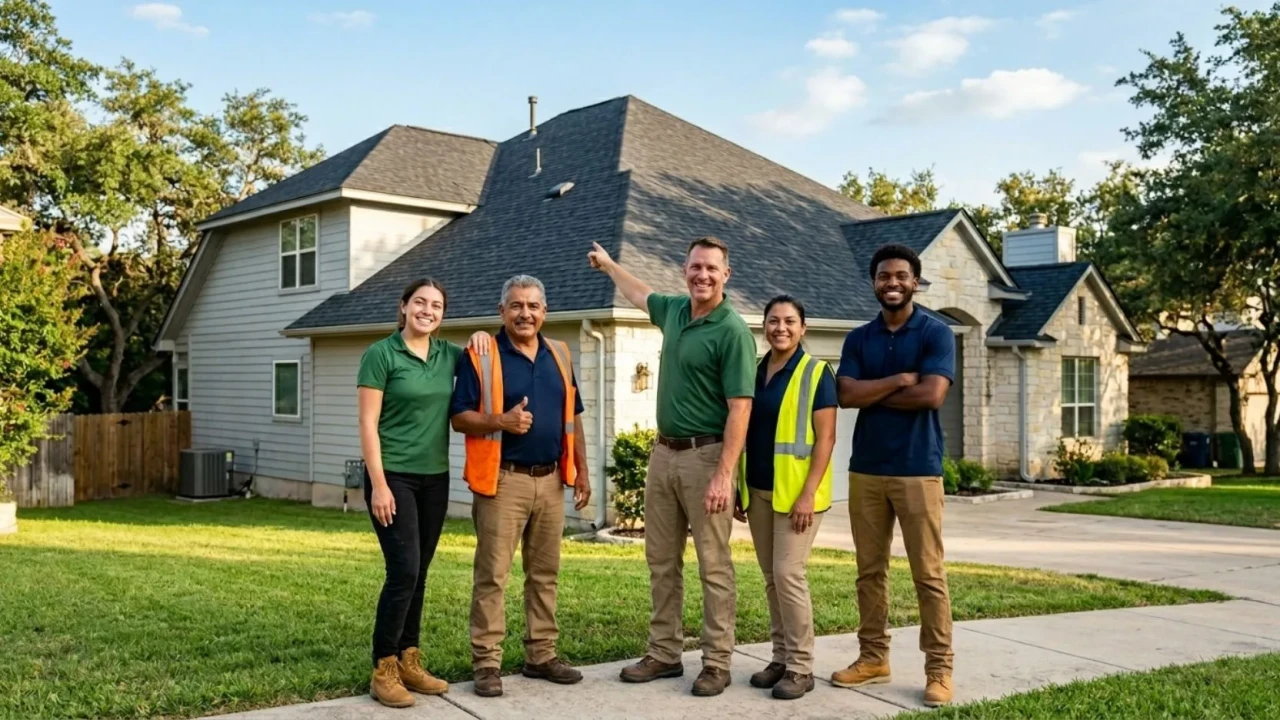
Verifiable references: A local contractor can point you to recent roofs in or near your neighborhood. You can drive by, see the work, and even talk to the homeowner.
Reviews that mean something: Google and Better Business Bureau reviews tied to a local business are harder to fake and easier to trust than a brand-new profile that appeared the week after a storm.
Ask for the address of the contractor office and look it up before you sign. A legitimate local roofing company has a verifiable physical location in the Austin area, a license, and proof of insurance they will share without hesitation. If a contractor is reluctant to give you an address, dodges questions about insurance, or only has a cell phone and a magnetic truck sign, treat that as a warning. The crews that disappear are almost always the ones that could not answer these questions up front.
- Physical Austin-area business address confirmed and verified
- At least two or three local references provided and contacted
- Google and Better Business Bureau reviews reviewed for patterns
- Current certificate of insurance shared without resistance
- Contractor license number provided and checked where applicable
Warranty and Support
A roofing warranty is only as good as the company standing behind it. A 10-year workmanship warranty from a contractor who left the state is worthless. A local Austin contractor is still in town to honor the warranty, fix a callback, and maintain the roof over its full life. That long-term presence is the quiet benefit that pays off years after the install, when a small issue could turn into a big one if no one answers the phone.
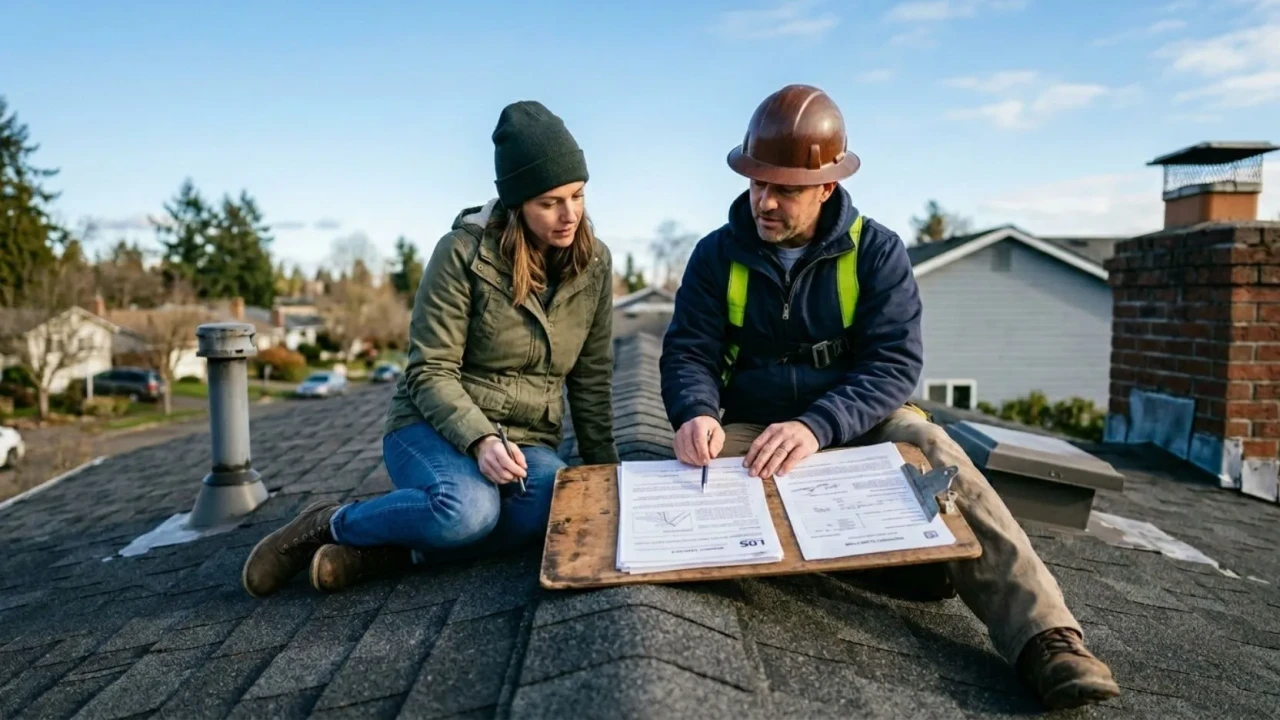
Workmanship warranty that holds: A local crew can come back and make it right. That is the entire point of a workmanship warranty, and it only works if the company still exists nearby.
Insurance claim support: Local contractors know how Texas storm claims work. They document damage, meet the adjuster on site, and provide an independent estimate that strengthens your claim.
After a qualifying storm, you are entitled to your own independent roof assessment separate from the insurance adjuster. A local contractor will document the damage with dated photos, provide a written estimate, and meet the adjuster on the roof so nothing gets missed. If the adjuster scope comes in far below the real repair cost, that documentation gives you the footing to request a re-inspection. File within the window your Texas policy allows, which is commonly one year from the date of loss.
- Workmanship warranty provided in writing, separate from the material warranty
- Warranty length and exactly what it covers stated clearly
- Contractor will document storm damage and meet the adjuster on site
- Independent written estimate provided for your insurance file
- Maintenance or inspection plan offered to protect the roof over time
This is the comparison that matters most after a major hail event, when out-of-town crews are knocking on doors across Austin. The work might look similar on day one. The difference shows up in everything that happens afterward.
| What matters | Local Austin contractor | Out-of-town storm chaser |
|---|---|---|
| Emergency response time | Same day or next day, crews already nearby | Days to weeks, routed in from out of state |
| Permits and inspections | Knows Austin and county rules, pulls permits | Unfamiliar with local jurisdictions, often skipped |
| References you can verify | Local roofs you can drive past and inspect | Few or no verifiable local jobs |
| Warranty service | Still in town to honor callbacks | Gone to the next storm, unreachable later |
| Insurance claim support | Meets the adjuster, documents damage on site | Limited or no follow-through after signing |
| Accountability | Reputation depends on local referrals | No local stake once the crew leaves |
- Confirm a real, physical Austin-area business address you can look up
- Check Google and Better Business Bureau reviews for a consistent local track record
- Confirm the contractor carries general liability and workers compensation insurance
- Look for a roof recently completed in or near your own neighborhood
- Will you pull the city or county permit and schedule the inspection?
- Is your estimate itemized, with the materials and scope written out?
- What does your workmanship warranty cover, and for how many years?
- Will you meet my insurance adjuster on the roof if I file a claim?
- Can you provide two or three local references I can contact?
- Pressure to sign immediately or pay a large deposit in cash up front
- No physical address, no license, or reluctance to show proof of insurance
- Out-of-state plates and a profile that appeared right after the storm
- A bid far below every other quote, which usually signals corners being cut
- A promise to waive or absorb your insurance deductible, which is not legal in Texas
Why is a local roofing contractor better than a national company in Austin?
How fast can a local Austin roofer respond to storm damage?
Does a local roofing contractor handle Austin permits and inspections?
How do I verify a local Austin roofing contractor is legitimate?
Will a local contractor help with my roof insurance claim?
Are local roofing contractors more expensive in Austin?
Get a free roof inspection in the Austin area
Storm damage, a stubborn leak, an aging roof, or anything you are not sure about. We will inspect it for free, document the damage, and give you a clear written estimate at no cost.
[/et_pb_code][/et_pb_column][/et_pb_row][/et_pb_section]