
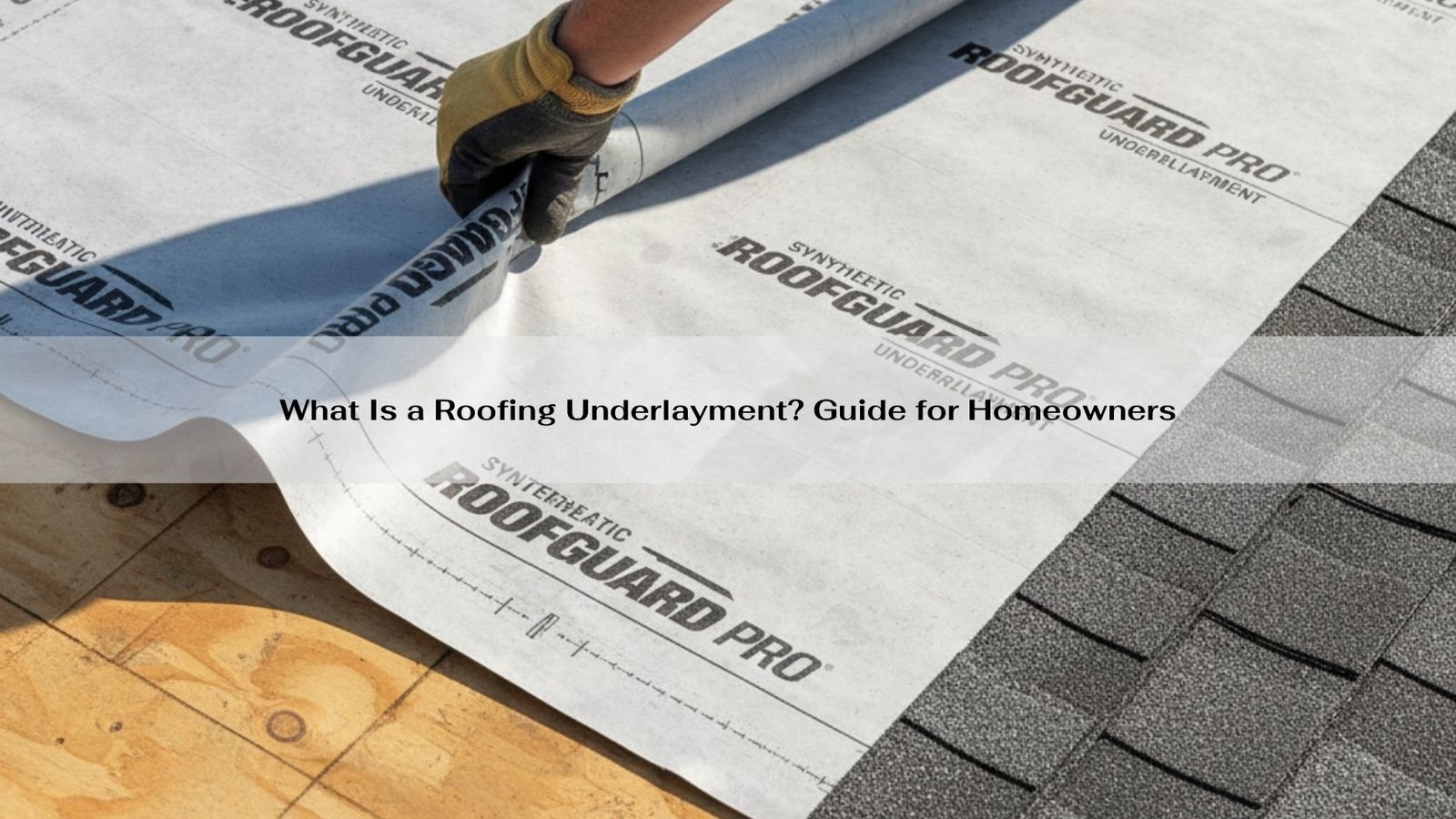
You might think your shingles do all the work, but there’s a hidden hero protecting your roof: the roofing underlayment. This often-overlooked layer sits beneath your shingles and plays a crucial role in keeping your home safe from water, ice, and wind damage. For homeowners, understanding underlayment can save thousands in repairs and give your roof a longer life.
Understanding Roofing Underlayment
A roofing underlayment is a protective layer installed between your roof deck and the shingles. It acts like a second line of defense if your shingles fail or get damaged.
There are two main types:
- Felt underlayment: Traditional, asphalt-saturated felt. It’s affordable and widely used.
- Synthetic underlayment: Newer, lighter, and more durable. Often lasts longer and handles weather extremes better.
As one homeowner shared on Angi, “I never realized my roof needed anything under the shingles until I had a leak.” Studies show that proper underlayment can extend a roof’s lifespan by 10–15 years HomeAdvisor.
Why Underlayment Is Important
Underlayment protects your home in multiple ways:
- Waterproofing: Stops leaks if shingles are damaged.
- Ice and wind protection: Essential in areas prone to severe weather.
- Secondary barrier: Gives your roof extra resilience.
Homeowners often underestimate the importance. A Reddit user in r/Roofing shared, “We skipped underlayment to save a few bucks and ended up replacing half the roof after a storm.”
Choosing the Right Underlayment
Selecting the right underlayment depends on your climate, budget, and roofing type:
- Felt: Cheaper, easy to install, good for moderate climates.
- Synthetic: More expensive, stronger, ideal for high wind or heavy rain areas.
For a detailed comparison, This Old House provides tips on selecting the best material for your roof.
Installation Tips for Homeowners
Professional installation is recommended to ensure effectiveness. Common mistakes include:
- Overlapping underlayment incorrectly.
- Using the wrong fasteners.
- Skipping areas around valleys and edges.
DIY installation is possible but carries risks. For technical details, Wikipedia offers a breakdown of roofing layers and installation considerations.
Conclusion
Roofing underlayment might not be visible, but it’s vital for protecting your home. It prevents leaks, extends roof life, and adds peace of mind. Homeowners should prioritize quality underlayment and professional installation to avoid costly repairs down the line.