
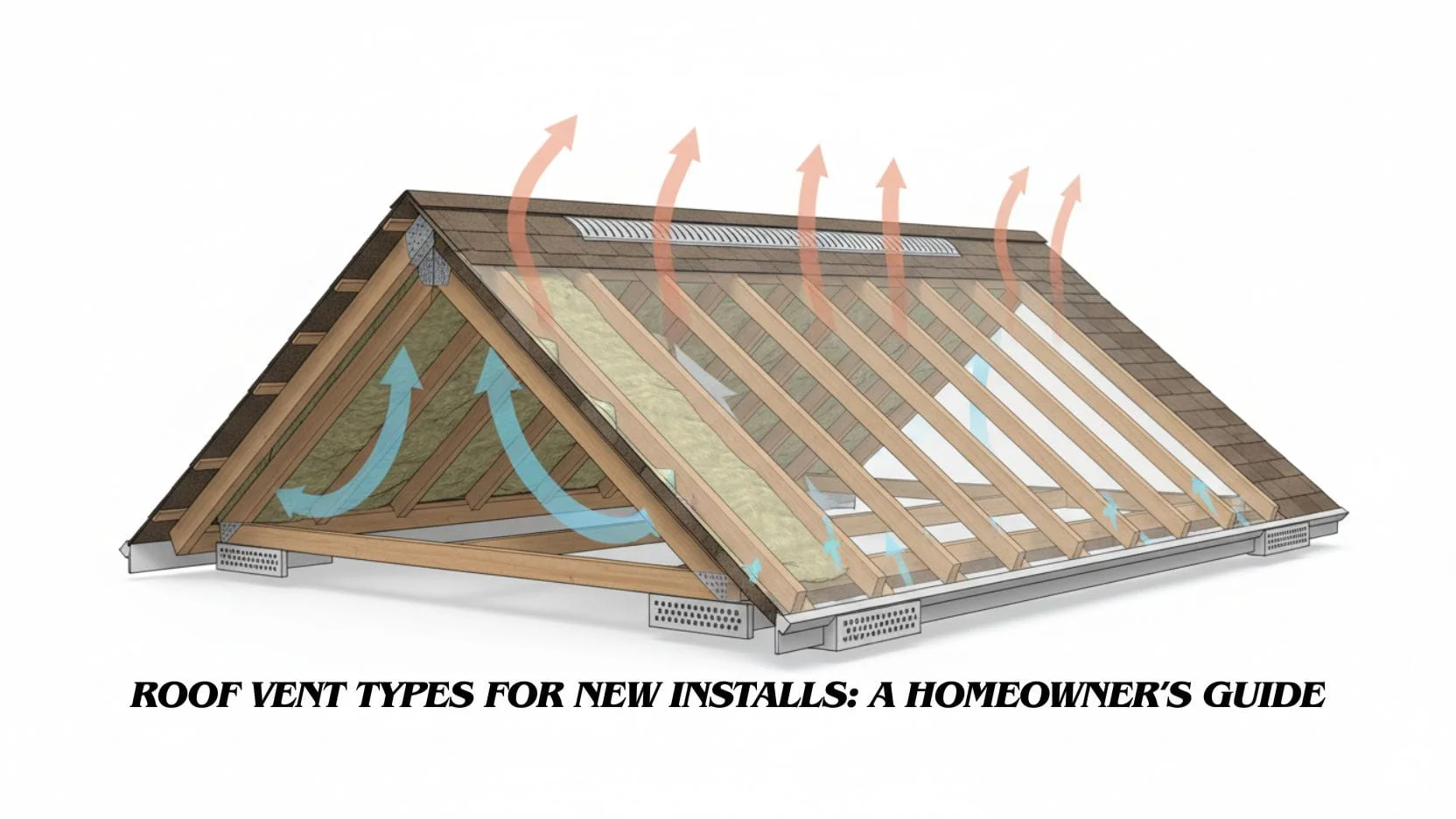
If you are getting a new roof, this is the best time to think about ventilation. Many homeowners focus only on shingles and colors. But airflow under your roof plays a big role in comfort, energy bills, and how long your roof lasts.
“I didn’t even know roof vents were a thing until my attic felt like a sauna,” one homeowner shared on a home improvement forum. That experience is common.
According to roof ventilation benefits explained by Wikipedia, proper airflow helps remove heat and moisture before they cause damage. This is especially important in hot or humid areas. A well-ventilated attic can feel 20–30 degrees cooler than a poorly ventilated one.
In this guide, we will walk through the main roof vent types for new installs, how they work, and how to choose the right option for your home.
Why Roof Ventilation Is Important for New Roof Installs
Heat and moisture build up in your attic every day. Cooking, showering, and even breathing add moisture to the air. When that air has nowhere to go, it can cause mold, wood damage, and higher cooling costs.
According to the attic ventilation guide from HomeAdvisor, good ventilation can help lower attic temperatures and reduce strain on your HVAC system. Many homeowners report lower energy bills after improving attic airflow.
A contractor on HomeAdvisor said it best: “Most homeowners don’t think about airflow, but it can add years to your roof and save money every month.”
When you are installing a new roof, it is much easier and more cost-effective to add or upgrade vents at the same time.
Ridge Vents | The Most Popular Choice for New Roofs
Ridge vents run along the peak of your roof. They allow warm air to escape naturally as it rises.
According to types of roof vents explained by Angi, ridge vents are one of the most efficient and low-profile options. They blend in with shingles and do not change the look of your home.
One homeowner wrote in an Angi review, “Our contractor suggested ridge vents, and the house feels cooler already. We noticed the difference within weeks.”
Ridge vents work best when paired with soffit vents, which allow cool air to enter from below.
Box Vents and Static Vents | Simple and Budget-Friendly
Box vents, also called static vents, are small openings placed near the top of the roof. They let hot air escape without using power or moving parts.
Many contractors recommend them for smaller roofs or tight budgets. On contractor reviews from Yelp, several roofers mention box vents as a reliable option when ridge vents are not possible.
A roofer on Yelp shared, “They’re basic, but they work. For certain roof designs, box vents are the cleanest solution.”
They may not move as much air as ridge vents, but they still improve airflow compared to having no vents at all.
Turbine Vents and Powered Vents | Extra Help Moving Hot Air
Turbine vents spin with the wind to pull hot air out of the attic. Powered vents use electricity or solar energy to do the same job.
Homeowners have mixed opinions. On homeowner discussions about roof vents on Reddit, some people love the fast results, while others worry about noise or maintenance.
One Reddit user wrote, “Our turbine vent spins like crazy on windy days, and the attic stays much cooler.” Another added, “Powered vents helped, but make sure they’re installed right.”
These vents can be helpful in very hot climates or homes with poor natural airflow.
Soffit Vents | The Intake Side of the System
Exhaust vents let hot air out, but you also need fresh air coming in. That is where soffit vents come in. They are placed under the eaves of your roof.
According to the attic ventilation guide from HomeAdvisor, balanced intake and exhaust is key. Without intake vents, exhaust vents cannot do their job well.
A contractor explained, “Think of it like breathing. You need air in and air out. One without the other doesn’t work.”
When installing a new roof, adding soffit vents is easier and cleaner than trying to add them later.
Choosing the Right Roof Vent for Your Home
Every home is different. The best vent type depends on your roof design, climate, and budget.
Here are a few things to consider:
- Roof shape and size
- Local weather conditions
- Attic space and insulation
- Your long-term energy goals
As one homeowner said, “Every house is different, so one-size-fits-all doesn’t work.”
Talking with a local roofing professional and checking reviews on platforms like Angi and HomeAdvisor can help you make a smart choice.
Conclusion: The Best Roof Vent Types for New Installs
When it comes to roof vent types for new installs, ridge vents, box vents, turbine vents, powered vents, and soffit vents all have their place. The right setup improves comfort, protects your roof, and can lower energy costs.
Installing the right vents during a new roof project is easier and more affordable than fixing problems later. With the right balance of intake and exhaust, your home will stay cooler, drier, and healthier.
As one contractor put it, “Good ventilation is cheap insurance for your roof.”