
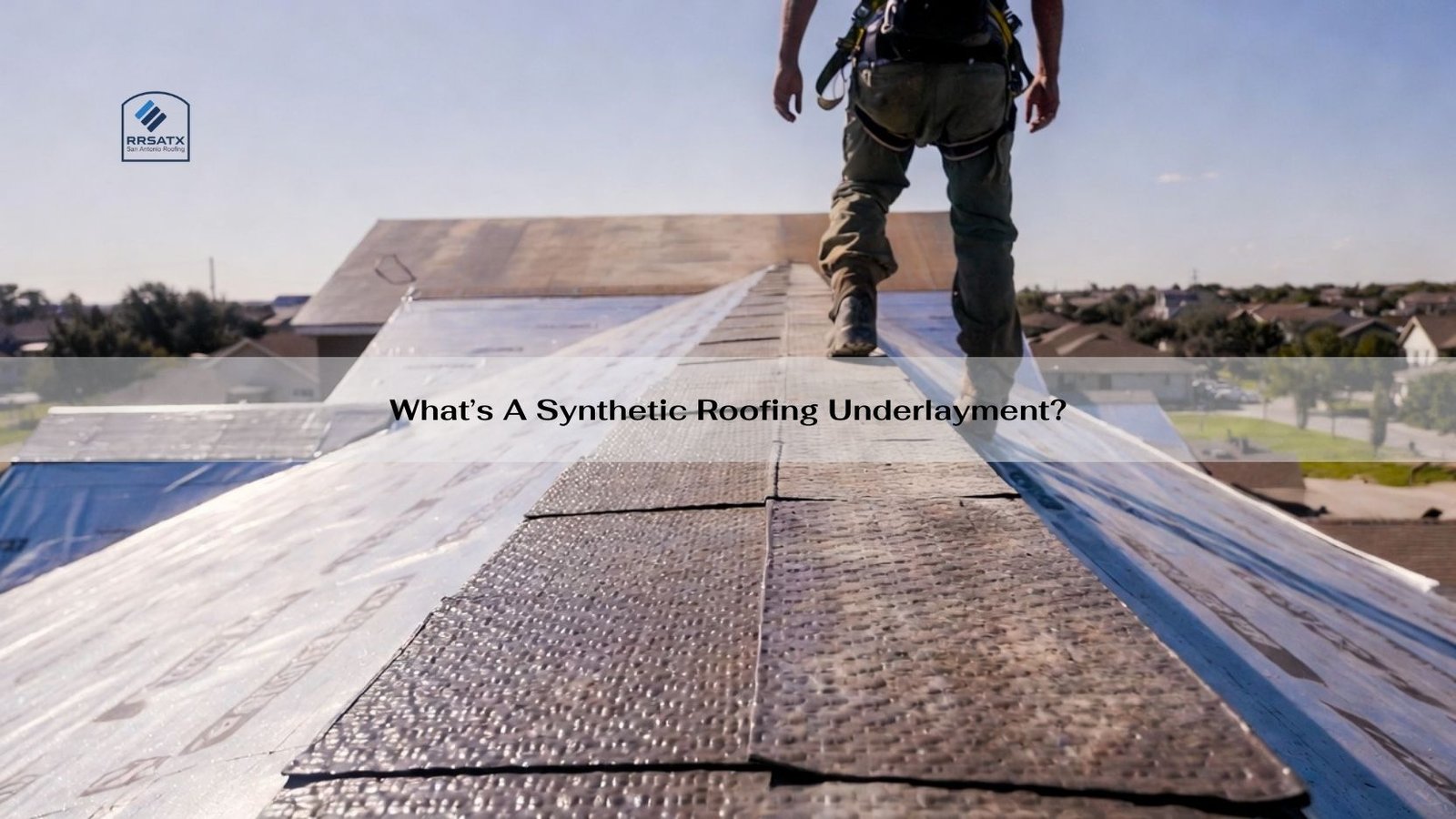
With over a decade working alongside roofing contractors and inspecting residential and commercial roofing systems in Texas, I’ve seen firsthand how underlayment choice affects long-term roof performance. A synthetic roofing underlayment is a high-performance, engineered material installed beneath shingles or metal panels to provide a water-resistant, tear-resistant barrier that protects the roof deck.
In simple terms: it’s a modern upgrade to traditional felt paper, designed to be stronger, lighter, and more durable especially in extreme weather like we see in San Antonio, TX.
What Does Synthetic Roofing Underlayment Do?
Synthetic underlayment acts as a secondary water barrier between your roof covering and the wood deck.
If shingles blow off or heavy rain penetrates the surface, this layer:
- Prevents water intrusion
- Reduces risk of mold and rot
- Adds temporary weather protection during installation
- Improves roof longevity
How Synthetic Underlayment Protects Roofs
Unlike traditional asphalt felt, synthetic underlayment is made from woven or spun polypropylene or polyethylene. That structure provides:
- Higher tear resistance
- Better UV resistance
- Superior traction for installers
- Longer exposure times before roofing material is installed
Key takeaway: In storm-prone areas like San Antonio, synthetic underlayment adds critical protection during sudden wind and hail events.
Synthetic VS Felt Roofing Underlayment: What’s The Difference?
Synthetic underlayment is lighter, stronger, and longer-lasting than traditional asphalt felt.
Here’s a direct comparison:
| Feature | Synthetic Underlayment | Asphalt Felt |
| Weight | Lightweight | Heavy |
| Tear Resistance | High | Moderate |
| UV Exposure | 2–6 months (varies) | 30–60 days |
| Lifespan | 20–40+ years | 12–20 years |
| Cost | Higher upfront | Lower upfront |
| Performance in Heat | Excellent | Can dry out/crack |
Synthetic Underlayment VS Asphalt Felt In Texas Heat
In San Antonio’s triple-digit summers:
- Felt can wrinkle and degrade faster.
- Synthetic materials resist thermal breakdown.
- Moisture absorption is lower with synthetic.
For extreme weather conditions, synthetic consistently outperforms felt.
What Are The Benefits Of Synthetic Roofing Underlayment?
The main benefits are durability, weather resistance, and long-term performance.
1. Durability Of Synthetic Underlayment
- Resists tearing during installation
- Handles high winds better
- Less prone to cracking over time
2. Waterproofing With Synthetic Underlayment
While not fully waterproof (unless it’s a peel-and-stick product), most synthetic options are:
- Highly water-resistant
- Non-absorbing
- Mold-resistant
3. Fire Resistance
Some synthetic underlayments carry:
- Class A fire ratings
- Improved flame spread resistance
4. Lightweight And Safer Installation
- Easier to carry onto steep roofs
- Better traction reduces slip hazards
5. Longevity
How long does synthetic underlayment last?
Most quality products last 20 to 40 years, depending on manufacturer and climate.
What Are The Types Of Roofing Underlayment?
There are three primary types of roofing underlayment.
1. Asphalt-Saturated Felt
- Traditional
- Budget-friendly
- Less durable
2. Synthetic Underlayment
- Polypropylene or polyethylene-based
- Stronger and lighter
- Ideal for modern roofing systems
3. Rubberized Asphalt (Peel-and-Stick)
- Self-adhering
- Fully waterproof
- Used in valleys and leak-prone areas
Key takeaway: For most San Antonio homes and businesses, synthetic underlayment offers the best balance of cost and performance.
What Is The Cost Of Synthetic Roofing Underlayment?
Synthetic underlayment costs more upfront but delivers better long-term value.
Typical material costs (not including labor):
- Felt: $0.05–$0.15 per sq ft
- Synthetic: $0.15–$0.30 per sq ft
For an average 2,000 sq ft roof:
- Felt: $100–$300
- Synthetic: $300–$600
Labor costs are often similar.
In high-wind regions like San Antonio, the added protection often offsets the modest increase in material cost.
How Is Synthetic Roofing Underlayment Installed?
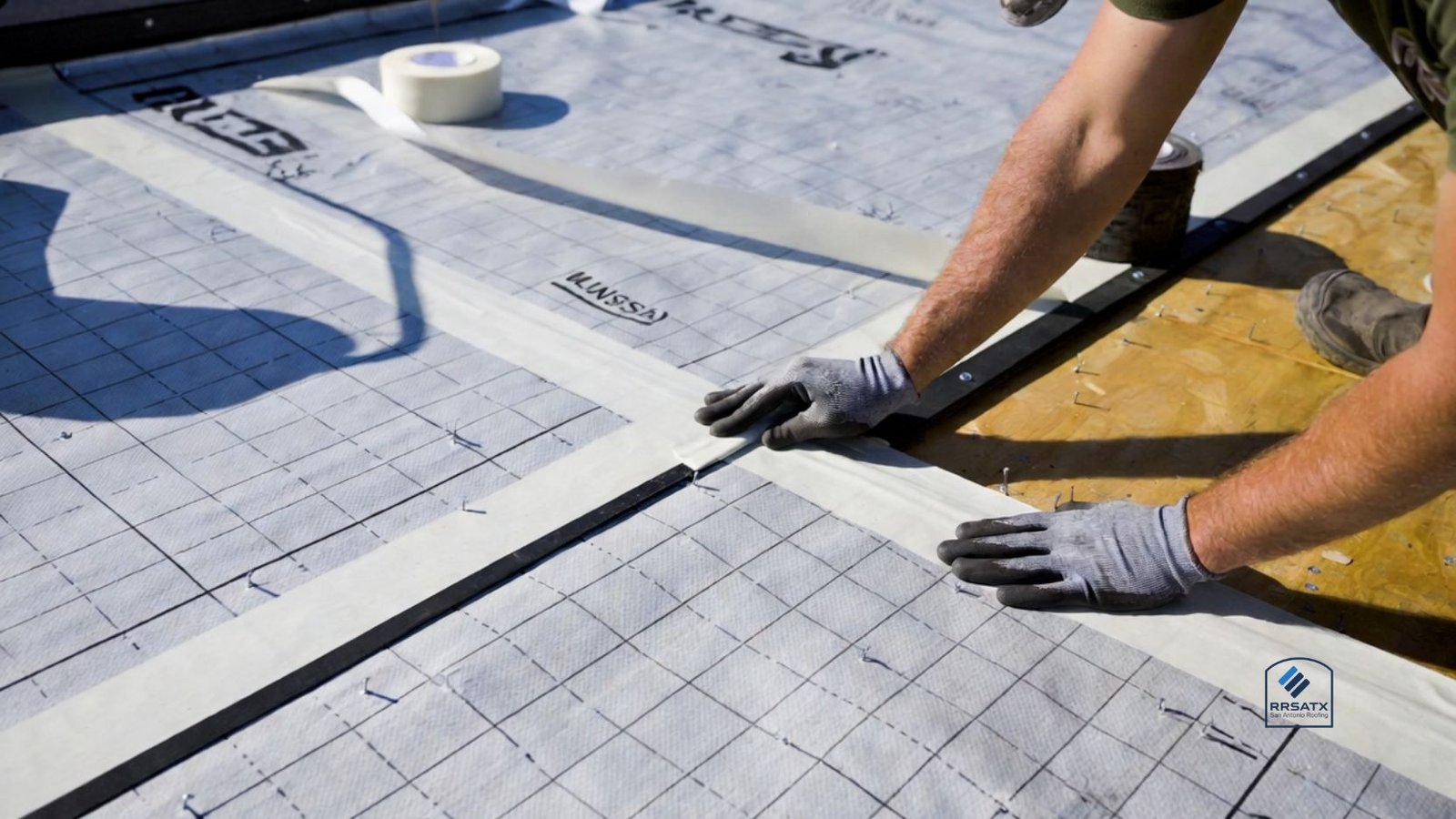
Synthetic underlayment is rolled out horizontally across the roof deck and secured with cap nails or staples.
Installing Synthetic Roofing Underlayment: Key Steps
- Clean and inspect the roof deck.
- Roll underlayment parallel to the eaves.
- Overlap seams (usually 4 inches).
- Secure with plastic-capped fasteners.
- Tape seams if required by manufacturer.
Roofing Underlayment Installation Tips
- Follow local building codes (San Antonio follows IRC standards).
- Ensure proper overlap for wind uplift resistance.
- Avoid overexposure beyond manufacturer limits.
- Use high-quality fasteners.
Incorrect installation can compromise even the best synthetic underlayment.
Is Synthetic Underlayment Better For Shingle Or Metal Roofs?
Synthetic underlayment works well for both shingle and metal roofs.
Synthetic Underlayment For Shingle Roofs
- Improves wind resistance
- Reduces moisture infiltration
- Extends shingle lifespan
Synthetic Underlayment For Metal Roofs
- Prevents condensation issues
- Provides smooth substrate
- Enhances long-term corrosion protection
In commercial properties around San Antonio, synthetic is especially common under standing seam metal systems.
How Do You Choose The Right Underlayment For Your Roof?
The right underlayment depends on roof type, climate, and budget.
Consider:
- Roof slope
- Local weather patterns
- Fire code requirements
- Roofing material (shingle, tile, metal)
- Exposure time before final roofing install
For extreme weather conditions like hail, high winds, and heat in South Texas, synthetic underlayment offers stronger long-term protection.
FAQs
Is Synthetic Roofing Underlayment Waterproof?
Most synthetic underlayments are water-resistant, not fully waterproof. Peel-and-stick versions provide full waterproofing.
How Long Does Synthetic Underlayment Last?
High-quality products can last 20 to 40 years, depending on exposure and installation quality.
Is Synthetic Underlayment Worth The Extra Cost?
In hot, storm-prone climates like San Antonio, yes. The added durability and weather resistance typically justify the modest increase in cost.