
As a roofing consultant who has worked with homeowners and small commercial property owners across Texas for over a decade, I’ve reviewed dozens of roofs that failed inspection due to avoidable code issues. In San Antonio, roofing must comply with the International Residential Code (IRC) as adopted by the city, plus local amendments.
To check if your roofing is up to code in San Antonio, you must verify permits, confirm proper installation (underlayment, flashing, ventilation), check wind and slope requirements, and ensure it meets current IRC and local building regulations.
Below is a step-by-step, practical guide you can follow.
What Are The Roofing Code Requirements In San Antonio, TX?
San Antonio follows the International Residential Code (IRC) with local amendments, requiring proper permits, approved materials, wind resistance standards, and inspections.
Key roofing code requirements include:
- Valid roofing permit (for replacement or structural changes)
- Approved roofing materials per IRC
- Proper underlayment installation
- Wind uplift resistance compliance
- Flashing at penetrations and roof transitions
- Adequate attic ventilation
- Correct roof pitch for selected material
For commercial buildings, the International Building Code (IBC) applies.
Key takeaway: If no permit was pulled, your roof may automatically fail code compliance even if it looks fine.
How Do I Check If A Roofing Permit Was Pulled?
Start by verifying whether a permit was issued through the City of San Antonio’s Development Services Department.
You can:
- Search your address in the city’s online permit portal.
- Call Development Services directly.
- Request inspection records.
If your contractor replaced a full roof without a permit, that’s a red flag.
Roofing permits and codes matter because they trigger official inspections that verify code compliance.
How To Inspect A Roof For Code Compliance (Basic Checklist)
You can visually check for common roofing code violations, but structural or technical issues require a licensed inspector.
Here’s a practical roof inspection checklist for code compliance:
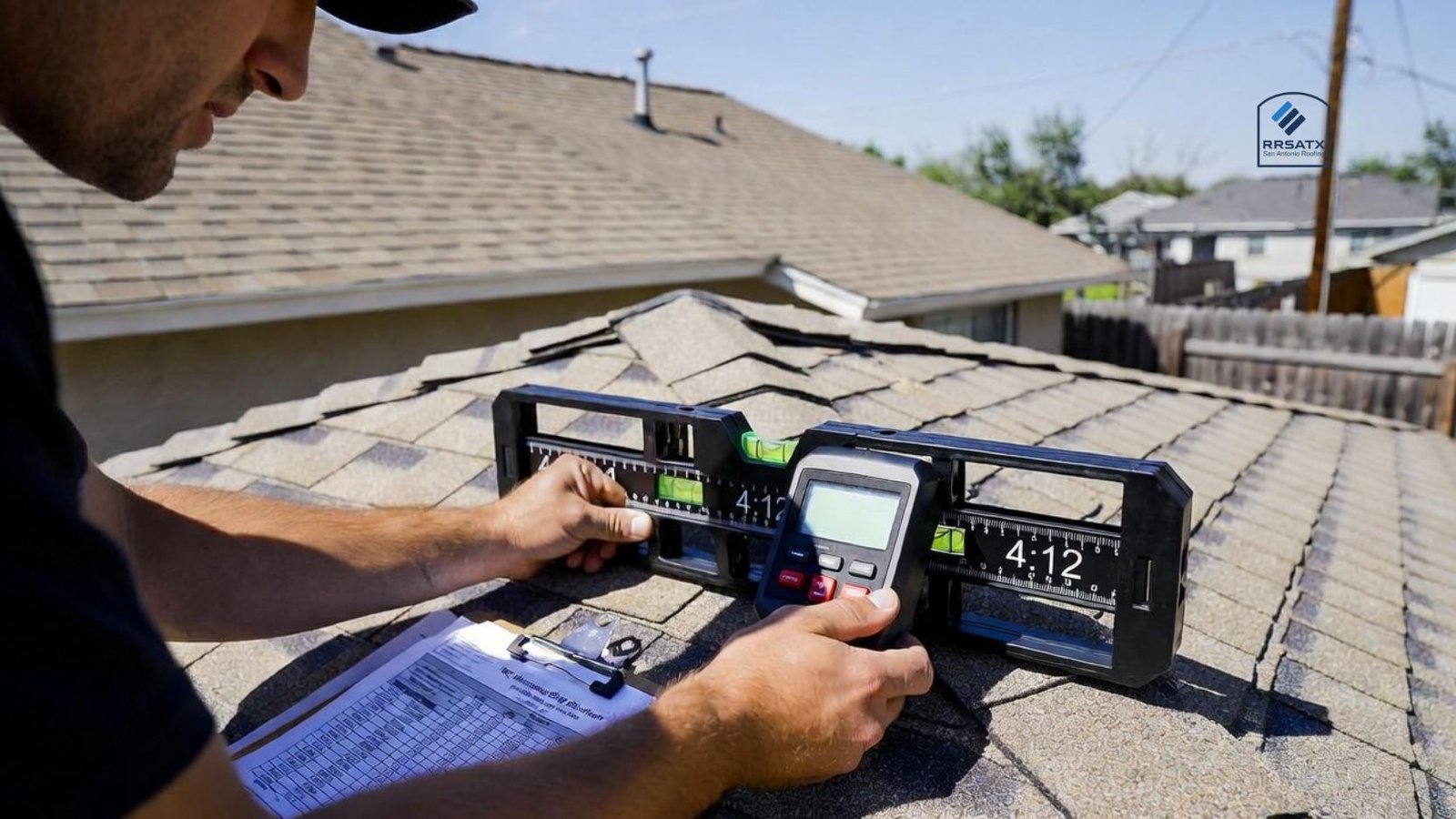
1. Check The Roof Pitch
Different materials require minimum slopes.
| Roofing Material | Minimum Slope (Typical IRC Standard) |
| Asphalt shingles | 2:12 with underlayment upgrade |
| Metal panels | 3:12 (varies by system) |
| TPO (flat roofs) | 1/4:12 minimum slope |
If shingles are installed on too low a pitch, that’s a violation.
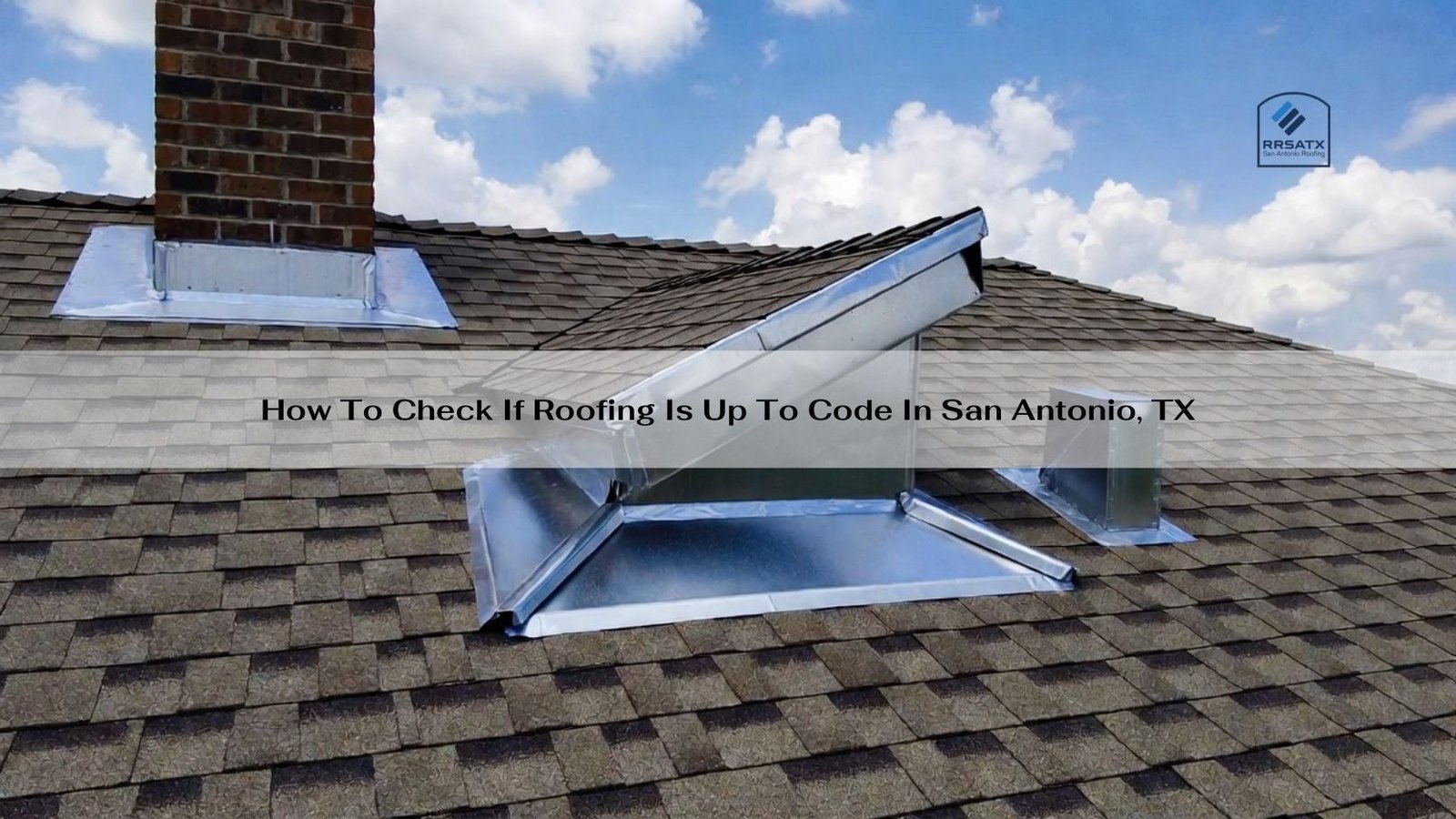
2. Look At Flashing Installation
Flashing should be installed:
- Around chimneys
- At valleys
- Along roof-to-wall transitions
- Around vents and skylights
Improper or missing flashing is one of the most common roofing code violations.
3. Check Ventilation
IRC requires balanced attic ventilation.
Look for:
- Ridge vents or box vents
- Soffit intake vents
- No blocked airflow
Poor ventilation may not immediately fail inspection but it can violate code and void warranties.
4. Inspect Underlayment And Drip Edge
At roof edges:
- Drip edge should be installed at eaves and rakes.
- Underlayment should overlap properly.
- Ice and water shield may be required in specific applications.
Missing drip edge is a frequent issue in older San Antonio homes.
What Are Common Roofing Code Violations In San Antonio?
The most common violations involve permits, improper fastening, and incorrect installation techniques.
Here are the top issues inspectors flag:
- No permit pulled
- Incorrect nail placement on shingles
- Too few fasteners for wind zones
- Missing flashing
- Inadequate roof decking thickness
- Re-roofing over too many existing layers
San Antonio is in a wind-prone region. Wind uplift requirements are strictly enforced.
How To Read Roofing Code Specifications Without Getting Overwhelmed
Focus on three areas: slope, fastening, and ventilation.
When reviewing building code for residential roofing:
- Check material-specific requirements.
- Review fastening patterns.
- Confirm local amendments from San Antonio.
If you’re unsure, search:
“City of San Antonio roofing regulations”
or consult Development Services documentation.
Key takeaway: You don’t need to read the entire IRC only the sections relevant to your roofing type.
Should I Hire A Roofing Inspector For Code Compliance?
Yes, especially before selling, buying, or renovating a property.
A licensed roofing inspector can:
- Identify hidden violations
- Provide written compliance reports
- Help correct issues before city inspection
- Verify roofing inspections for new construction
This is particularly important for:
- ADUs
- Commercial flat roofs
- Insurance claims
- Home renovations
The cost of an inspection is usually far lower than correcting major violations later.
How To Ensure Your Roof Meets Building Codes During Renovations
Always confirm code requirements before starting work not after.
If you’re renovating:
- Confirm permit requirements
- Review roof code guidelines for home renovations
- Verify structural load limits
- Ensure contractor licensing
Never assume older standards still apply. Codes update regularly.
How To Fix Roof Code Violations
Fixes depend on the severity of the violation.
Common solutions include:
- Adding proper flashing
- Re-nailing shingles to meet wind code
- Installing drip edge
- Improving ventilation
- Removing extra roofing layers
In serious cases, partial tear-off may be required.
Key takeaway: The sooner violations are corrected, the lower the repair cost.
FAQs
Do I Need A Permit To Replace My Roof In San Antonio?
Yes. Most full roof replacements require a permit and inspection from the city.
Can I Fail A Home Sale Because Of Roof Code Violations?
Yes. Lenders or buyers may require repairs if the roof doesn’t meet building codes.
How Do I Check Roof Pitch For Code Compliance?
Measure the rise over 12 inches of run (e.g., 4:12 slope). Compare it to the minimum slope required for your roofing material.