
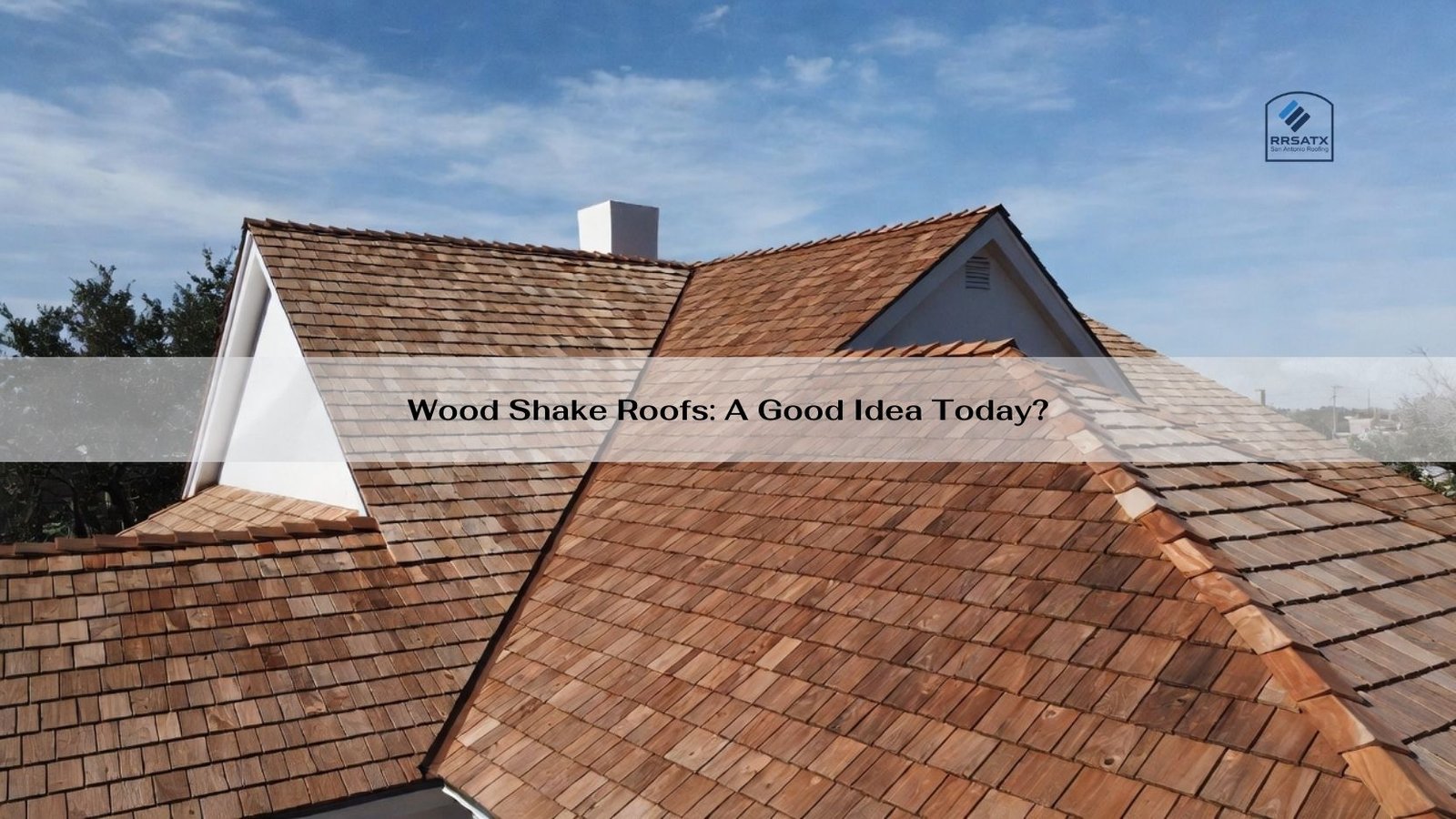
With decades of hands-on roofing experience in San Antonio, we’ve replaced aging cedar shake roofs, repaired storm-damaged wood shingles, and installed modern alternatives across South Texas. Our climate intense heat, UV exposure, heavy rain, and occasional hail creates specific challenges for natural wood roofing.
Wood shake roofs can still be a good idea today for homeowners who prioritize appearance and are willing to commit to regular maintenance but they are not the most durable or low-maintenance option in Texas.
Here’s what you should consider before choosing one.
What Are Wood Shake Roofs, And How Are They Different From Shingles?
Wood shakes are split from logs for a thicker, textured look, while wood shingles are machine-cut and smoother.
Key differences:
- Shakes: Thicker, more rustic, uneven surface
- Shingles: Thinner, uniform appearance
- Both commonly made from cedar
Shakes provide a natural, high-end appearance often used in historic or custom homes.
Key takeaway: Wood shakes offer character and curb appeal, but require more upkeep than asphalt or metal roofing.
Are Wood Shake Roofs Durable In Texas Weather?
Wood shake roofs can last 20–30 years in Texas, but climate exposure significantly affects lifespan.
San Antonio conditions include:
- Prolonged summer heat
- Strong UV radiation
- Heavy rainstorms
- Occasional hail
Heat dries wood fibers over time, increasing the risk of cracking or splitting. Moisture can also lead to warping or rot if ventilation is poor.
Compared to other materials:
| Roofing Material | Average Lifespan in Texas | Maintenance Level |
| Wood Shake | 20–30 years | High |
| Architectural Shingles | 25–30 years | Moderate |
| Metal Roofing | 40–50 years | Low |
Do Wood Shake Roofs Require More Maintenance?
Yes. Wood shake roofs require consistent maintenance to prevent rot, mold, and insect damage.
Maintenance typically includes:
- Annual inspections
- Removing debris buildup
- Treating for moss or mildew
- Replacing split or warped shakes
- Ensuring proper attic ventilation
Without maintenance, small issues can turn into widespread deterioration.
Key takeaway: Wood shakes are not “install and forget” roofing systems.
Are Wood Shake Roofs Safe From Fire And Storms?
Modern treated wood shakes can meet fire-resistance standards, but untreated shakes pose higher risk.
Important considerations:
- Fire-rated shakes are chemically treated
- Insurance companies may charge higher premiums
- Wind uplift can loosen poorly fastened shakes
- Hail can crack or split exposed wood surfaces
In storm-prone areas, impact-resistant shingles or metal roofing often perform better.
Are Wood Shake Roofs Energy Efficient?
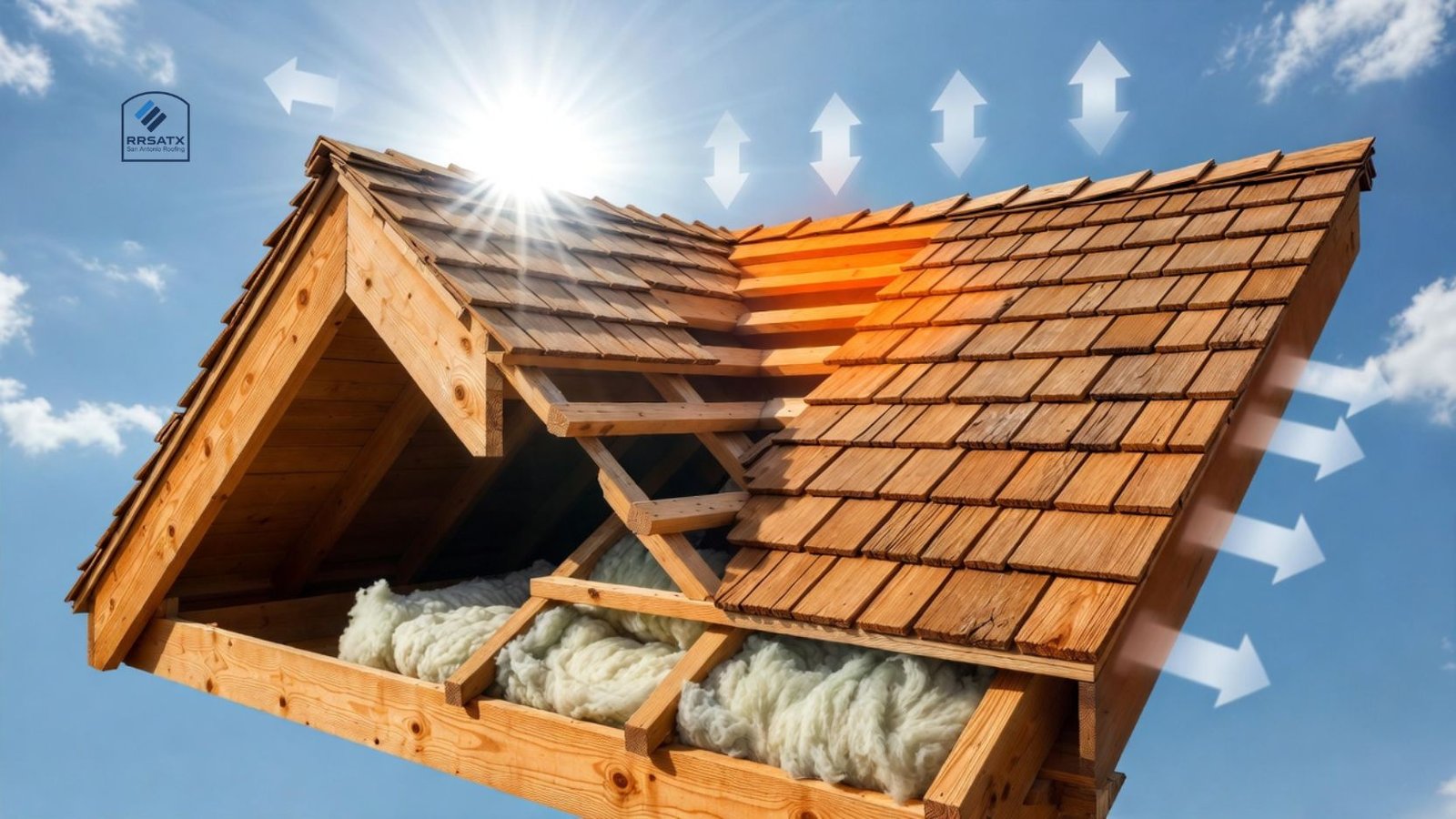
Wood has natural insulating properties, but ventilation matters more than material alone.
Benefits include:
- Natural thermal resistance
- Air gaps between shakes improve airflow
However, reflective metal or cool-roof shingles often outperform wood in reducing heat absorption in Texas summers.
Are Wood Shake Roofs More Expensive?
Yes, wood shake installation is typically more expensive than asphalt shingles.
Factors influencing cost:
- Higher material pricing
- Skilled labor requirements
- Ongoing maintenance expenses
In many cases, homeowners choose synthetic cedar alternatives to achieve the same look with lower maintenance.
Are Synthetic Cedar Shakes A Better Alternative?
For many homeowners, synthetic shakes provide similar aesthetics with improved durability.
Advantages of synthetic options:
- Resistant to rot and insects
- Lower maintenance
- Often impact-rated
- Longer warranties
They can be a practical compromise for property owners who want the appearance of wood without the upkeep.
Should You Install A Wood Shake Roof In San Antonio Today?
Wood shake roofs are best suited for homeowners prioritizing architectural style over minimal maintenance.
They may be a good fit if you:
- Own a historic or custom home
- Are prepared for regular upkeep
- Value natural materials
- Have proper attic ventilation
They may not be ideal if you:
- Want low maintenance
- Prefer maximum storm resistance
- Are focused on long-term durability
For properties near 4324 Monterey St or 318 E Nakoma Dr in San Antonio, a professional inspection can determine whether a wood shake replacement or alternative material makes more sense.
FAQs
How Long Do Wood Shake Roofs Last In Texas?
Most last 20–30 years, depending on maintenance and climate exposure.
Do Wood Shake Roofs Increase Home Value?
They can enhance curb appeal, but buyers may factor in maintenance costs.
Are Wood Shake Roofs Prone To Leaks?
They can develop leaks if shakes split, warp, or are improperly installed.