
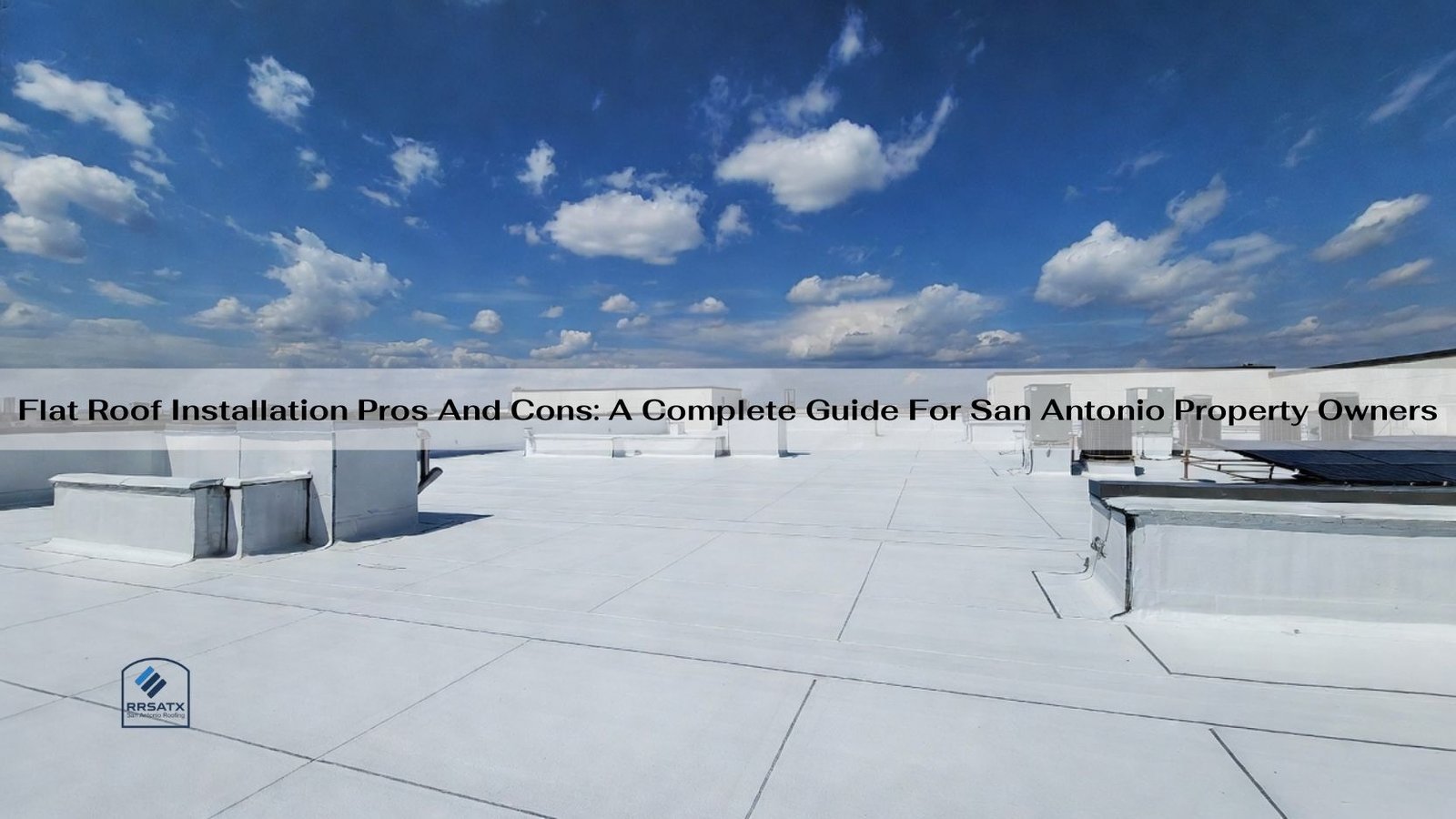
With decades of experience installing and repairing flat roofing systems across San Antonio, our team has worked on residential additions, commercial buildings, and multi-family properties. We’ve seen how climate, drainage design, and material choice directly impact flat roof performance in South Texas heat and storms.
The main pros of flat roof installation are lower upfront cost, easier maintenance access, and usable rooftop space. The main cons are drainage challenges, shorter lifespan (depending on material), and higher leak risk if installed improperly.
If you own a home or commercial property near 4324 Monterey St or 318 E Nakoma Dr in San Antonio, here’s what you need to know before choosing a flat roof system.
What Are The Advantages Of Flat Roof Installation?
Flat roofs are cost-effective, accessible, and ideal for commercial buildings and modern homes.
1. Lower Installation Cost
Flat roofs require fewer materials and less labor compared to steep-slope systems.
- Less framing complexity
- Faster installation timeline
- Reduced material waste
This makes them attractive for budget-conscious property owners.
2. Easier Maintenance And Repairs
Flat roofs are safer and easier to walk on during inspections.
This simplifies:
- HVAC servicing
- Leak detection
- Gutter and drain maintenance
- Storm damage assessment
Key takeaway: Accessibility lowers long-term service costs.
3. Usable Rooftop Space
Flat roofs can support:
- Solar panel systems
- Rooftop HVAC units
- Outdoor patio spaces (in residential builds)
- Commercial equipment
For urban properties, this adds functional value.
What Are The Disadvantages Of Flat Roof Installation?
Flat roofs require proper drainage and regular maintenance to prevent water pooling and leaks.
1. Drainage Challenges
Unlike sloped roofs, flat systems rely on internal drains or slight pitch for water flow.
Poor drainage can cause:
- Ponding water
- Membrane deterioration
- Structural stress
In San Antonio’s heavy rainstorms, proper slope design is critical.
2. Shorter Lifespan (Depending On Material)
Not all flat roofing systems perform equally.
| Flat Roofing Type | Average Lifespan | Best For |
| Modified Bitumen | 15–20 years | Small buildings |
| TPO | 20–30 years | Commercial properties |
| EPDM | 20–25 years | Large roof areas |
| PVC | 20–30 years | High-heat climates |
Metal or tile pitched roofs may last longer, but modern flat membranes perform well when maintained.
3. Higher Leak Risk If Installed Poorly
Flat roofs are more sensitive to installation errors.
Common failure points:
- Seam welding defects (TPO/PVC)
- Flashing mistakes
- Improper drain placement
- Weak edge details
Key takeaway: Installation quality matters more than material alone.
Are Flat Roofs A Good Choice In San Antonio?
Yes, flat roofs work well in San Antonio when properly designed for drainage and heat resistance.
South Texas presents unique challenges:
- High UV exposure
- Intense summer heat
- Sudden heavy rainfall
- Occasional hail
Reflective materials like TPO and PVC help reduce heat absorption, improving energy efficiency in commercial buildings.
Is A Flat Roof Better For Commercial Properties?
Flat roofing systems are often the preferred option for commercial buildings.
Reasons include:
- Easier placement of HVAC units
- Large uninterrupted roof areas
- Lower structural load requirements
- Simpler future modifications
For warehouses, retail spaces, and apartment complexes, flat roofing is often the most practical system.
What Maintenance Does A Flat Roof Require?
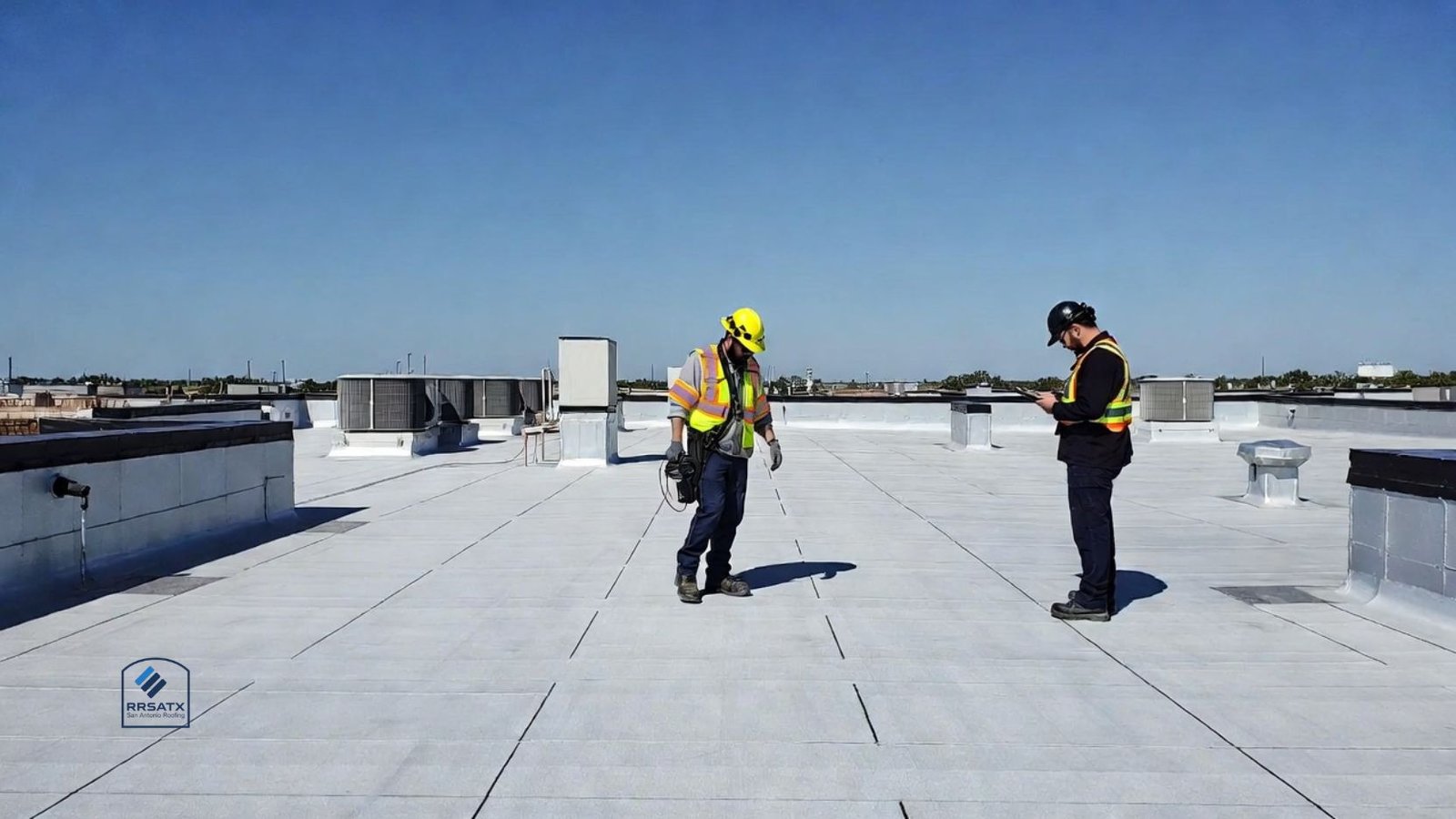
Flat roofs need routine inspections at least twice per year and after major storms.
Maintenance includes:
- Clearing debris from drains
- Inspecting seams and flashing
- Checking for membrane punctures
- Monitoring ponding areas
Property owners filing insurance claims benefit from documented maintenance records.
How Much Does Flat Roof Installation Cost In Texas?
Costs vary based on material and square footage.
Typical commercial pricing ranges:
- Modified Bitumen: $4–$8 per sq. ft.
- TPO: $5–$10 per sq. ft.
- PVC: $6–$12 per sq. ft.
Final cost depends on:
- Tear-off requirements
- Insulation upgrades
- Roof deck condition
- Drainage modifications
A professional inspection provides accurate estimates.
FAQs
Do Flat Roofs Leak More Than Sloped Roofs?
Flat roofs are not inherently prone to leaks, but poor drainage and improper installation increase risk.
How Long Does A Flat Roof Last In Texas?
Most modern flat roofing systems last 20–30 years with proper maintenance.
Can You Put Shingles On A Flat Roof?
No. Asphalt shingles require slope to shed water. Flat roofs need membrane-based systems like TPO, PVC, or modified bitumen.