
At RRSATX: San Antonio Roofing Company, our team inspects residential and commercial roofs across Bexar County every week from older homes near 4324 Monterey St to commercial properties off Nakoma Dr. Working in South Texas heat, hail, and high winds has shown us one clear pattern: most major roof failures start as small, preventable issues.
The answer: The 5 signs you need a roof inspection in San Antonio are water stains inside your home, missing or damaged shingles, visible storm damage, a roof older than 15–20 years, and sagging or soft spots. If you notice any of these, schedule a professional inspection promptly.
Below, each sign is explained in detail.
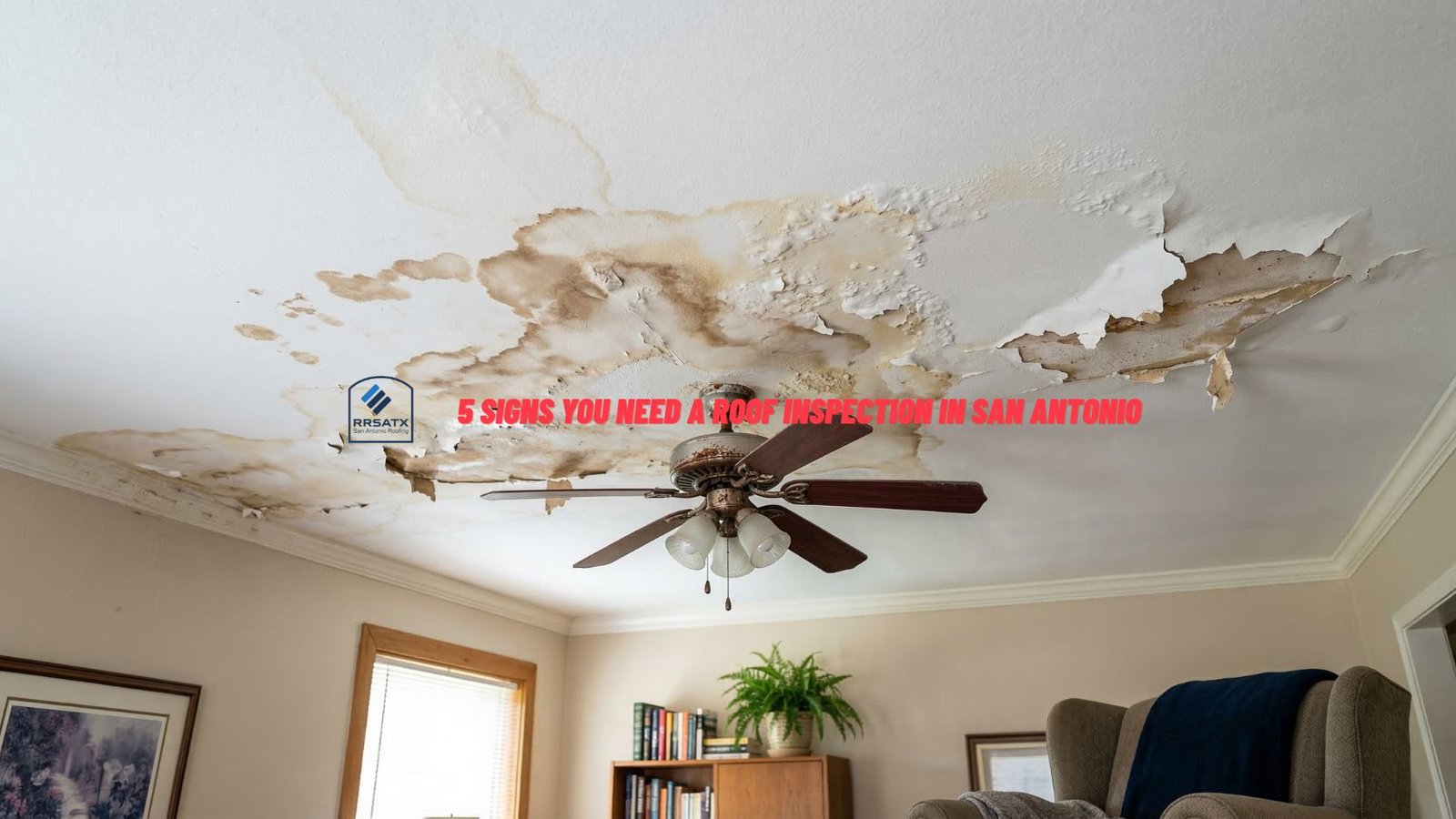
1. Are Water Stains On Your Ceiling A Sign Of Roof Damage?
Yes. Interior water stains are among the clearest signs that your roof may be compromised.
Brown spots, peeling paint, or bubbling drywall usually indicate moisture intrusion. In San Antonio, heavy rain can cause:
- Cracked flashing
- Lifted shingles
- Failing sealant around vents
- Nail pops
Even a slow leak can damage insulation, framing, and ceilings over time.
Key takeaway: If you see ceiling stains, assume the problem started above the roofline.
2. Do Missing Or Curling Shingles Mean You Need A Roof Inspection?
Yes. Missing, cracked, or curling shingles expose your roof deck to water.
Shingles protect the underlayment beneath them. When they fail, your roof system becomes vulnerable.
Common causes in South Texas include:
- Wind uplift during thunderstorms
- UV breakdown from extreme heat
- Natural aging (15+ years)
From the ground, you might see uneven lines or dark patches. Up close, damage is often worse.
Early inspection prevents deeper structural decay.
3. Should You Get A Roof Inspection After A Hail Or Wind Storm In San Antonio?
Yes. Storm damage is often invisible without a trained assessment.
San Antonio regularly experiences hail events and strong wind gusts. Damage may include:
- Shingle bruising
- Granule loss
- Loosened flashing
- Lifted ridge caps
Hail impacts weaken shingles even if they don’t immediately leak.
If left unaddressed, water intrusion can occur months later.
For insurance purposes, early documentation is critical.
4. Is A 15–20-Year-Old Roof At Higher Risk In Texas Heat?
Yes. Roofs older than 15 years in Texas are more vulnerable to failure.
High UV exposure and thermal expansion shorten the lifespan of materials.
Typical lifespans in San Antonio:
| Roofing Type | Average Lifespan |
| 3-Tab Shingles | 15–20 years |
| Architectural Shingles | 20–30 years |
| Metal Roofing | 40–50+ years |
If your roof is approaching these limits, an inspection helps you plan proactively rather than react to leaks.
Aging roofs should be evaluated annually.
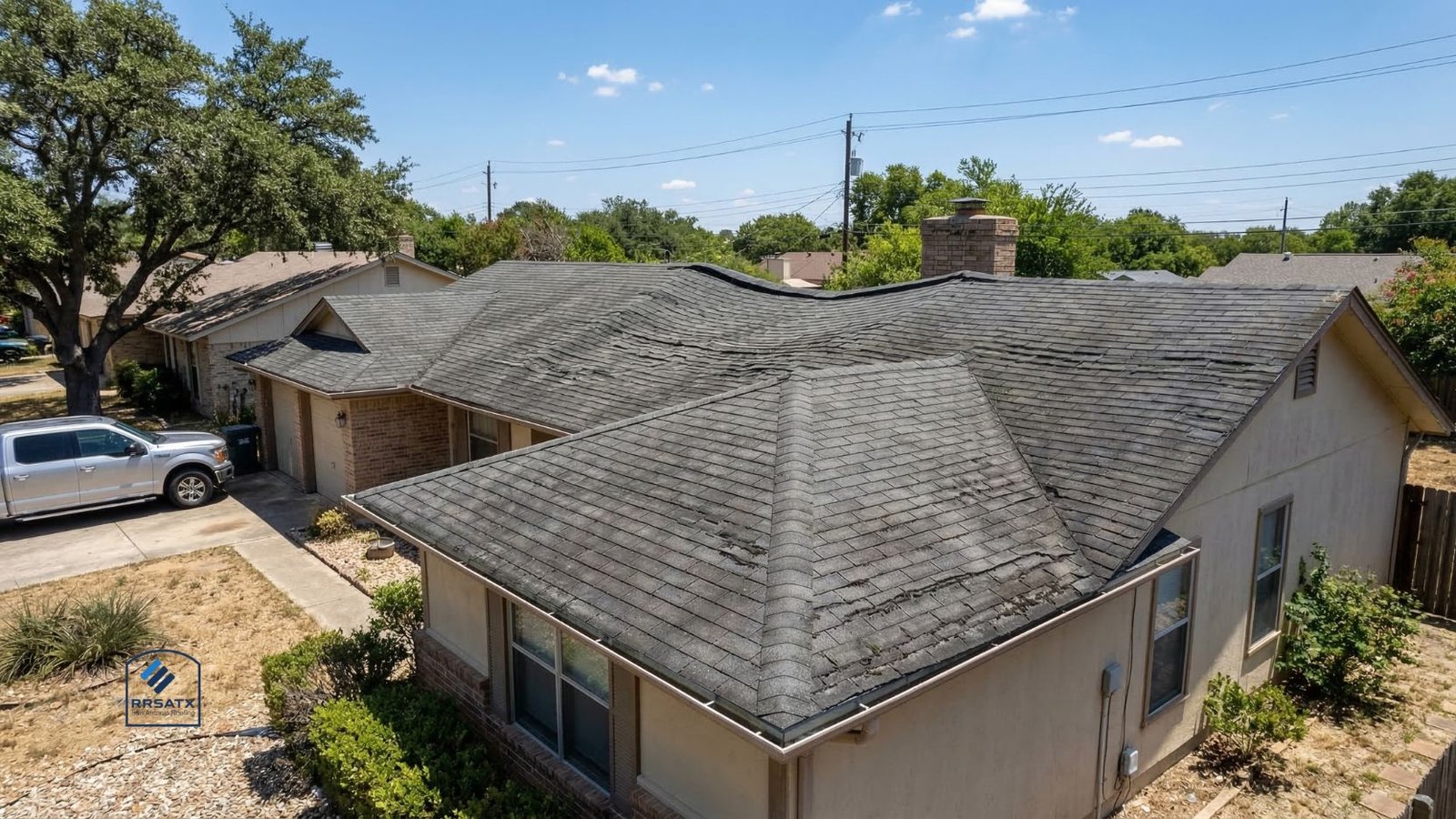
5. Does A Sagging Or Soft Roof Area Mean Structural Issues?
Yes. Sagging or soft spots can indicate decking or structural damage.
You may notice:
- Dips along roof lines
- Uneven surfaces
- Soft feeling when walked on (for flat roofs)
These issues may result from:
- Long-term moisture intrusion
- Rotting decking
- Inadequate ventilation
Structural issues require immediate professional assessment.
This is not a wait-and-see situation.
When Should San Antonio Homeowners Schedule A Roof Inspection?
You should schedule an inspection:
- After hail or severe wind
- If you notice interior leaks
- When buying or selling property
- If your roof is 15+ years old
- Before filing an insurance claim
Commercial property owners should consider inspections twice per year, especially for flat or low-slope systems common in San Antonio.
Why Roof Inspections Matter For Budget-Conscious Property Owners
A roof inspection is a risk-management decision.
It helps you:
- Avoid emergency repairs
- Document storm damage
- Extend roof lifespan
- Protect property value
Preventive maintenance is almost always less expensive than reactive repair.
FAQs
How Long Does A Roof Inspection Take?
Most residential inspections take 45 to 90 minutes, depending on size and complexity.
Can A Roof Have Damage Without Leaking?
Yes. Many roofs sustain hail or wind damage months before leaks appear.
How Often Should I Inspect My Commercial Roof?
Commercial roofs should be inspected at least twice per year and after major storms.
Conclusion
Recognizing the 5 signs you need a roof inspection in San Antonio can prevent major structural damage and unexpected expenses. In a climate with intense sun, hail, and heavy rainfall, proactive inspections protect both residential and commercial properties.
If you notice any of these warning signs, scheduling a professional evaluation is a practical next step.