
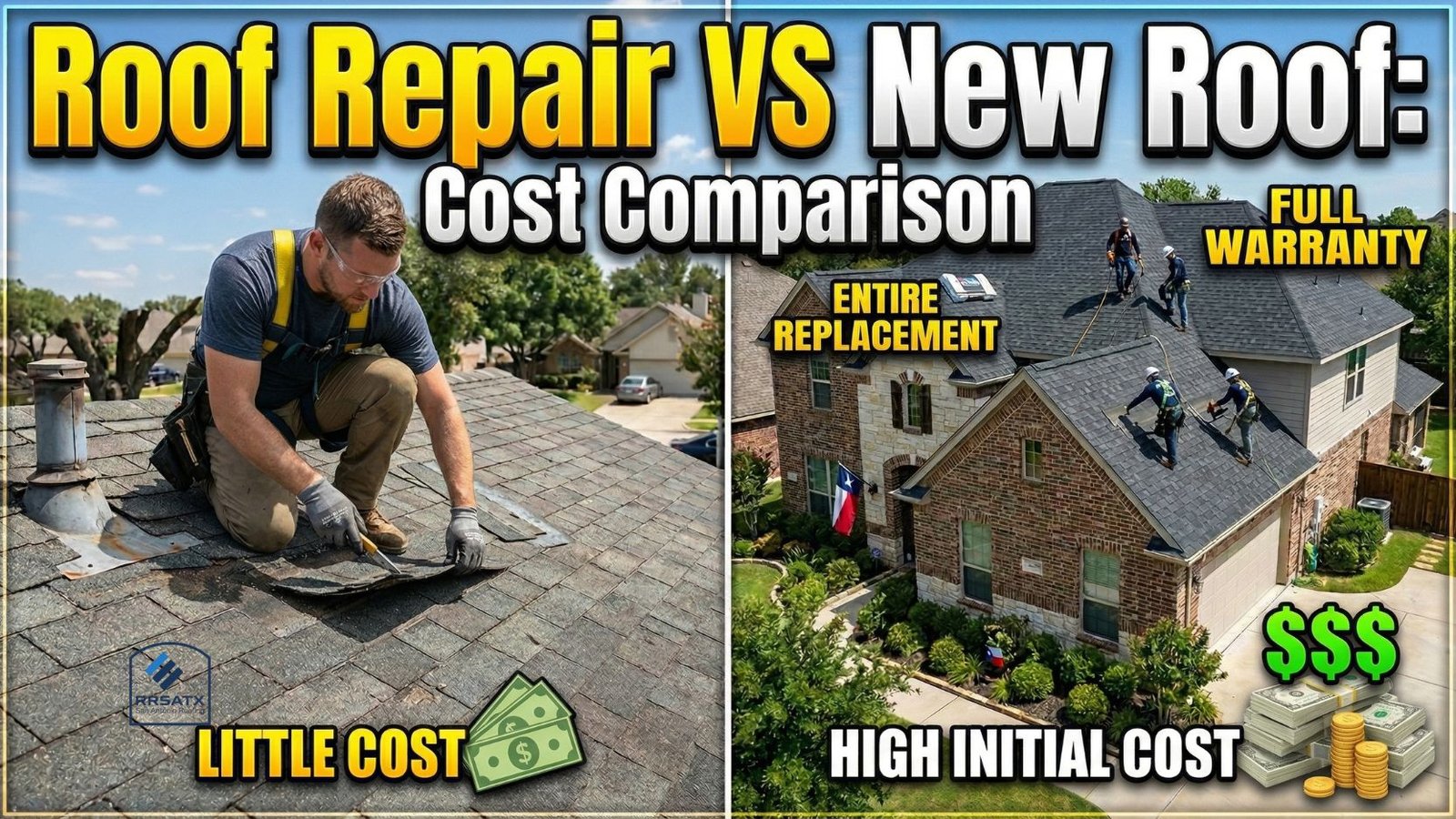
Property owners in San Antonio often face the same question after a leak or storm: Is it cheaper to repair the roof or install a new one? In most cases, roof repair costs less upfront, but a new roof can cost less over time if the existing roof is old, leaking in multiple areas, or has widespread storm damage.
This guide explains the real cost comparison in practical terms. It is written for homeowners, commercial owners, and buyers or sellers who need a clear answer based on roof age, damage level, and long-term value.
Is Roof Repair Cheaper Than A New Roof?
Yes, roof repair is almost always cheaper upfront than a new roof. But that does not automatically make it the better financial decision.
A repair is usually the lower-cost option when:
- The damage is limited to one section
- The roof is still in good overall shape
- The leak source is clear and easy to fix
- The roof still has useful life left
A new roof may be the better value when:
- Repairs keep happening
- Water damage is spreading
- The roof is 15 to 20+ years old
- Storm damage affects large areas
- Matching old materials is difficult
Key takeaway: The cheaper option today is not always the lower-cost option over the next few years.
What Does Roof Repair Usually Cost Compared To Roof Replacement?
Roof repair costs vary based on the problem, while roof replacement is a much larger full-system expense. The right comparison is repair cost today versus expected future repair cost plus risk.
Here is a simple comparison table:
| Roofing Option | Typical Cost Pattern | Best Use Case | Main Risk |
| Roof Repair | Lower upfront cost | Isolated damage on a newer roof | May need more repairs later |
| New Roof | Higher upfront cost | Older roof or widespread failure | Larger initial investment |
What increases repair cost:
- Hidden decking damage
- Leak tracing complexity
- Flashing replacement
- Emergency storm response
- Material matching issues
What increases the cost of a new roof:
- Roof size
- Material type
- Tear-off layers
- Deck repairs
- Steep slopes or complex roof design
If the roof has already been repaired several times, another repair may only delay a bigger expense.
When Is Roof Repair The Smart Financial Choice?
Roof repair is the smart choice when it solves the actual problem without likely repeat costs. That usually means the issue is isolated, recent, and not tied to overall roof failure.
Repair usually makes financial sense when:
- A few shingles blew off in one storm
- Flashing failed around a vent or chimney
- A small leak is caught early
- The rest of the roof is structurally sound
- The roof is well below the end of its lifespan
For a home in San Antonio, this can be common after a single wind event or minor localised damage.
Signs The Repair Is Likely Worth The Money
- No sagging areas
- No repeated leak history
- No widespread granule loss
- No major interior moisture damage
- No large hail impact across multiple slopes
Key takeaway: Repair is a good investment when it restores performance, not when it only buys a little time.
When Is A New Roof More Cost-Effective?
A new roof becomes more cost-effective when the current roof is near the end of its life or failing in multiple areas.
This often happens when:
- Leak repairs keep returning
- The underlayment is ageing
- Shingle deterioration is widespread
- Storm damage affects most of the roof
- Interior ceiling or attic damage is getting worse
In San Antonio, roof systems face strong sun, summer heat, hail, and sudden heavy rain. Those conditions can shorten the useful life of asphalt roofing and expose weaknesses quickly.
A New Roof May Save Money Over Time By:
- Reducing repeat repair bills
- Lowering the chance of interior water damage
- Improving inspection results for sale or purchase
- Supporting insurance documentation after a major storm loss
- Avoiding patchwork that does not match older materials
For many older roofs, replacement is not just about appearance. It is about stopping a cycle of recurring costs.
How Does Roof Age Affect The Cost Comparison?
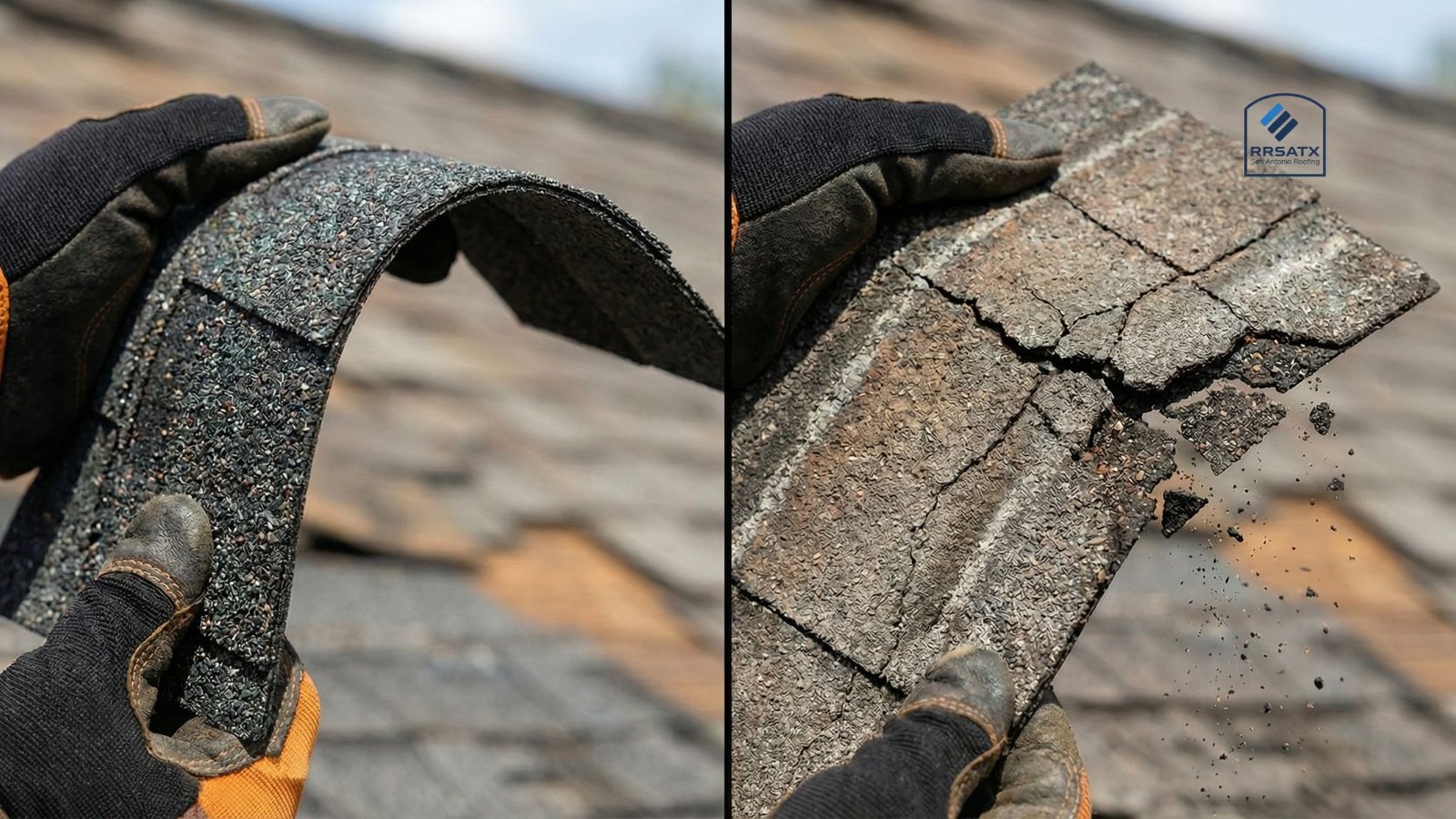
Roof age is one of the biggest cost factors. A repair on a newer roof is often a good value. A repair on an ageing roof is more likely to be temporary.
General rule:
- Newer roof + isolated issue = repair often makes sense
- Older roof + multiple problems = replacement often makes more sense
Why age matters:
- Materials become brittle over time
- Repairs can disturb the surrounding older shingles
- Matching colour and product lines becomes harder
- Older systems may have hidden moisture damage
For many asphalt shingle roofs, the 15- to 20-year range is where repair decisions become less straightforward. At that point, cost comparison should include likely future repairs, not just current damage.
Should You Repair Or Replace After Storm Damage In San Antonio?
After storm damage, the best decision depends on how much of the roof was affected. A small damaged section may be repairable. Broad hail or wind damage across several slopes may justify a new roof.
Storm damage can include:
- Lifted shingles
- Creased tabs
- Dented flashing or vents
- Granule loss
- Water entry around penetrations
This matters for homes and commercial buildings near both of your San Antonio service points:
- 4324 Monterey St, San Antonio, TX 78237
- 318 E Nakoma Dr #210, San Antonio, TX 78216
A proper inspection should document:
- Surface damage
- Hidden moisture
- Attic signs of intrusion
- Deck condition
- Repairability versus full-system failure
Key takeaway: After a storm, cost comparison should include insurance, documentation, and the risk of hidden damage.
What Is The Best Choice For Budget-Conscious Homeowners?
If your budget is tight, choose the option that prevents repeated spending. A lower bill today is only helpful if it actually solves the issue.
Budget-conscious owners should ask:
- Will this repair last?
- Is the roof old enough that more failures are likely?
- Is there hidden damage below the surface?
- Will another leak cause interior repair costs?
Sometimes a focused repair is the most responsible choice. Other times, stretching to a new roof avoids paying twice.
How Can You Compare Roof Repair VS New Roof Costs The Right Way?
The best way to compare costs is to look at total ownership cost, not just contractor price.
Use this decision framework:
Compare These 5 Factors.
- Roof age
- Damage spread
- Repair history
- Interior damage risk
- Expected remaining roof life
If most signs point to a limited issue on a solid roof, repair is likely the lower-cost solution. If most signs point to an ageing roof with repeated failures, a new roof often delivers better value.
FAQs
Is It Cheaper To Keep Repairing A Roof?
Not always. If repairs are frequent or the roof is old, repeated repair bills can cost more than replacement over time.
How Do I Know If My Roof Is Too Old To Repair?
Age alone does not decide it, but it matters a lot. If an older roof has leaks in multiple areas or storm damage across several slopes, replacement is often the better investment.
Can A Roof Inspection Help With Cost Comparison?
Yes. A roof inspection helps determine whether the damage is isolated or widespread, a key factor in comparing repair versus replacement costs.