
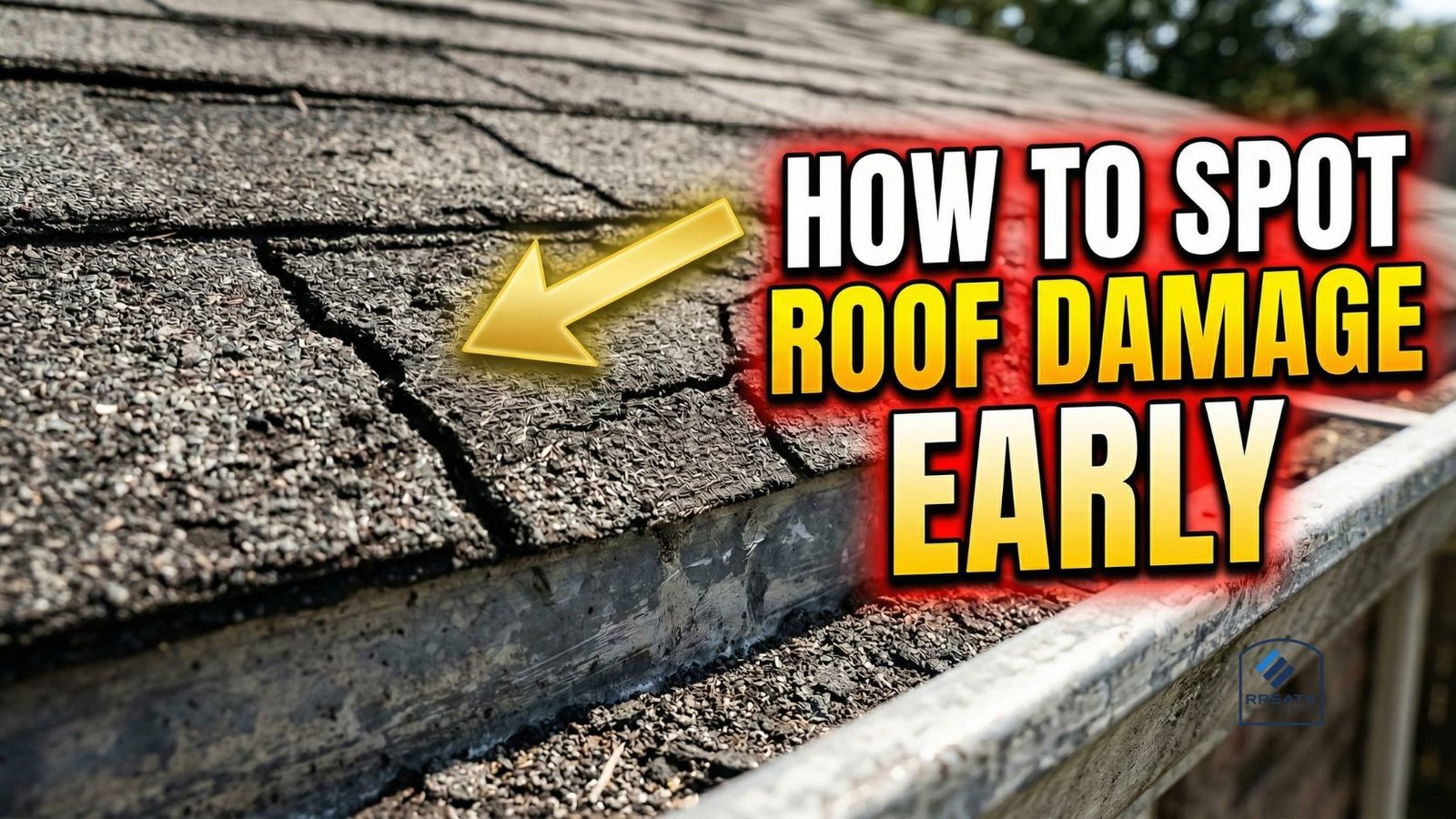
If you want to spot roof damage early, look for missing shingles, cracked flashing, water stains, sagging areas, granules in gutters, and signs of moisture in the attic. For property owners in San Antonio, catching these issues early matters because heat, hail, wind, and heavy rain can turn a small roofing problem into a costly repair fast.
At RRSATX: San Antonio Roofing Company, our team works with homeowners and commercial property owners dealing with roof leaks, storm damage, and aging roofing systems in San Antonio. Based on the roofing concerns common in South Texas, the earliest signs of damage usually show up around shingles, roof penetrations, flashing, drainage areas, and attic spaces.
What Are The First Signs Of Roof Damage?
The first signs of roof damage are usually small exterior changes or indoor moisture clues. They may not seem urgent at first, but they often point to a larger issue developing underneath the surface.
Common early warning signs include:
- Missing, cracked, or curling shingles
- Dark water stains on ceilings or walls
- Granules collecting in gutters
- Loose or damaged flashing
- Soft spots or sagging roof sections
- Mold, mildew, or musty attic smells
- Light coming through the attic
- Standing water on flat roofs
Key takeaway: Roof damage often starts small and hidden, not dramatic and obvious.
How Can Homeowners Spot Roof Damage From The Ground?
You can often spot early roof damage from the ground by doing a careful visual check after storms or during seasonal weather changes. This is one of the safest ways to catch obvious issues without climbing on the roof.
Look for:
- Uneven roof lines or sagging
- Shingles that appear lifted or out of place
- Bald spots where granules are missing
- Debris buildup in valleys
- Damaged metal flashing near vents or chimneys
- Pieces of roofing material in the yard
If you see any of these signs, the next step is a professional roof inspection. A ground-level check is helpful, but it will not reveal every hidden problem.
What Does Roof Damage Look Like Inside The House?
Interior signs are often the first clue that your roof has a problem. In many cases, homeowners notice damage indoors before they see anything on the roof itself.
Watch for:
- Brown or yellow ceiling stains
- Peeling paint near the ceiling
- Bubbling drywall
- Wet insulation in the attic
- Mold growth near vents or corners
- Dripping during or after rain
These signs may point to a roof leak, but they can also involve ventilation or flashing problems. The important thing is to act quickly before trapped moisture causes wood rot or mold spread.
Why Does Roof Damage Get Worse So Quickly In San Antonio?
Roof damage gets worse quickly in San Antonio because local roofs are exposed to intense sun, hail, wind, and sudden storms. These conditions break down roofing materials over time and make weak spots fail faster.
In South Texas, common causes of early roof wear include:
- UV exposure that dries and weakens shingles
- Hail impacts that bruise shingles or damage membranes
- Wind that lifts shingles and loosens flashing
- Heavy rain that finds gaps around penetrations
- Poor drainage on flat or low-slope roofs
For older roofs, even one storm can push a worn system past the point where a simple repair is enough.
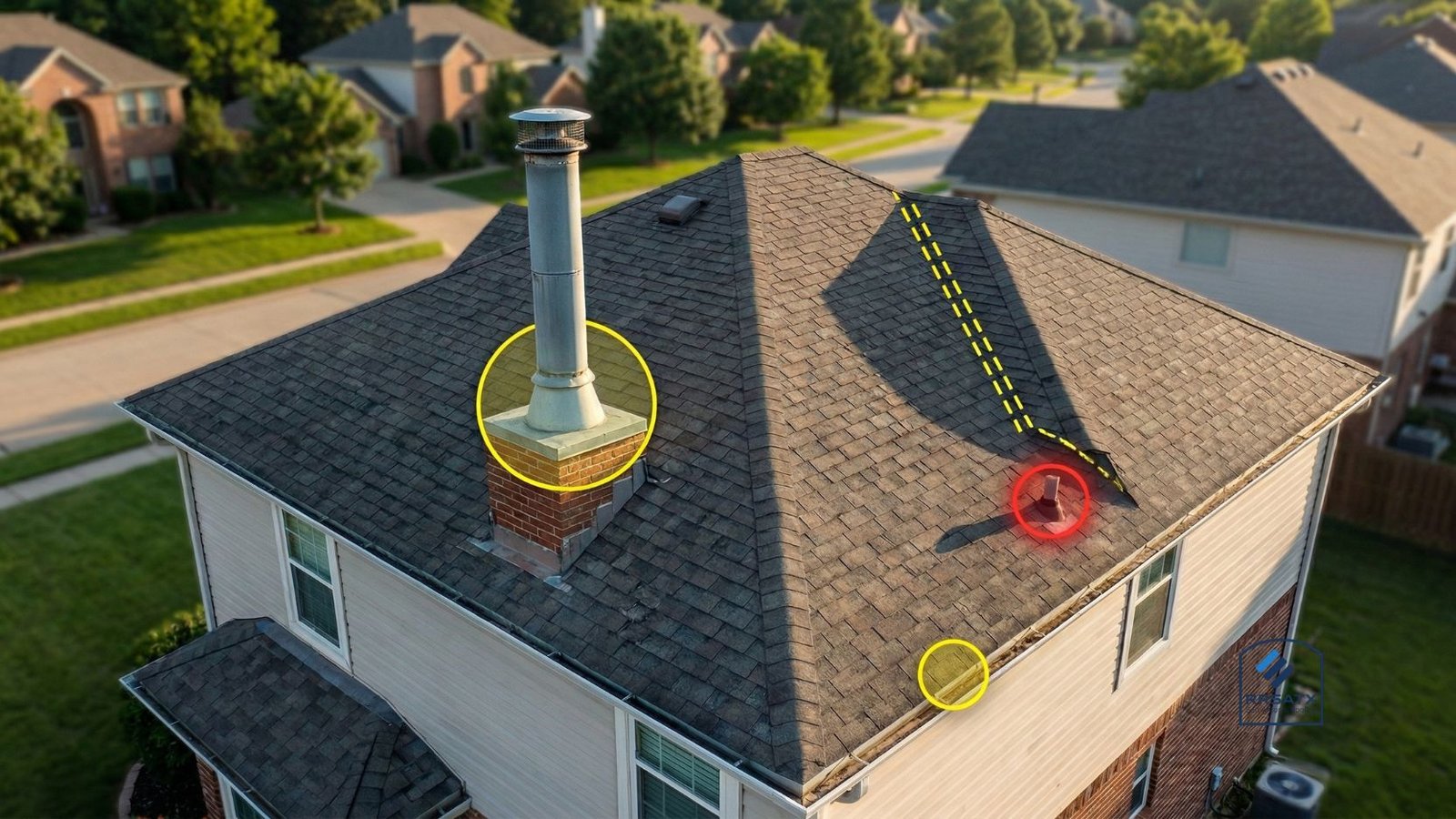
Which Parts Of The Roof Usually Fail First?
The first parts of a roof to fail are usually the areas where water can enter or materials are stressed the most. These are the spots that should get the closest attention during an inspection.
High-Risk Roof Areas
| Roof Area | Why It Fails Early | What to Look For |
| Flashing | Metal can loosen or corrode | Gaps, rust, lifted edges |
| Valleys | Water flows heavily here | Debris, worn shingles, leaks |
| Chimneys and vents | Penetrations create weak points | Cracks, sealant failure |
| Shingle edges | Wind exposure is highest | Curling, missing tabs |
| Flat roof drains | Poor drainage causes ponding | Standing water, soft spots |
Key takeaway: Roof penetrations, edges, valleys, and drainage areas are the most common early trouble spots.
Should You Inspect Your Roof After Every Storm?
Yes, you should inspect your roof after a major storm, especially if your area had hail, strong wind, or heavy rain. Even when damage is not obvious, storms can loosen materials and create small openings that lead to leaks later.
After a storm, check for:
- New ceiling stains
- Shingle pieces in the yard
- Dented gutters or metal vents
- Clogged downspouts from granule loss
- Water around attic beams or insulation
This matters for homeowners and commercial building owners alike, especially when insurance documentation may be needed.
When Should Roof Damage Be Repaired Instead Of Monitored?
Roof damage should be repaired right away if it involves active leaks, missing materials, flashing failure, sagging, or storm-related openings. Waiting usually increases the cost.
You should not delay action if you notice:
- Water entering the home
- Large areas of shingle loss
- Visible storm damage
- Rotting wood or soft decking
- Repeated leaks in the same area
If the roof is older and has multiple problem areas, a replacement may make more sense than ongoing patch repairs.
How Often Should A Roof Be Inspected?
Most roofs should be inspected at least once a year and after major storms. For roofs that are 15 to 20 years old, more frequent checks are often a smart move.
A professional inspection is especially useful when:
- Buying or selling a property
- Filing an insurance claim
- Managing an older roof
- Checking a commercial building
- Planning repairs before storm season
Regular inspections help property owners catch small issues before they become interior damage.
FAQs
Can A Roof Be Damaged Without Leaking Right Away?
Yes. A roof can have storm damage, lifted shingles, or flashing problems without an active leak at first. Water may not enter until the next heavy rain.
Is It Safe To Inspect A Roof Yourself?
A ground-level inspection is usually safe, but walking on a roof is risky, especially after storms. If you suspect damage, a professional inspection is the safer option.
What Is The Most Common Early Sign Of Roof Damage?
For many homes, the most common early sign is damaged shingles or water stains on ceilings. On flat roofs, ponding water is also a common warning sign.