
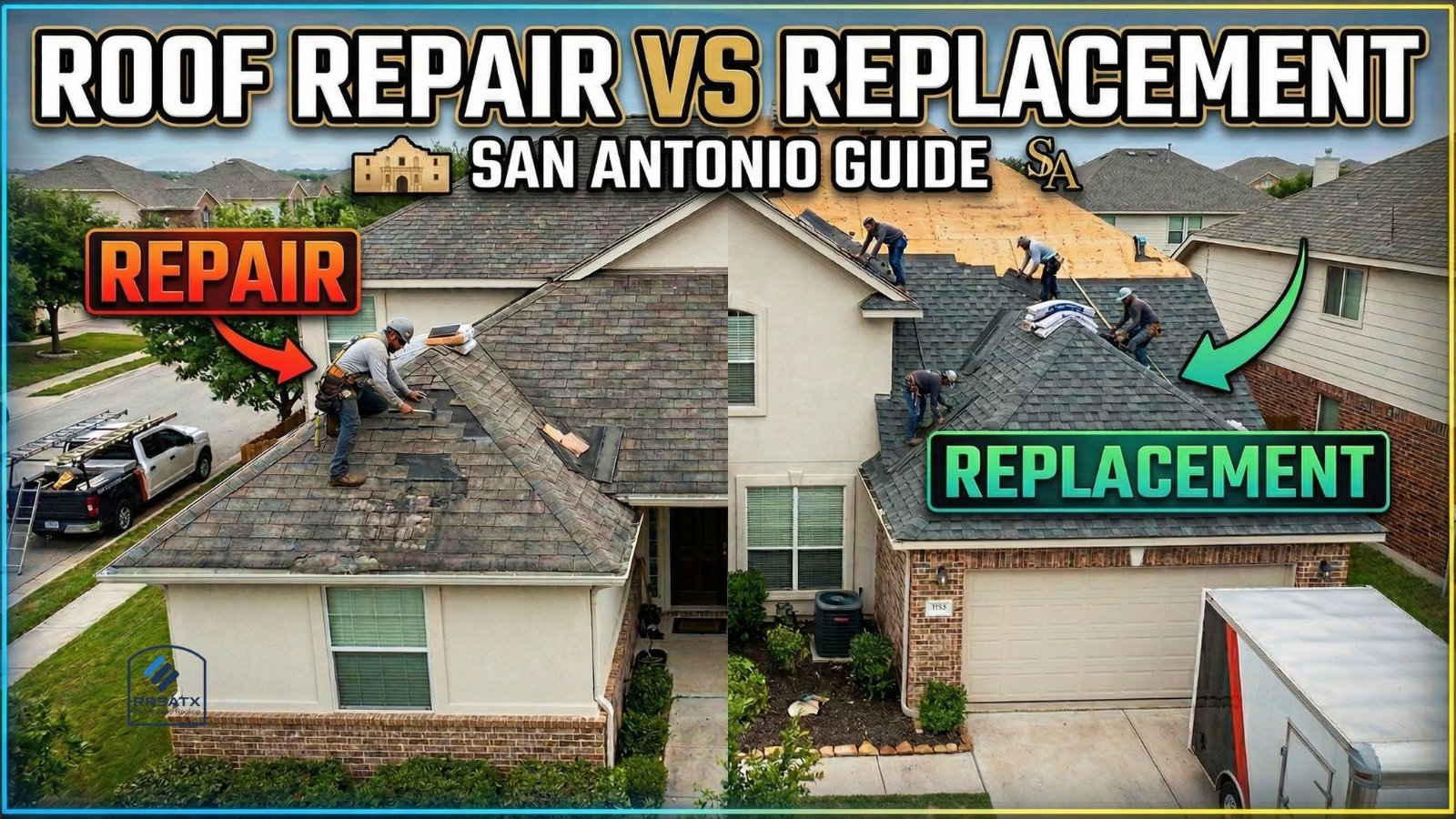
For San Antonio property owners, the basic decision is simple: choose roof repair when the damage is isolated and the roof still has useful life; choose roof replacement when the damage is widespread, recurring, storm-related across multiple areas, or the roof is near the end of its lifespan. The right answer depends on age, leak history, storm exposure, material condition, and total long-term cost.
This guide is written for homeowners, commercial owners, buyers, sellers, and insurance-related situations in San Antonio. In this market, hail, wind, heat, UV exposure, and ventilation problems often make the repair-versus-replacement decision more urgent than it first appears.
How Do You Decide Between Roof Repair And Roof Replacement?
Start with the scope of damage, the roof’s age, and whether the problem is isolated or systemic. A roof with one failure point can often be repaired. A roof with multiple weaknesses usually needs replacement.
Use this quick rule:
- Repair if the issue is limited, recent, and the roof is otherwise in good shape
- Replace if the roof is old, leaking in multiple places, or deteriorating across large sections
Signs repair may be enough:
- One missing section of shingles
- Localized flashing failure
- Minor leak around a vent or pipe boot
- Limited storm damage on a newer roof
Signs replacement is more likely:
- Multiple leaks
- Widespread granule loss or curling shingles
- Sagging or soft decking
- Repeated repair history
- Roof age of 15–20+ years for many asphalt systems
Key takeaway: The more widespread the problem, the less value you get from another patch.
When Is Roof Repair The Smarter Option In San Antonio?
Roof repair is the smarter option when the damage is small, clearly defined, and the rest of the roof still has years of service left. This is especially true for newer roofs.
Repair often makes sense when:
- The roof is under 10–15 years old
- Storm damage affected only one slope or one section
- The problem is limited to flashing, sealant, or one penetration
- Matching materials are still available
- There is no major moisture damage underneath
In San Antonio, fast repairs after wind or hail can prevent interior damage from getting worse. But the repair still needs to solve the root cause, not just cover the symptom.
When Is Roof Replacement The Better Long-Term Decision?
Roof replacement is usually the better decision when repairs are becoming repetitive, expensive, or unreliable. It is also the better choice when the roof system as a whole is aging out.
Replacement is often worth it if:
- The roof is near or beyond its expected lifespan
- There are multiple leak points
- Shingles are brittle, curling, or missing in many areas
- The decking or underlayment is compromised
- Storm damage is spread across several roof slopes
- The roof has already had several repairs
For older San Antonio roofs, strong sun and heat often weaken shingles before owners realize how close they are to failure.
Does Roof Age Matter More Than Visible Damage?
Roof age and visible damage should be evaluated together. Age alone does not always require replacement, but an older roof with visible wear has a much higher chance of needing it.
Here is a simple age guide:
| Roof Type | Typical Lifespan | When Replacement Becomes More Likely |
| 3-tab asphalt shingles | 15–20 years | 15+ years |
| Architectural shingles | 20–30 years | 20+ years |
| Flat/commercial membrane | 15–30 years | Depends on drainage and seam condition |
| Metal roofing | 40+ years | Depends on fasteners and coating condition |
A 17-year-old roof with active leaks is very different from a 17-year-old roof with no signs of wear. But once age and visible failure appear together, replacement becomes much more likely.
What Storm Damage Can Be Repaired, And What Usually Requires Replacement?
Minor storm damage can often be repaired, but widespread hail or wind damage may justify replacement. The key is how much of the roof system has been affected.
Damage often suitable for repair:
- A few missing shingles
- Isolated flashing displacement
- Small punctures in limited areas
- One leak after a minor event
Damage more likely to require replacement:
- Hail impact across large areas
- Wind creasing on multiple slopes
- Exposed underlayment in several spots
- Water intrusion in more than one room
- Damage to shingles, flashing, and ventilation components together
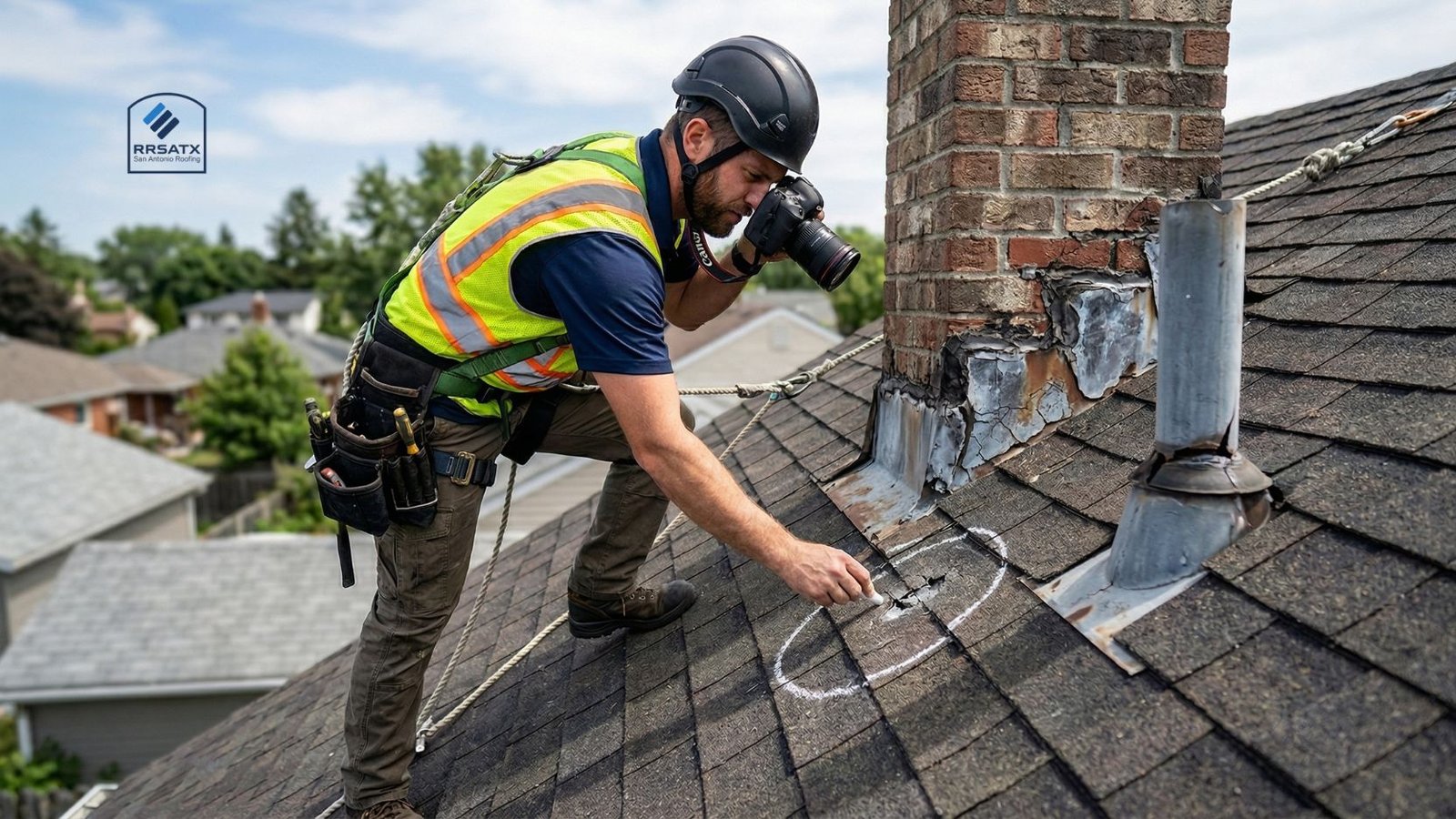
For insurance-related cases, storm documentation is critical. Not all old roofs qualify for replacement, but a recent covered event can change the scope.
Is It Cheaper To Repair A Roof Now Or Replace It Later?
Repair is cheaper in the short term, but replacement is often cheaper in the long term if the roof is already failing. Delaying replacement can turn a roofing problem into an interior and structural problem.
Short-term repair may cost less upfront, but repeated repairs can add up when they fail to address:
- Aging materials
- Poor ventilation
- Hidden decking damage
- Water intrusion into insulation or drywall
- Recurring leak paths
Key takeaway: If repairs are only buying a few more months, they are not actually saving money.
How Does The Decision Change For Buyers, Sellers, And Commercial Property Owners?
The repair-versus-replacement decision affects resale, inspections, insurance, and building operations. Different property owners have different priorities, but roof condition matters in every case.
For Home Buyers
- Ask for a roof inspection before closing
- Know the roof’s age and leak history
- Use findings in negotiations if replacement is near
For Home Sellers
- A failing roof can delay a sale
- Replacement may improve buyer confidence
- A documented inspection reduces surprises
For Commercial Owners
- Low-slope roof issues may hide moisture damage
- Repeated patching can disrupt tenants and operations
- Replacement planning may be better than emergency repairs
What Should San Antonio Homeowners Check Before Choosing Repair Or Replacement?
Homeowners should check roof age, visible wear, leak history, and whether storm damage is isolated or widespread. A professional inspection helps confirm what is visible and what is hidden.
Use this checklist:
- Check the roof’s approximate age
- Look for ceiling stains or attic moisture
- Inspect for missing, cracked, or curling shingles
- Review how many times the roof has been repaired
- Note any recent hail or wind event
- Ask whether flashing, ventilation, or decking is also affected
- Compare the cost of repair with expected remaining roof life
Properties throughout San Antonio, including areas near Monterey Street and Nakoma Drive, face the same basic issue: heat and storms can make a borderline roof fail quickly.
What Is The Best Next Step If You Are Unsure?
The best next step is a professional roof inspection with a written recommendation for repair versus replacement. A useful inspection should explain the cause of the issue, the expected life remaining, and whether a repair is a real solution or just a delay.
A good decision is based on:
- Roof age
- Damage extent
- Leak frequency
- Storm history
- Material condition
- Long-term budget impact
Key takeaway: If your roof has active leaks, visible wear, and age working against it, replacement is usually the stronger long-term investment.
FAQs
Can A 20-Year-Old Roof Still Be Repaired?
Yes, but it depends on condition. If the damage is isolated, repair may be possible. If wear is widespread, replacement is usually more practical.
How Many Leaks Mean I Need A New Roof?
There is no fixed number, but multiple leaks in different areas are a strong sign the roof system is failing.
Will Insurance Cover Repair Or Replacement After A Storm?
Possibly. Coverage depends on the cause of damage, policy terms, roof age, and claim documentation.