
At RRSATX: San Antonio Roofing Company, our team works with homeowners and property owners dealing with leaks, storm damage, aging roofs, and pre-sale roof concerns across San Antonio. With decades of roofing experience represented within the company and regular exposure to South Texas heat, hail, wind, and heavy rain, we know which warning signs usually show up before a professional roof inspection confirms the full problem.
To spot roof damage before an inspection, look for visible exterior wear, interior water signs, storm-related changes, gutter debris, and changes in roof shape or drainage. You should not climb onto the roof, but you can often identify enough warning signs from the ground and inside the home to know when a professional inspection is needed.
What Are The Easiest Signs Of Roof Damage To Spot From The Ground?
The easiest signs to spot from the ground are missing shingles, uneven roof lines, damaged flashing, debris impact, and visible material deterioration. These clues often appear before interior leaks become obvious.
Walk around your property and look for:
- Missing or lifted shingles
- Cracked, curling, or darkened shingle sections
- Bent or detached flashing
- Sagging roof areas
- Debris from tree limbs
- Damaged gutters or downspouts
- Exposed underlayment
- Loose roofing material near edges
If your roof is metal, look for:
- Loose panels
- Dents from hail
- Rust spots
- Separation at seams or fasteners
If your roof is flat or low-slope, look for:
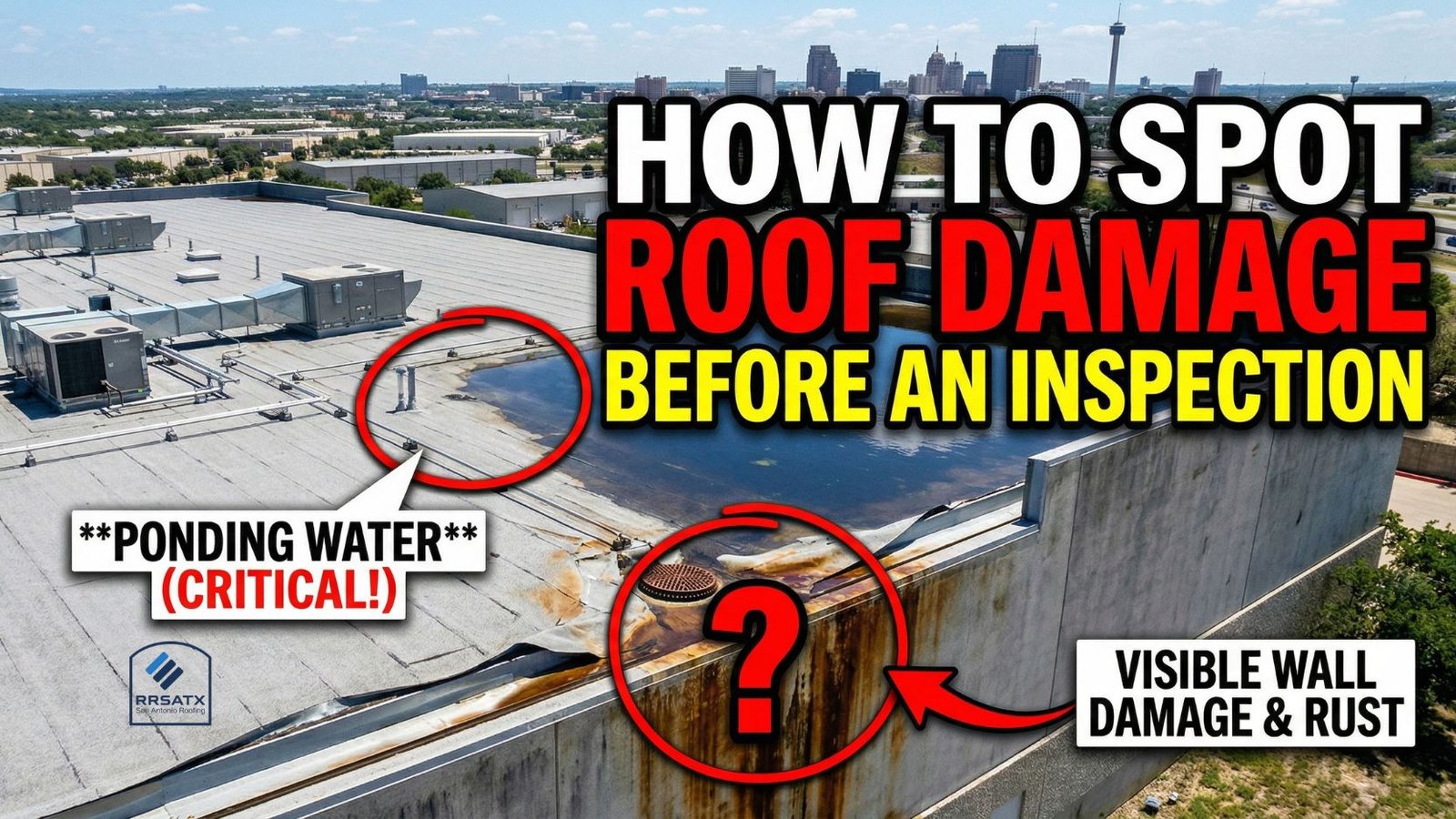
- Ponding water
- Bubbling surface areas
- Edge lifting
- Drain overflow stains
Key takeaway: If you can see visible roof changes from the ground, there may be additional hidden damage that only a closer inspection will reveal.
Can You Tell If Your Roof Is Damaged From Inside The House?
Yes, interior signs often reveal roof damage even when the outside looks mostly normal. In many cases, the first warning sign appears inside the ceiling, attic, or upper walls.
Look for:
- Water stains on ceilings
- Brown or yellow discoloration
- Bubbling or peeling paint
- Damp drywall
- Mold or mildew odor
- Drips during rain
- Warped trim near exterior walls
If your attic is accessible, check for:
- Wet insulation
- Damp wood
- Daylight coming through roof boards
- Mold growth
- Rust on nails or metal fasteners
Interior signs do not always show where the roof leak started, but they are strong evidence that water may be entering somewhere above.
What Roof Damage Should You Look For After A Storm?
After a storm, focus on signs of hail impact, wind damage, and debris-related damage. Even if you do not see a leak right away, storms can weaken the roofing system.
After hail or wind, look for:
- Shingles in the yard
- Granules collecting in gutters or downspouts
- Dents on gutters, vents, or metal surfaces
- Torn or creased shingles
- Broken tiles
- Tree limb impact marks
- New flashing separation
- Water spots appearing within a few days
Common Storm Damage Signs By Type
| Storm Type | What to Look For |
| Hail | Dents, bruised shingles, granule loss |
| Wind | Lifted, torn, or missing shingles |
| Heavy rain | Interior leaks, overflow, drainage issues |
| Falling debris | Punctures, cracked materials, bent flashing |
In San Antonio, fast-moving storms can create damage that is easy to miss from the street. That is why post-storm checks are so important.
How Do Aging Roofs Show Damage Before An Inspection?
Aging roofs usually show wear through material breakdown, granule loss, fading, brittleness, and repeated minor problems. If your roof is 15 to 20 years old or older, small changes should not be ignored.
Signs of age-related roof damage include:
- Curling shingle corners
- Bald spots where granules are missing
- Cracked sealant around penetrations
- Frequent minor leaks
- Uneven appearance across slopes
- Worn ridge caps
- Faded or brittle materials
Older roofs in San Antonio often age faster because of:
- Intense UV exposure
- High temperatures
- Thermal expansion and contraction
- Wind-driven rain
- Hail events over time
Key takeaway: A roof does not have to be actively leaking to be failing. Age-related wear often shows up in stages.

Should You Check Gutters When Looking For Roof Damage?
Yes, gutters can reveal roof damage that is not easy to see from above. In many cases, the gutters collect the evidence first.
Check for:
- Excessive granules from shingles
- Pieces of roofing material
- Dented gutter sections
- Loose gutter fasteners
- Overflow marks
- Clogged downspouts after storms
Granule loss matters because it may mean shingles are losing their protective surface. While some granule shedding can happen naturally over time, heavy buildup in gutters can indicate more advanced wear.
What Roof Damage Signs Mean You Should Schedule An Inspection Quickly?
Some roof damage signs mean you should schedule an inspection as soon as possible. Fast action can help limit damage to insulation, drywall, framing, and interior finishes.
Call for a professional roof inspection quickly if you notice:
- Active leaking during rain
- Sagging roof sections
- Ceiling bulges
- Several missing shingles
- Storm impact from a fallen limb
- New interior water stains
- Repeated leaks in the same area
- Ponding water on a flat roof
Urgent VS Non-Urgent Warning Signs
| Sign | Priority |
| Active leak | Urgent |
| Sagging roof line | Urgent |
| Missing shingles after storm | Urgent |
| Minor discoloration with no leak | Soon |
| Granules in gutters | Soon |
| Faded older shingles | Monitor with inspection |
What Should You Avoid Doing When Checking For Roof Damage?
You should avoid climbing onto the roof, pressure washing surfaces, or trying to pull back damaged materials yourself. Those actions can increase risk and sometimes make the problem worse.
Avoid:
- Walking on the roof without proper safety equipment
- Using binoculars as a substitute for a full professional evaluation
- Attempting DIY patching before documentation
- Scraping or moving damaged shingles
- Ignoring attic moisture because the ceiling looks dry
A visual check is helpful, but it is only the first step.
Where Can San Antonio Property Owners Get A Professional Roof Inspection?
If you spot warning signs and need a local inspection, RRSATX: San Antonio Roofing Company serves San Antonio property owners from:
- 4324 Monterey St, San Antonio, TX 78237, USA
- 318 E Nakoma Dr #210, San Antonio, TX 78216
This is especially relevant for homeowners with leaks, older roofs, storm concerns, buyers and sellers, commercial buildings, and insurance-related roofing issues.
FAQs
Can I Inspect My Roof Myself From The Ground?
Yes. You can often spot obvious signs like missing shingles, sagging, gutter debris, and storm impact from the ground.
Do I Need A Roof Inspection If I Only See Granules In The Gutter?
Possibly. Heavy granule loss can be a sign of shingle wear or storm damage, especially on older roofs.
How Soon After A Storm Should I Check For Roof Damage?
Check as soon as it is safe to walk around the property. If you notice visible changes or interior moisture, schedule an inspection promptly.