
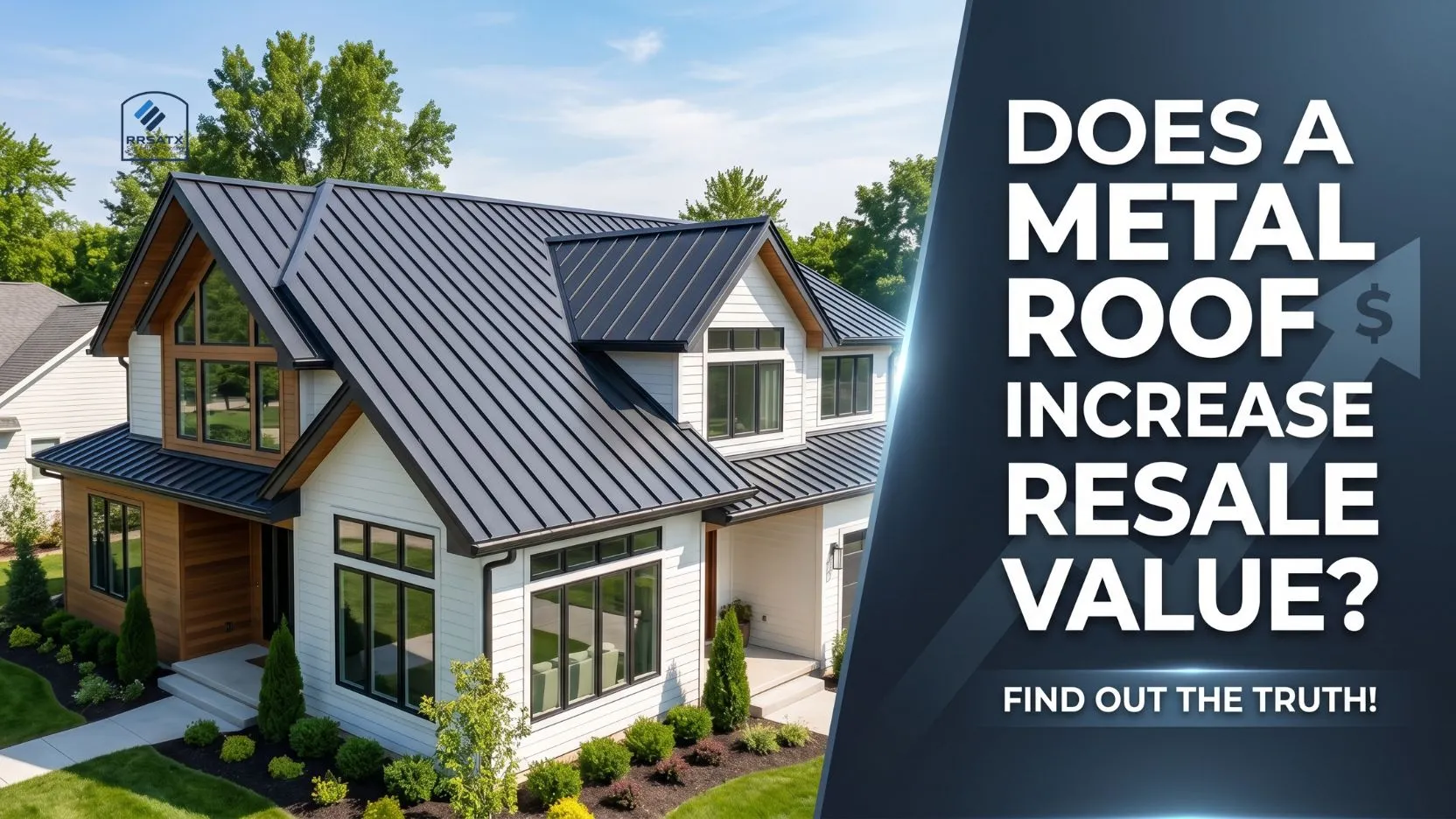
Yes—a metal roof increases resale value for most San Antonio homes. The longer answer matters more: the bump is real and shows up in appraisals and buyer negotiations, but it is not automatic. Panel type, install quality, condition at listing, and documentation all decide how much value you actually capture.
National figures often cite roughly a 1–6% resale lift versus a comparable home with an aging asphalt roof—about $3,500–$21,000 on a $350,000 house. Local buyers also price in what they will *not* have to spend: a 20-year-old asphalt roof can mean a $12,000–$18,000 replacement within 5–10 years, while a mid-life metal roof may still have 40+ years left.
Remodeling cost-recovery studies commonly put metal at about 60–85% of install cost recovered at sale. In a hail-aware market like San Antonio, recovery often sits toward the higher end—especially for standing seam and stone-coated systems—when the roof is clean, permitted, and well presented.
By the end of this guide, you’ll know how appraisers and buyers treat metal, how insurance and energy savings support the premium, which panel types add the most value, and how to document the roof before you list.
Table of Contents
- Why Buyers Pay More for Metal
- What Appraisers Look For
- Buyer Negotiations and Inspection Leverage
- Insurance and Energy Benefits Buyers Inherit
- Resale Value by Metal Type
- Metal vs Asphalt for Resale
- Common Questions About Metal Roof Resale Value
- Next Steps for San Antonio Homeowners
Why Buyers Pay More for Metal
San Antonio buyers understand roofing costs. An inspector flagging a 15-year-old asphalt roof as near end-of-life often triggers $5,000–$15,000 in credits, price cuts, or delayed closings. A well-maintained metal roof usually turns that conversation off—and can stand out in listing photos as a maintenance signal before the first showing.
Investors buying rentals also favor metal to shrink long-term maintenance budgets. Neutral colors (charcoal, weathered gray, dark bronze) photograph and resell better than bold custom finishes in most neighborhoods.
Practical rule: sell the remaining service life and avoided replacement cost—not just the word “metal.”
What Appraisers Look For
Appraisers credit metal through longer remaining life (less cost-to-cure), better effective age on major systems, and comparable sales where metal homes already sold at a premium.
| Roof material | Average lifespan | Mid-life appraisal treatment |
|---|---|---|
| 3-tab asphalt | 15–20 years | Often negative if replacement is 5–7 years out |
| Architectural asphalt | 25–30 years | Neutral when remaining life is acceptable |
| Standing seam metal | 40–70 years | Positive: decades of life left, no deduction |
| Corrugated steel | 40–60 years | Positive durability for age |
| Stone-coated steel | 40–70 years | Positive: premium look + metal life |
They also weigh visible install quality, rust or lifted panels, material type (standing seam above exposed-fastener for residential appeal), and permits plus transferable warranty paperwork.
Buyer Negotiations and Inspection Leverage
A pre-listing metal roof inspection ($150–$300) with a written condition report is a marketing asset. Hand it to the buyer’s agent before their inspector arrives and you cut roof-related uncertainty—and many concession fights—before they start.
Include install year, panel type, gauge/coating notes, remaining life estimate, and transferable warranty steps in the listing remarks. If the roof is Class 4 impact-rated, say so and attach the manufacturer certificate.
Insurance and Energy Benefits Buyers Inherit
Insurance discounts
Texas premiums have risen with hail and wind losses. Qualifying metal roofs often earn 10–30% discounts (Class 4 impact) plus Class A fire benefits. On a typical San Antonio home, that can mean roughly $600–$1,200 less per year versus asphalt—savings a buyer inherits on day one.
| Rating | Meaning | Typical TX discount |
|---|---|---|
| Class 4 impact (UL 2218) | Highest hail test tier | About 15–30% with many carriers |
| Class A fire | Non-combustible metal | Often 5–10% additional |
| Wind uplift (e.g. ~160 mph standing seam) | Hurricane-force design levels | Carrier-specific wind savings |
Energy savings buyers notice
Reflective / Energy Star cool coatings can cut peak summer cooling use about 10–25% versus dark asphalt that can run 150–185°F on the surface. An SRI above 78 supports cool-roof claims; utility history makes the pitch concrete.
Resale Value by Metal Type
| Metal roof type | Installed cost (SA avg.) | Est. resale value added | Buyer perception |
|---|---|---|---|
| Standing seam (steel/aluminum) | $18,000–$35,000 | $12,000–$25,000 on a $300K–$500K home | Strongest premium; clean look; no exposed screws |
| Stone-coated steel | $15,000–$28,000 | $10,000–$20,000 | Strong traditional look + durability |
| Corrugated (exposed fastener) | $8,000–$16,000 | $5,000–$12,000 | Durable but more industrial; lower upscale premium |
| Metal shingles | $14,000–$22,000 | $9,000–$18,000 | Broad appeal; metal life with shingle look |
For homes above roughly $400,000, standing seam is the system most often read as a true upgrade. Match system ambition to neighborhood price point.
Practical rule: if resale is the goal, choose standing seam in a neutral color and keep permit, warranty, and Class 4 docs in the disclosure package.
Metal vs Asphalt for Resale
| Factor | Metal roof | Architectural asphalt | Advantage |
|---|---|---|---|
| Expected lifespan | 40–70 years | 25–30 years | Metal |
| Appraisal at ~15 years old | Positive remaining life | Neutral to negative | Metal |
| Inspection leverage | Rarely a concession trigger | Common credit target | Metal |
| Typical annual insurance | About $1,800–$2,400 | About $2,400–$3,500+ | Metal |
| Summer cooling contribution | About 10–25% load reduction potential | Absorbs / transfers heat | Metal |
| 20-year maintenance | About $500–$1,500 | $2,000–$5,000 + replacement | Metal |
Common Questions About Metal Roof Resale Value
How much does a metal roof increase home value in San Antonio?
Often about 1–6% versus a comparable home with aging asphalt—roughly $3,500–$21,000 on a $350,000 sale—depending on type, age, condition, documentation, and neighborhood comps.
Do buyers actually pay more?
Yes in most price ranges. Buyers price in avoided $12,000–$22,000 asphalt replacements and lose roof-credit leverage at inspection. Investors especially pay for lower maintenance.
Which metal type adds the most resale value?
Standing seam first; stone-coated second; exposed-fastener corrugated still helps but usually less in upscale neighborhoods. Neutral colors outperform bold finishes.
Does metal lower insurance here?
Yes when Class 4 (and Class A) ratings are documented—commonly 10–30% off premiums, often $600–$1,200 a year on a typical home. Confirm your specific product rating.
Worth it if I sell in a few years?
Best when the current asphalt roof is already a liability. If shingles are sound and under ~10 years old, a new metal roof may not fully recover before closing. If inspectors would flag the existing roof, metal can erase concessions and raise list strength.
Do local appraisers credit metal?
Yes via sales comparison adjustments and lower roof depreciation in the cost approach when remaining life is long and the system is documented.
Next Steps for San Antonio Homeowners
Gather permit, final inspection, manufacturer specs, transferable warranty, insurance discount letter, and a fresh condition report before you list. Clean gutters, fix obvious fasteners or flashings, and state remaining life and Class 4 status in the listing.
If you want a pre-listing San Antonio metal roof inspection and documentation package—RRSATX can help. Call 713-504-2341 or schedule online.