
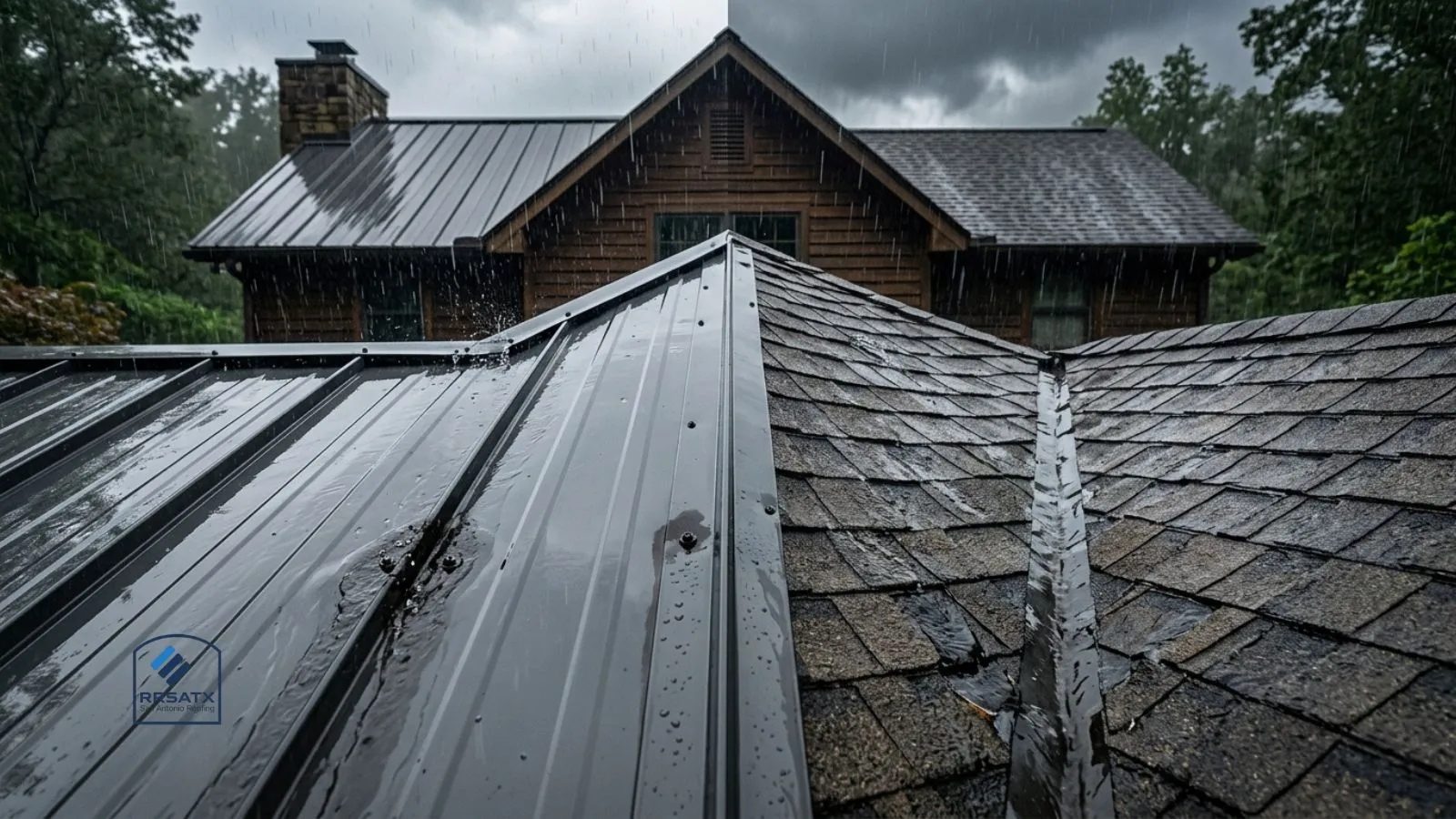
It is one of the most common objections before switching from asphalt in San Antonio: will a metal roof leak more than the shingles already on the house? Exposed screws and hard panels sound risky. Decades of local repair patterns and industry comparisons point the other way.
No—a properly installed metal roof does not leak more than shingles. Comparative data often cited in the trade puts metal leak rates around ~2% versus roughly ~10% for asphalt systems over a comparable period. When metal *does* leak, the cause is almost always installation quality (fasteners, flashing, seams)—not the metal “failing” the way aged shingles crack and curl.
Shingles develop leak risk across the whole surface as granules wear and UV cooks the mat. Metal concentrates risk at specific, inspectable points. That is a different failure pattern—and usually a more controllable one when the crew knows the system.
By the end of this guide, you’ll know how each material fails, how San Antonio hail and heat change the picture, which metal panel types leak less, and what to verify before you approve an install.
Table of Contents
- How Metal and Shingles Actually Let Water In
- Installation Quality Is the Real Variable
- San Antonio Climate: Heat, Hail, and Humidity
- Not All Metal Panels Leak Alike
- Metal vs Shingle Leak Comparison
- Maintenance That Keeps Either Roof Dry
- Common Questions About Metal Roof Leaks
- Next Steps for San Antonio Homeowners
How Metal and Shingles Actually Let Water In
Asphalt roofs are thousands of overlapping pieces. They work while tabs stay intact and granules protect the mat. In San Antonio heat, granule loss, curling, and cracking create leak risk gradually—and often invisibly from the ground—across the whole field.
Metal panels form a continuous shedding surface with raised seams or interlocks. There is no granule layer to wear away. Failures usually map to an over-driven screw, a bad flashing joint, or a seam that was not crimped correctly—specific points you can inspect and fix.
Flashing around chimneys, vents, and skylights remains the top shared leak source on *both* materials. Roof age versus expected lifespan changes how much risk you should ignore.
Practical rule: treat “metal leaks” as a contractor-skill question first, a material question second.
Installation Quality Is the Real Variable
Metal is a more specialized trade than shingles. Fewer San Antonio crews correctly set torque, crimp standing seams, and flash penetrations for thermal movement. A skilled metal crew can deliver decades without a leak; an occasional metal job on a shingle-heavy crew is how the leak myth gets fed.
Common metal mistakes: over-driven screws that strip the seal, under-driven screws that leave gaps for wind-driven rain, and misaligned flashing. Shingle mistakes—bad nailing patterns, skimpy underlayment, poor flashing—create leaks just as reliably.
Ask how many metal roofs the contractor installed in the past two years, not only how long they have been in business. Require fastener gauge/spacing, flashing plan, manufacturer underlayment, and a workmanship warranty separate from the material warranty.
San Antonio Climate: Heat, Hail, and Humidity
Texas leads the nation in significant hail events (850+ significant events per year nationally is a figure often cited in storm discussions), and San Antonio sits in an active corridor. Hail bruises shingles and strips granules—sometimes without obvious curb appeal damage—then leaks show up seasons later. On metal, hail more often dents without breaching the seal on standard or heavier gauge steel.
Rough hail size cues:
- ~1 inch (quarter): shingles lose granules / life; metal usually cosmetic denting
- ~1.75 inches (golf ball): shingles can crack; metal dents more on light gauge, seal often holds
- ~2.75 inches+ (baseball): both materials risk structural damage
Daily heat swings also work fasteners loose over years if clip/screw spacing ignores expansion. Spring (April–June) is peak hail season—inspect after storms larger than about quarter size even when the roof “looks fine” from the driveway.
Not All Metal Panels Leak Alike
| Panel type | Leak risk profile | Why |
|---|---|---|
| Standing seam | Lowest | Hidden clips; no face penetrations |
| Exposed-fastener (corrugated) | Moderate | Thousands of screws/washers |
| Stone-coated steel | Low to moderate | Strong impact; coating chips need watch |
| Asphalt shingles | Moderate→high with age | Whole-surface UV/granule breakdown |
If leak resistance is the priority, standing seam is the metal system with the strongest track record. It costs more than exposed-fastener panels because it removes the most common metal leak path.
Metal vs Shingle Leak Comparison
| Factor | Metal roof | Asphalt shingle roof |
|---|---|---|
| Typical leak rate (comparative) | Around 2% | Around 10% |
| Primary leak source | Fastener/flashing/seam install error | Granule loss, curling, cracking |
| Expected lifespan | 40–70 years | 15–30 years (often 20–30 cited; SA heat pushes many toward the low–mid band) |
| Hail | Dents; seal usually holds on proper gauge | Bruising/granule loss even from moderate hail |
| Install skill needed | Higher, fewer specialists | Lower, widely available |
| Inspection cadence | Every 2–3 years | Annually + after major storms |
Maintenance That Keeps Either Roof Dry
Metal: check fasteners, sealant, and flashing every 2–3 years. Shingles: visual checks at least yearly as aging progresses. Both: clear valleys/gutters, scan the attic for stains after heavy rain, and document storms with photos for claims.
Texas insurance generally covers sudden hail/wind damage—not deferred maintenance. Keep dated photos and your own estimate after significant events.
Common Questions About Metal Roof Leaks
Do metal roofs leak more than shingles in San Antonio?
No. Properly installed metal typically leaks less over a comparable period, even with local heat and hail. Installation quality decides outcomes.
What causes most metal leaks?
Over/under-driven screws, aged EPDM washers, poor flashing, and bad seam work—almost always install or maintenance, not spontaneous panel failure.
Is standing seam more leak-resistant than corrugated?
Yes. Hidden fasteners remove the washer field that ages under San Antonio sun.
Does hail make metal roofs leak?
Usually not from denting alone on proper gauge. Very large hail can stress seams or coatings—inspect after major storms.
How often should metal be inspected?
Every 2–3 years, and after hail larger than about quarter size.
Next Steps for San Antonio Homeowners
If leak resistance tops your list, favor standing seam and a metal-experienced crew with written fastener and flashing details. Compare current shingle age and attic stains before you assume metal is the risk.
If you want an honest San Antonio leak assessment or a metal vs shingle second opinion, RRSATX can inspect and put findings in writing. Call 713-504-2341 or schedule online.