
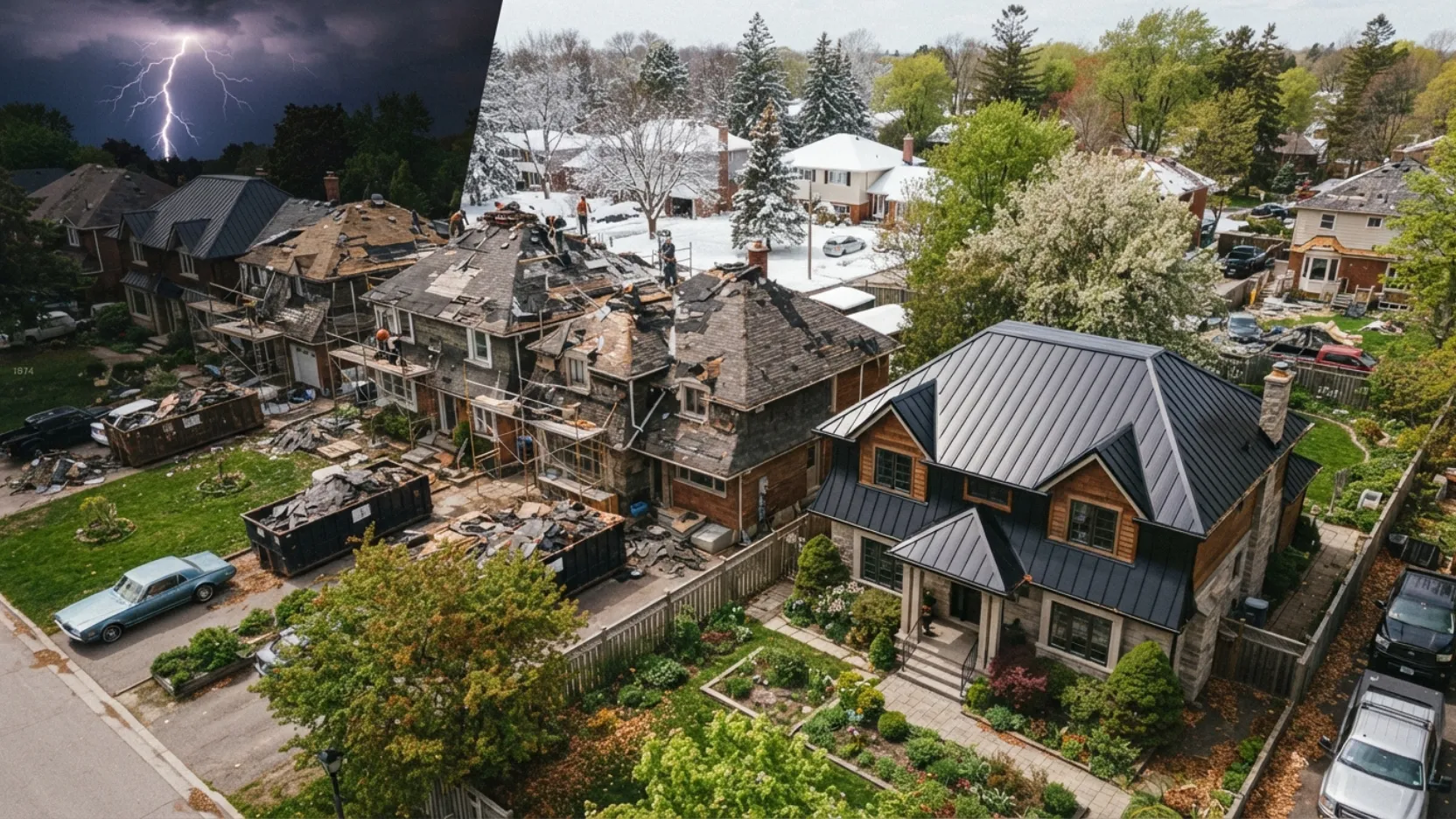
When San Antonio homeowners research metal roofs, the environmental question comes up quickly. Compared with asphalt shingles, metal has one of the strongest environmental profiles of any common roofing material—if you look at the full lifecycle, not only day-one stickers.
The case rests on four pillars: recycled content at manufacture, energy savings from solar reflectivity in our long cooling season, decades of service that avoid repeated tear-offs, and 100% recyclability at end of life. Asphalt is petroleum-based, shorter-lived in Bexar County heat and UV, and usually landfilled when it comes off.
This guide compares recycled content, cooling savings, landfill diversion, solar and rainwater compatibility, and a direct metal-versus-asphalt scorecard for San Antonio homes.
By the end, you’ll know which product questions to ask (recycled content, ENERGY STAR, EPD) and how to weigh the upfront premium against 50-year environmental and utility math.
Table of Contents
- Why Metal Scores Well Environmentally
- Recycled Content
- Energy Efficiency in San Antonio Heat
- Lifespan and Landfill Diversion
- End-of-Life Recycling and Extra Green Benefits
- Metal vs Asphalt Environmental Comparison
- Common Questions About Eco-Friendly Metal Roofing
- Next Steps for San Antonio Homeowners
Why Metal Scores Well Environmentally
The biggest advantage is often what does not happen over the next 50 years. An asphalt roof in San Antonio is typically torn off and landfilled two or three times before a same-era metal roof needs replacement. Each average residential tear-off can generate roughly 2 to 3 tons of mostly non-recycled waste. Metal avoids those cycles—and when it finally comes off, scrap has commercial value.
Practical rule: judge eco-friendliness on lifecycle (manufacture + energy + replacements + end of life), not only recycled-content marketing claims.
Recycled Content
Steel panels commonly contain about 25–95% recycled steel (many products land around 50–60%). Aluminum often reaches about 90–95% post-consumer recycled content; recycled aluminum uses roughly 5% of the energy needed to make primary aluminum from bauxite. Stone-coated steel typically carries a recycled steel core in roughly the 25–60% range. Asphalt shingles, by contrast, are petroleum-based with essentially no recycled feedstock in the core.
Ask your contractor for the recycled-content percentage on the specific panel SKU, whether steel came from electric-arc-furnace production, and whether an Environmental Product Declaration (EPD) exists.
Energy Efficiency in San Antonio Heat
San Antonio averages 220+ sunny days a year, with summers often over 100°F. Dark asphalt roofs can hit about 150–175°F surface temperature and drive attic heat well over 140°F. Reflective metal—especially light colors meeting ENERGY STAR thresholds—can cut attic temperatures by about 20–40°F and reduce cooling costs by up to about 40% versus dark asphalt in strong cases; 20–40% is the practical planning band many owners see.
| Roofing material | Typical SA summer surface temp | Cooling effect |
|---|---|---|
| Dark asphalt shingles | 150–175°F | Highest cooling load |
| Light asphalt shingles | 130–150°F | Modest improvement |
| Metal, dark color | 120–140°F | Moderate savings vs asphalt |
| Metal, light ENERGY STAR | 95–120°F | Up to ~40% cooling cost cut |
Practical rule: in South Texas, color and reflectance often move energy savings as much as the metal-versus-asphalt choice itself. Prefer light gray or tan when HOA rules allow.
Lifespan and Landfill Diversion
Realistic San Antonio asphalt life is often about 15–25 years (many 30-year-labeled roofs show serious wear by year 18–20). Metal with proper install and maintenance commonly runs 40–70 years. Over ~50 years, that can mean 4–9 tons of avoided shingle waste from 2–3 asphalt replacements—on the order of 11 billion pounds of asphalt shingles landfilled nationally each year that metal roofs help homeowners avoid locally by not cycling as often.
End-of-Life Recycling and Extra Green Benefits
Steel and aluminum scrap is routinely recycled into new products. Standing seam also supports clamp-on solar without roof penetrations—cleaner for warranties than screwing through asphalt. Smooth metal runoff is generally cleaner for rainwater harvesting (Texas law is friendly to residential collection). Metal does not need the algae/moss chemical cycles common on shaded asphalt.
Metal vs Asphalt Environmental Comparison
| Measure | Metal roofing | Asphalt shingles |
|---|---|---|
| Recycled content | Typically 25–95% | Essentially none |
| SA energy performance | Up to ~40% cooling cut (light / ENERGY STAR) | Dark surfaces absorb heat |
| Expected SA lifespan | 40–70 years | 15–25 years |
| Landfill over ~50 years | One install; scrap recycled later | ~4–9 tons from 2–3 tear-offs |
| End of life | ~100% recyclable scrap | Low real recycling rate |
| Solar compatibility | Excellent (especially standing seam clamps) | Penetrations; warranty risk |
| Rainwater runoff | Cleaner starting point | Petroleum/granule load |
Metal often costs about 2–3× asphalt per installed square foot up front—but avoided replacements and utility savings reshape the 50-year picture.
Common Questions About Eco-Friendly Metal Roofing
Is metal more eco-friendly than asphalt?
Yes, across recycled content, energy, lifespan, landfill impact, and end-of-life recycling—especially in San Antonio’s UV and heat.
How much can bills drop?
Light, ENERGY STAR-rated metal often cuts cooling 20–40% versus dark asphalt, depending on insulation, ventilation, HVAC, and color.
How much recycled content is typical?
Steel roughly 25–95%; aluminum often 90–95% post-consumer. Always ask for the SKU-specific number.
Can I put solar on metal?
Yes. Standing seam clamp systems avoid penetrations and are usually the cleanest path if solar is in the plan.
What happens at end of life?
Panels go to metal recyclers, not a typical asphalt-style landfill pile.
Next Steps for San Antonio Homeowners
Confirm recycled content, ENERGY STAR / cool-roof finish, light color, ventilation, and responsible tear-off recycling on every bid. If solar is future work, prioritize standing seam.
For a San Antonio metal roof scoped for energy and lifecycle value—not only day-one price—RRSATX can inspect and quote. Call 713-504-2341 or schedule online.