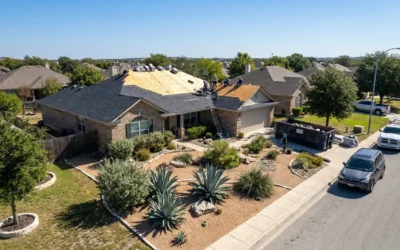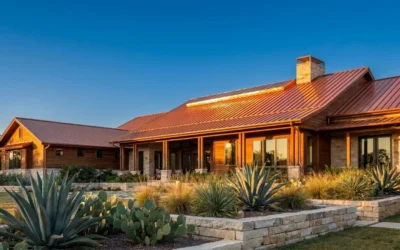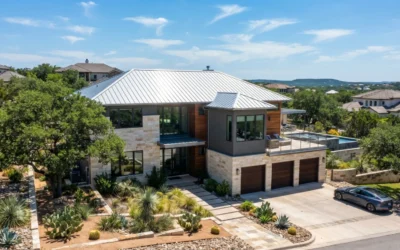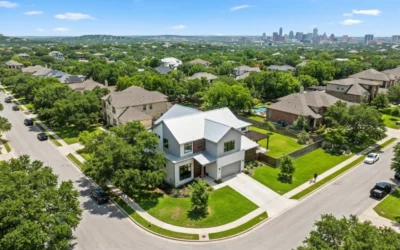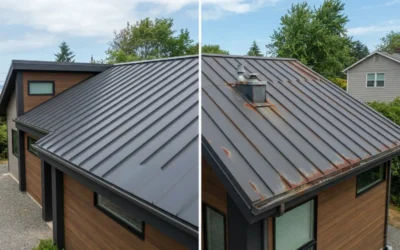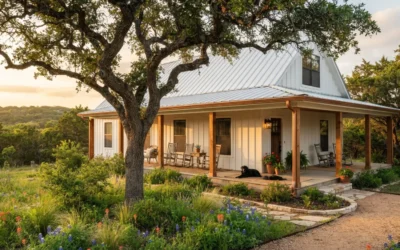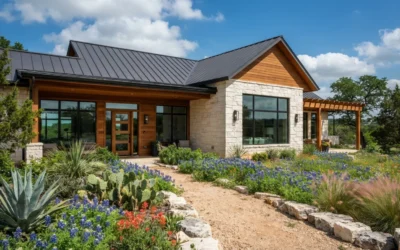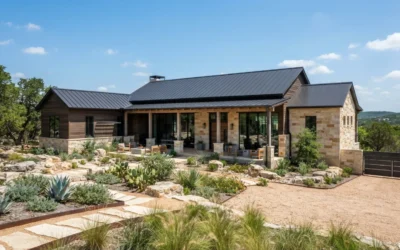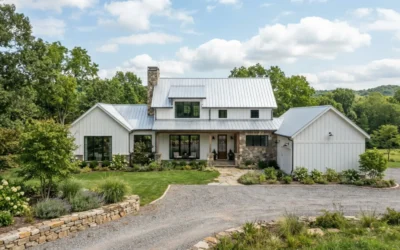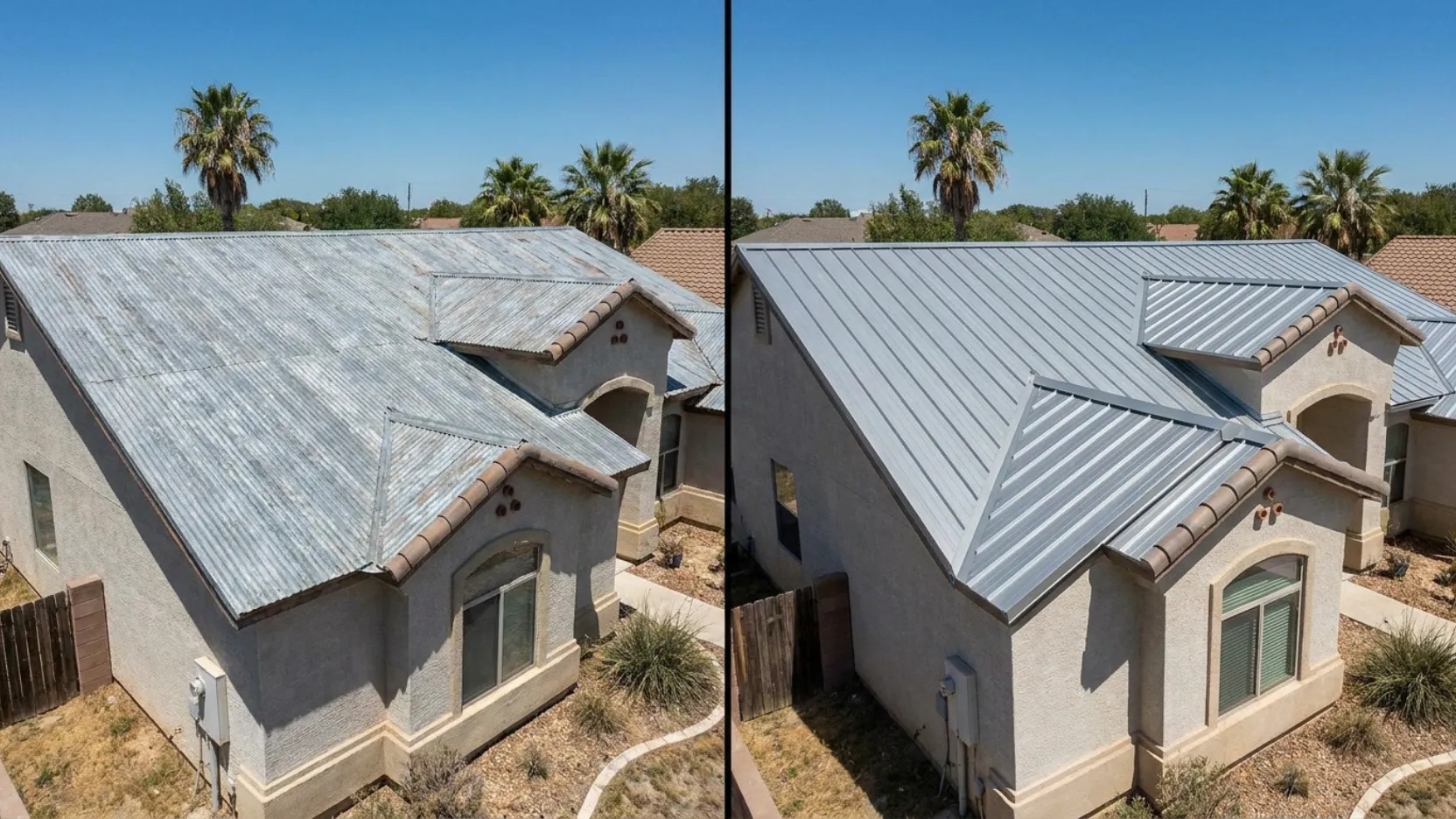
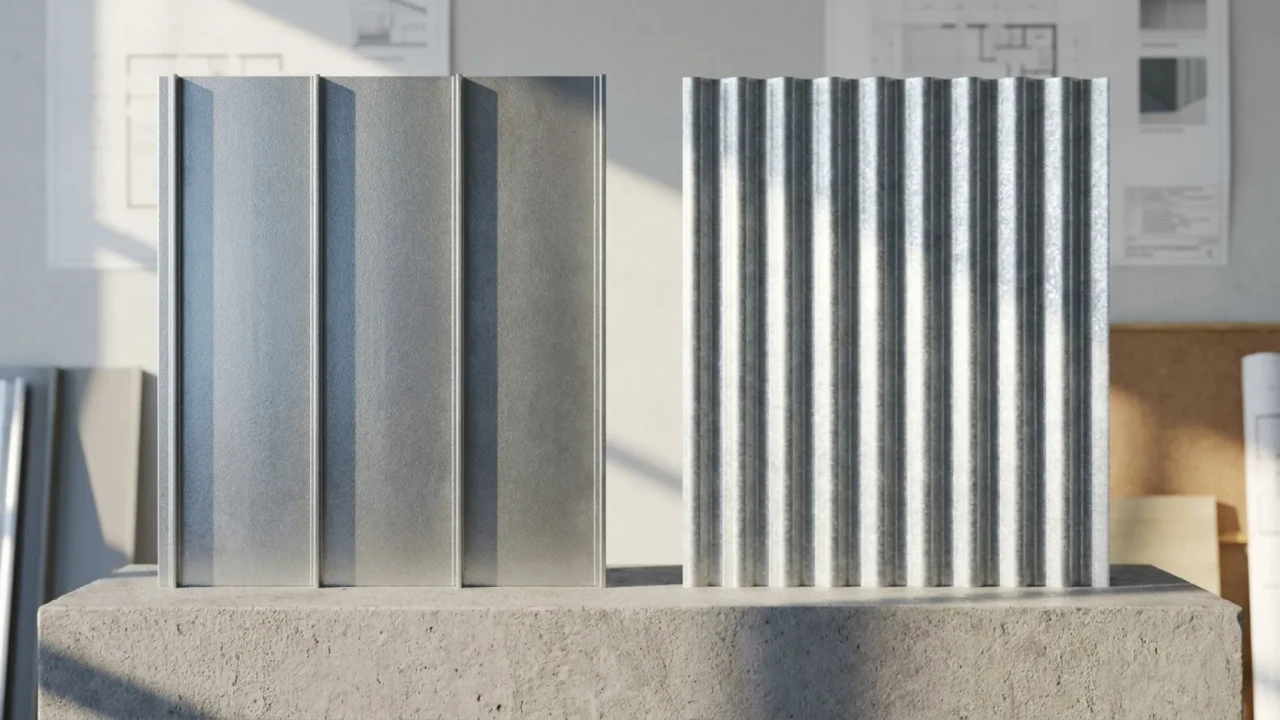
Both Galvalume and galvanized steel are used in metal roofing across San Antonio. They look nearly identical from the ground but perform very differently over time. This guide explains what each coating is made of, how each holds up under Texas heat, humidity, and salt air, and which one belongs on your roof.
Walk into any San Antonio roofing supply yard and you will find stacks of both Galvalume and galvanized steel panels sitting side by side. They weigh the same. They look nearly identical. They are often priced within a few cents per square foot of each other. But what is inside the coating is completely different, and that difference determines how your roof holds up against the heat, humidity, and occasional salt air that define the South Texas climate.
The short answer is that both are steel panels protected by a metallic coating, but Galvalume uses a blend of aluminum and zinc while galvanized steel uses pure zinc. That one distinction shapes the corrosion resistance, heat reflectivity, lifespan, and appropriate applications for each product. If you are choosing a metal roof for a home or commercial building in San Antonio, knowing which coating is right for your situation can mean the difference between a roof that lasts 60 years and one that needs replacement in 30.
Galvalume and galvanized steel are not interchangeable in every application. Galvalume performs significantly better over the long term in most roofing environments, which is why it has become the industry standard for unpainted standing seam metal roofs across the country. However, galvanized steel still has legitimate uses, especially in agricultural and industrial buildings, and in situations where contact with concrete, pressure-treated lumber, or certain fertilizers is a concern. Knowing which environment your roof lives in is the starting point for making the right material choice.
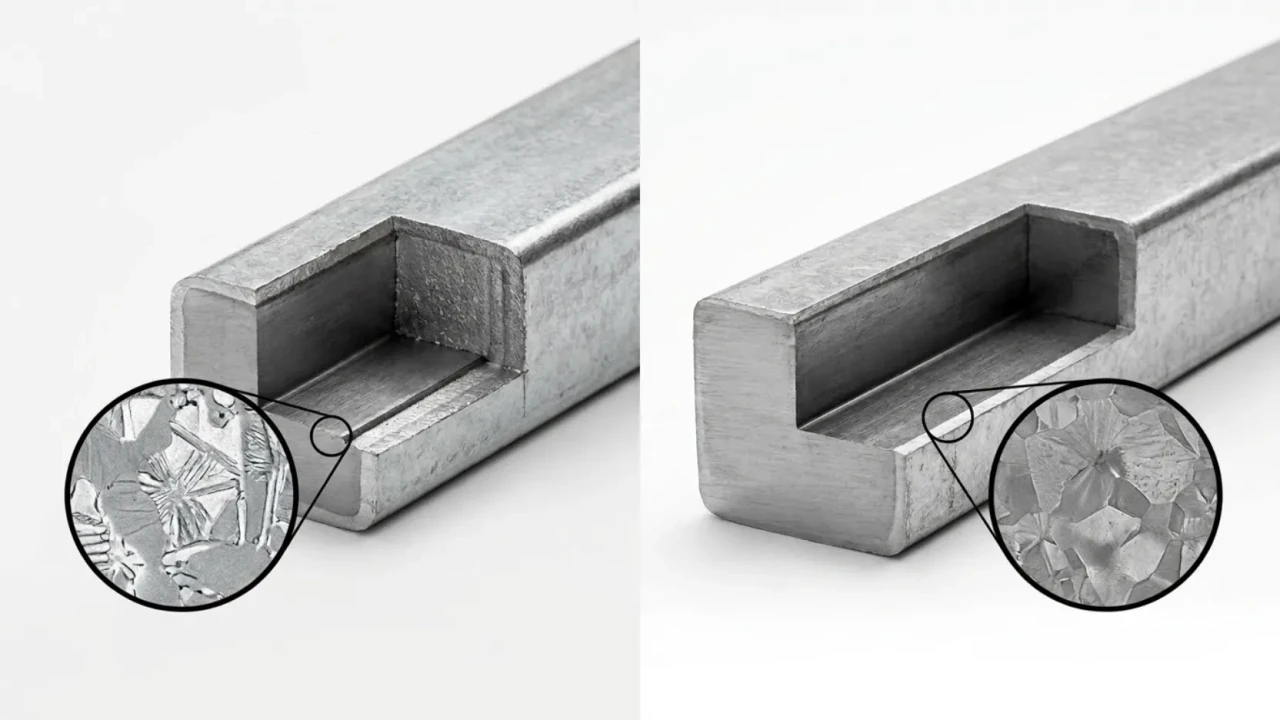
Both Galvalume and galvanized steel start with the same base: a sheet of carbon steel. The difference is in what gets applied to the surface of that steel during manufacturing to protect it from corrosion. That protective layer, called the coating, is what gives each product its name and defines its performance characteristics.
Galvalume coating: Developed in the 1970s and trademarked by Bethlehem Steel, Galvalume uses a hot-dip coating process that applies an alloy of 55 percent aluminum, 43.4 percent zinc, and 1.6 percent silicon to the surface of the steel. The aluminum provides barrier protection and heat reflectivity. The zinc provides galvanic or sacrificial protection at cut edges and scratches. The silicon helps the coating bond tightly to the steel surface.
Galvanized steel coating: Galvanized steel also uses a hot-dip process, but the coating is pure zinc or a zinc-iron alloy. Zinc protects steel primarily through galvanic protection: it sacrifices itself to protect the base steel when a cut or scratch exposes the surface. Galvanized coatings have been in use since the 1800s and are well understood, but the pure zinc coating depletes faster than the aluminum-zinc blend used in Galvalume.
- Galvalume panels should reference ASTM A792 on the material spec sheet or mill certificate
- Galvanized panels should reference ASTM A653 the standard for zinc-coated steel sheet
- Coating thickness is measured in ounces per square foot: G90 galvanized means 0.90 oz/sq ft of zinc
- AZ50 Galvalume means 0.50 oz/sq ft of the aluminum-zinc alloy common for residential roofing
- Heavier coatings (G100, AZ55) provide longer service life and cost more per panel
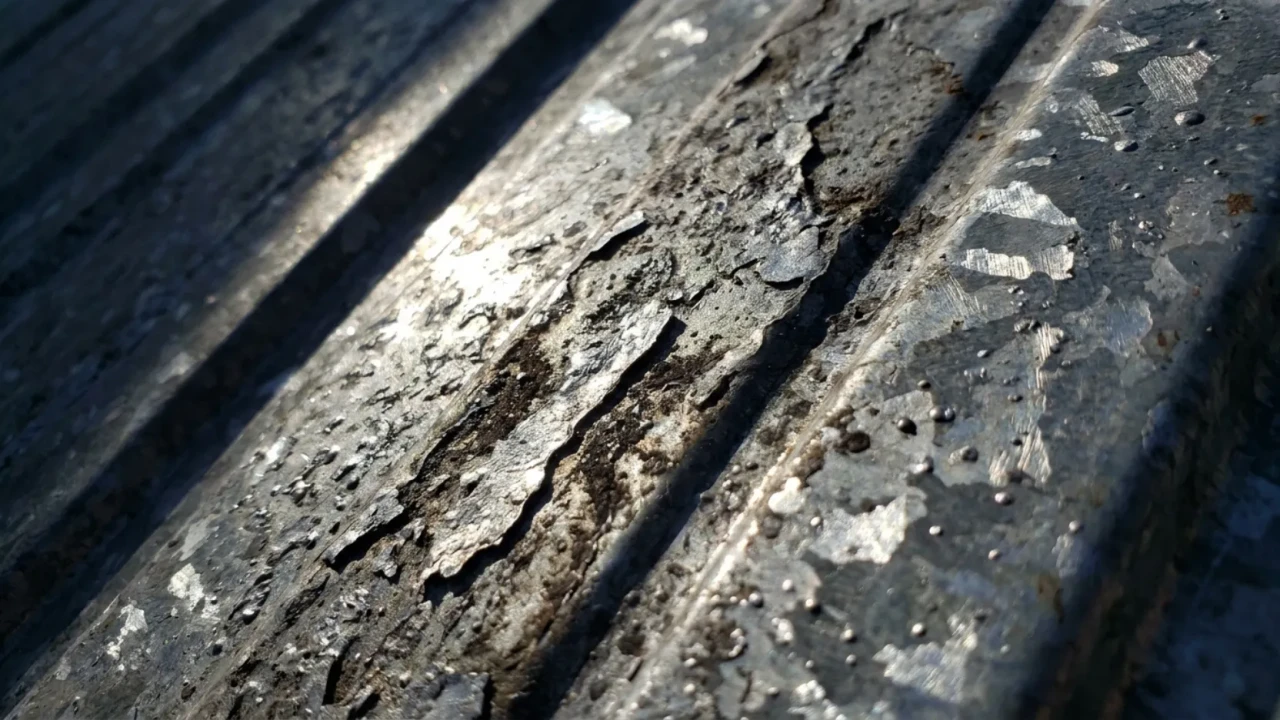
Rust resistance is the primary reason homeowners and contractors choose one material over the other, and this is where the chemistry difference matters most. The aluminum in Galvalume's coating forms a dense, stable oxide layer on the surface that acts as a physical barrier against moisture and oxygen. This barrier protection slows the corrosion process dramatically compared to a pure zinc coating, which relies almost entirely on sacrificial protection.
Independent accelerated corrosion testing and decades of field data consistently show Galvalume lasting two to four times longer than galvanized steel of equivalent gauge in standard atmospheric exposures. For a San Antonio roof that deals with hot, humid summers, occasional salt air from the Gulf, and acid rain from urban pollution, that multiplier is meaningful in real-world terms.
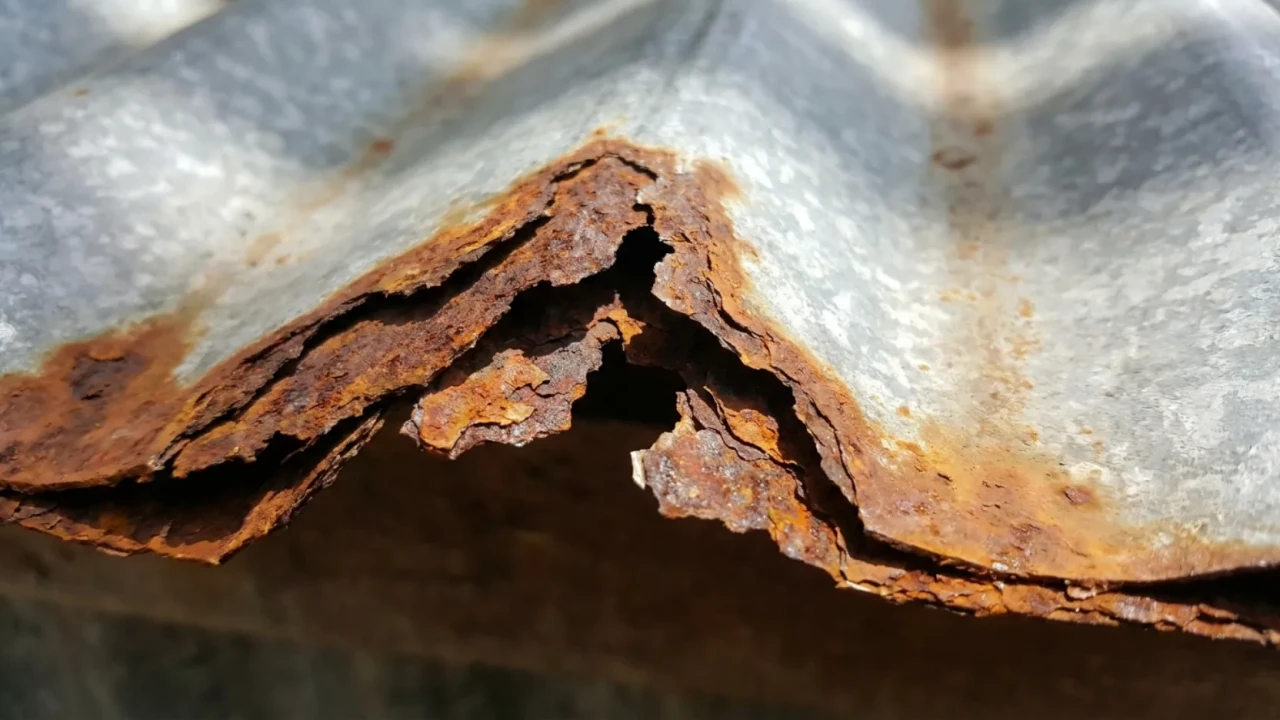
However, there is one corrosion scenario where galvanized steel holds an advantage over Galvalume. At cut edges and at scratches or holes where the base steel is exposed, galvanized steel's pure zinc coating provides stronger galvanic protection. The zinc migrates to cover the exposed steel and sacrifices itself more aggressively than Galvalume's aluminum-zinc blend. For panels that are frequently cut in the field, or in applications with many exposed fastener holes, galvanized steel's edge protection behavior is relevant.
San Antonio's distance from the Gulf Coast puts it in a moderate corrosion zone, not a severe one. Homeowners in Corpus Christi or Galveston are in a different situation closer proximity to the Gulf means salt air deposits on roof surfaces year-round, and a painted Galvalume system becomes important in those markets. For San Antonio, unpainted Galvalume is a sound choice for residential standing seam roofing. If you are within 1,500 feet of a major highway where road salt is used in rare winter weather events, a painted Galvalume system provides an additional layer of protection.
- Confirm material choice is appropriate for your corrosion zone coastal vs. inland San Antonio locations differ
- Any Galvalume panels resting on concrete or masonry need a protective barrier or isolator
- Pressure-treated lumber should not contact Galvalume directly use a separator or galvanized fasteners designed for ACQ lumber
- Copper flashing should never be used with Galvalume or galvanized panels galvanic corrosion will accelerate failure at the contact point
- Painted systems provide a third layer of protection over either coating consider it for roofs near industrial areas or major highways
San Antonio averages over 220 sunny days per year and regularly sees summer roof surface temperatures exceeding 160 degrees Fahrenheit on dark-colored materials. For a metal roof, the coating's reflectance how much solar energy it bounces back rather than absorbs directly affects attic temperatures and cooling loads. This is where Galvalume's aluminum content delivers a real energy benefit.
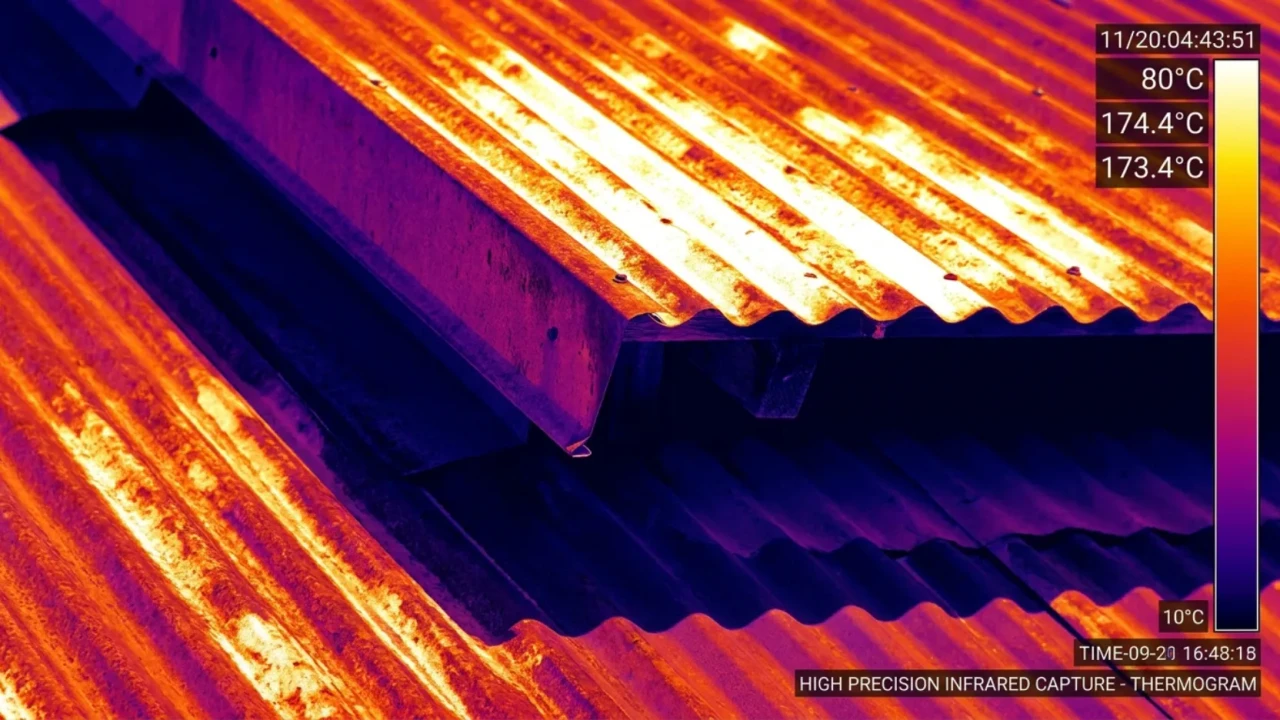
Galvalume solar reflectance: Unpainted Galvalume has a solar reflectance of approximately 0.60 to 0.65, meaning it reflects 60 to 65 percent of incoming solar radiation. That reflectance is driven primarily by the aluminum in the coating, which naturally reflects infrared radiation. On a San Antonio summer day, this translates to a roof surface that runs significantly cooler than galvanized or painted dark-colored options.
Galvanized steel solar reflectance: Bare galvanized steel has a lower solar reflectance than Galvalume, typically in the range of 0.35 to 0.50 depending on the finish condition. Fresh galvanized steel has a bright spangle finish that reflects reasonably well, but as the zinc oxidizes and weathers to a matte gray, reflectance drops. The aluminum in Galvalume retains its reflectance much longer through the weathering process.
For San Antonio homeowners, the practical implication is lower attic temperatures, which reduces the load on air conditioning systems during the months when cooling costs are highest. An unpainted Galvalume standing seam roof can qualify for Energy Star certification without any additional coating, which may also affect your property's resale positioning and potentially qualify for federal energy efficiency credits depending on current tax code provisions.
- Confirm solar reflectance rating on your chosen panel ask for the published value, not a general claim
- Unpainted Galvalume qualifies for Energy Star; confirm the specific product is listed at energystar.gov
- A radiant barrier in the attic paired with a Galvalume roof significantly reduces cooling loads in San Antonio summers
- Light-colored PVDF-painted panels on Galvalume substrate deliver maximum reflectance plus maximum coating longevity
- Check current IRS provisions for residential energy efficiency credits cool roof products have qualified in previous years
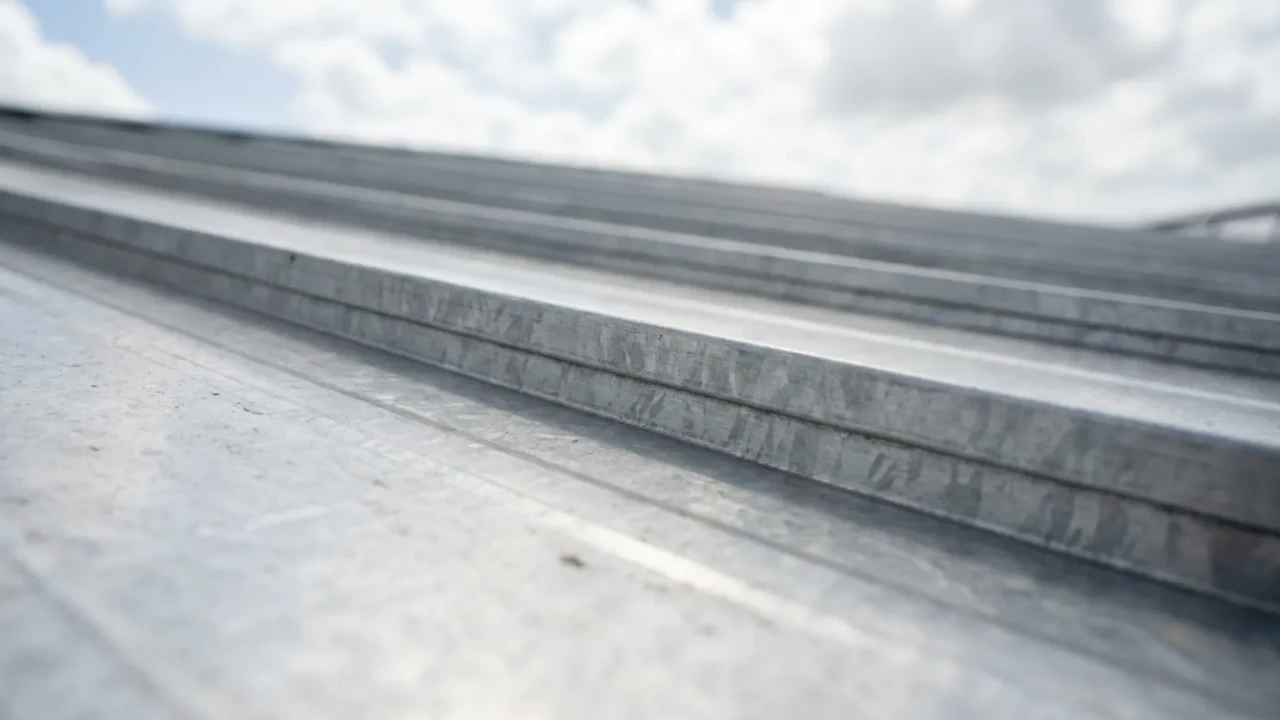
One of the most common misconceptions homeowners have when comparing Galvalume and galvanized steel is that the lower price of galvanized steel makes it the more economical choice. When you look at cost per year of useful service life rather than cost per square foot at the time of installation, the picture reverses in most San Antonio roofing applications.
| Performance factor | Galvalume steel | Galvanized steel |
|---|---|---|
| Expected lifespan (unpainted, San Antonio) | 50 to 65 years with maintenance | 25 to 40 years with maintenance |
| Coating depletion rate | Slow aluminum barrier extends zinc life | Faster pure zinc sacrifices itself more rapidly |
| Typical warranty from panel manufacturer | 40 years on substrate; 25 years on coating | 20 to 30 years on substrate |
| Material cost premium (Galvalume over galvanized) | 5% to 15% higher per sq ft | Base price reference |
| Maintenance schedule | Inspection every 5 years; cleaning as needed | Inspection every 3 years; touch-up painting recommended at 15 to 20 years |
| Energy Star qualification (unpainted) | Yes qualifies without additional coating | Generally no requires painted coating to qualify |
| Performance at cut edges and scratches | Good zinc component provides galvanic protection | Excellent pure zinc migrates more aggressively to cover exposed steel |
| Contact with treated lumber or concrete | Requires barrier aluminum reacts in alkaline contact | More tolerant zinc does not have the same alkaline sensitivity |
For a 2,000 square foot roof in San Antonio, the material cost difference between Galvalume and galvanized steel panels is typically $500 to $1,500 at current pricing. Spread that difference over a lifespan advantage of 20 to 30 years, and Galvalume provides significantly lower cost per year of useful service in most residential applications. The math is clear for homeowners who plan to stay in the property long term.
When getting quotes for a metal roof in San Antonio, always ask the contractor to specify the material by ASTM standard, not just by name. "Galvalume" written on a quote without a reference to AZ50 or AZ55 and ASTM A792 is not specific enough to ensure you are getting the product you expect. The same applies to galvanized: G90 and G60 are significantly different products despite both carrying the galvanized label. A contractor who cannot or will not specify the coating weight is a contractor to approach with caution.
- Request the manufacturer's warranty document before signing a contract not just a verbal claim
- Confirm coating weight: AZ50 is standard for residential Galvalume; AZ55 is the step-up option
- For galvanized, G90 is the minimum for roofing applications G60 is not appropriate for a roof in San Antonio's climate
- Ask whether the contractor's workmanship warranty covers fastener and sealant failures separately from panel failure
- Confirm the installation meets manufacturer requirements improper installation typically voids the substrate warranty
The material choice is not purely about which coating is technically superior. It is about matching the right product to the actual conditions and requirements of your specific building. Galvalume is the better performing material in most residential roofing scenarios, and it has become the industry default for standing seam metal roofing across the country. But galvanized steel is not obsolete. It still performs well in specific applications and environments where its characteristics are well suited.
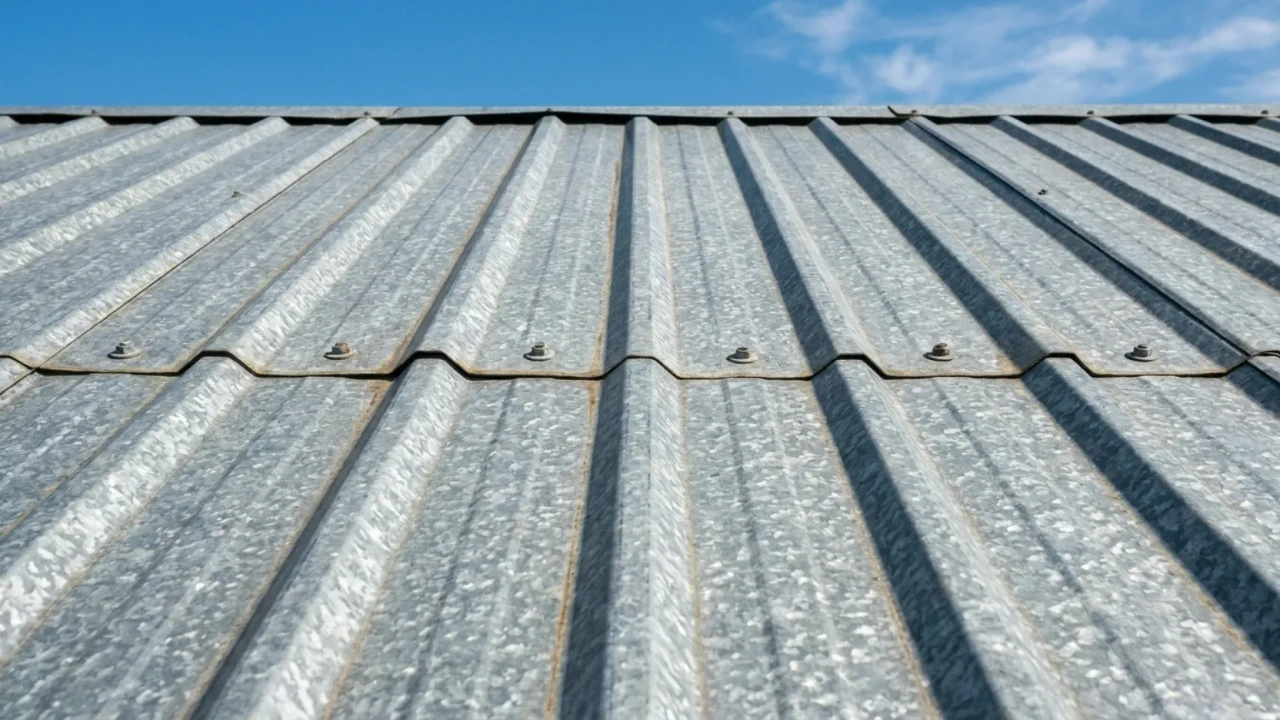
Use Galvalume for residential standing seam roofs. The standing seam profile keeps fasteners concealed, which eliminates the exposed fastener edge protection advantage that galvanized steel has over Galvalume. The longer lifespan, better energy performance, and superior corrosion resistance in open atmospheric exposure all favor Galvalume. Most residential metal roofing warranties in the U.S. are written specifically for Galvalume substrates, not galvanized.
Use galvanized steel for agricultural buildings, barns, and utility structures. When a building has a shorter intended lifespan, sits on a budget that does not support the Galvalume premium, or involves direct contact with lime, fertilizers, or wet concrete, galvanized steel is an appropriate choice. Its stronger edge galvanic protection also makes it better suited for heavily-cut panel applications in agricultural construction where panels are frequently trimmed in the field.
For painted panel systems, either material can be appropriate. When a PVDF or polyester paint coating is applied over either substrate, the paint becomes the primary protective layer. The substrate choice matters less in a painted system, though Galvalume still provides a better corrosion backup if the paint is ever scratched or chipped.
- Confirm whether your roof design uses concealed or exposed fasteners concealed favors Galvalume; exposed creates more edge scenarios where galvanized has an advantage
- Identify any contact points between panels and concrete, masonry, or pressure-treated lumber address with barriers if Galvalume is selected
- Check the manufacturer's warranty requirements for the panel profile being installed most residential warranties require Galvalume substrate
- If considering an agricultural or utility building with a 25 to 30 year horizon, galvanized steel can be a cost-effective and appropriate choice
- For painted panel systems, confirm the paint coating type: PVDF (Kynar) outperforms polyester significantly in San Antonio's UV environment
- Discuss the full material specification with your contractor in writing, not just the panel profile or color
This table covers every practical comparison point you need when making a material decision for a metal roof in San Antonio. Use it alongside a conversation with your contractor to confirm the right specification for your specific building.
| Comparison factor | Galvalume steel | Galvanized steel | Winner for San Antonio residential |
|---|---|---|---|
| Coating composition | 55% aluminum, 43.4% zinc, 1.6% silicon | 100% zinc (or zinc-iron alloy) | Galvalume |
| Governing ASTM standard | ASTM A792 | ASTM A653 | Both have clear standards |
| Corrosion resistance (open atmosphere) | 2 to 4x longer than galvanized | Good but depletes faster | Galvalume |
| Cut edge protection | Good zinc provides galvanic protection | Better pure zinc migrates more aggressively | Galvanized |
| Solar reflectance (unpainted) | 0.60 to 0.65 Energy Star eligible | 0.35 to 0.50 weathers lower | Galvalume |
| Expected lifespan (San Antonio climate) | 50 to 65 years | 25 to 40 years | Galvalume |
| Material cost per sq ft | 5% to 15% higher than galvanized | Lower upfront cost | Galvanized (upfront only) |
| Cost per year of service life | Lower longer service spreads cost | Higher shorter life, more replacement cycles | Galvalume |
| Contact with concrete or treated lumber | Requires barrier alkaline sensitivity | More tolerant of alkaline contact | Galvanized |
| Standard for painted systems | Preferred substrate for most manufacturers | Compatible but less common for residential | Galvalume |
| Residential manufacturer warranties | Most warranties require Galvalume substrate | Typically not covered under residential warranties | Galvalume |
| Agricultural and utility buildings | Works well; slight cost premium | Excellent standard choice for ag applications | Galvanized (for ag use) |
- Material substrate confirmed in writing: Galvalume (ASTM A792) or galvanized (ASTM A653)
- Coating weight specified: AZ50 or AZ55 for Galvalume; G90 minimum for galvanized residential
- Panel profile confirmed: standing seam, corrugated, or R-panel and whether fasteners are concealed or exposed
- Paint system confirmed if applicable: PVDF (Kynar) or SMP polyester, and solar reflectance value
- Mill certificate or product spec sheet available from the contractor on request
- Any contact between Galvalume panels and concrete, masonry, or treated lumber identified and addressed with barriers
- Copper flashing eliminated from the design use galvanized or Galvalume flashing with metal panel systems
- Fasteners confirmed as compatible with the panel material stainless or zinc-plated for Galvalume systems
- All cut panel edges sealed or treated per manufacturer recommendation where panels are field-cut
- Manufacturer's warranty document reviewed before contract signature not just a verbal summary
- Warranty requirements confirmed to match the specified material and installation method
- Contractor's workmanship warranty documented separately from the manufacturer's material warranty
- Energy Star certification confirmed if qualifying for energy efficiency credits is part of the decision
- Maintenance schedule provided in writing: when to inspect, what to look for, and what voids the warranty
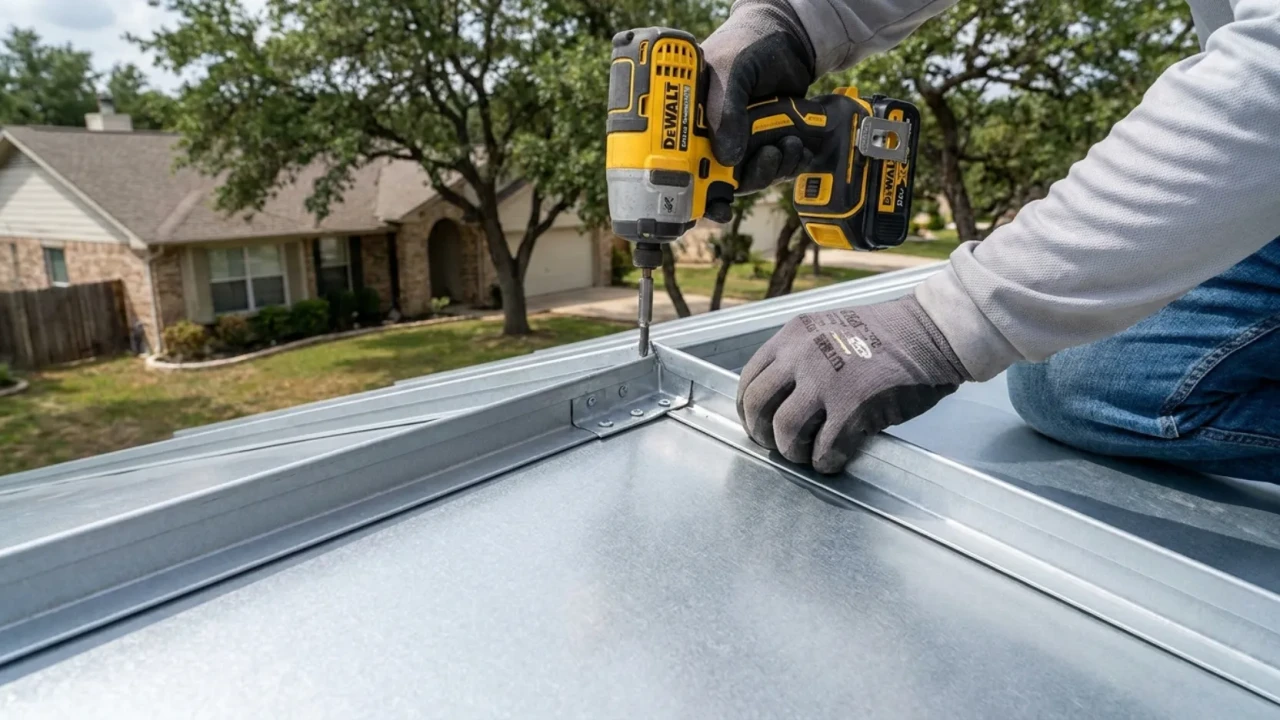
Not sure which material is right for your San Antonio roof?
We will walk your property, evaluate the existing roof or framing conditions, and give you a straight recommendation on whether Galvalume or galvanized steel is right for your specific situation no sales pressure, no obligation.