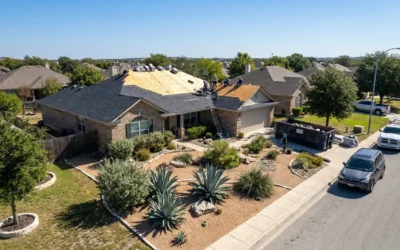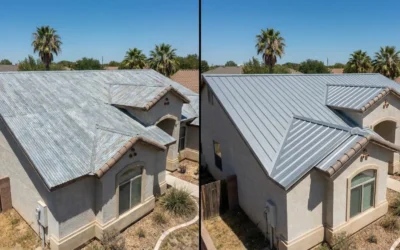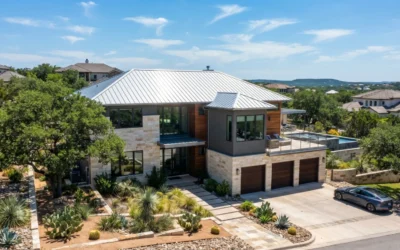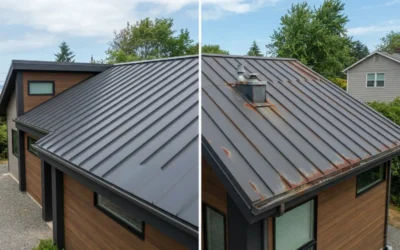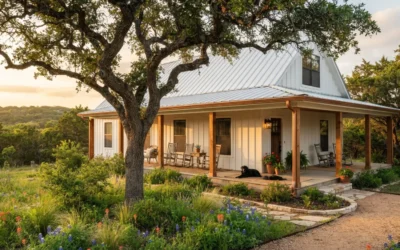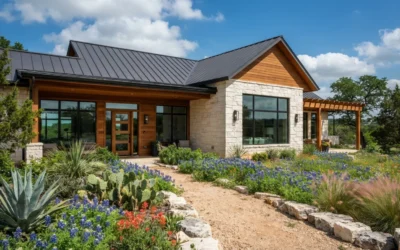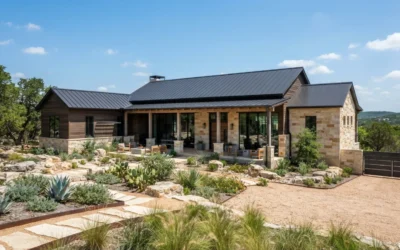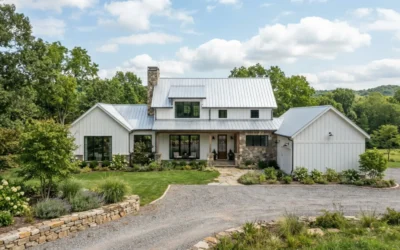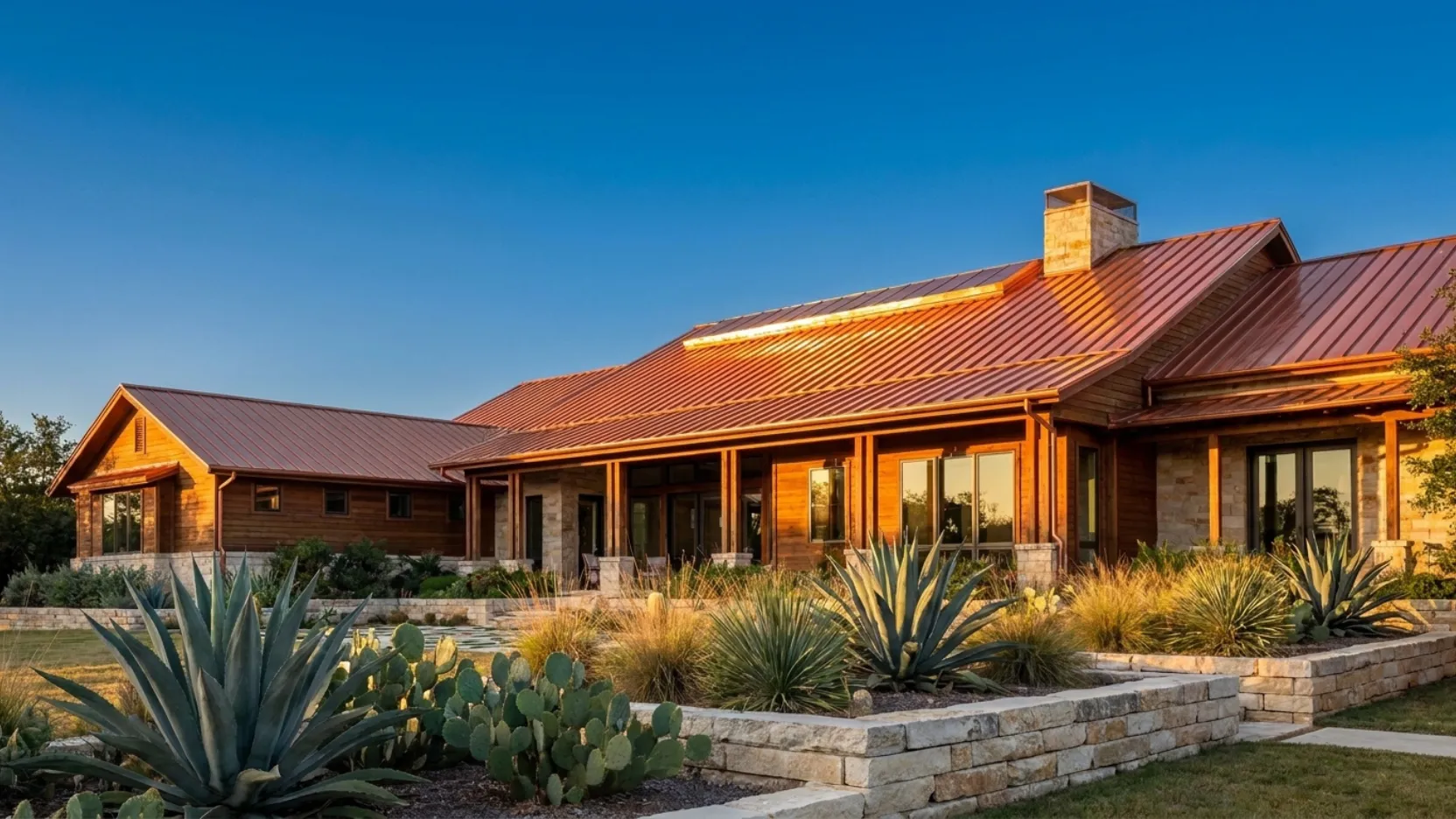
Copper roofing is one of the most beautiful and longest-lasting materials available to San Antonio homeowners. It is also the most expensive. This guide gives you the full picture: every genuine advantage, every real drawback, what copper actually costs in 2026, and how to know whether it is the right investment for your home.
Copper roofing occupies a unique position in the world of residential roofing. It is the material that shows up on historic courthouses, high-end custom homes, and centuries-old European cathedrals. It requires no paint, no coating, no periodic treatment, and no replacement for the life of most buildings. It is also significantly more expensive than any other residential roofing option, requires a contractor with specific experience to install correctly, and carries a few compatibility restrictions that matter in a Texas climate.
If you are a San Antonio homeowner considering copper roofing, you deserve a straight, complete answer to the question of whether it is worth it for your specific situation. This guide covers every genuine pro, every real con, what you will actually pay in 2026, how copper behaves in San Antonio's climate, and what questions to ask any contractor who quotes you on a copper installation.
The homeowners who are happiest with copper roofing are those who understand what they are actually buying. Copper is not a premium version of an asphalt shingle roof. It is a fundamentally different category of investment: a material that will very likely outlast every other component of your home, never need replacement, and become more beautiful with age. The question is not whether copper is good. It clearly is. The question is whether the specific benefits justify the specific cost for your home, your budget, and your plans for the property. This guide gives you the information to answer that question honestly.
The single most compelling argument for copper roofing is its lifespan. While asphalt shingles last 20 to 30 years, standing seam steel lasts 40 to 60 years, and even premium aluminum systems top out around 50 years, copper roofs on well-maintained historic buildings have been documented at 100, 150, and even 200 years of continuous service. For a San Antonio homeowner, that means a copper roof installed today could still be on the house when your grandchildren inherit the property.
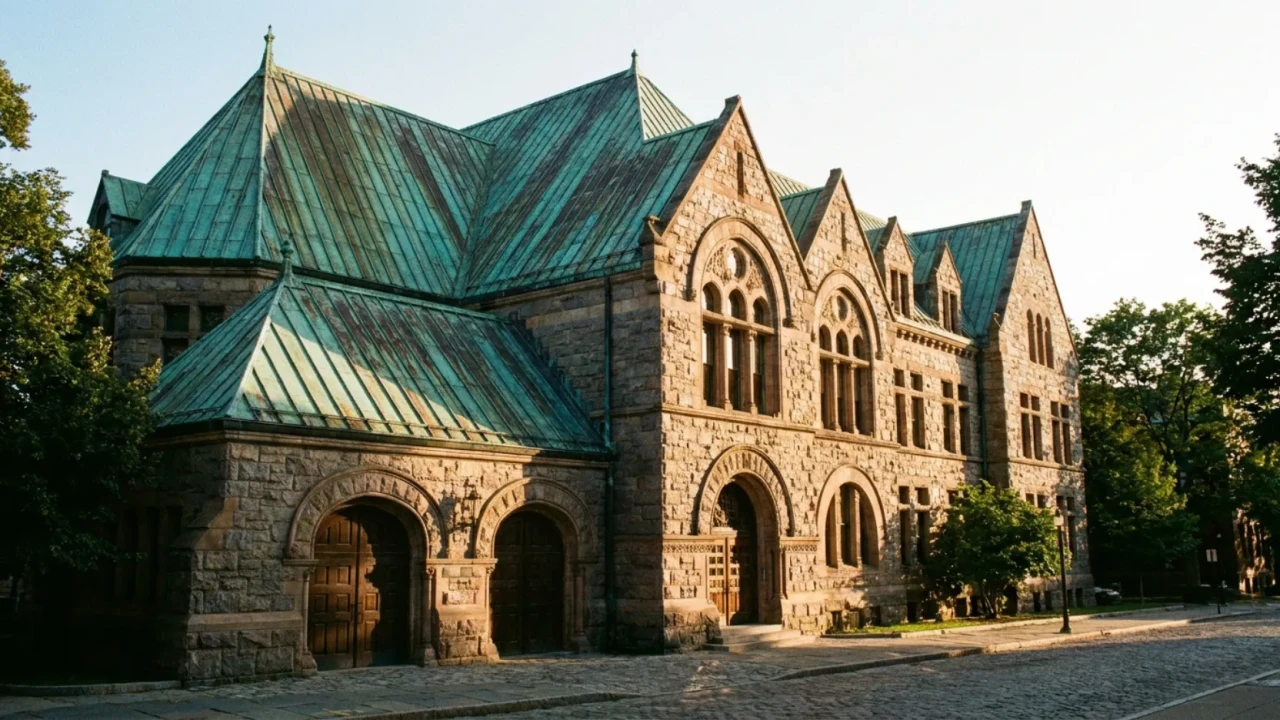
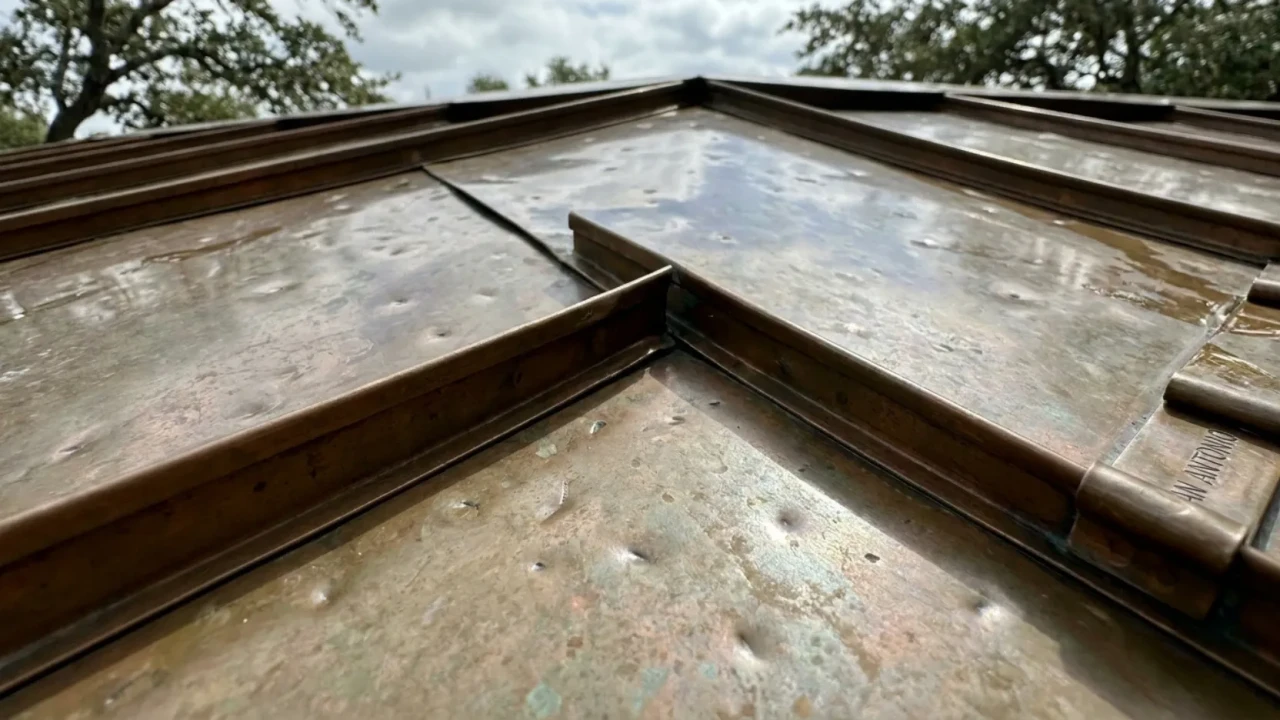
The reason copper achieves this lifespan is its corrosion behavior. Unlike steel, which corrodes by forming iron oxide (rust) that actively destroys the base metal, copper forms a stable patina layer of copper carbonate and copper sulfate compounds. This patina layer does not continue to eat into the copper beneath it. Instead, it becomes a hard, adherent protective barrier that actually slows further corrosion. The patina is self-healing: if it is scratched or abraded, it reforms naturally.
For a San Antonio home, the lifespan advantage translates directly into a financial argument over a long time horizon. A homeowner who installs asphalt shingles will replace that roof three to five times during the period a single copper roof would still be performing. Each replacement carries material cost, labor cost, and the disruption of a full roof replacement project.
- Self-forming patina acts as a stable protective barrier that does not consume the base metal
- No paint or coating that can fail, peel, or require reapplication
- Thermal expansion managed by standing seam profile design panels float rather than stress the fasteners
- Natural antimicrobial properties prevent moss, algae, and lichen growth that degrades other roofing materials
- Soft material that absorbs hail impact without cracking or fracturing the way tile or brittle coatings do
Most roofing materials require ongoing maintenance to achieve their rated lifespan. Asphalt shingles need periodic inspection and granule loss monitoring. Steel panels need fastener and sealant checks every few years. Even premium systems with PVDF paint coatings eventually need touch-up or recoating to maintain full corrosion protection. Copper needs none of this. Its protection is built into the material itself, and it improves over time as the patina develops.
For San Antonio homeowners, this matters in two ways. First, it eliminates the recurring cost and inconvenience of maintenance service calls. Second, it eliminates the risk of deferred maintenance leading to premature failure. The most common reason metal roofs in San Antonio fail before the end of their potential lifespan is not material failure, but maintenance failure: sealants that were never reapplied, fasteners that backed out and were never replaced, and rust that was never treated at the surface stage. None of those failure paths apply to copper.
The one maintenance task that does apply to copper roofing is keeping gutters and valleys clear of debris. Leaves, pine needles, and organic matter that sit against copper in wet conditions can trap moisture and create localized chemistry that affects the patina color development in those areas. Keeping the roof surface clear and gutters flowing freely is the entirety of what most copper roof owners ever need to do. That is not a maintenance burden. It is the same basic care any roofing system needs.
- Clear gutters and valleys of leaves and debris at least once per year in San Antonio's oak and live oak neighborhoods
- Inspect the roof every 5 to 10 years or after a major hail event copper dents but does not crack or lose coating
- Check flashing penetrations around chimneys and HVAC curbs the only sealant-dependent connections on a copper roof
- Never apply paint, sealant, or waterproofing products to the copper surface they are not needed and can interfere with patina development
- Do not pressure wash the roof it is not necessary and can damage developing patina uniformity
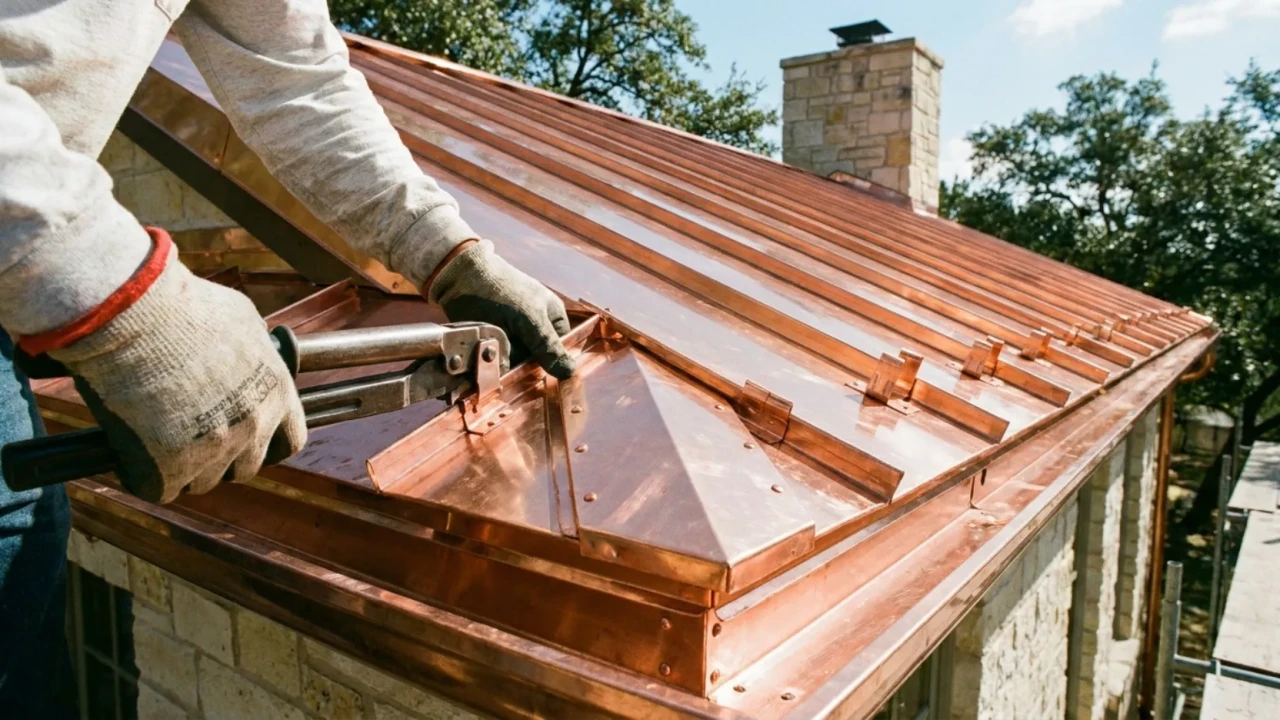
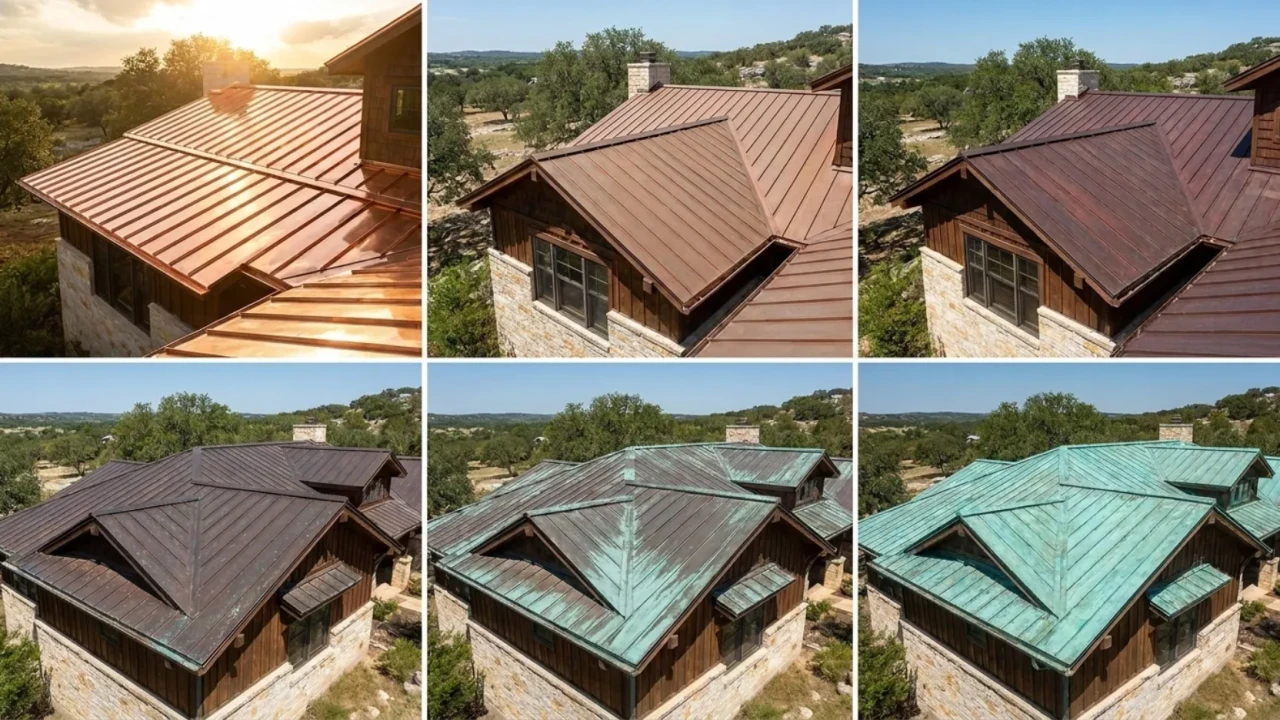
Every other roofing material looks best the day it is installed and degrades visually from there. Asphalt shingles lose granules and fade. Steel panels develop surface oxidation. Clay tile chips and stains. Copper works in reverse. A new copper roof has a bright, warm reddish-brown appearance that is attractive but relatively unremarkable. Over the following years and decades, it transforms through chocolate browns, dark charcoal tones, and eventually the iconic verdigris green patina that makes copper roofing instantly recognizable as a premium material.
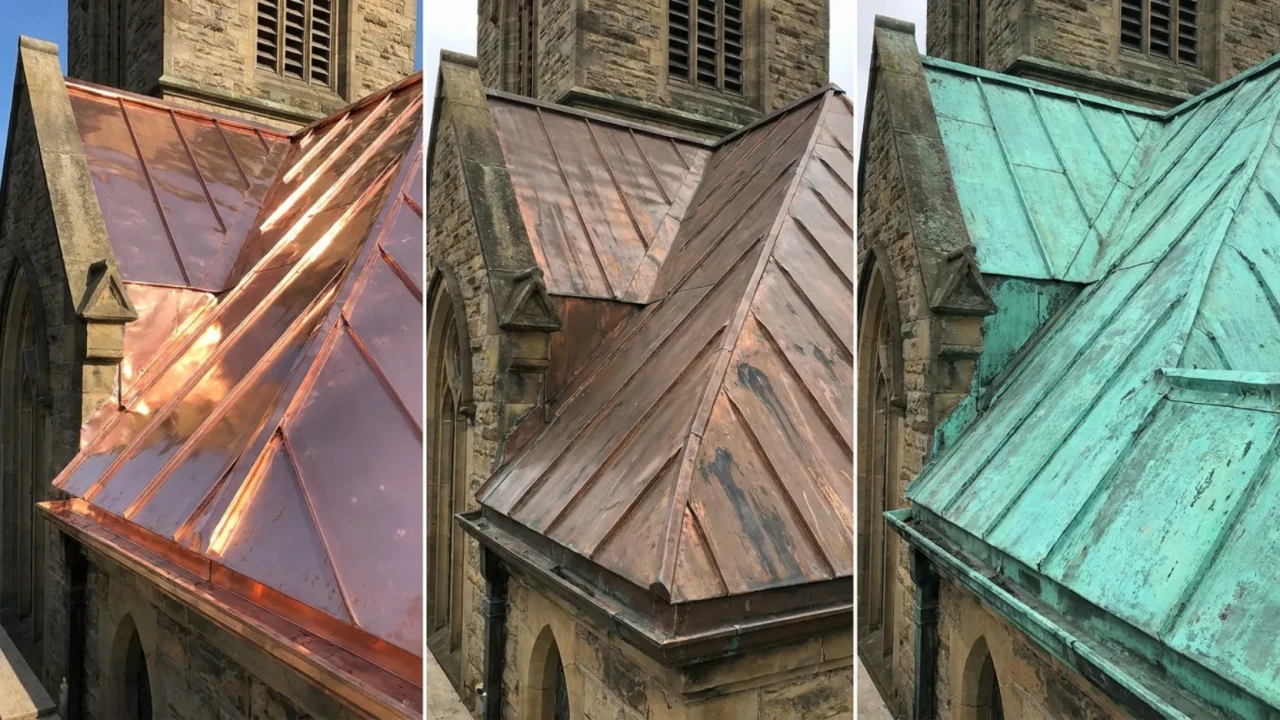
In San Antonio's climate, the patina timeline typically unfolds over 15 to 25 years. The initial bright copper color lasts for the first one to two years before the surface begins oxidizing to a matte brown. That brown tone deepens and darkens over the next decade before the green verdigris begins developing, typically first in areas with more moisture exposure such as valleys and north-facing slopes. Full patina development across the entire roof takes longer in dry inland climates like San Antonio than in coastal or high-humidity environments.
From a property value standpoint, real estate appraisers categorize copper roofing as a premium feature that contributes to home value. The contribution is not dollar-for-dollar on the full installation cost, but on a high-end custom home in neighborhoods like Alamo Heights, Terrell Hills, or the Dominion, a copper roof is a recognized quality signal that supports the property's position in the market.
- Confirm that gutter design directs all copper roof runoff away from concrete driveways, painted siding, and masonry surfaces
- Discuss patina uniformity with your contractor shaded areas develop patina faster than sun-exposed areas, which can create a two-tone appearance during the transition
- Consider the architectural style match: copper reads best on traditional, craftsman, and historic-influenced architecture common in San Antonio's older neighborhoods
- Document the installation with photos for your homeowners insurance file copper's replacement value is significantly higher than standard roofing materials
- Inform your insurance carrier of the copper installation to ensure your policy reflects the appropriate replacement cost coverage
San Antonio sits in one of the most active hail corridors in the United States, and copper handles hail better than almost any other residential roofing material. The reason is copper's natural ductility. Unlike asphalt shingles, which crack and lose protective granules when struck by hail, or brittle materials like clay tile that fracture under impact, copper dents without losing structural integrity or protective capability. A dented copper panel is still a fully waterproof, fully protective copper panel.
The same ductility that protects against hail impact also gives copper exceptional performance through the thermal expansion and contraction cycles that stress San Antonio roofs year-round. The temperature difference between a San Antonio roof in January and one in August can exceed 120 degrees Fahrenheit. A copper standing seam system is specifically designed for this movement: the panels float within the seam profile and expand and contract freely without stressing sealants, fasteners, or the panel face.
After a hail event in San Antonio, a copper roof may show cosmetic denting that other roofing systems would not. This is a trade-off worth understanding upfront. The softness that makes copper so durable from a structural standpoint is also what makes it susceptible to visible dimpling from golf-ball-sized hail or larger. The denting does not compromise the roof's waterproofing ability or shorten its lifespan in any meaningful way. However, your homeowners insurance adjuster may include cosmetic denting in a hail damage claim. Discuss this scenario with your insurance carrier before installation to understand how your policy handles cosmetic hail damage on copper specifically.
- Confirm the installation meets local San Antonio wind uplift requirements panel clip spacing and seam profile both affect wind rating
- Discuss hail denting with your insurance carrier before installation understand how cosmetic damage is handled under your policy
- Lightning protection: if adding a lightning rod system, copper roofing integrates naturally with copper conductor systems
- Verify that all flashings at penetrations are also copper mixing metals creates galvanic corrosion problems
- Ensure the standing seam clip system allows for the full thermal movement range calculated for your specific roof geometry
Asphalt shingles are one of the largest contributors to construction and demolition waste in the United States. Every 20 to 30 years, a full shingle roof replacement generates thousands of pounds of tear-off material that typically ends up in a landfill. A homeowner who uses copper instead of asphalt over a 100-year period eliminates four or five complete roof replacement cycles and the landfill waste each generates.
Copper itself is 100 percent recyclable and retains its material value at end of life. When a copper roof eventually does need to be replaced whether in 100 or 150 years the removed panels have significant scrap value and can be recycled into new copper products without loss of material quality. The energy required to recycle copper is a fraction of the energy required to produce new copper from ore. From a full lifecycle perspective, copper's environmental footprint per year of service life is among the lowest of any roofing material.
- Ask your contractor about copper sourcing domestically milled copper from certified suppliers supports responsible mining practices
- Copper roof runoff carries dissolved copper into the local watershed consider this in environmentally sensitive locations near waterways
- Document the copper installation for potential LEED or green building certification points if applicable to your project
- At end of life, copper panels should go to a metal recycler, not a general waste hauler the material has significant commodity value
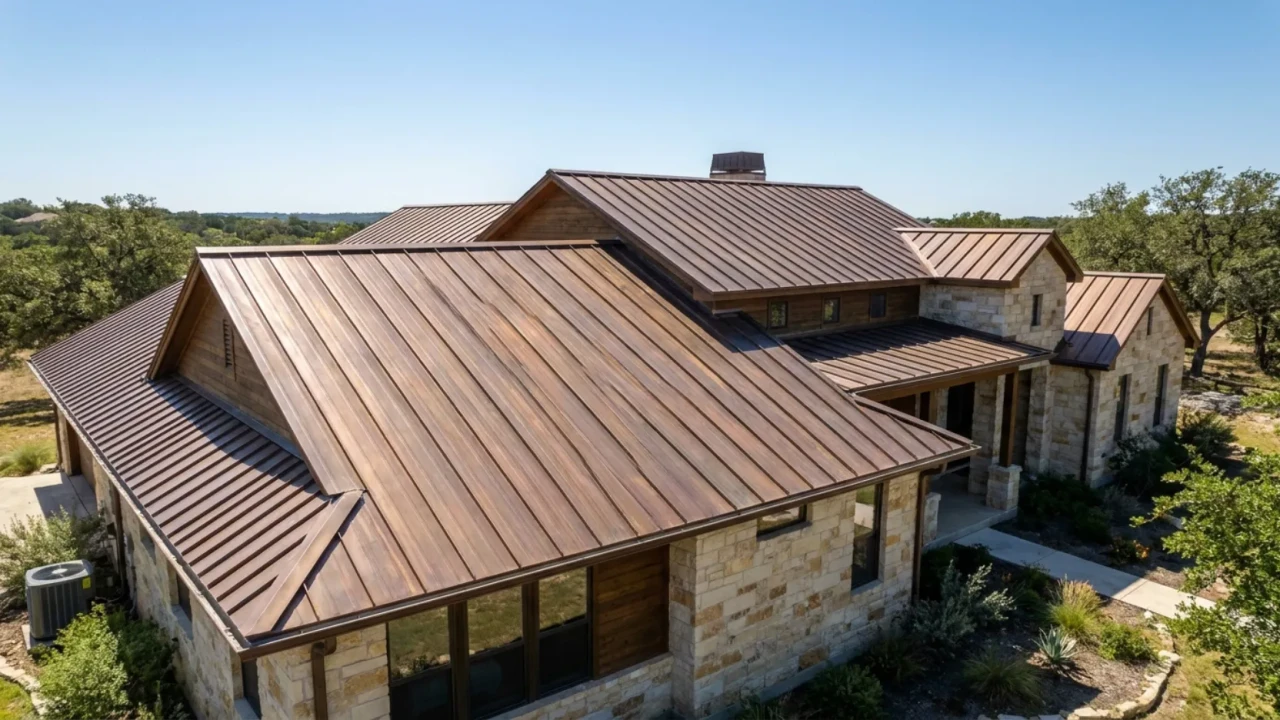
There is no softening this reality: copper roofing is extraordinarily expensive compared to every alternative. The cost is driven by copper's commodity price on global markets, the specialized fabrication required to produce roofing-grade copper panels, and the skilled labor required to install the material correctly. Unlike steel or aluminum, where installation can be learned by most experienced roofing crews, copper installation requires specific training in soldering, expansion joint management, and panel forming that not every San Antonio roofing contractor possesses.
- Get at least two written quotes from contractors with specific copper roofing experience not just general metal roofing contractors
- Confirm the copper gauge specified: 16 oz is standard for residential standing seam; 20 oz is used for more complex profiles
- Ask whether the quote includes copper valley flashing, copper ridge caps, and copper fascia or if those are priced separately
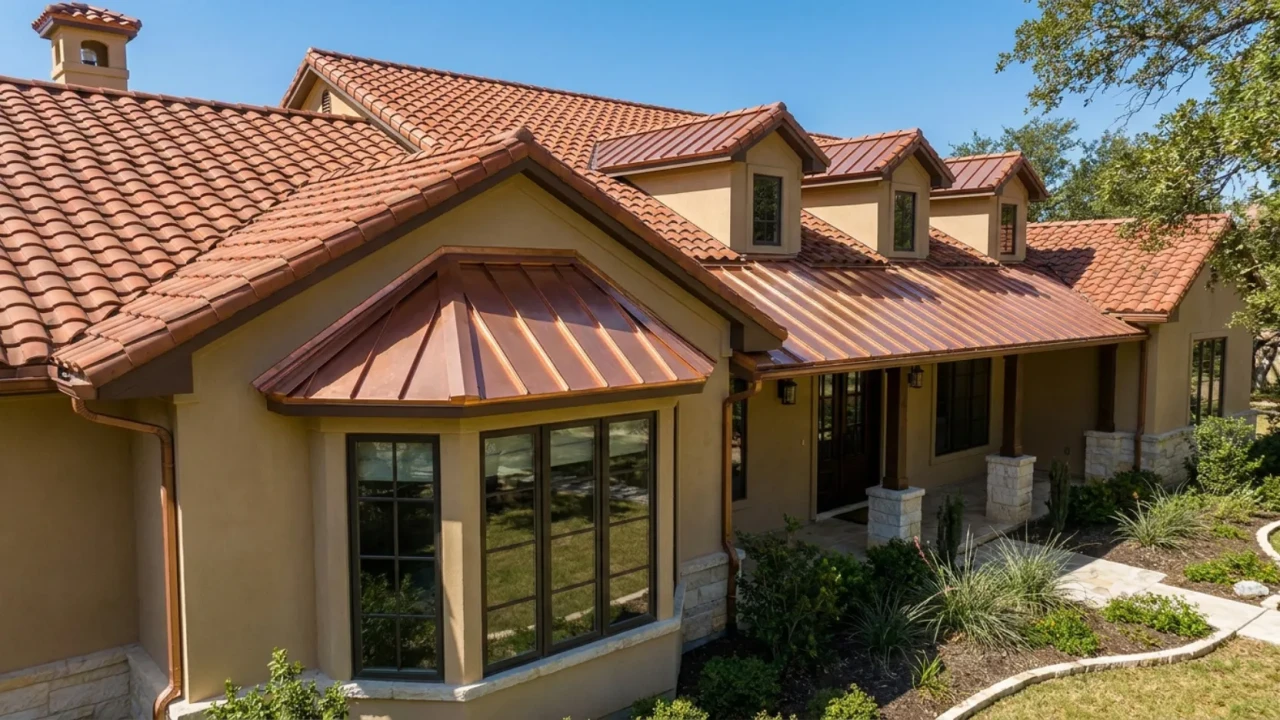
- Consider a partial copper strategy: copper on dormers, bay windows, or porch roofs paired with a quality steel or tile system on the main roof
- Lock in material pricing in writing before committing to a start date if copper commodity prices are volatile at the time of your project
Copper roofing is a specialized skill. The techniques required for proper copper installation including soldering watertight seams, designing and cutting expansion joints, managing the material's thermal movement over long panel runs, and forming custom flashing profiles are not part of standard roofing training. A crew that installs Galvalume steel panels every day does not automatically know how to work with copper, even if they claim otherwise.
The consequences of incorrect copper installation are serious. Improperly managed thermal expansion causes panels to buckle, seams to split, and fasteners to work loose over time. Incorrect solder joints on flat-seam copper work create leak points that are difficult to locate and expensive to repair on an otherwise sound installation. And because copper is so expensive, a failed installation is not just a roofing problem it is a significant financial loss that may not be covered under a contractor's general liability policy if the installation method was the cause.
When vetting a contractor for a copper roofing project in San Antonio, ask three specific questions before any other conversation happens. First: Can you show me photos and references from copper roofing projects you have completed in the last five years? Second: What copper gauge and standing seam clip system do you specify for a residential project in our climate, and why? Third: Do you fabricate your own panels on site, or do you use pre-fabricated panels from a copper panel manufacturer? A contractor who cannot answer the second question confidently or who has no verifiable copper references should not be given the job regardless of their general reputation.
- Request and verify at least three copper-specific references from completed San Antonio area projects
- Ask to see photos of the contractor's copper work at different stages: raw panel, seam forming, and finished installation
- Confirm the contractor carries the correct liability coverage for copper installation value a $50,000+ roof needs commensurate coverage
- Ask specifically about their expansion joint design for your roof's longest panel run and panel orientation
- Confirm whether all penetration flashings and valley flashing will also be copper mixed-metal installation creates galvanic corrosion problems
- Request a written workmanship warranty separate from the material warranty
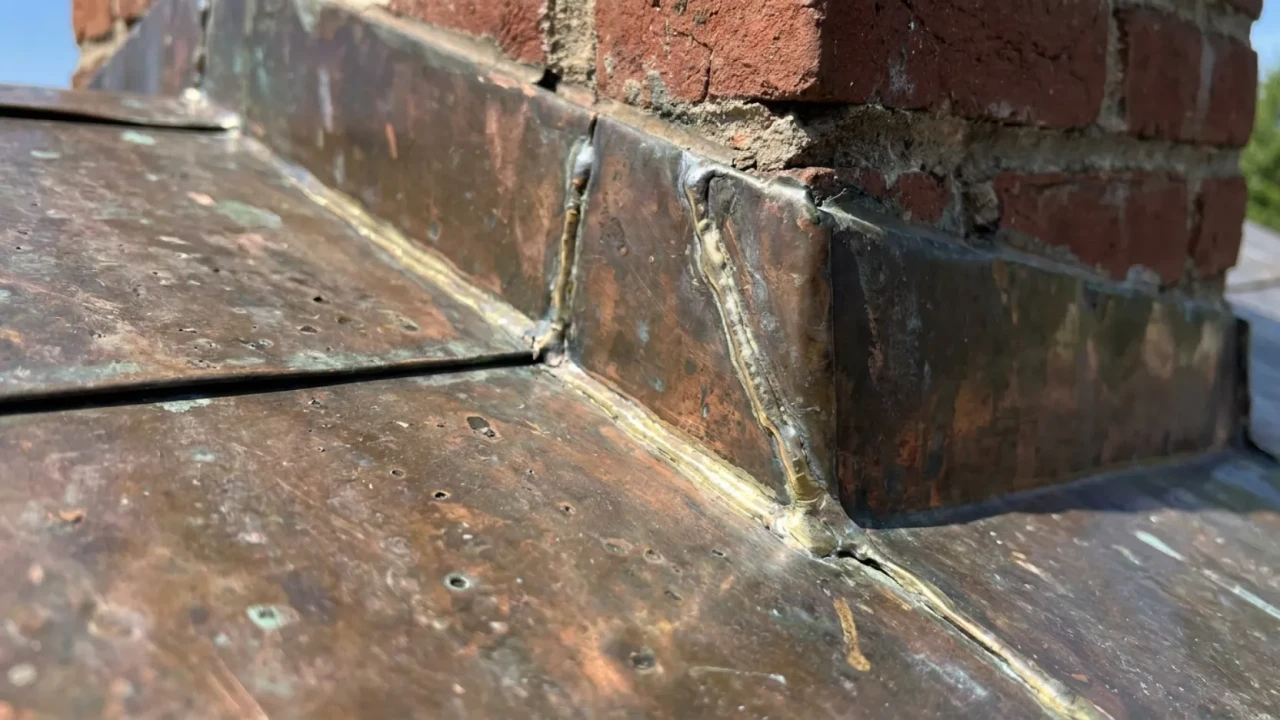
Copper sits near the top of the galvanic series, which means it acts as a cathode in any contact with less noble metals. When copper contacts steel, aluminum, zinc, or galvanized materials in the presence of moisture, it accelerates corrosion of the other metal dramatically. This is not a theoretical concern. It is one of the most frequently cited causes of early failure in copper roofing installations done by crews without specific copper experience.
The practical implications for a San Antonio copper roofing project are significant. All flashings must be copper, not galvanized steel. All fasteners that contact the copper panels must be copper, stainless steel, or specifically rated for copper contact. Copper runoff water that drains onto galvanized gutters, aluminum window frames, or galvanized steel fascia will accelerate corrosion of those surfaces. In a region like San Antonio where existing construction commonly uses galvanized materials, planning for copper compatibility requires a thorough design review before installation begins.
- Inventory all metals currently present on the home's exterior: gutters, fascia, soffit, window frames, downspouts
- Confirm all penetration flashings will be copper no galvanized or aluminum substitutions
- Confirm all fasteners used in the copper installation are copper, silicon bronze, or stainless steel rated for copper contact
- Plan gutter system to collect and direct copper runoff away from galvanized or aluminum components
- Ask the contractor to provide a written metals compatibility review as part of the design consultation
Copper's softness is both a strength and a limitation. The ductility that makes it so resistant to hail damage structurally also means it shows cosmetic dents from hail more visibly than harder metals. On a standing seam copper roof, golf-ball-sized hail leaves visible dimpling across the panel faces that does not affect performance but is apparent on visual inspection. Homeowners who understand this before installation accept it without concern. Homeowners who are surprised by it after a hail event can be frustrated, even when the roof is performing exactly as intended.
Rain noise on metal roofing is a concern that applies to all metal systems but is specifically relevant to copper because of the premium homeowners pay for the material. Copper without adequate underlayment or solid decking can transmit rain and hail noise into the living space more noticeably than asphalt shingles over a vented attic. The solution is straightforward: a solid decking substrate with an appropriate acoustic underlayment eliminates rain noise as an issue. The key is specifying this correctly at the design stage, not as an afterthought when the homeowner is already unhappy with the sound level.
The noise concern for copper roofing in San Antonio is almost entirely a specification issue, not an inherent material problem. A copper standing seam system installed over solid plywood or OSB decking with a closed-cell foam or rubberized asphalt acoustic underlayment performs very similarly to any other premium roofing material from a noise standpoint. The issue arises when copper is installed over open purlins or with a thin felt underlayment on a project where cost was prioritized over the full correct specification. If your contractor proposes open-framed installation or minimal underlayment, push back and ask for the full solid-decking acoustic system.
- Specify solid plywood or OSB decking under the copper installation no open purlin framing for residential applications
- Specify an acoustic or rubberized asphalt underlayment between the decking and the copper panels
- Discuss cosmetic hail denting with your insurance carrier before installation understand the claims process for cosmetic damage on copper
- Inspect attic insulation levels: adequate attic insulation reduces sound transmission from the roof to living spaces
- Accept that minor dimpling from hail is a characteristic of copper roofing, not a defect it does not affect waterproofing or longevity
Copper theft is a documented problem across the United States, driven by the material's consistently high commodity value. In most residential contexts, a copper roof on a regularly occupied home with normal visibility from the street presents a low theft risk. The logistics of removing copper panels from an occupied home in a San Antonio neighborhood are significant enough to deter most opportunistic theft. However, on vacation homes, infrequently occupied properties, properties in isolated locations, or commercial buildings with limited foot traffic, copper theft has occurred and is a real consideration.
The risk is more commonly associated with copper flashing, copper gutters, and copper downspouts than with full panel systems, because those components are more accessible and easier to remove quickly. For a full standing seam copper roof, the panels are mechanically interlocked in a way that makes rapid removal difficult. However, copper gutters and downspouts on a home that is unoccupied for extended periods do present a legitimate theft risk that should be factored into both property management and insurance planning.
- Notify your homeowners insurance carrier of the copper installation and confirm coverage at full replacement value
- For vacation or infrequently occupied properties, consider a monitored security system with exterior camera coverage of the roofline
- Document the copper installation thoroughly photos, receipts, and contractor paperwork for any future insurance claim
- Copper gutters and downspouts on unoccupied properties represent the highest theft risk consider alternatives if this is a concern
Use this table to see how copper stacks up against the most common alternatives for San Antonio residential roofing projects.
| Factor | Copper roofing | Steel standing seam (Galvalume) | Architectural asphalt shingles | Clay or concrete tile |
|---|---|---|---|---|
| Expected lifespan (San Antonio) | 100 to 200+ years | 50 to 65 years | 20 to 30 years | 30 to 50 years |
| Installed cost per sq ft (2026) | $25 to $45 | $8 to $14 | $3 to $6 | $10 to $20 |
| Maintenance required | Minimal gutter clearing only | Low fastener and sealant checks | Moderate periodic inspection and granule monitoring | Moderate cracked tile replacement |
| Painting or coating required | Never | If unpainted, never; if painted, recoat at 25 to 40 years | Not applicable | Not applicable |
| Hail impact behavior | Dents but does not crack or lose coating | May dent; coating may chip at impact | Granule loss and mat cracking | Fractures and cracks; coating chips |
| Curb appeal trajectory | Improves over time as patina develops | Stable but weathers to matte | Degrades from day one | Stable; fading and staining over time |
| Energy Star (unpainted) | Yes aluminum-rich patina reflects well | Yes Galvalume qualifies | Only with cool-roof rated products | Varies by color |
| Recyclability | 100% full commodity value retained | 100% recyclable steel | Limited primarily landfill | Partial some tile recycling programs |
| Contractor availability in San Antonio | Limited requires specialist | Wide most metal roofing crews | Very wide any roofing contractor | Moderate tile-trained crews |
| Galvanic compatibility concerns | Strict all contact metals must be compatible | Moderate avoid copper contact | None | None |
Copper roofing is not right for every San Antonio homeowner, and the decision should not be made on aesthetics alone. Here is how to think through the decision honestly.
| Your situation | Recommendation | Reason |
|---|---|---|
| Long-term owner of a high-value custom home in Alamo Heights, Terrell Hills, or similar | Strong candidate for copper | Lifespan, low maintenance, and property value impact all align with long-term ownership of a premium property |
| Planning to sell the home within 10 years | Unlikely to recoup the premium | The cost-per-year advantage of copper only materializes over decades. A quality steel or tile roof is more financially sensible for a shorter ownership horizon. |
| Historic home in King William or Monte Vista districts | Strong candidate for copper | Copper is historically appropriate for many San Antonio historic district homes and may be required or strongly preferred by historic preservation guidelines |
| Budget under $30,000 for the roof | Copper is not practical | At that budget level, a 2,000 sq ft copper roof is not financially achievable. A quality Galvalume standing seam system delivers most of the performance benefits at a fraction of the cost. |
| Want copper aesthetics on a budget | Consider partial copper strategy | Copper on dormers, bay windows, or porch roofs paired with Galvalume on the main roof delivers the visual impact of copper at a manageable cost |
| Concerned about ongoing maintenance and long-term roof performance | Copper is a very good fit | No other material eliminates maintenance concerns as thoroughly as copper does over a long ownership period |
| Home has galvanized gutters, aluminum fascia, and aluminum soffit | Factor in full compatibility upgrade cost | A proper copper installation may require upgrading surrounding metals, adding significant cost to the project beyond the roof panels themselves |
- Ownership horizon confirmed: copper makes the most financial sense for homeowners who plan to stay in the property 20 or more years
- Budget confirmed: full copper roof on a 2,000 sq ft San Antonio home realistically requires $50,000 to $90,000+
- Partial copper strategy evaluated: copper accents on dormers, bays, and porches considered as an alternative to full copper
- Historic district requirements reviewed if applicable: some San Antonio historic districts have specific roofing material requirements
- Insurance carrier notified: homeowners policy updated to reflect copper replacement value before installation begins
- Contractor has provided verifiable references from copper roofing projects completed in the past five years
- Contractor has answered the three vetting questions correctly: references, gauge and clip system specification, and panel fabrication method
- Contractor carries liability coverage appropriate to the project value at minimum $1 million, preferably $2 million for a full copper installation
- Written contract specifies copper gauge, panel profile, clip system, underlayment type, and all associated copper flashings and fasteners
- Workmanship warranty provided separately from the copper material warranty
- All contact metals on the home inventoried: gutters, fascia, soffit, window frames, HVAC penetrations
- Metals compatibility plan in place: incompatible metals identified and upgrade plan included in the project scope
- Copper runoff drainage plan confirmed: gutters designed to direct copper-carrying water away from masonry, concrete, and incompatible metals
- Stain risk surfaces identified: concrete driveways, painted siding, and masonry below drip line noted and protected in the design
- Solid decking and acoustic underlayment specified: no open purlin installation without an explicit discussion and decision
- Expansion joint design reviewed: contractor has calculated the expansion allowance for the longest panel run on your specific roof geometry
Thinking about copper roofing for your San Antonio home?
We will walk your property, assess your roof structure and surrounding metal compatibility, and give you a straight recommendation on whether copper makes sense for your specific situation no sales pressure, no obligation.