
[et_pb_section fb_built=”1″ admin_label=”section” _builder_version=”4.16″ global_colors_info=”{}”][et_pb_row admin_label=”row” _builder_version=”4.16″ background_size=”initial” background_position=”top_left” background_repeat=”repeat” global_colors_info=”{}”][et_pb_column type=”4_4″ _builder_version=”4.16″ custom_padding=”|||” global_colors_info=”{}” custom_padding__hover=”|||”][et_pb_code _builder_version=”4.27.6″ _module_preset=”default” global_colors_info=”{}”]
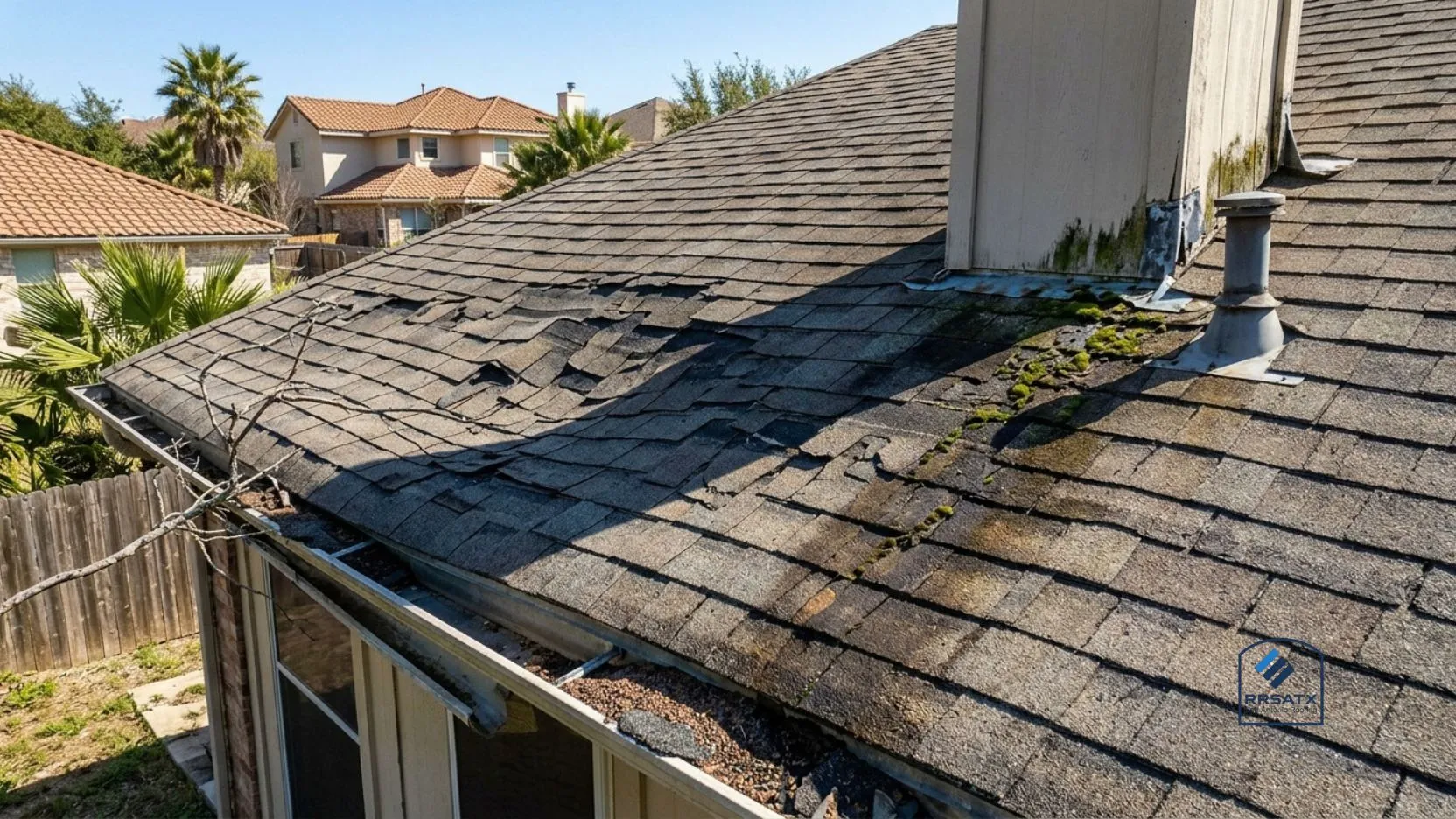
Most roof failures do not start with a collapse. They start small: a soft spot underfoot, a damp ceiling stain, a few grit-covered granules in the gutter. This guide breaks down the four warning signs that mean your San Antonio roof needs immediate repair, why each one matters, and what happens if you wait.
San Antonio roofs work harder than almost any other part of the house. They absorb months of triple-digit summer heat, take direct hits from one of the most active hail corridors in the country, and then get soaked by sudden, heavy downpours that test every seam, flashing point, and shingle edge. Most of the time, a roof handles all of this quietly. But certain signs mean the roof has crossed a line from normal wear into a problem that needs attention right away.
The challenge is that roof damage is rarely obvious from the driveway. A roof can look fine from the ground while water is already finding its way into the attic. This guide walks through the four warning signs that should prompt an immediate call to a roofing contractor, why each one is more serious than it looks, and what tends to happen to San Antonio homeowners who wait too long to act.
A loose shingle or a hairline crack in flashing does not stay small in San Antonio’s climate. Intense UV exposure, sudden temperature swings, and seasonal hail all accelerate minor damage into major damage in a matter of months, not years. Catching one of these four signs early is consistently the difference between a $300 repair and a $10,000 roof replacement.

Active Leak
A water stain on the ceiling is rarely the first sign of a roof problem. It is usually the last sign, the visible result of water that has already been finding its way through the roof system for weeks or months. By the time a brown or yellow ring shows up on drywall, water has typically passed through the roof covering, the underlayment, and the decking before it reaches the ceiling you can see.
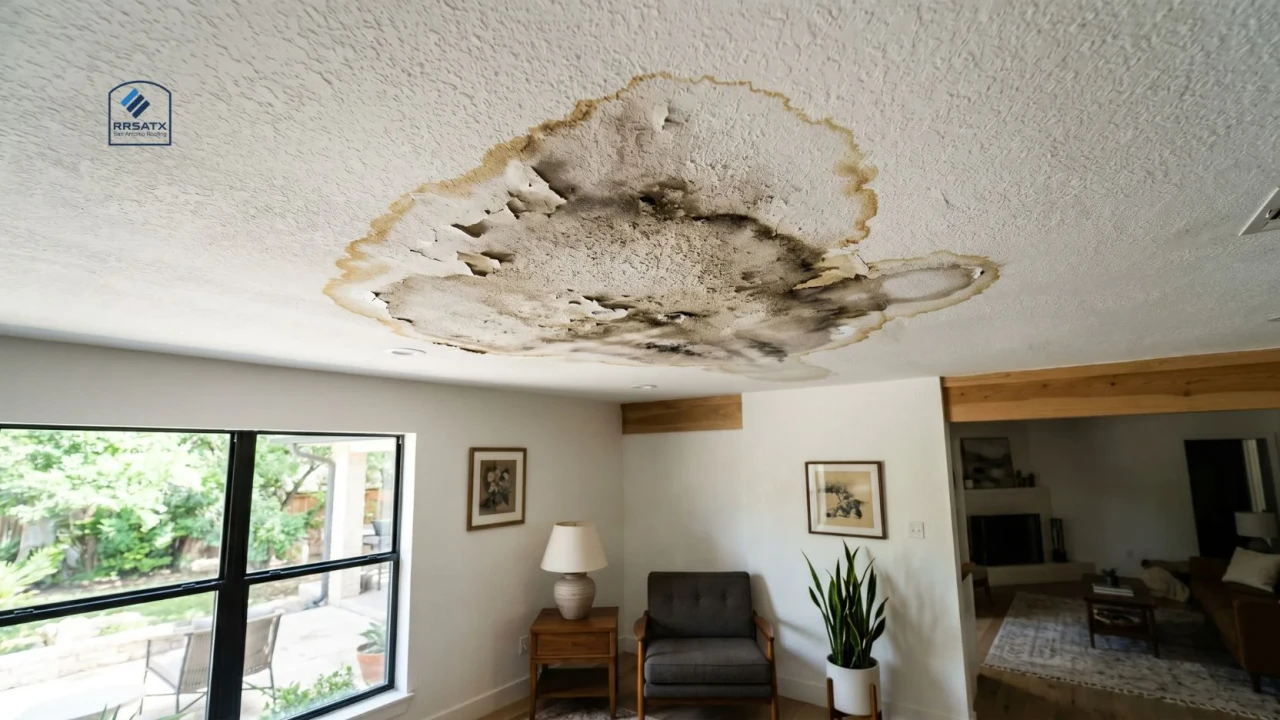
Ceiling stains and discoloration: Brown, yellow, or gray rings on ceilings or upper walls almost always trace back to a roof leak, even when the stain is several feet from the actual entry point.
A musty or damp smell: Persistent moisture inside roof decking and insulation creates an odor before any visible stain appears. This is often the earliest detectable sign of a slow leak.
San Antonio’s heavy seasonal downpours make this sign especially urgent. A small gap in flashing or a cracked shingle that lets in a trickle of water during a light rain can let in a significant volume of water during one of the area’s intense summer thunderstorms. Once water is inside the structure, it can travel along rafters and framing before dropping, which is why the source of a leak is often several feet from where the stain appears on the ceiling.
- Stain location on the ceiling photographed and dated for reference
- Attic checked for damp insulation, wood discoloration, or mold near the suspected leak area
- Contractor inspects the roof surface directly, not just the interior ceiling
- Leak source confirmed with a hose test if the entry point is not immediately visible
- Decking checked for soft spots or rot once the roof covering is opened up
- Repair includes a written workmanship warranty separate from material warranty
Shingle Damage
Asphalt shingles are built with a layer of protective granules embedded in asphalt over a fiberglass mat. Those granules block UV rays and give the shingle its fire resistance and weatherproofing. When a roof starts losing shingles outright, or the remaining shingles are cracking, curling at the edges, or shedding granules, the protective system is failing. This is one of the most visible signs of roof trouble, and it is also one homeowners most often underestimate.
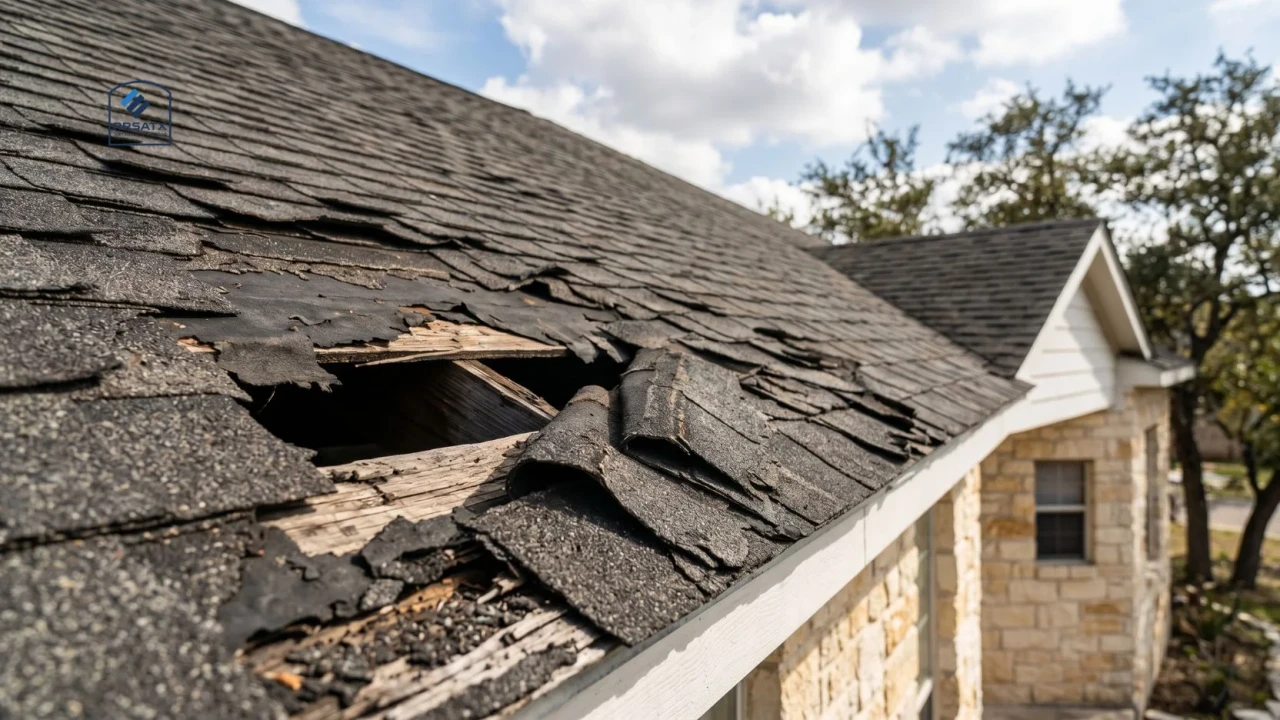
Curling and cracking: Shingle edges that lift, roll, or split open are losing their seal against wind-driven rain and against each other.
Granule loss: A heavy buildup of grit in the gutters after a storm signals impact damage to the shingle surface above.
San Antonio’s combination of intense summer heat and seasonal hail accelerates all of these failure modes. Heat causes the asphalt to dry out and the shingle edges to curl, while hail impact knocks granules loose and can crack the fiberglass mat underneath. Once a shingle starts curling or cracking, it no longer forms a tight, overlapping seal with the shingles around it, which makes wind-driven rain far more likely to get underneath during a storm.
Check your gutters after a heavy rain or a windy day. A small amount of granule loss is normal on any asphalt shingle roof, especially one that is over ten years old. A heavy, consistent buildup of granules, especially after a single storm, is a sign that the shingles have been impacted hard enough to need a closer look. This is one of the easiest checks a homeowner can do without getting on the roof.
- Gutters and downspouts checked for granule accumulation after storms
- Missing or lifted shingles counted and their locations noted before calling a contractor
- Shingle age confirmed: most asphalt shingles in San Antonio are rated for 20 to 30 years
- Replacement shingles matched to existing color and style before any repair begins
- Underlayment checked for exposure or damage anywhere shingles are missing
- Full roof assessed if granule loss or curling is found on more than one slope
Structural
A roof should be straight and firm from ridge to eave. Any visible dip, sag, or wave in the roofline, or a soft, spongy feeling when a roofer walks the surface, means the decking underneath has been weakened, usually by sustained water exposure that has gone undetected for months or longer. This is the most serious of the four signs covered in this guide, because it points to a structural issue rather than a surface-level one.

Visible sagging: A dip or wave visible when viewing the roofline from the street or driveway, especially noticeable along the ridge or between rafters.
Soft or spongy decking: Areas that flex or feel soft when walked on, a sign that the plywood or OSB beneath the shingles has absorbed water and begun to weaken or rot.
Interior ceiling bowing: In advanced cases, the sag is visible from inside the home as well, on ceiling drywall directly beneath the affected roof section.
Sagging rarely happens overnight. It is almost always the end result of a leak that was never repaired, allowing water to repeatedly saturate the same section of decking and framing over months or years. By the time a sag is visible from the ground, the affected wood has typically lost significant structural strength. This is not a sign to monitor and revisit later. It is a sign that calls for an inspection as soon as it is noticed.
If you notice a sag or soft spot from inside the attic or from the ground, do not attempt to walk the roof to investigate further. Weakened decking can give way under a person’s weight. Leave the inspection to a roofing professional who knows how to safely assess the affected area, often from the attic side first.
- Roofline visually checked from the street for dips, waves, or unevenness
- Attic inspected for visible light, water staining, or sagging rafters from below
- No one walks the affected roof area until a professional has assessed the decking
- Contractor identifies the full extent of affected decking, not just the visible soft spot
- Framing checked for rot or weakening in addition to the decking itself
- Repair scope confirmed in writing before any work begins, given the structural nature of this repair
Storm Damage
San Antonio and the surrounding Hill Country are part of one of the most hail-prone regions in the United States. The area has experienced at least sixteen major hail events over the past decade, including a 2016 storm that caused widespread roof damage across Bexar County. Hail season typically runs from spring through early summer, and a single severe storm can leave thousands of roofs across the city with damage that ranges from cosmetic to serious.
The difficulty with hail and wind damage is that it is often invisible from the ground. A roof can look completely normal from the driveway while carrying dozens of impact points that have compromised the shingle surface, cracked the fiberglass mat, or lifted ridge caps just enough to let water underneath during the next rain.
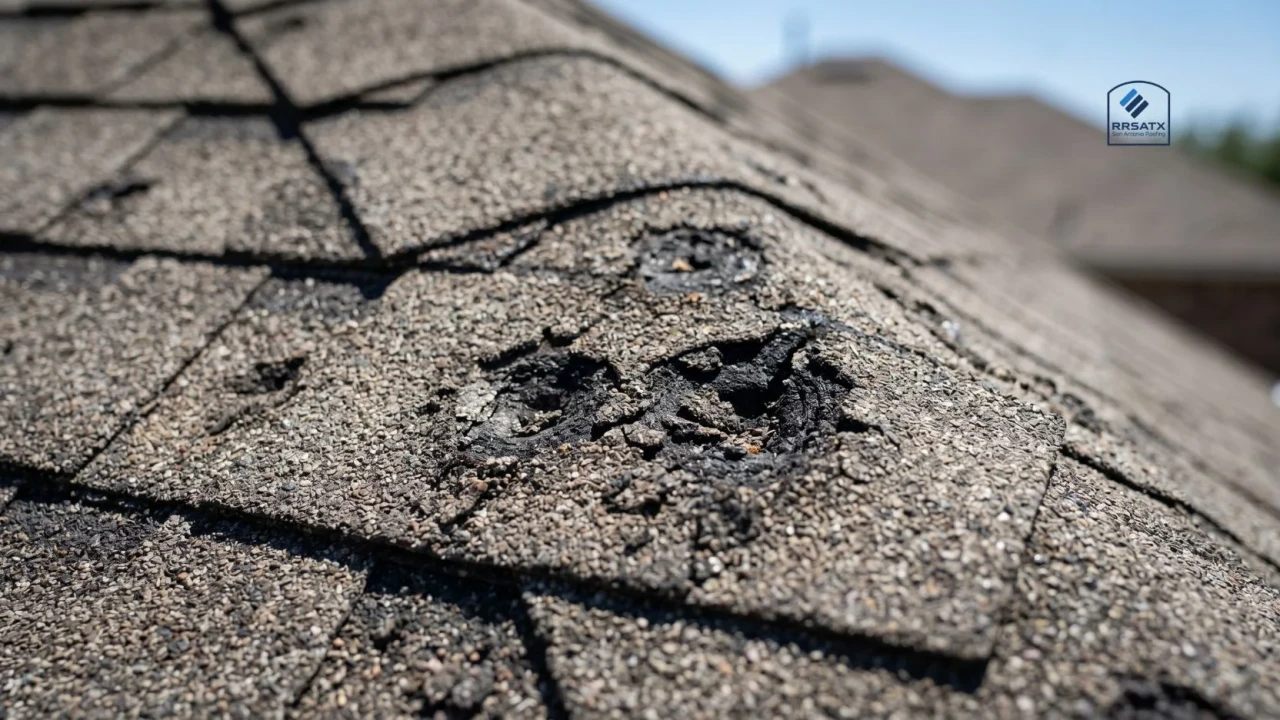
Hail bruising: Dark, soft impact circles where granules have been knocked loose, often clustered on the side of the roof facing the storm.
Ground-level clues: Dented gutters, downspouts, or AC fins are a reliable sign that hail was large enough to affect the roof as well.
File a storm damage claim within the window your policy allows, typically one year in Texas. After a major hail event, get an independent inspection from a licensed San Antonio roofing contractor before, or alongside, the insurance adjuster’s visit. A contractor who walks the roof can document damage the adjuster’s report might miss, and you are entitled to your own professional assessment in addition to the insurance company’s evaluation.
- Roof inspected within 30 days of any hail event with stones one inch or larger
- Gutters, downspouts, vents, and AC units checked for dents as ground-level indicators
- Damage documented with dated photos before any temporary repairs are made
- Independent contractor inspection scheduled separate from, or alongside, the insurance adjuster
- Insurance claim filed within the policy’s reporting window if hail was one inch or larger
- Written estimate compares repair scope against full replacement before deciding which to pursue
These price ranges reflect typical San Antonio market rates in 2026. Actual cost depends on roof pitch, access difficulty, material type, and the size of the affected area. Always get a written estimate before work begins.
| Warning sign | Typical repair cost range | Urgency level |
|---|---|---|
| Ceiling stains or active leak | $175 to $2,000+ | Immediate |
| Missing or curling shingles | $200 to $1,200 | High – within days |
| Sagging roofline or soft decking | $600 to $4,000+ | Immediate |
| Hail or storm damage | $200 to $26,000 | High – within 30 days |
| Granule loss in gutters | $200 to $1,200 | Medium – schedule an inspection |
| Full roof replacement | $5,200 to $26,000+ | Depends on inspection findings |
| Situation | If you wait | If you call now |
|---|---|---|
| Small ceiling stain after a storm | Leak continues, decking and insulation absorb more water, repair cost grows | Source identified and sealed before structural damage develops |
| A few missing shingles | Exposed decking takes on water during the next rain event | Spot repair completed for a few hundred dollars in most cases |
| Soft spot underfoot in the attic | Decking continues to weaken, risk of localized roof failure increases | Affected section replaced before the issue spreads to framing |
| Hail damage with no visible leak yet | Hidden impact damage surfaces as a leak weeks or months later | Damage documented in time to support an insurance claim |
- Ceilings and upper walls checked for stains, discoloration, or bubbling paint
- Attic checked for damp insulation, water stains on rafters, or daylight coming through the roof
- Any musty or damp odor noted, even without a visible stain
- Interior ceiling checked for bowing or sagging beneath any suspected roof problem area
- Roofline viewed from the street for any visible dip, sag, or unevenness
- Gutters and downspouts checked for granule buildup, especially after storms
- Gutters, vents, and AC units inspected for dents that indicate hail size and impact force
- Missing, lifted, or visibly damaged shingles photographed for reference
- Photos taken and dated for every visible sign of damage
- Date of the most recent storm or hail event noted, if applicable
- Insurance policy reviewed for the claim filing window, typically one year in Texas
- At least two written estimates planned for any repair over $500
How urgent is a small water stain on my ceiling?
Can I wait until I have saved up money to fix a sagging roof?
How do I know if hail damaged my roof if I cannot see anything from the ground?
Does homeowners insurance cover these types of roof repairs?
How much does an emergency roof inspection cost in San Antonio?
How quickly can a San Antonio roofing contractor respond to an active leak?
Get a free roof inspection in San Antonio, same week scheduling available
Spotted one of these warning signs on your roof? Tell us what you are seeing and we will schedule a free inspection, document any damage with photos, and give you a clear written repair estimate at no cost.
[/et_pb_code][/et_pb_column][/et_pb_row][/et_pb_section]