
A San Antonio hailstorm can turn a quiet evening into a roofing question before the yard is dry. You may see dents in the gutters, granules near the downspouts, or nothing obvious at all, then wonder about the hail damage roof repair cost and whether you should call your insurer first.
A single online average won’t tell you what your roof needs. The practical question is, what factors determine the repair scope for this specific roof? Material, roof design, damage distribution, age, access, flashing, decking, and insurance requirements all affect the answer.
Table of Contents
- After the Storm Your First Questions Answered
- Why Hail Damage Is More Than Meets the Eye
- Key Factors That Influence Repair Scope
- Repair or Replace How Pros Make the Call
- Navigating Your Homeowners Insurance Claim
- Get a Clear Path Forward for Your Roof
After the Storm Your First Questions Answered
Homeowners often search for one number because they need a quick decision. That number can mislead you. A small repair on one asphalt shingle slope is a different project from restoring several roof planes, replacing damaged flashing, or rebuilding areas where water reached the decking.
Many articles quote a national hail repair average of about $4,250, but they often leave out the details that control real-world pricing. U.S. residential roof repairs averaged $4,699 in 2025, which was 25% higher than the prior four-year average, according to Carrier Management’s coverage of the industry benchmark. That figure provides context, not a quote for your home.
Start with a safe first look
You can inspect the property from the ground without climbing. Check gutters, downspouts, siding, window screens, exterior paint, and the metal cabinet around the outdoor air-conditioning unit. Look for water stains inside, but don’t assume the absence of a ceiling stain means the roof escaped damage.
A safe guide to DIY roof inspection after a storm can help you organize what you observe. It can’t replace a close inspection by a qualified roofing professional, especially when the roof is steep, wet, or difficult to access.
Practical rule: Don’t climb onto a roof to save the cost of an inspection. A fall can create a far larger problem than the storm itself.
What a useful assessment includes
A proper evaluation identifies the roof system, maps impact areas, checks penetrations and flashing, considers the roof’s age, and separates storm damage from ordinary wear. The inspector should explain why a repair is adequate or why a larger scope is justified.
San Antonio roofs also face intense Texas heat and heavy rain after the storm passes. Hail can weaken a roof today, while the next hard rain exposes the problem. An inspection gives you a defensible starting point for both repair planning and an insurance conversation.
Why Hail Damage Is More Than Meets the Eye
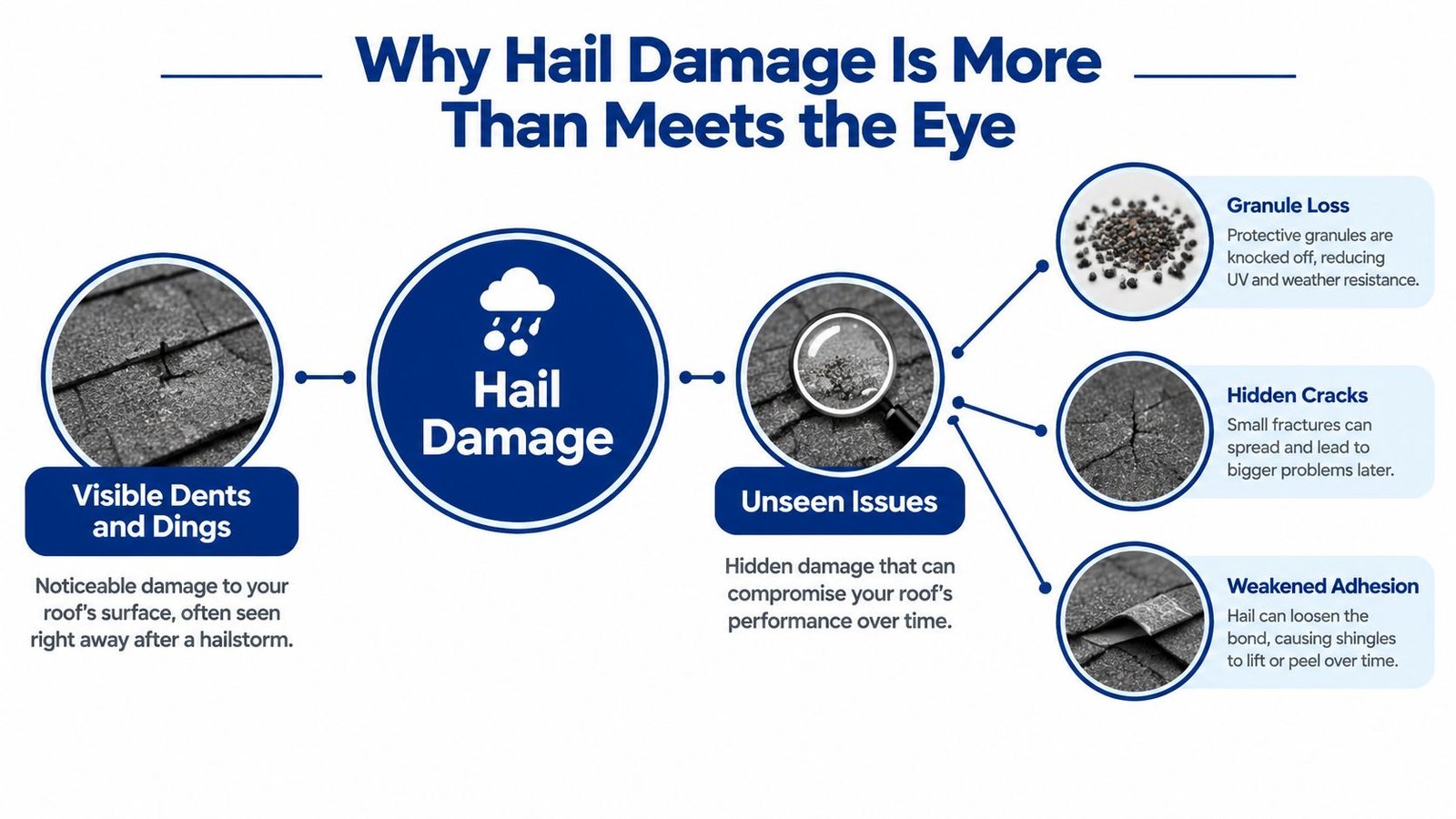
Hail damage behaves much like a bruise on an apple. The skin may look intact, but pressure underneath has weakened the fruit. A shingle can suffer a similar impact. The surface may not show a dramatic hole, yet the mat, protective granules, seal, or surrounding components may no longer perform as intended.
Damage that can hide in plain sight
On asphalt shingles, an impact may dislodge granules and expose more of the underlying material to sun and rain. On tile, the problem may be a hairline fracture that isn’t visible from the driveway. Metal panels can show dents or coating damage, while sealant around vents, pipes, skylights, and flashing can crack under repeated impacts.
The roof’s water-shedding ability depends on the whole assembly, not just the center of a shingle. Valleys, ridges, edges, penetrations, and flashing direct water away from the home. A small failure in one of those areas can send water beneath otherwise serviceable materials.
Resources explaining shingle damage from hail are useful because they show why impact marks should be evaluated by pattern, location, and material condition rather than by appearance alone.
Why a ground inspection has limits
From the ground, you might identify collateral clues, such as dented gutters or loose granules. You won’t reliably confirm soft spots, fractured mats, cracked tile, or compromised flashing from that position. Walking on a roof can also cause additional damage, particularly on brittle tile or a hot asphalt surface.
A professional inspection should include appropriate safety equipment and a methodical review of roof planes and roof penetrations. It should also look at accessible attic areas when there are signs of moisture, because the first interior evidence may appear away from the original entry point.
Key Factors That Influence Repair Scope
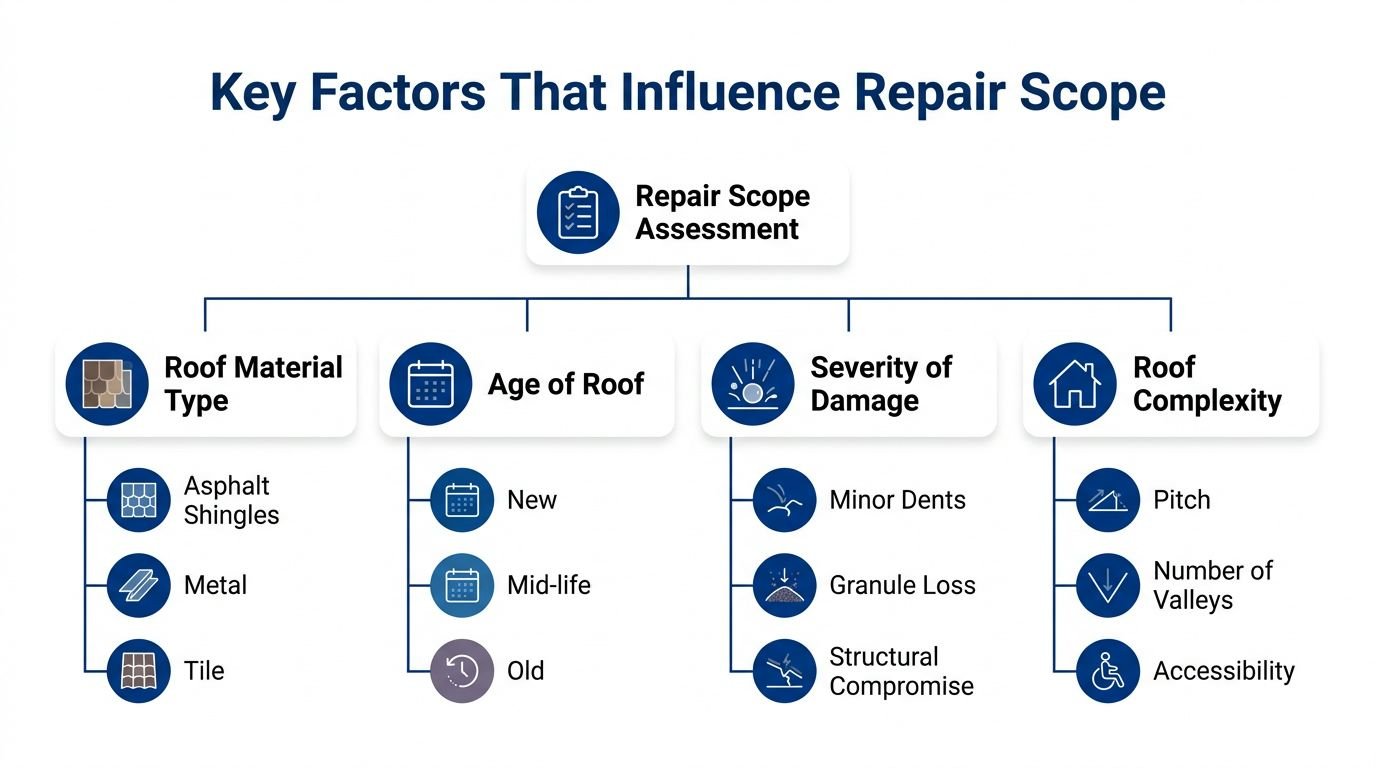
The hail damage roof repair cost comes from the work required to restore the roof, not from hail alone. Two homes on the same street can receive the same storm and need different scopes because their materials, layouts, and maintenance histories differ.
Roof material changes the work
Asphalt shingles are commonly repaired by removing affected shingles and carefully integrating replacements with the surrounding courses. Matching can become difficult when the existing roof has weathered, and the repair must preserve the seal and water-shedding pattern.
Metal, tile, and slate typically require different handling and more specialized labor. Modernize’s hail repair guidance notes that premium materials cost more to repair than asphalt, while steep pitches, multi-story access, skylights, vents, ridges, and valleys raise labor requirements.
A tile roof may need careful removal of surrounding pieces to reach the damaged area without breaking sound tiles. A metal roof may need panel, coating, fastener, or flashing evaluation. A flat or low-slope system requires close attention to seams, penetrations, drainage, and membrane condition.
For a more detailed comparison of repair considerations, review this guide to roof repair costs by material.
Roof geometry affects access
A simple roof plane gives a crew a direct path to the work area. Multiple slopes, valleys, dormers, skylights, and high walls require more movement, protection, and inspection. That additional labor isn’t automatically padding. It reflects the time needed to reach each area and leave the assembly watertight.
Damage distribution determines scope
A few isolated impacts may support a localized repair. Widespread bruising across several slopes can change the decision because patching each location may leave an inconsistent or unreliable system. The inspector should document where the damage is, how it affects performance, and whether surrounding components must be disturbed to complete the work correctly.
Repair or Replace How Pros Make the Call
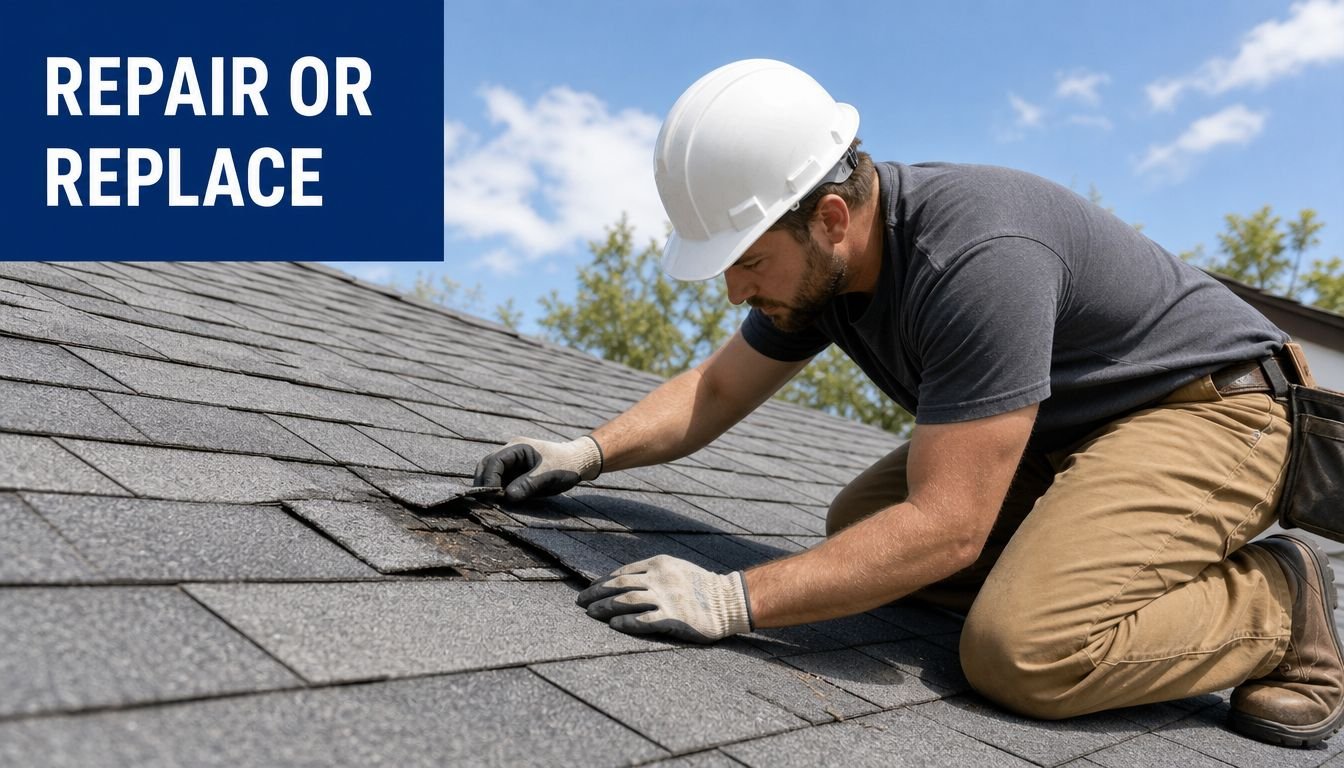
A leak-free roof isn’t automatically an undamaged roof. Hail can reduce a system’s remaining serviceability before water enters the living space, so the repair-versus-replacement decision depends on evidence rather than on whether the ceiling is currently dry.
The decision starts with roof condition
A professional considers the roof’s age, material availability, prior repairs, number of damaged areas, and condition of the underlayment and decking. A localized impact on a relatively sound system may be repairable. If impacts are spread across multiple planes or the existing materials are already near the end of their useful service, replacement may provide a more dependable result.
The key distinction is between cosmetic damage and functional damage. A dent that doesn’t affect performance is different from bruising, cracking, exposed substrate, failed adhesion, damaged flashing, or conditions that allow water intrusion.
Insurers may use documented thresholds
Texas roof-claims guidance says some insurers may require at least 10 hail hits measuring at least one-half inch in diameter per 100-square-foot roofing square before approving full replacement, as explained in the Insurance Institute of Insurance Agents’ roof-claims guidance. That doesn’t mean every carrier uses the same standard, and it doesn’t replace the policy language or adjuster’s evaluation.
The lesson is practical. A contractor should document impact locations, size, affected roof planes, collateral damage, and the condition of related components. Photos and written observations are more useful than a general statement that the roof “looks bad.”
Scope must follow evidence
A responsible roofer won’t recommend replacement solely because a storm occurred. Nor should a homeowner accept spot repairs when the evidence shows system-wide functional damage. Storm damage repair should restore the roof properly, account for code or material requirements, and explain the reasoning before work begins.
Navigating Your Homeowners Insurance Claim
After a San Antonio storm, the cleanest claim process begins with documentation. Take ground-level photos of visible exterior damage, save the storm date and notes, and contact your insurer according to the policy. Don’t make permanent roof repairs before the carrier has had a reasonable opportunity to inspect, unless temporary action is needed to protect the home from active water entry.

A typical claim path
- Document visible evidence: Photograph gutters, siding, screens, vents, and interior stains from safe locations.
- Contact the insurer: Report the loss and ask what records, deadlines, and inspection steps apply to your policy.
- Schedule the adjuster visit: Keep the roof contractor’s inspection findings available.
- Compare scopes: Review the adjuster’s estimate against the contractor’s documented observations.
- Separate covered work from maintenance: Insurance generally addresses covered storm damage under the policy, not every aging component.
- Authorize the work: Read the scope and contract before allowing construction to begin.
- Track completion: Keep invoices, photos, change approvals, and completion records.
Wind and hail deductibles are often percentage-based rather than flat amounts. A common range is 1% to 5% of dwelling coverage, and the deductible is calculated by multiplying Coverage A by the applicable percentage, as explained in this guide to wind and hail deductibles.
For broader context, the average home insurance hail claim is about $13,511, and that figure includes damage to siding, gutters, and HVAC condensers, not only the roof, according to the industry hail-loss database summary. You can also review My Policy Quote’s claim denial insights to understand why documentation and policy compliance matter.
A roofing contractor can help document damage and discuss the scope with the adjuster, but no contractor can promise a particular insurance decision. Coverage depends on your policy, exclusions, deductible, cause of loss, and the insurer’s adjustment.
Get a Clear Path Forward for Your Roof
The right hail damage roof repair cost estimate starts with a roof-specific inspection. Material, roof geometry, damage distribution, age, flashing, decking, and insurance documentation all shape the work. Online averages can provide context, but they can’t tell you whether your San Antonio home needs a small repair, a broader restoration, or replacement.
Industry data puts average U.S. residential roof replacement costs at $17,631 in 2025, while average roof repair costs were $4,699, according to Verisk benchmark coverage. Those figures reinforce why a qualified assessment matters before you sign a contract or settle a claim.
Don’t climb onto the roof yourself, and don’t assume a leak-free interior proves the roof is sound. Have the system inspected, documented, and explained in plain language.
Call 713-504-2341 to speak with RRSATX about storm damage, roof repair, or roof replacement in San Antonio and surrounding communities. You can also schedule a free, no-obligation roof inspection online through RRSATX and receive a clear written assessment from an insured local roofing team.