
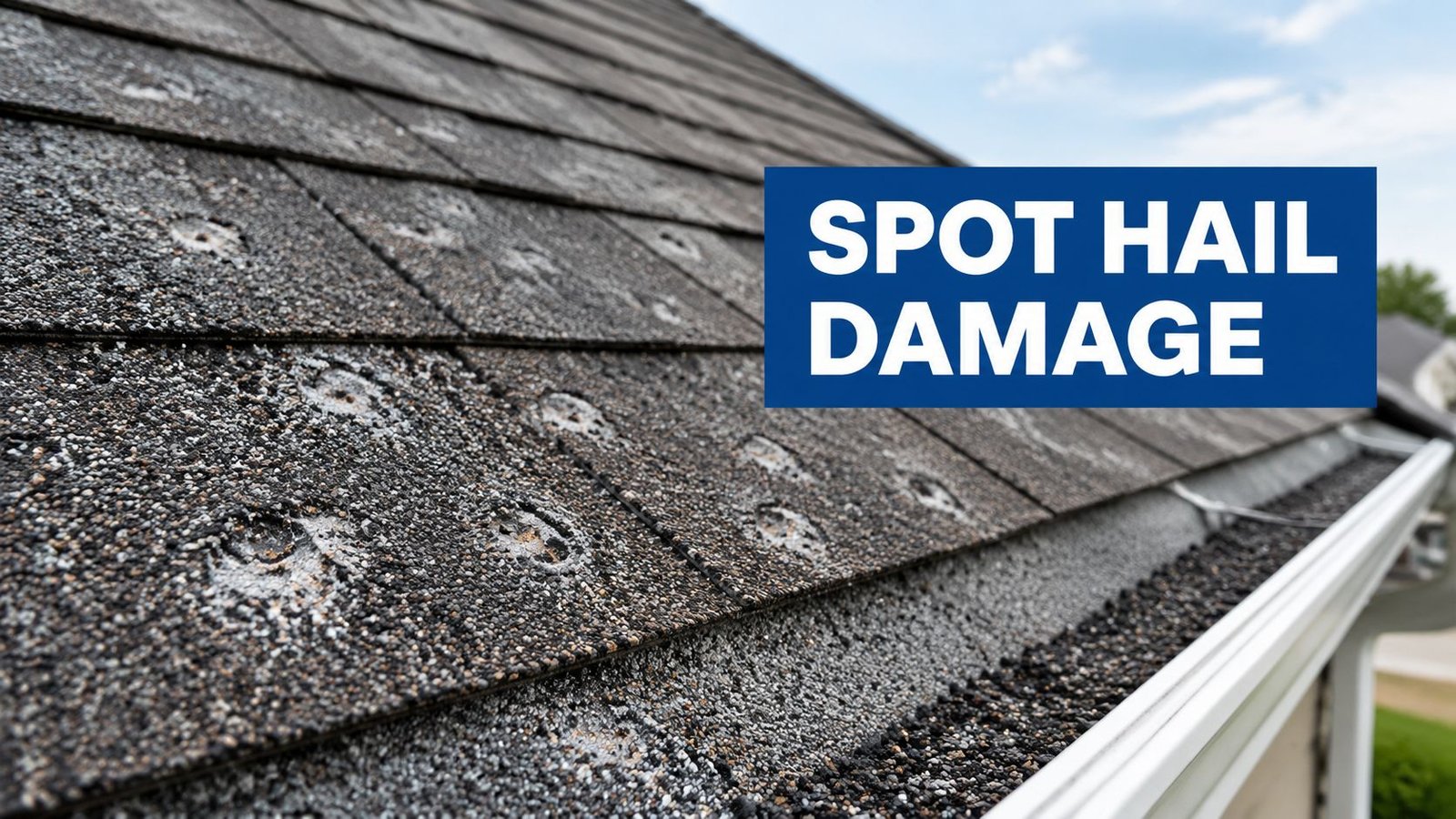
You wake up after a San Antonio hailstorm and the yard looks torn up, but the roof still looks fine from the driveway. That's the trap. Hail damage often hides on the roof surface, in the gutters, and on the soft metal pieces first, and a roof can take a real hit without showing an obvious hole or leak right away. Industry guidance on hail size and impact signs makes the same point, quarter-sized hail is a practical warning sign, but size alone never tells the whole story.
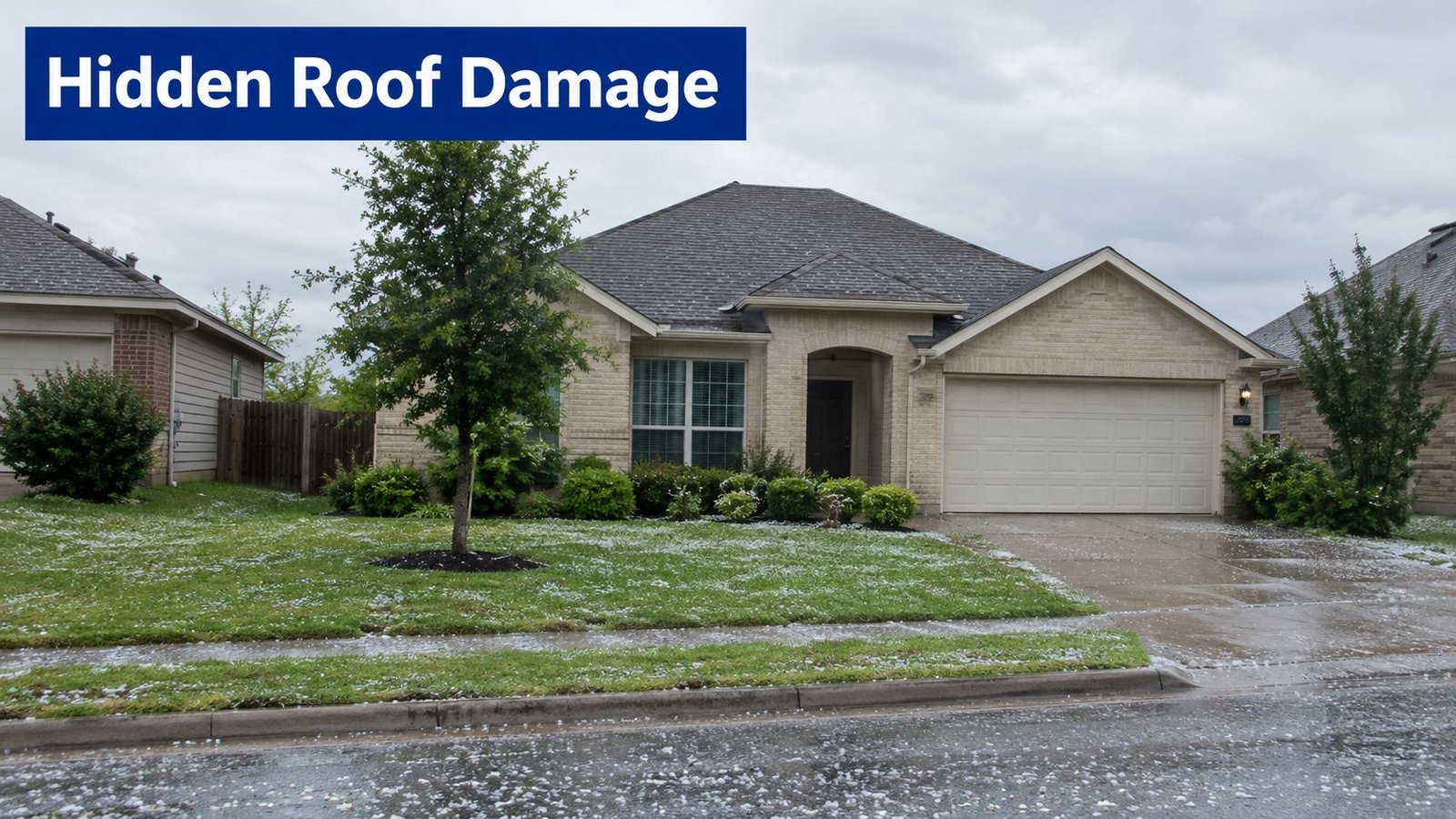
Table of Contents
- Introduction Why Hail Damage Is Easy to Miss in San Antonio
- Safe Ground Level Checks Every Homeowner Can Do First
- What Hail Damage Looks Like on Asphalt Shingles Up Close
- How Hail Shows Up on Metal Tile and Flat Roofing and Flashings
- How Professionals Document Hail Damage and What to Prepare for Insurance
- When to Call a Roofer in San Antonio and Next Steps After You Spot Damage
Introduction Why Hail Damage Is Easy to Miss in San Antonio
A San Antonio roof can take a hit and still look normal from the curb. Strong sun, wind, and fast-moving storms wear on shingles, so fresh hail bruising can hide under the granules while the surface still looks intact. Homeowners usually miss it until a stain shows up inside, and by then the storm evidence is already fading.
The first clue is often not on the shingles. Check the gutters and downspouts, vents, flashing, and other soft metal parts for dents, pitting, and granule buildup where water exits. A quick driveway look misses those details, which is why hail-damage identification guidance starts with impact marks and granule loss instead of a clean hole in the roof. If the AC condenser or nearby trim shows the same peppered dents, the storm reached more than one surface, and that usually means the roof needs a closer look.
What matters next is spread. One dented piece can happen from debris, but dents across gutters, screens, vents, and siding point to a wider impact pattern. A roof with scattered marks on one slope may have isolated damage. A roof with the same signs on several sides usually did not escape. That kind of reading saves time, helps you judge whether the damage is localized or widespread, and gives an adjuster a cleaner story when you file the claim.
Practical rule: If the ground-level metalwork shows impact, treat the shingles as suspect until you inspect them up close.
Safe Ground Level Checks Every Homeowner Can Do First
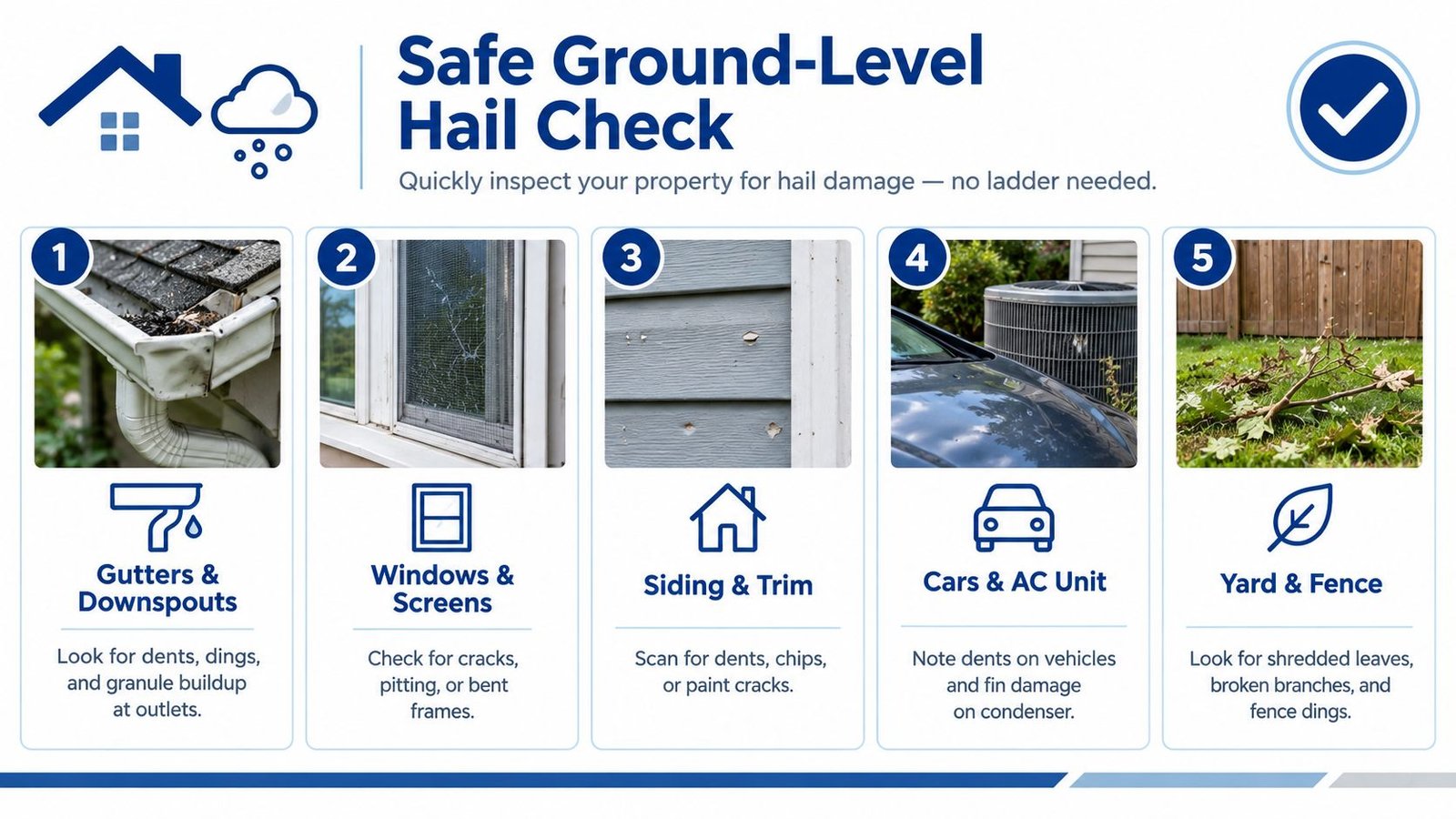
A hailstorm can leave the roof looking normal from the street, while the first real clues show up on the ground. Start there. Walk the perimeter with your phone camera and look for impact on the parts hail usually tags first, because those surfaces hold the clearest storm evidence. If you want a fuller checklist after this, the local guide on DIY roof inspection tips after a storm is a useful follow-up.
What to photograph first
Check the gutters and downspouts for dents, dings, and granule buildup where water exits. Granules in those spots matter because they come off the shingle surface when hail hits, and that kind of loss is one of the cleaner signs the roof took impact. Then move to window screens, siding, fence panels, cars, and the AC condenser. Thin metal, screens, and fins often show the storm better than shingles do from the ground, and a field guide on ground-level hail evidence guidance lays out the same idea.
Use binoculars if you have them, but keep your camera work front and center. Take wide shots of each side of the home, then close-ups of any dents, cracks, or bent fins. If you can safely check the attic, look for fresh moisture, dark staining, or daylight where it should not be.
Dented gutters do not prove roof failure by themselves, but they do show the storm had enough force to reach the roof system.
I tell homeowners to treat the photo set like a storm record. Date-stamped pictures of the yard, exterior metal, and attic carry more weight later than a memory of what the place looked like after the hail passed. Get the collateral damage documented before the weather changes again.
Safe ground-level hail check
| What to Capture | Why It Helps | How to Do It Safely |
|---|---|---|
| Gutters and downspouts | Dents and granule buildup point to impact | Shoot from the ground at each corner |
| Windows and screens | Cracks, pitting, and bent frames show storm force | Use a phone camera from outside |
| Siding and trim | Dents and chipped paint help confirm storm direction | Walk the full perimeter slowly |
| Cars and AC unit | Vehicle dents and fin damage are useful collateral clues | Photograph before anyone moves the car |
| Yard and fence | Broken branches and fence dings show storm intensity | Take wide and close photos together |
What Hail Damage Looks Like on Asphalt Shingles Up Close
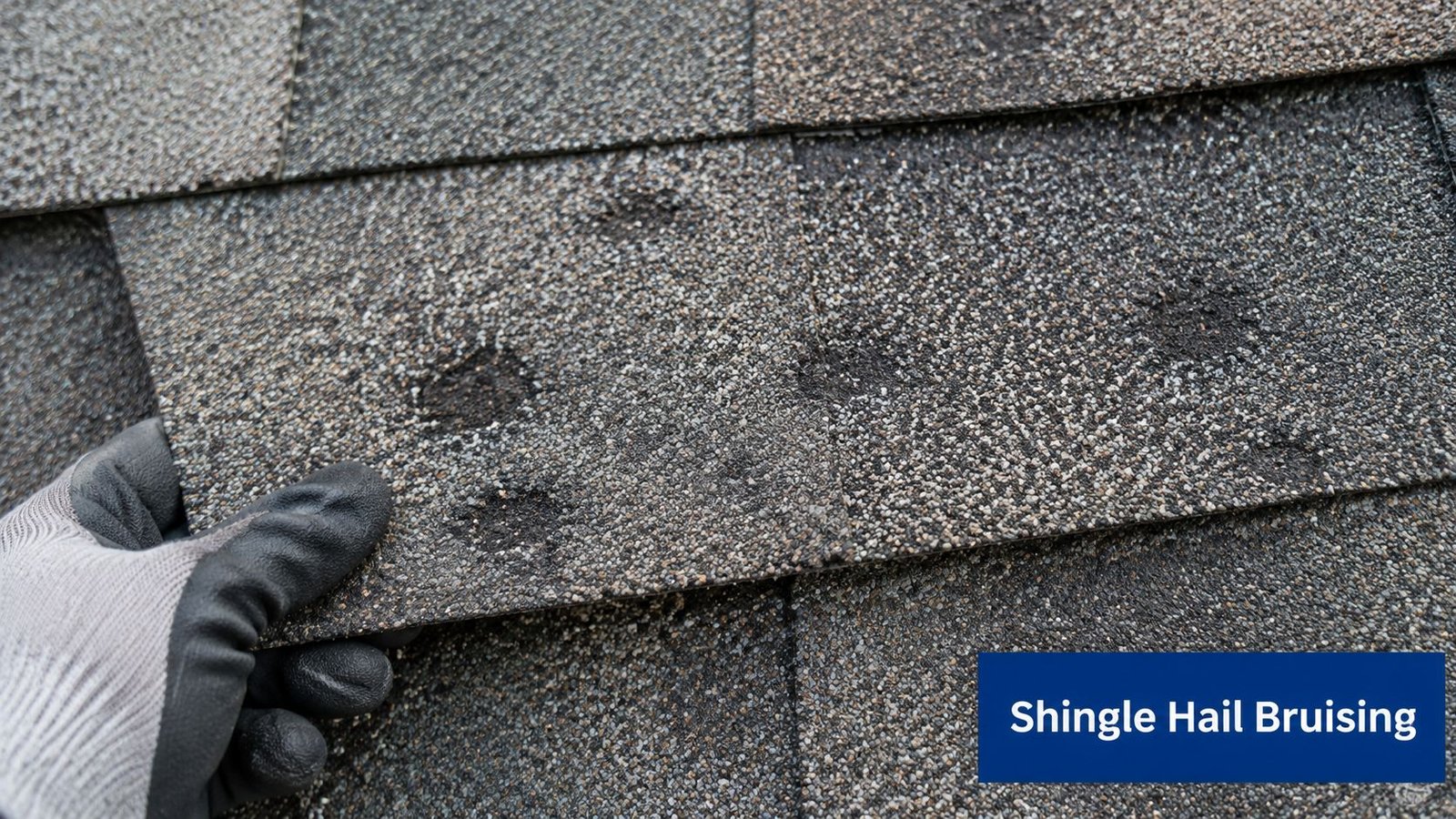
Asphalt shingles usually show hail in a very specific way. The classic sign is a circular or roughly round impact mark with granules knocked loose, sometimes exposing black asphalt or fiberglass mat underneath shingle hail-sign guidance. A true bruise can also feel soft or spongy when pressed, which is why roofers use touch as part of the read, not just sight.
Randomness matters. Real hail damage is scattered and irregular, not neat and uniform like normal aging. That difference helps separate storm impact from wear, foot traffic, or small manufacturing blisters. Granules in the gutters alone don't prove functional damage, because old shingles shed granules too, but granule loss paired with bruising and dents on nearby soft metal tells a much stronger storm story.
After a hailstorm, I look for the pattern before I look for the individual mark. One bruise can be a fluke, but many scattered bruises across a slope change the picture fast. If the roof has only cosmetic scuffs and the soft metals are clean, that's a different conversation than a roof covered in fresh impact marks and matching collateral dents.
The safest rule is simple. Don't climb up to test this yourself. A trained inspector can compare the shingle surface, the gutters, the vents, and the flashing all at once, which is the only way to sort hail bruising from ordinary wear with any confidence.
One bruise doesn't tell the story. A roof inspection has to show scattered impact, not just isolated wear.
How Hail Shows Up on Metal Tile and Flat Roofing and Flashings
Different roofing materials react differently to hail, so the same storm can leave one roof scarred and another only dented. That's why the answer to how to tell if roof has hail damage depends on the system sitting over the house, not just on hail size alone.
Material by material clues
On metal roofing, the usual signs are visible dents and dimples, plus paint chipping at the impact points. Metal often preserves the shape of the hit better than shingles do, which makes it easier to see once you know where to look. On tile roofing, the concern is cracked, chipped, or shattered tiles, often with circular fracture patterns around the strike. Flat and low-slope systems can show punctures, membrane bruising, or damaged flashing and caps, especially at edges and penetrations.
Soft metals often reveal the storm first. Dented vents, flashing, gutters, skylights, and downspouts are common because hail leaves a cleaner mark on those surfaces than on the roof covering itself industry hail-fraud guidance. Wind direction matters too, because damage may show up on only one side of the roof while the other side looks calmer.
| Roof Type | Common Hail Signs | What Matters Most |
|---|---|---|
| Asphalt shingles | Bruises, granule loss, soft spots | Random scattering across a slope |
| Metal roofing | Dents, dimples, paint chipping | Impact points on panels and seams |
| Tile roofing | Cracks, chips, shattered sections | Fracture pattern and break location |
| Flat roofing and flashings | Punctures, membrane bruising, bent metal | Damage around seams and penetrations |
For San Antonio homes, this matters because one neighborhood storm can hit a clay tile house, a standing-seam roof, and a flat commercial roof all in different ways. A roofer has to read the material correctly or the inspection misses the damage.
How Professionals Document Hail Damage and What to Prepare for Insurance
A good insurance file starts at ground level. After a Texas hailstorm, I look first at the gutters, downspouts, vents, skylights, AC fins, and screens, because those parts usually show the storm before shingles do. If the dents are scattered on only one side, that points to a narrower hit. If they show up on several slopes and on multiple pieces of soft metal, the damage is more likely widespread.
On the roof, inspectors document the pattern, not just a few random marks. They work in 10-foot-by-10-foot test squares on each slope and count the verifiable impacts where damage is concentrated. That approach keeps the inspection tied to what can be proven, not what looks bad from a distance.
The file gets stronger when the ground evidence matches the roof evidence. A photo set should include the yard, the soft-metal dents, granules in gutters or downspouts, and any attic staining or daylight seen from safe access points. That gives the adjuster a cleaner story about storm direction, impact severity, and where the roof took the hit.
| What to Capture | Why It Helps | How to Do It Safely |
|---|---|---|
| Storm date and hail size notes | Connects damage to the event | Write it down while it is fresh |
| Photos of soft-metal dents | Shows storm direction and impact | Shoot vents, gutters, and flashing from the ground |
| Granules in gutters or downspouts | Shows shingle surface loss | Photograph the buildup before cleanup |
| Attic stains or daylight | Helps show active roof penetration | Look only from safe attic access points |
| Exterior collateral damage | Strengthens the claim file | Keep wide shots and close-ups together |
That kind of documentation also helps you compare the roof repair path against replacement. For a practical estimate of what drives that decision, see our breakdown of hail damage roof repair cost in San Antonio. Homeowners who want a clearer insurance roadmap can also use this roofing contractor hail claim resource as an outside reference.
For homeowners in San Antonio, the goal is simple. Give the inspector clean evidence so the roof's condition is clear before any repair or replacement decision starts.
When to Call a Roofer in San Antonio and Next Steps After You Spot Damage
Call a roofer when the storm left dented soft metals, bruised shingles, torn screens, or granule buildup that doesn't make sense for normal wear. You don't need to wait for a ceiling stain or interior leak. By the time water shows up inside, the roof has usually been taking damage for a while.
A professional inspection should end with written findings, photos, and a plain explanation of whether the roof needs repair, storm damage repair, or replacement based on the material and the extent of the impact. That's especially important in San Antonio, where heat, heavy rain, and hail can all work together against an aging roof. Good documentation matters for insurance, but it should never be treated as a promise that a claim will be approved.
The other safety rule is absolute. Don't climb a hail-damaged roof yourself. Slippery slopes, loose granules, and soft spots create a real fall risk, and a bad step can turn a storm issue into an injury. A fully insured local roofer should be able to inspect, document, and explain what they found without asking you to guess from the ground.
If the storm left dents on the house, don't wait for a leak to prove what happened.
For homeowners who want a trusted San Antonio inspection, RRSATX offers free roof inspections with written findings, storm damage repair, roof repair, roof replacement, and insurance-ready documentation. The company is family-owned since 2000, backed by $2,000,000 in liability insurance, and built around forty years of local roofing experience. They can help you sort out whether the roof needs a repair or a full replacement, but no roofer can guarantee an insurance approval.
If your San Antonio home took hail and you're not sure what you're seeing, get a free roof inspection before the next rain rolls in. RRSATX can document the damage, explain whether your roof needs repair or replacement, and help you understand your next step with confidence. Visit RRSATX to schedule your inspection and get a local roofer on the roof the right way.