
Installed gutters nationally average roughly $10.80 to $16.32 per linear foot for a standard system, while the broader market spans about $4 to $40 per foot, depending on the material, gutter type, roofline, and installation conditions. A San Antonio homeowner may see a very different quote from a neighbor because the number covers more than the metal or vinyl channel itself.
After a hard South Texas storm, water can pour over the roof edge like a sheet from a fire hose. It splashes against siding, soaks flower beds, and collects near the foundation. Then you search for “gutter cost per linear foot installed” and find several prices that seem impossible to reconcile.
The confusion usually comes from what each contractor includes. One quote may cover removal, downspouts, hangers, and labor. Another may show only the gutter material. The sections below separate those pieces so you can judge a San Antonio gutter bid on the same terms as every other bid.
Table of Contents
- Why Gutter Pricing Feels So Confusing
- Understanding Gutter Cost Per Linear Foot Installed
- The Line Items Inside an Installed Gutter Price
- Comparing Gutter Materials and System Types
- What San Antonio Homes Should Expect
- How to Compare Gutter Bids the Right Way
- Getting a Fair Gutter Price in San Antonio
Why Gutter Pricing Feels So Confusing
A sudden downpour makes gutter problems easy to spot. You may see water spilling from a corner, a downspout dumping beside the slab, or a long gutter run pulling away from the fascia. In neighborhoods across San Antonio, from Downtown to Alamo Heights, that one storm can turn a small drainage weakness into a messy cleanup job.
Then the estimates arrive. One contractor talks about a price per foot. Another gives you a total project number. A third adds downspouts and removal on separate lines. All three may be describing a legitimate job, but they aren't necessarily pricing the same scope of work.
The phrase installed price matters. It can include the gutter channel, fasteners, labor, and drainage pieces, or it can leave some of those items outside the headline rate. Bob Vila's explanation of gutter installation pricing notes that some pricing references bundle removal, disposal, downspouts, mounting hardware, and labor, while others separate them or show material-only figures.
Why the roofline changes everything
A straight, single-story roof is relatively simple to reach and measure. A home with several corners, valleys, dormers, multiple stories, or limited access takes more time to lay out and install. The crew may need additional staging, careful cuts, and more precise fastening.
San Antonio weather adds another practical concern. Extreme heat, heavy rain, and hail can expose weak attachment points or undersized drainage. A fair quote should account for how water moves across your particular roof, not just multiply a generic number by an approximate house size.
By the end of the estimating process, you should know how many linear feet are being installed, what material is specified, how many downspouts are included, and which labor and removal tasks are covered. That information is more useful than a low-looking number with no explanation.
Understanding Gutter Cost Per Linear Foot Installed
Think of linear-foot pricing the same way you might price a fence or baseboard trim. The contractor measures the length of the edge being covered, then applies a rate to that measured run. For gutters, the measurement follows the roof edges where the channels will hang. It isn't the square footage of the house, and it isn't automatically the entire perimeter.
Start by identifying the roof edges that need drainage. Straight runs along the eaves count toward the gutter length. Then note the corners, end caps, inside angles, and locations where downspouts will carry water away. A rough ground-level measurement can help you understand a proposal, but a contractor should verify the dimensions before work begins.
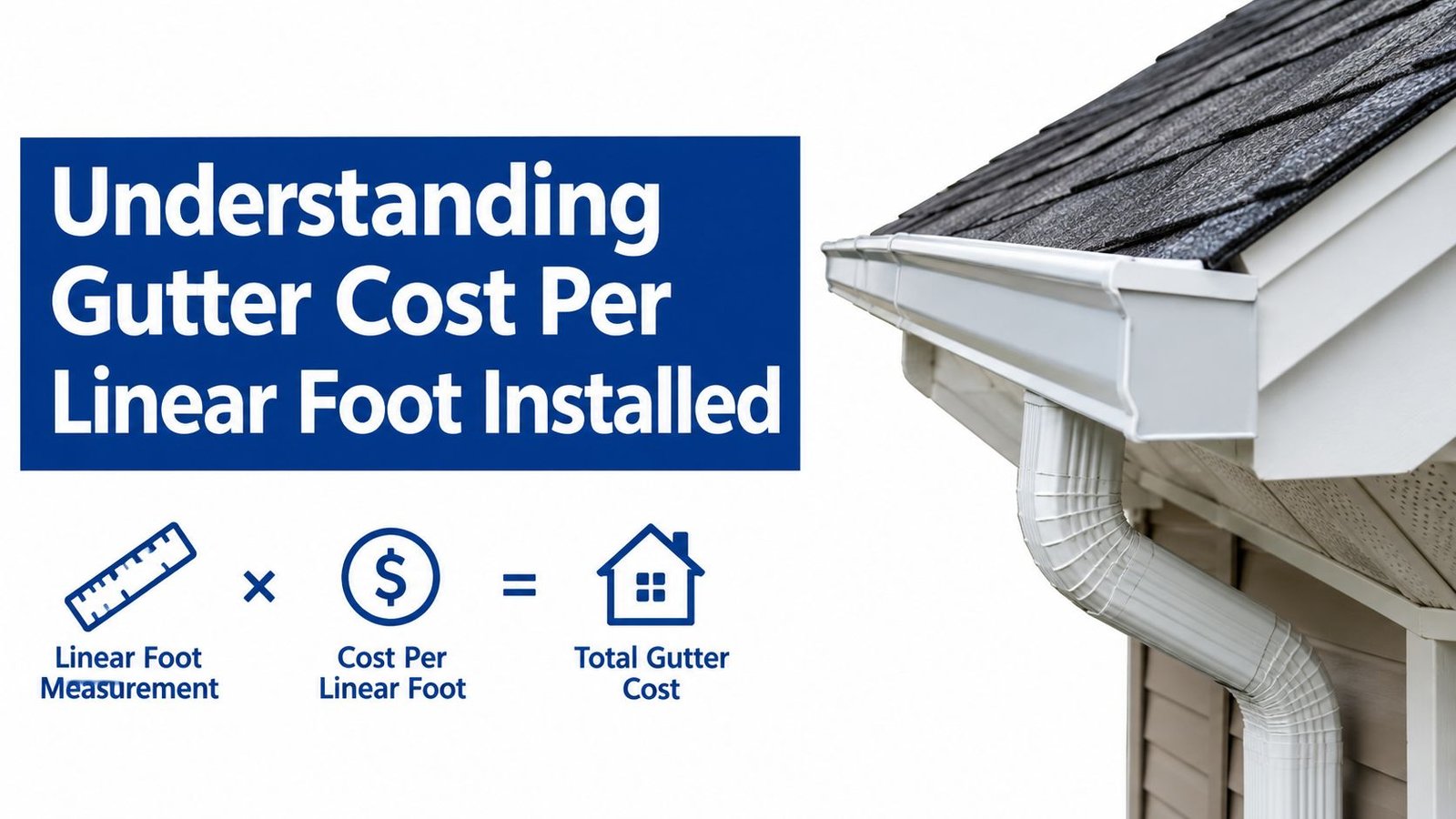
Major U.S. homeowner cost guides in 2025 to 2026 place the overall market at about $4 to $40 per linear foot, with a national average often cited around $20 per linear foot for a typical home. For a home needing roughly 200 linear feet, that produces a broad project range of about $800 to $8,000, depending on the material and system type, as shown in Angi's gutter replacement cost guide.
The key idea: linear-foot pricing is a budgeting measurement, not a complete description of the work.
That 200-foot example isn't a promise about your San Antonio home. It shows why two homes with similar roof footprints can receive different totals. A basic system, an aluminum system, and a premium metal system don't carry the same material or labor requirements.
If you're also comparing maintenance or cleaning work in another market, this resource on power washing Dallas gutter costs can help clarify how service pricing differs from new gutter installation. Those are separate jobs, so don't compare a cleaning rate with an installed replacement rate.
A short video can also make the measurement concept easier to visualize:
The Line Items Inside an Installed Gutter Price
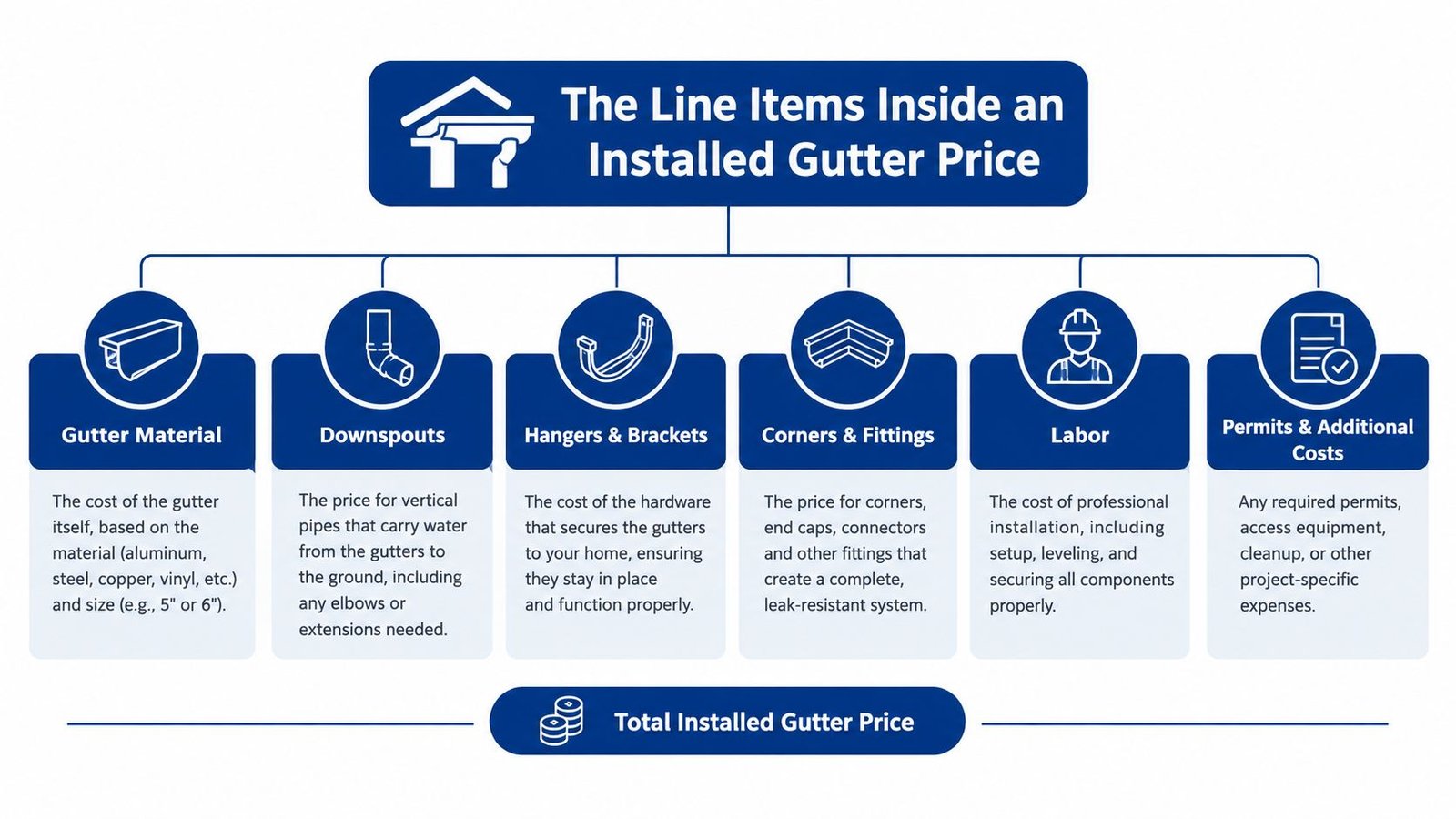
An installed gutter rate is best treated as a bundled system cost. The visible channel is only one part of the system. The final number also reflects the pieces that hold it in place, move water away from the structure, and put everything together safely.
The channel and its supporting hardware
Gutter material forms the main visible run. Vinyl and basic aluminum can sit near the entry level, while steel, continuous-run aluminum, and copper move into higher material tiers. The profile and size also matter because a system designed for a demanding roof may require more material or stronger support.
Hangers and mounting hardware are the hidden backbone. Hangers attach the gutter to the fascia or roof structure, while screws, brackets, end caps, and sealants help create a stable, functioning assembly. In a region with heavy rain and strong storms, poor attachment can lead to sagging, overflow, or separation from the roof edge.
The pieces that move water away
Downspouts carry water from the gutter to the ground or another drainage point. They may be included in the installed rate, or they may appear separately. Their number and placement depend on the roof layout and where water needs to go, so a quote that gives only gutter footage doesn't tell you the complete drainage plan.
Removal and disposal apply when you're replacing an existing system. The crew may need to take down old sections, remove damaged fasteners, load the debris, and haul it away. New construction or a first-time installation won't have the same removal scope.
Labor is part of the system
Current independent benchmarks place typical installed gutters at about $10.80 to $16.32 per linear foot nationally. One benchmark separates continuous-system labor at about $3 to $7 per foot and materials at about $3 to $13 per foot, as reported by EcoWatch's gutter installation cost overview.
Those components don't behave like fixed commodities. A standard aluminum or steel installation may cluster near the lower portion of a broad market range, while premium metals rise quickly. Labor also changes with height, access, corners, roof pitch, fascia condition, and the time needed to fabricate or fit the system.
A useful way to read the bundle is:
- Roofline measurement: establishes the gutter footage.
- Material selection: determines the channel and finish.
- Support hardware: keeps the run secure.
- Drainage layout: adds downspouts and discharge points.
- Installation work: covers fitting, fastening, sealing, and cleanup.
- Replacement scope: may include removal and disposal.
That is why a per-foot figure by itself can be misleading. Ask what sits underneath it.
Comparing Gutter Materials and System Types
A gutter bid becomes easier to read when you separate the system format from the material. Sectional gutters arrive in pre-cut pieces and are joined during installation. Continuous gutters are formed and cut to the required length on site, reducing the number of leak-prone joints along long runs.
Continuous length does not mean the system has no joints. Corners, end caps, and downspout connections still require careful fitting and sealing. The benefit is concentrated on long, straight runs, where fewer connections leave fewer places for movement, failed sealant, or debris to cause trouble.
| System Type | Typical Cost Per Linear Foot | Best For |
|---|---|---|
| Sectional vinyl or basic aluminum | About $3 to $20 | Simpler rooflines and homeowners focused on an accessible starting point |
| Continuous aluminum or steel | About $6 to $20 | Many standard homes needing fewer joints and stronger long-run performance |
| Continuous systems overall | About $5 to $40 | Homes where roof complexity and material choice vary widely |
| Continuous copper | About $30 to $50 | Premium architectural projects where appearance and material character matter |
The ranges above reflect The Spruce's 2026 gutter installation pricing information. HomeAdvisor's continuous-gutter guide places installation broadly between $3 and $25 per linear foot and gives a national average of about $9.92 per foot for a 200-linear-foot installation.
Matching the system to the house
Vinyl can suit a basic, accessible installation, though San Antonio homeowners should consider how heat and hail may affect the choice. Aluminum offers a common balance of weight, availability, and performance. Steel provides a sturdier option, but its finish and cut edges need attention to limit corrosion.
Copper belongs in a different budget conversation. The material costs far more, and its finished appearance becomes part of the home's design. It can suit a distinctive property, but it is not the automatic answer for every San Antonio roof.
A long roofline with few corners may benefit from fewer joints. Heavy rain or recurring connection leaks can make that feature more valuable. A sectional system can still work well on a small, simple roofline when each connection is fitted correctly and the drainage layout sends water to suitable discharge points.
When comparing bids, ask whether the quoted per-foot price includes the channel, hangers, end caps, corners, downspouts, and labor. Two contractors may quote the same footage while including different parts, much like comparing a base truck price with one that already includes the tools and equipment.
What San Antonio Homes Should Expect
A gutter bid can change noticeably from one San Antonio neighborhood to the next. A roof in Alamo Heights may have tight access, several corners, or multiple elevations. A straightforward home in Helotes, Schertz, or New Braunfels may offer longer, easier runs. Linear footage sets the starting point, while roof shape and working conditions determine how much labor and hardware the system needs.
South Texas weather adds another layer. Extreme heat can stress lower-grade materials and sealants. Heavy rains can overwhelm a discharge path that sends water toward a foundation or low spot. Hailstorms can dent exposed gutter runs or damage sections that appeared sound before the storm.
The roof's drainage pattern matters as much as the edge length. A long valley or broad roof plane can send a large volume of water toward one corner. That may require a different downspout layout or a larger system, much like directing traffic from several roads into one narrow intersection.
Local conditions widen the range
San Antonio labor rates and access conditions can place continuous aluminum systems around the middle of the broader market range. Copper remains uncommon outside homes where its appearance fits the design, including some historic properties in areas such as Alamo Heights. These local factors can matter more to your final bid than a national average.
A written estimate based on your actual roofline will tell you more than a generic per-foot figure. Ask whether the price includes the channel, hangers, end caps, corners, downspouts, labor, removal, and cleanup. Without that list, two bids can look comparable while covering different portions of the job, like comparing a base truck price with one that includes its tools and equipment.
Homeowners handling a roof project at the same time may also benefit from this guide on whether you should upgrade gutters too. New gutters should match the roof edge, fascia, and drainage plan, rather than being added without checking how the complete system will work.
How to Compare Gutter Bids the Right Way
Start with the scope, not the headline rate. A contractor may quote a per-linear-foot figure that includes the full installation, while another may show a material-only rate and add labor, downspouts, and disposal elsewhere. Bob Vila's gutter installation cost guide highlights this difference, which is why two apparently similar bids can describe different jobs.
Ask each contractor to put the same information in writing:
- Measured footage: Confirm the total linear feet and the roof edges included.
- System type: Ask whether the quote covers sectional or continuous gutters.
- Material and profile: Verify the material, finish, and gutter profile.
- Downspouts: Record the number, size, locations, and whether they are included.
- Hangers and fasteners: Ask what hardware will be used and how the system will be attached.
- Removal work: Confirm whether old gutter removal, disposal, and cleanup are covered.

Check the drainage plan
A bid can look complete and still leave the most important question unanswered: where does the water go? Look for discharge points that move water away from the foundation rather than releasing it directly beside the slab.
Ask whether the contractor inspected the fascia and mounting surface. If the wood behind an old gutter is damaged, the new system may not have a sound place to attach. That condition should be discussed before installation, not discovered after the old gutters are removed.
Also clarify whether the proposal is for a full replacement or a new installation. Replacement usually involves tear-off and disposal, while a new installation doesn't. The work may also differ if the crew is tying gutters into an existing roof, repairing one run, or changing the drainage layout.
Put competing bids on the same page
Use a simple comparison sheet. Write each contractor's footage, system type, material, downspout count, hardware, removal scope, labor, cleanup, and warranty terms in separate columns. You don't need a complicated spreadsheet. You need enough detail to see whether one quote leaves out a cost that another includes.
If the roof is complex, insist on an on-site review and a written estimate. Photos and measurements help, but they don't always show access limits, fascia condition, or how water moves during a storm.
If you're coordinating gutters with roofing work, read this guide on whether to install gutters before or after roofing. The order can affect access, trim, flashing, and the final fit.
Getting a Fair Gutter Price in San Antonio
A per-foot number is only the starting point. The fair comparison comes from understanding what the number includes, how the roofline was measured, and whether the system will move stormwater away from the house.
Walk around the property from the ground and note long roof edges, corners, visible downspouts, and places where water currently collects. Don't climb onto the roof or use a high ladder after a storm just to take measurements. Wet surfaces, damaged shingles, and unstable ladders can cause serious injuries, so leave roof-level inspection to an insured professional.
Gather a detailed written estimate that answers the practical questions:
- What system is proposed? Sectional or one-piece, and which material?
- What does the rate include? Labor, hangers, downspouts, removal, disposal, and cleanup?
- What does the roof need? Are fascia, flashing, or access concerns noted?
- Where will water discharge? Does the layout protect the slab, landscaping, and foundation?
- How will storm damage be handled? Ask for documentation, but don't assume an insurance carrier will approve a claim.
You can also have the roof and gutter relationship checked together. A roof inspection may reveal damaged flashing, missing shingles, or drainage issues that a gutter-only visit won't address. In San Antonio's heat, rain, and hail, fixing the visible overflow without finding the underlying cause can leave the same problem waiting for the next storm.
The safest path is a local, insured contractor who measures the roofline, explains the system in plain language, and provides the scope in writing before work begins. That gives you something concrete to compare, instead of relying on a single attractive number.
RRSATX provides free roof inspections, written estimates, gutter installation and repair, roof repair, roof replacement, and storm-damage support for homes and commercial properties around San Antonio. Visit RRSATX to discuss your gutter needs, call 713-504-2341, or schedule a free roof inspection online before the next heavy South Texas storm.