
Flat roof repair · San Antonio, Texas
Ponding Water on a Flat Roof in San Antonio: Causes and Fixes
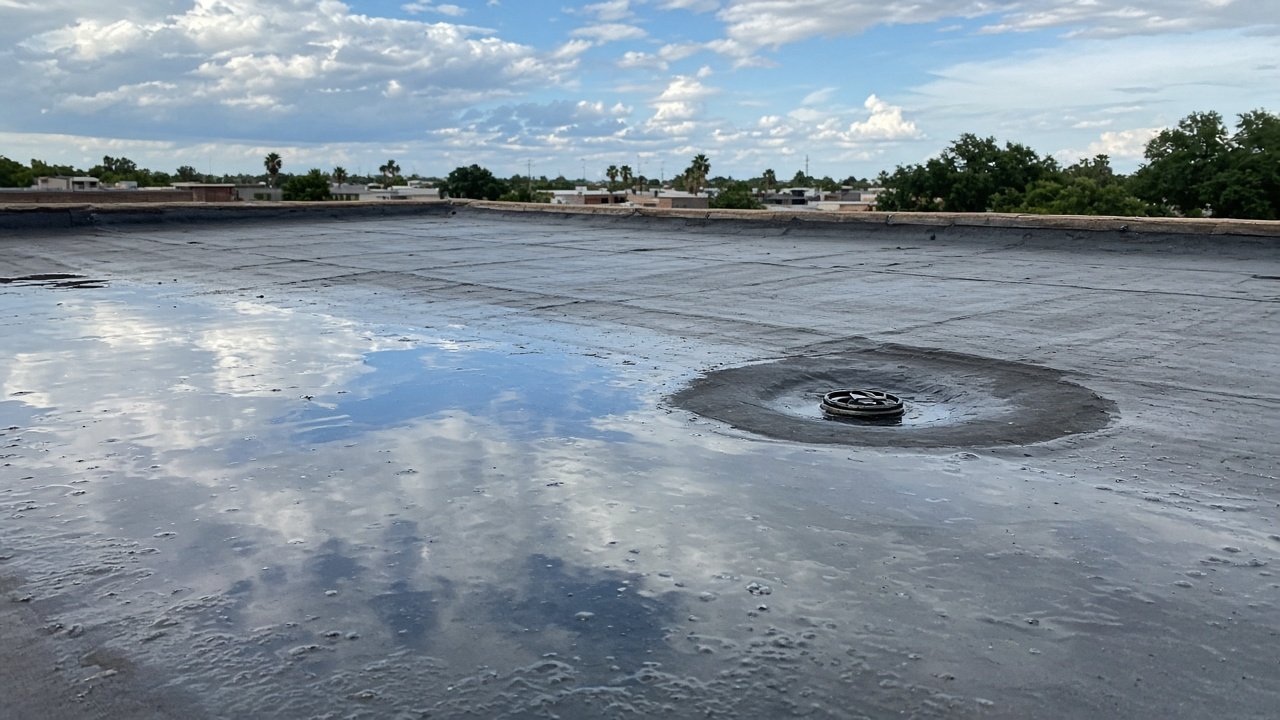
A flat or low-slope roof is supposed to shed water, just more slowly than a pitched roof. If the same pool is still sitting there a day or two after a San Antonio storm, the roof is telling you something about its drains, its slope, or what is underneath the membrane. Here is how to read it and what repair to ask for.
The short answer
IKO, summarizing National Roofing Contractors Association guidance, describes ponding as water that is still on a flat roof 24 to 48 hours after rain. [1] It usually comes down to a blocked drain, a low spot, compressed insulation, or a slope problem. Find and correct that cause first, then repair whatever membrane the water has damaged. A patch laid over the puddle won’t stop the water from collecting there again.
How to tell ponding water from normal drying after a San Antonio rain
Write down when the rain stopped. Then check whether the same area is still wet 24 to 48 hours later. IKO explains that water still there after that window is what the National Roofing Contractors Association treats as ponding. [1]
Plenty of flat roofs hold a thin film of water for a few hours after a downpour. That alone isn’t a problem. What matters is whether one area is still holding water well after the rest of the roof has dried, and whether it does that after every storm. San Antonio weather helps you here. After a heavy rain the sun usually comes back quickly, so a pool that outlasts a dry, hot day stands out.
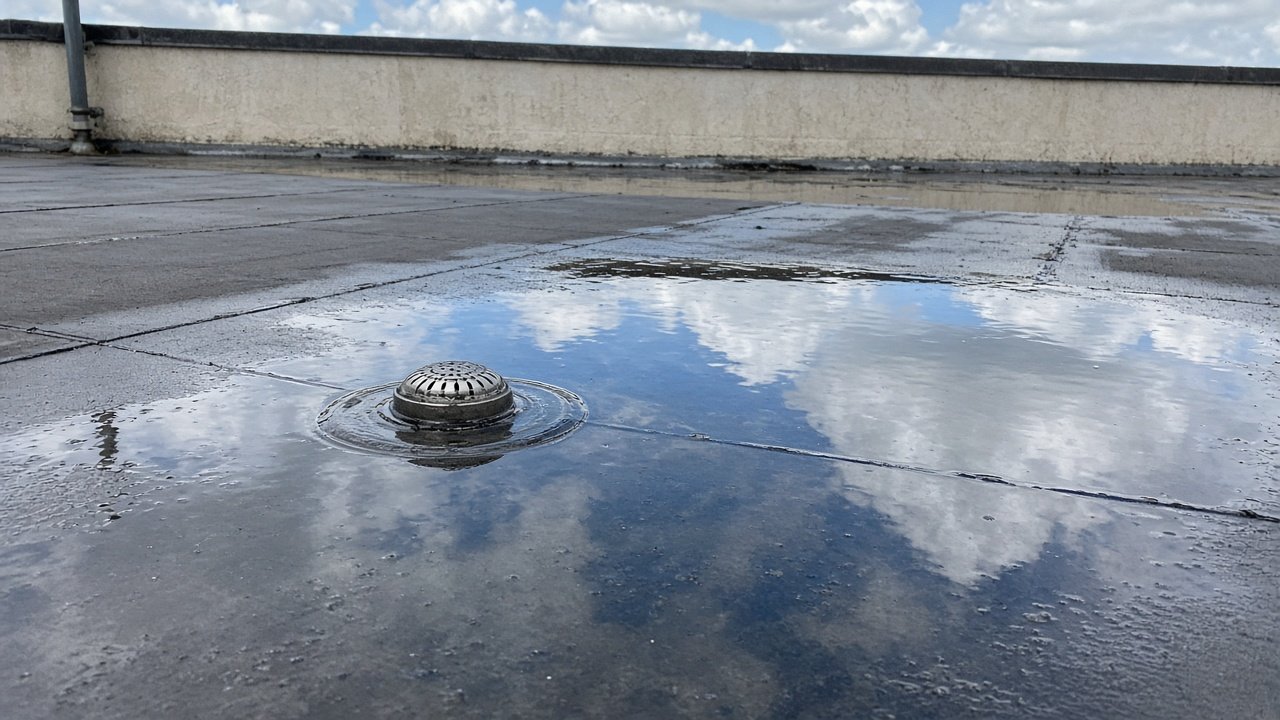
Take photos from a safe spot, like an upstairs window, a neighboring roof deck, or a ladder set up at the roof edge without stepping onto the roof. Record the date and time and keep the pictures together. Over a few storms they show the inspector how long the water stays and whether the pool is growing.
- Is the water still there 24 to 48 hours after the rain ended?
- Does the same spot pond after every rain, or only after the heaviest storms?
- Is there a ring of dirt, debris, or discoloration where water has dried before? A ring like that means the spot ponds regularly.
- Is a seam, blister, patch, or flashing edge sitting in the standing water?
- Have you noticed a new ceiling stain or musty smell in the room below?
If the area dries within a day and you don’t see it again in the same place, note it and keep watching. If it keeps coming back, have someone inspect the drainage path rather than just patching the surface. This is the kind of problem RRSATX’s flat roof repair service in San Antonio handles.
Where flat-roof ponding shows up on San Antonio homes and buildings
Most San Antonio houses have pitched shingle, metal, or tile roofs, but many also have a low-slope section somewhere, and that section is where ponding usually starts.
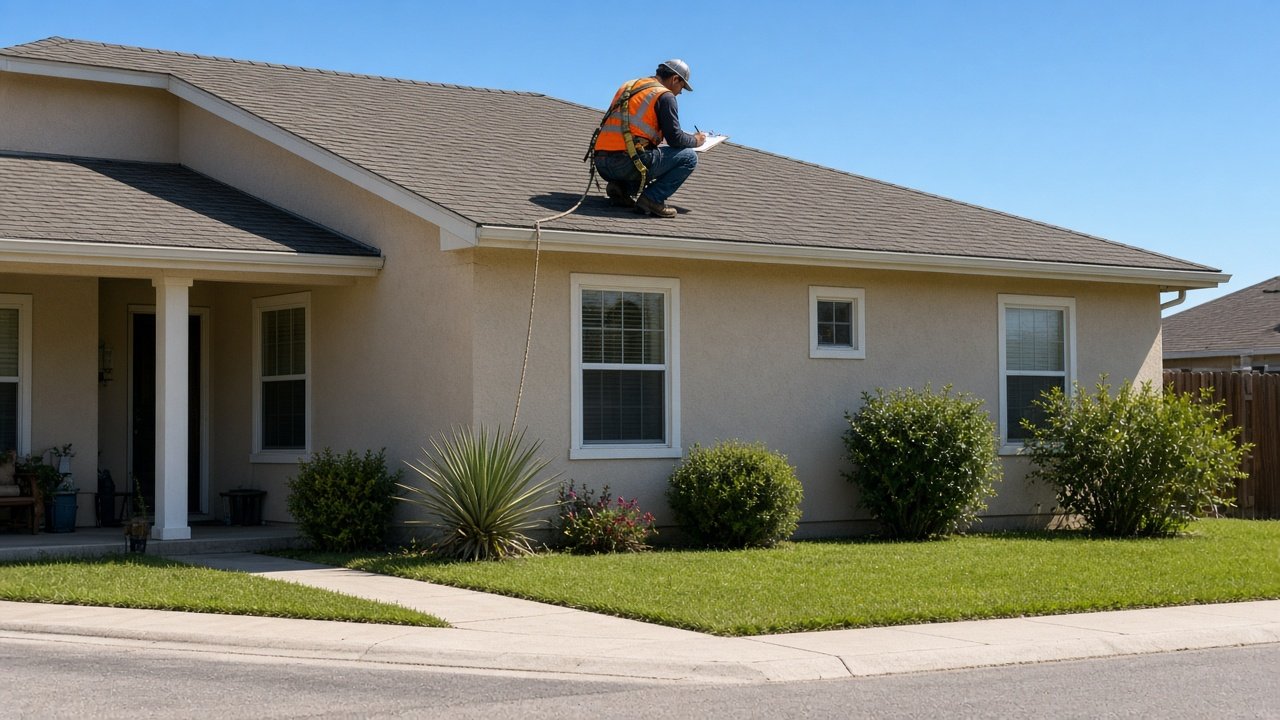
Look at the parts of the property that are flat or nearly flat. Common examples are a back-room addition, an enclosed porch, a carport or patio cover tied into the house, a garage converted to living space, and the flat roofs on many older homes, duplexes, and small commercial buildings around the city. Where a low-slope section meets a pitched roof, water often runs onto it from the steeper slope above. That can overload the drainage and leave a pool along the wall or at the joint between the two roofs.
On commercial and multi-unit buildings, the low-slope roof is often the whole roof, with drains, scuppers, and rooftop equipment spread across it. Each unit curb and pipe penetration interrupts the flow of water, and these are common places to find a pond. If you own or manage one of these buildings, RRSATX’s commercial roofing service covers this type of roof.
Why water stays on a flat roof instead of draining
A flat roof is built with a slight slope toward its drains. When water keeps ponding, the cause is usually a drainage problem, a low spot, or a structural issue. IKO lists improper slope, clogged or slow drains, compressed insulation, dips near roof features, and building settling among the causes. [1]
Ask the inspector to name the specific cause on your roof. “It ponds” describes the symptom, not the cause. A useful answer points to the drain, slope, insulation, or flashing detail that is holding the water, and comes with photos of it.
| Possible cause | What you might notice | What to ask the inspector |
|---|---|---|
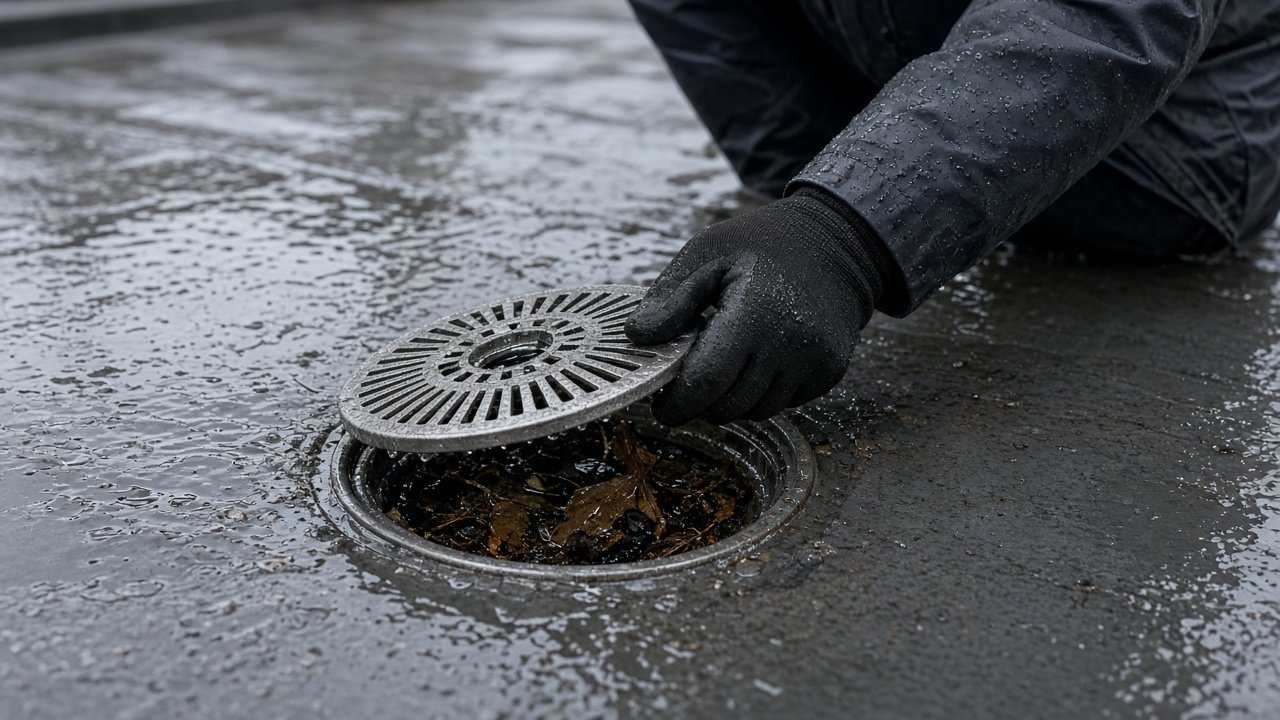
| Blocked or slow drain | Pool centered on a drain or scupper, with leaves or debris nearby | Was the drain cleared and tested, and did the water drain away afterward? |
| Low spot or compressed insulation | Pool in open roof area away from any drain, often in a foot-traffic path | Where is the low area, how did you find it, and is the insulation under it wet or crushed? |
| Slope toward the wrong place | Water collecting against a wall, parapet, or the joint with the main roof | Which way does this area drain now, and what would send the water to a drain? |
| Dip near equipment or a penetration | Pool beside an AC curb, vent pipe, or skylight | Is the flashing or curb holding water back, and does that detail need repair too? |
For background on the roof system itself, see RRSATX’s flat roofing services. The existing guide to flat roof leaks covers what happens once water gets through a low-slope roof.
What standing water can do to a flat roof over time
According to IKO, ponding adds weight to the roof, keeps the roofing material in constant contact with water, and can contribute to early roof failure and leaks. [1]
That doesn’t make every puddle an emergency, and it doesn’t mean the whole roof needs replacing. It does mean a pond that keeps coming back needs a diagnosis, a written scope of work, and a timeline. That’s especially true when a seam or flashing edge sits in the water, the surface feels soft, or a stain has appeared indoors under the same spot. A pond over a seam can push water into the seam for days after each storm, and that’s longer than most roof details are designed to handle.

Call sooner when you see these together
Water ponding in the same place after most rains, combined with any of these: a seam or blister in the water, an area that feels soft, or a new ceiling stain below. Photograph what you can see safely and note the dates. The pattern helps the inspector tell a drain problem from a failing roof surface.
Fix the drainage cause first, then repair the flat roof surface
A repair that lasts deals with why the water stays before it restores the membrane the water has been sitting on. IKO’s repair sequence starts with an inspection, then addresses structural, slope, or drainage problems, corrects low points, and finally replaces materials the ponding has damaged. [1]
- Inspect and photograph. Map the drain path, low areas, seams, and flashing in and around the pond, and check whether the material underneath is wet.
- Clear and test the drainage. Remove debris from drains, strainers, and scuppers, and confirm the water now flows where it should.
- Correct the low spot or slope. Depending on what the inspection finds, the proposal may involve rebuilding a low area or redirecting water toward a drain. Ask which applies to your roof and why.
- Repair the damaged material. Once the cause is fixed, repair or replace any membrane, cap sheet, or insulation the standing water has damaged.
- Check it after the next rain. The real test is whether the same spot dries out normally after the next storm.
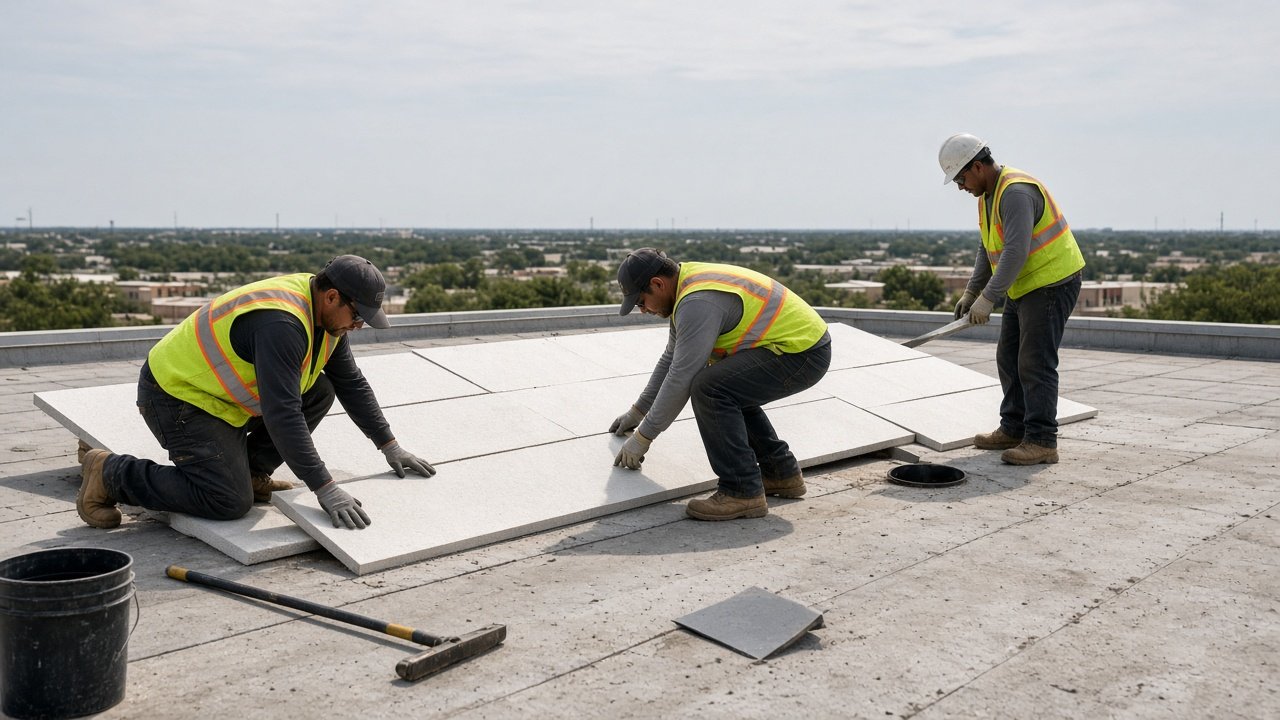
Be wary of a quote that only patches or coats the wet area and never explains the drainage finding. Ask what will be different after the next rain. If water is already getting inside, start with roof leak repair in San Antonio so the interior is protected while the drainage fix is planned.
How to read a flat roof repair estimate in San Antonio
Compare what each proposal includes before you compare prices. The Texas Department of Insurance recommends getting more than one written bid and keeping copies of your agreements and warranty terms. [2]
Two bids for “ponding repair” can describe very different jobs. One might clear a drain and patch a seam. Another might rebuild a low area and replace wet insulation. A low price doesn’t help if it leaves out the cause. Before signing, make sure each bid answers these questions in writing:
- Which drain, low spot, seam, or flashing detail will be repaired? Is each one named and photographed?
- Is wet or compressed insulation included, excluded, or listed as “if found”?
- How will any extra work be documented, priced, and approved before it is done?
- What membrane and flashing materials will be used?
- What are the payment stages and the written warranty terms?
This guide does not give an average San Antonio price for ponding repair. Cost depends on the cause, the roof system, and how much material the standing water has damaged, and the inspection should establish all three.
Local roofing service
About Affordable Roofing Contractors San Antonio
Affordable Roofing Contractors San Antonio, also known as RRSATX, provides roof repair, roof replacement, and roof inspections in San Antonio, including flat roof repair. When you call, tell us where the water sits, how long it stays after rain, and whether you have noticed any staining inside. Dated photos help as well.
- Phone
- (713) 504-2341
- sales@affordableroofingcontractorssanantonio.com
- Address
- 4324 Monterey St, San Antonio, TX 78237
- Contact
- Request a free roof inspection
Ponding water on flat roofs in San Antonio: questions answered
How long can water sit on a flat roof before it counts as ponding?
IKO summarizes National Roofing Contractors Association guidance as water remaining 24 to 48 hours after rain. Even a puddle that clears within a day is worth noting if it keeps returning to the same spot. [1]
Will patching the membrane stop ponding from coming back?
Not if water still collects in the same place. The drain, low spot, or slope problem has to be corrected first, and then the material the standing water damaged can be repaired. Ask the roofer to cover both parts in the written scope.
Does ponding water mean I need a whole new flat roof?
Not on its own. IKO notes that some causes, such as a drainage problem, can be corrected without replacing the whole roof. A roof with badly built slope is a bigger decision. The inspection findings should drive the recommendation, not the puddle alone. [1]
Can I clear a flat roof drain myself?
Only if you can reach it without walking on a wet or damaged roof. If you’re not sure, don’t. Photograph the blockage from a safe place and have the inspection cover drain access, seams, and any soft areas at the same visit.
What should I send RRSATX before the inspection visit?
Send the property address, dated photos taken safely, when the rain stopped and when each photo was taken, and whether any staining has appeared below. Call (713) 504-2341 or use the contact page.
Explore the roofing topic
More help with flat and low-slope roofs
Get the cause of the ponding checked, not just the puddle
Ask RRSATX for a free roof inspection and written findings for your flat roof in San Antonio.