
Asphalt shingle repair · San Antonio, Texas
Curling Shingles in San Antonio: Cupping, Clawing, and When to Call
Asphalt shingles are supposed to lie flat and sealed. Edges that turn up, middles that sink, or a slope that looks wavy from the street all point to age, heat, or a shingle that has lost its seal. This guide explains how to read the pattern from the ground and how to decide between a repair and a replacement.
The short answer
GAF lists cracked, curling, or missing shingles among the outside signs a homeowner should have a professional look at. [1] A few curled shingles in one spot can often be repaired. Curling across most of a slope usually means the roof is close to the end of its service life. How far the curling has spread, documented with photos, should drive the decision, not a single shingle.
Cupping, clawing, and buckling: three ways shingles curl
“Curling” covers several different shapes. Telling the inspector which one you see helps narrow down the cause.
- Cupping: the edges or corners turn up, so the shingle looks like a shallow dish.
- Clawing: the edges stay down while the middle lifts, so the shingle looks pinched.
- Buckling: a raised ridge or wave runs across several courses, so part of the slope looks rippled. In this case the shingles aren’t changing shape one by one.
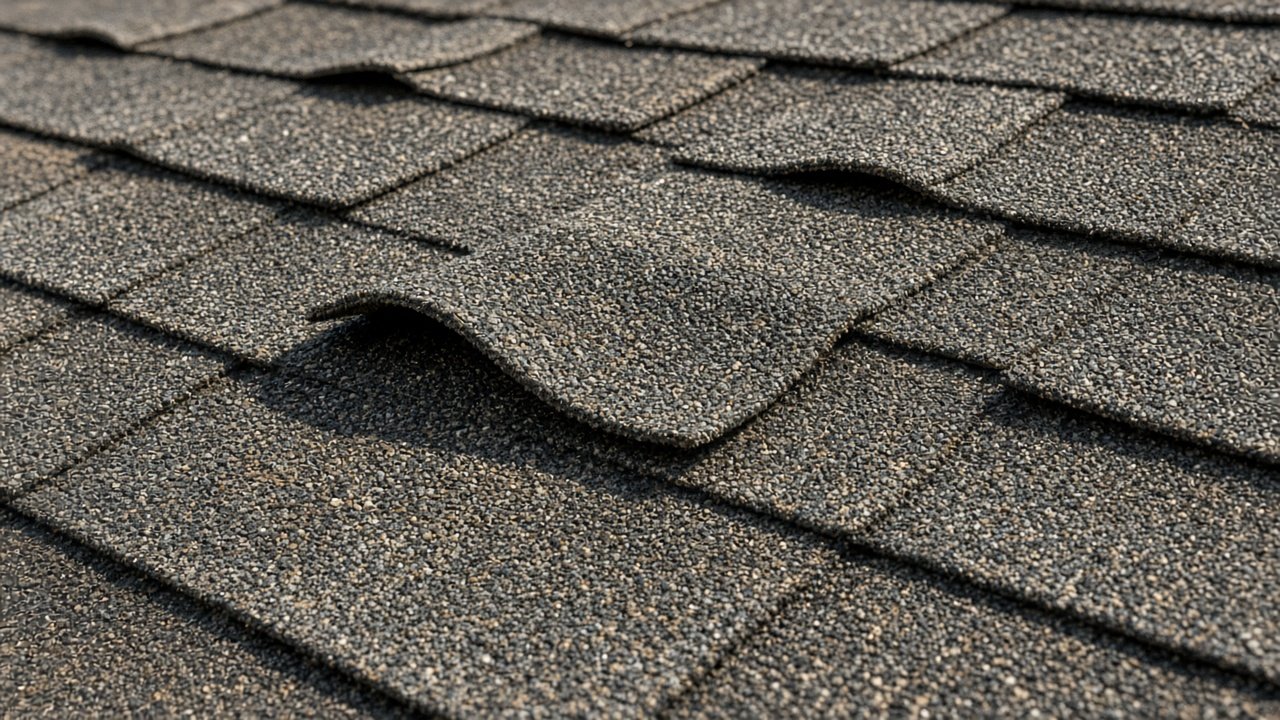
All three have the same practical result. A shingle that no longer lies flat can’t shed water and resist wind the way a sealed course does. A lifted edge gives wind something to catch and lets wind-driven rain get under the course above. That is why curling is worth tracking even when nothing is leaking yet.
Photograph each slope from the ground early in the morning or late in the afternoon. Low sun throws small shadows under lifted edges, so they’re much easier to see than at midday. Note whether the pattern is in one patch, along one edge, or across most of a slope.
Why asphalt shingles curl in San Antonio heat and sun
Age, heat, granule loss, moisture under the shingle, and shingles that never sealed properly can all show up as curling. GAF lists cracked, curling, or missing shingles as an outside sign to have a professional assess, rather than something to climb up and check yourself. [1]
San Antonio’s long, hot summers and strong sun are hard on asphalt shingles. Over time a shingle loses flexibility and the granules that shield it from sunlight. Once that happens, the shingle reacts more to daily heating and cooling. Slopes that get the most afternoon sun often show wear first, while a shaded slope on the same house can still look fine. Moisture trapped under a shingle and shingles that were never fastened or sealed correctly can produce curling too, sometimes on a roof that isn’t very old.
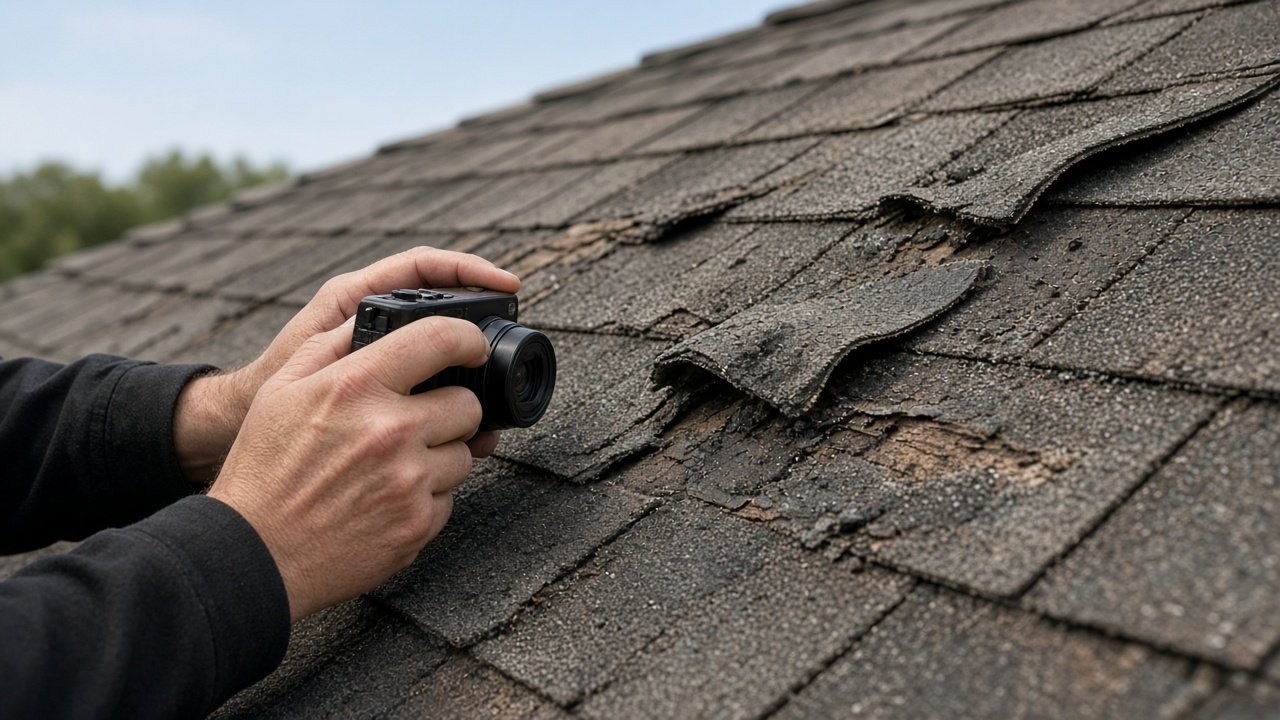
Ask the inspector to tie the pattern to a cause on your roof. Curling over one area, curling on the sunniest slope first, and curling everywhere at once are different findings, and each can call for a different scope of work.
Look for the signs that come with curling
Granules collecting where downspouts drain, cracked or missing shingles nearby, and staining inside under the same slope. RRSATX covers one of these in its guide to what causes granule loss on shingles. Read it alongside this one, because together the signs tell you more than either one alone.
How to check for curling shingles safely from the ground
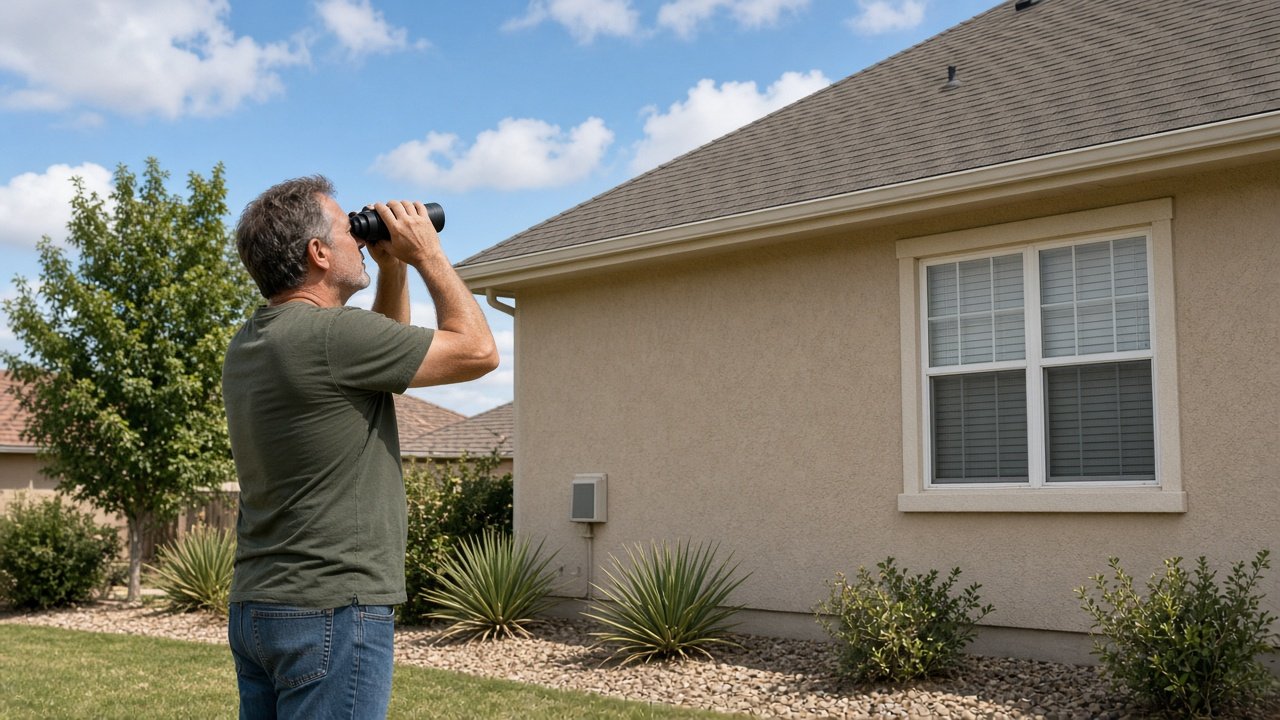
GAF advises homeowners to look at the roof from ground level outside and to check inside the house, and to call a professional instead of climbing onto the roof. [1]
- Walk the street side and the yard side. Do shingle edges look lifted or wavy, or do they cast uneven shadows?
- Use binoculars if you have them, and compare one slope with another instead of focusing on a single shingle.
- After a rain, check where the downspouts drain for an unusual amount of granules.
- Look inside for water stains or peeling paint on ceilings and walls. GAF lists these as interior signs. [1]
- Write down the roof’s approximate age and any past repairs. If you don’t know, say so.
Don’t press curled shingles flat, coat them, or lift one to look underneath. An old, brittle shingle can crack when you handle it, and disturbing the course above can cause the leak you were trying to prevent. When you’re ready for a professional look, RRSATX’s roof repair service in San Antonio is the next step.
Age-related curling vs. storm damage on San Antonio roofs
San Antonio gets strong spring and summer storms, so homeowners often wonder whether lifted shingles came from age or from one bad storm. They can look alike from the ground.
Curling from age tends to build slowly and spread across a slope. Storm damage tends to show up all at once after a known event. It is often concentrated on the side of the house that faced the wind, and it can include creased, torn, or missing tabs. Many roofs show both, with older, curling shingles giving way more easily in a storm.
If you noticed the change right after a storm, write down the date and take ground-level photos as soon as it’s safe. Ask the inspector to separate gradual wear from new damage in the written findings, so you know what you’re dealing with before you decide how to proceed. If shingles are missing as well as curled, the RRSATX guide to missing shingles covers that problem.
Repair or replace curling shingles? Let the pattern decide
GAF frames the repair-or-replace decision mainly around how much damage there is. Small, localized damage may be repairable, while significant or widespread problems point toward replacement. [1]
| Question | Localized curling | Widespread curling |
|---|---|---|
| Where is it? | One patch, edge, or area of a slope, named and photographed. | Across most of one or more slopes. |
| What is the likely cause? | Often a local issue, such as a spot that didn’t seal or moisture in one area. | Often age and sun exposure across the whole roof system. |
| What is proposed? | Which shingles and underlying materials will be addressed? | What full system is proposed, and what will be torn off? |
| What is still unknown? | What can only be confirmed once the shingles are lifted? | If damaged decking turns up, how will it be documented and priced? |
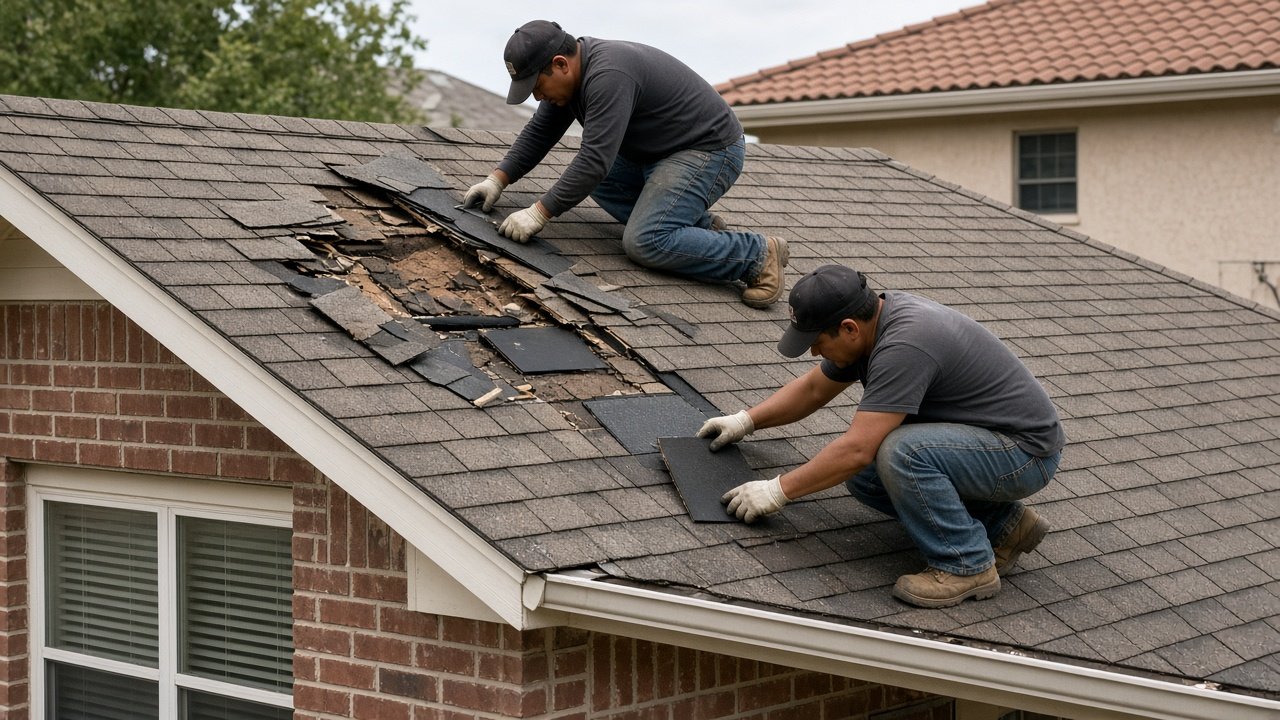
One practical point about spot repairs on an older roof: new shingles may not match the color or profile of weathered ones, and surrounding shingles that have gone brittle can be hard to work around without causing more damage. Ask the roofer how they would handle that on your roof before you choose the cheaper option.
You can compare the two service paths directly. Roof repair covers a localized scope, and roof replacement is the path when the pattern is widespread. For background on the material itself, see RRSATX’s asphalt roofing service.
Comparing written shingle repair and replacement proposals
The Texas Department of Insurance recommends getting more than one written bid and keeping your agreements and warranty terms. [2]
Bids for curling shingles can differ a lot. One contractor may quote a few shingles, while another quotes a full slope or the whole roof. Line them up by what they include, not by the total:
- Does the bid name the slopes and shingles included, and the material that will be installed?
- How will hidden deck or underlayment damage be photographed, priced, and approved?
- What is excluded, and what would trigger a change to the scope?
- What are the payment stages, the schedule assumptions, and the written warranty terms?

This guide does not claim an average San Antonio price for shingle repair or replacement, and it does not say that curling always means replacement. A sound recommendation depends on the pattern, the roof’s age if known, and the condition under the affected shingles.
Local roofing service
About Affordable Roofing Contractors San Antonio
Affordable Roofing Contractors San Antonio, also known as RRSATX, provides roof repair, roof replacement, and roof inspections in San Antonio, including asphalt shingle roofs. When you call, tell us which slopes look curled, whether granules are collecting below the downspouts, and the roof’s approximate age if you know it.
- Phone
- (713) 504-2341
- sales@affordableroofingcontractorssanantonio.com
- Address
- 4324 Monterey St, San Antonio, TX 78237
- Contact
- Request a free roof inspection
Curling shingles in San Antonio: questions answered
Do a few curling shingles mean I need a new roof?
No. GAF frames the decision around how much damage there is. Small, localized damage may be repairable, while widespread problems lead to a replacement discussion. Have the inspector photograph how far the pattern extends before you decide. [1]
What is the difference between cupping and clawing?
With cupping, the shingle’s edges turn up. With clawing, the edges stay down and the middle lifts. Either way the shingle is no longer lying flat and sealed. Tell us which one you see when you call.
Can I flatten a curled shingle back down myself?
It isn’t a reliable repair, and a brittle shingle can crack when you handle it. GAF advises homeowners to leave roof access to professionals and to check from the ground and from inside instead. [1]
Why is only one side of my roof curling?
Slopes that get more direct sun or more weather often wear faster than shaded ones. A local cause, such as moisture in one area or shingles that didn’t seal there, can also produce curling on a single slope. The inspection should say which it is.
What should I send RRSATX before the inspection?
Ground-level photos of each slope, a note about granules below the downspouts, any ceiling stains, and the roof’s age or repair history if you know it. Call (713) 504-2341 or use the contact page.
Should I get more than one bid for the work?
The Texas Department of Insurance recommends getting multiple written bids and keeping your agreements and warranty terms, so you can compare what each one includes, not just the total. [2]
Explore the roofing topic
More help with asphalt shingle roofs
Find out how far the curling really goes
Ask RRSATX for a free roof inspection and written findings before you approve spot repairs on your San Antonio home.