
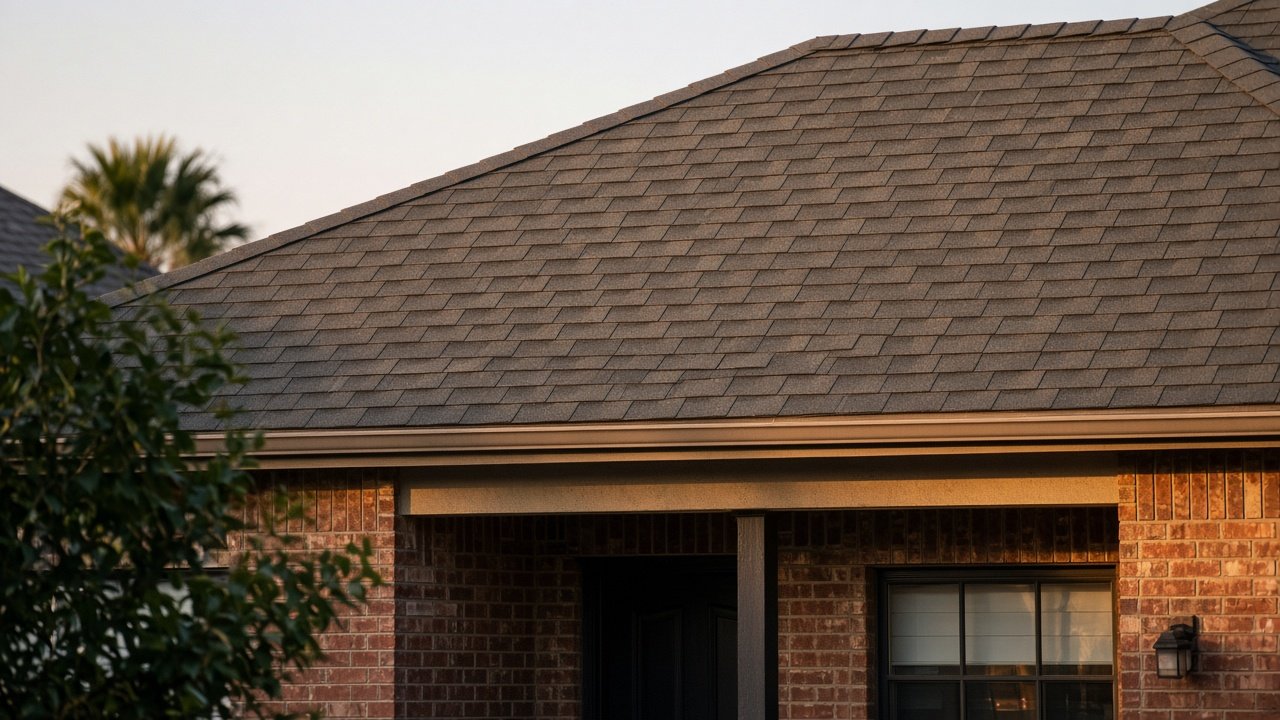
Roof basics · San Antonio, Texas
What Are Ridge Caps on a Roof? A San Antonio Homeowner’s Guide
The ridge cap is the row of shingles or trim that runs along the peak of your roof. It’s a small part of the roof that takes a lot of weather. This guide explains what ridge caps do, the main types, the damage San Antonio wind, hail, and sun cause, and how to tell a simple ridge repair from a bigger roof problem.
The short answer
What are ridge caps on a roof? They are the pieces that cover the peak and hip lines, where two roof slopes meet. On a shingle roof, ridge caps are shingles bent over the joint so water runs off both sides instead of into the seam. Metal roofs use a formed ridge cap or trim, and tile roofs use ridge tiles set in mortar or foam. Because they sit at the highest, most exposed point of the roof, ridge caps are often the first pieces to lift, crack, or blow off after a San Antonio storm.
What are ridge caps on a roof, in plain terms?
A ridge cap is the covering that seals the top edge where two roof slopes meet. If you picture a roof as two sloped planes leaning against each other, the ridge cap is the strip that closes the gap along the top.
The regular shingles on each slope, called field shingles, overlap from the eave upward so each row sheds water onto the row below. That pattern works until it reaches the peak. There, the top rows from each side meet at an angle and leave a seam that nothing above can overlap. The ridge cap solves that by laying a row of bent pieces over the seam, each overlapping the next, so the joint is covered from end to end.
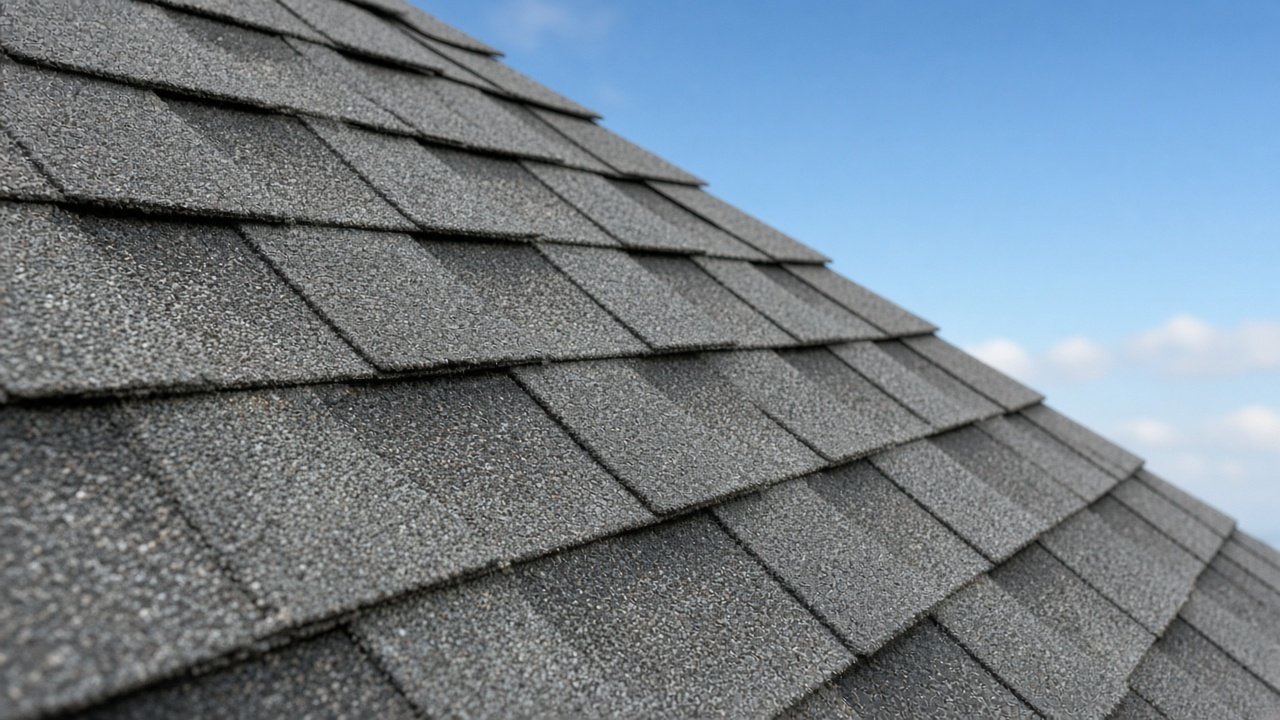
On most San Antonio homes with asphalt shingles, the ridge cap is made of shingle material that matches the rest of the roof. From the street it looks like a slightly raised line along the top. Some roofs have a vent running under the ridge cap, which is a separate component from the cap itself.
Ridge lines vs. hip lines: where caps go
Caps cover two kinds of outside joints: the ridge along the top, and the hips that run down from it. Both are places where two roof faces meet at a peak, so both need the same kind of cover.
The ridge is the horizontal line at the very top of the roof. A simple gable roof has one ridge and no hips. The hips are the sloped outside corners that run from the ridge down to the eaves on a hip roof, where the roof slopes on all four sides. Many San Antonio homes combine both, with a main ridge and several hips, so the total length of capped joints can be more than it looks from the curb.
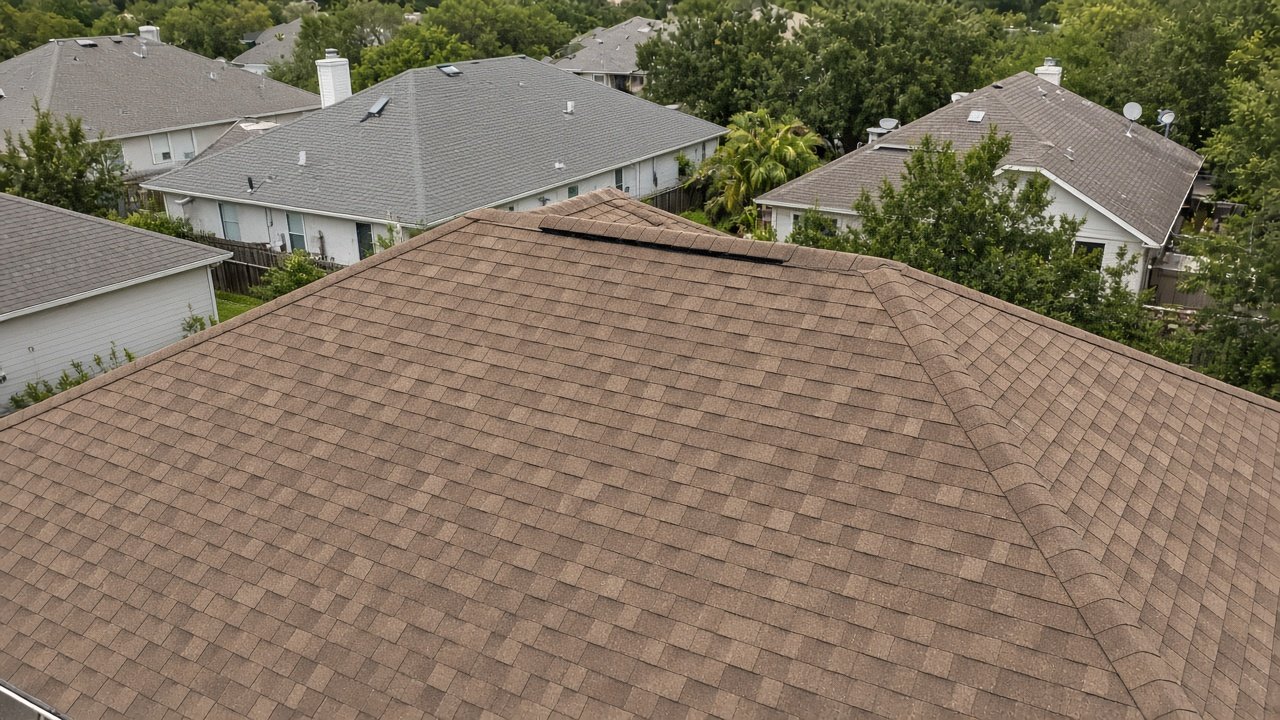
Don’t confuse hips with valleys. A valley is an inside corner where two slopes meet and water runs together. Valleys are lined and shingled differently and don’t use cap pieces.
What ridge caps do for your roof
Ridge caps keep water and debris out of the most exposed joint on the roof. GAF describes hip and ridge caps as protecting the areas where two roof faces meet, bent over the joint to help protect it from water intrusion and debris. [1]
- Shed water off the peak. Rain that lands on the ridge runs down both sides onto the field shingles instead of into the seam.
- Protect against wind-driven rain and debris. The cap covers the top edges of the field shingles, which would otherwise be open to rain blown sideways, leaves, and small debris.
- Cover the fasteners below. The top rows of field shingles are nailed near the peak, and the cap keeps those nails out of the weather.
- Give the roof a finished look. A straight, even ridge line makes the whole roof look neat and complete.
Because the ridge is the highest point, a failed cap can let water run down inside the roof and show up as a stain somewhere well below the peak.
Why ridge caps take a beating in San Antonio
Ridge caps sit where wind, hail, and sun hit the roof hardest. Nothing shelters the peak, so caps tend to show wear and storm damage before the rest of the roof does.
Strong gusts during San Antonio’s spring and summer storms pull at the edges of cap pieces from both sides. Hail strikes the peak directly. And the Texas sun bakes the ridge all day, which can dry out the shingle material and loosen its bond to the pieces below. Each cap shingle is also bent over the peak, so it’s under more stress than a flat field shingle.
- Lifted cap pieces whose edges no longer lie flat, often after a windy storm
- Missing cap pieces that leave a gap along the ridge or hip
- Cracked caps, often along the fold where the shingle bends over the peak
- Exposed or backed-out nails at the end of the run or under a lifted piece
- Granule wear that leaves dark, bare-looking patches along the ridge

If shingles are also missing from the slopes, see the RRSATX guide to missing shingles. For shingles that are cupping or lifting at the edges across the roof, see curling shingles in San Antonio.
Types of ridge caps on asphalt shingle roofs
On shingle roofs, ridge caps are either factory-made cap shingles or pieces cut from standard 3-tab shingles. Both cover the joint, but they look and handle differently.
| Type | How it’s made | What to know |
|---|---|---|
| Factory-made hip and ridge cap shingles | Pre-formed pieces made for the ridge | GAF presents them as an alternative to cutting up 3-tab shingles, with a more uniform finished look. [1] |
| Field-cut 3-tab pieces | Standard 3-tab shingles cut into tabs and bent over the peak | A traditional method. Ask your roofer what cap product they plan to use and why. |
| Metal ridge cap or ridge trim | Formed metal that matches the roof panels | Used on metal roofs and fastened over the panel ends at the peak. |
| Ridge tiles | Rounded or angled tiles | Used on tile roofs and set in mortar or foam along ridges and hips. |
Architectural shingle roofs are often finished with factory-made caps, since their thicker look doesn’t match flat 3-tab pieces. The RRSATX guide to 3-tab vs. architectural shingles explains how the two shingle styles differ, and our asphalt roofing page covers shingle roofs in San Antonio.

Ridge caps on metal and tile roofs
Metal and tile roofs cover the same joint with different materials. The job is the same: keep water and debris out of the peak.
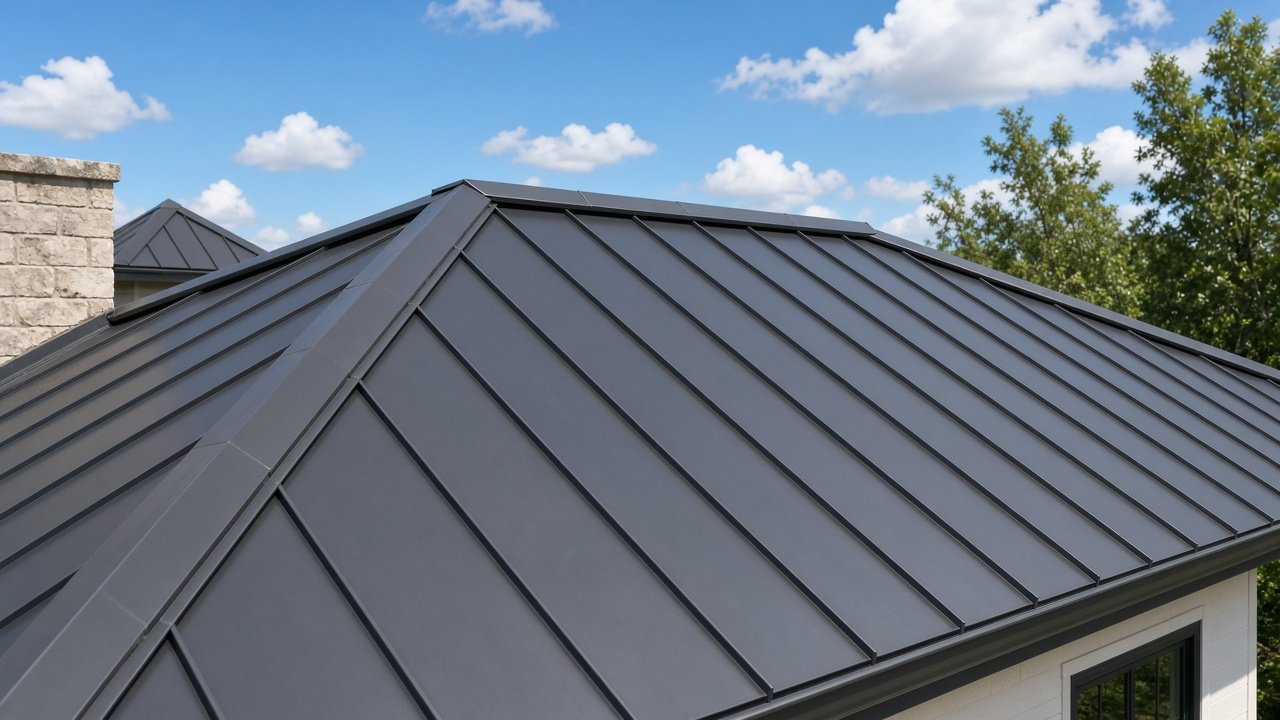
On a standing seam or other metal roof, the ridge cap is a length of formed metal trim that runs along the peak and covers the top ends of the panels. It’s fastened in place and usually sits over closures that fill the gaps under the panel ribs. Loose fasteners, bent trim, or gaps at the ends are the things to watch. RRSATX’s metal roofing page covers metal systems in more detail.
On clay and concrete tile roofs, rounded or angled ridge tiles are set along the ridges and hips in mortar or foam. Cracked mortar, loose ridge tiles, or gaps under them can let water in at the top of the roof.
What you can see from the ground
The ridge is easy to see from the street, which makes it a good place to check after a storm. Stay off the roof and use binoculars or a phone camera on zoom.
- Gaps along the ridge or hips where a cap piece is missing
- Cap edges that stick up or look wavy instead of lying flat
- Pieces of shingle or cap material on the ground, especially after wind
- A ridge line that dips, sags, or looks uneven along its length
- Dark, bare patches on the caps where granules have worn away
- Water stains on upper-floor ceilings, especially near the center of the house
Photograph anything you see from a safe spot and note the date. If you plan to file an insurance claim after a storm, those photos help.
When it’s a ridge repair and when it’s a bigger roof problem
The extent of the damage decides the fix. GAF’s repair-or-replace guidance makes the same general point: how much damage there is drives whether a repair or a replacement makes sense. [2]
A few lifted or missing cap pieces on an otherwise sound roof are usually a straightforward repair. The roofer removes the damaged pieces, checks the decking and field shingles at the peak, and installs new caps that match. RRSATX handles this through its roof repair service in San Antonio.
It points to a larger problem when caps are cracking and losing granules along the whole ridge, when the field shingles show the same wear, when the ridge line sags, or when a leak has already damaged the decking. After hail or high wind, damage to the caps often means the slopes were hit too. In that case, RRSATX’s storm damage roofing service can assess the whole roof.
What an RRSATX inspection checks at the ridge
Cap pieces that are lifted, cracked, or missing; exposed or backed-out nails; granule wear; the condition of the field shingles and decking near the peak; signs that water has reached the attic; and whether other storm damage is present. You get the findings in writing with photos. Book a free roof inspection to get started.
Whatever the scope, the Texas Department of Insurance recommends getting written bids, reading the contract before you sign, and not paying a large amount up front. [3]
Local roofing service
About Affordable Roofing Contractors San Antonio
Affordable Roofing Contractors San Antonio, also known as RRSATX, provides roof repair, storm damage roofing, roof inspections, and asphalt, metal, and tile roofing in San Antonio. When you call, tell us what you’ve seen along the ridge or hips and when you first noticed it. Photos taken from the ground help.
- Phone
- (713) 504-2341
- sales@affordableroofingcontractorssanantonio.com
- Address
- 4324 Monterey St, San Antonio, TX 78237
- Contact
- Request a free roof inspection
Ridge caps on San Antonio roofs: questions answered
What is the difference between a ridge cap and a hip cap?
They’re the same kind of piece in different places. Ridge caps run along the horizontal peak, and hip caps run down the sloped outside corners. GAF groups them together as hip and ridge caps. [1]
Can a missing ridge cap cause a leak?
Yes. Without the cap, the seam at the peak and the nails at the top of the field shingles are open to rain. Water can run down inside the roof and show up as a stain well below the ridge.
Can ridge caps be replaced without replacing the roof?
Often, yes, if the damage is limited to the caps and the rest of the roof is sound. If the field shingles show the same wear or storm damage, ask your roofer whether a larger repair or replacement makes more sense.
Do metal and tile roofs have ridge caps?
Yes. Metal roofs use formed metal ridge trim along the peak, and tile roofs use ridge tiles set in mortar or foam. Each covers the same joint a shingle cap does.
Should I go on the roof to check my ridge caps?
No. The ridge is the highest and steepest place to stand. Check it from the ground with binoculars or a zoomed photo, and leave the close look to a roofer.
What should I send RRSATX before an inspection?
Send the property address, photos of the ridge or hips, the date of any recent storm, and whether you’ve seen stains inside. Call (713) 504-2341 or use the contact page.
Explore the roofing topic
More help with shingles and roof damage
Get your ridge caps checked before the next storm
Ask RRSATX for a free roof inspection and written findings for your San Antonio roof.