
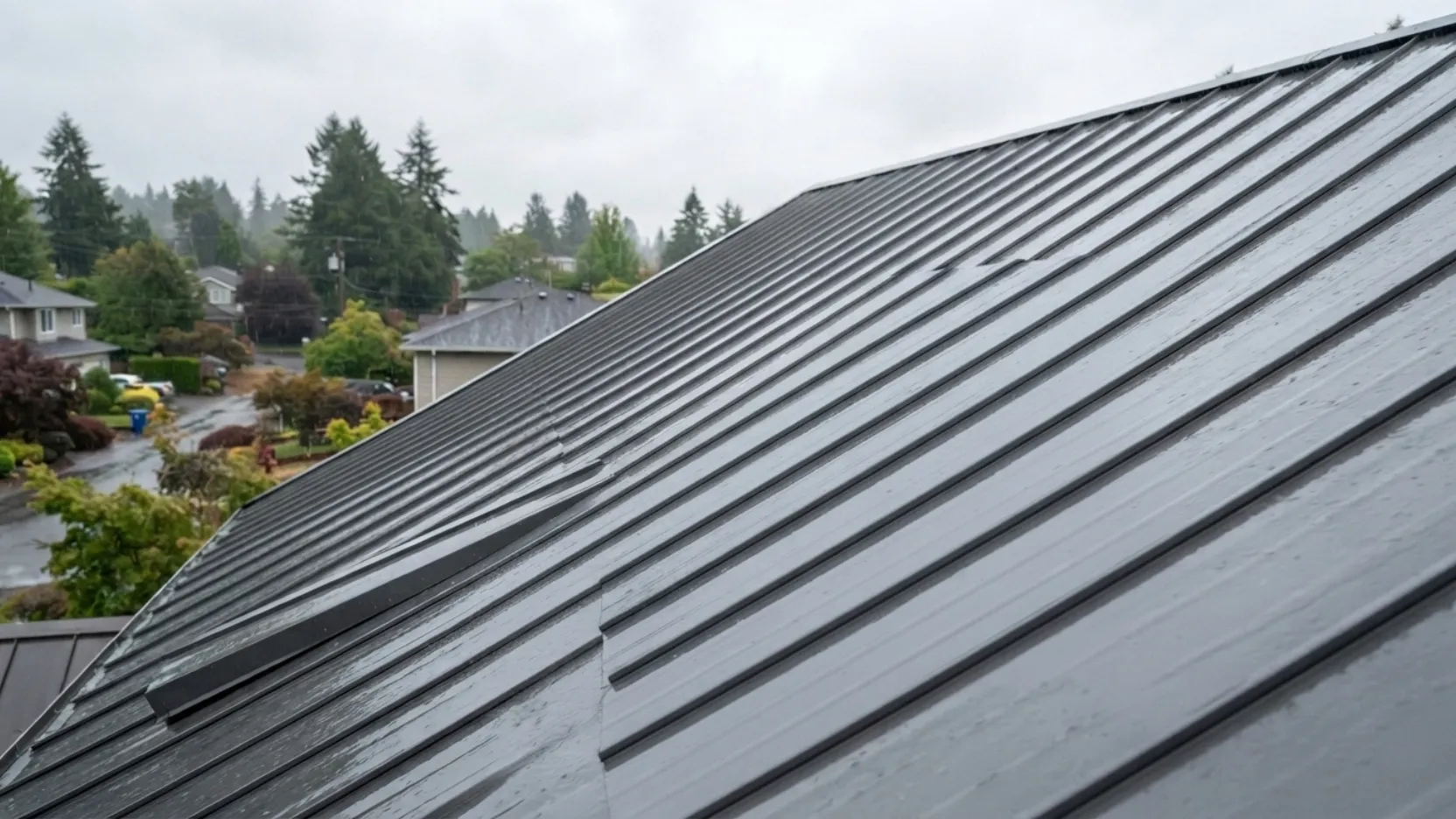
Yes—metal can be slippery, especially when wet—but “how slippery” depends on panel finish, pitch, weather, and footwear. A low-slope corrugated carport is nothing like a steep standing seam after a San Antonio downpour.
Smooth painted metal can feel roughly four times more slippery than asphalt granules when wet. Traction concerns rise sharply around 3:12 and steeper; at 4:12+, professional fall protection is the norm. Stone-coated steel grips more like shingles; bare Galvalume grips least.
Most homeowners ask either “Can a crew work on it safely?” or “Is it dangerous in an emergency?” Both answers start the same way: do not walk metal without roofing-rated rubber soles and a harness plan.
By the end of this guide, you’ll know how panel types and pitches compare, when weather makes metal hazardous, and what San Antonio homeowners should (and should not) do themselves.
Table of Contents
- Panel Type and Surface Finish
- Pitch Guidelines
- Weather, Dew, Algae, and Debris
- Footwear and Fall Protection
- What Homeowners Should Not DIY
- Traction Comparison Table
- Common Questions About Slippery Metal Roofs
- Next Steps for San Antonio Homeowners
Panel Type and Surface Finish
| Panel type | Dry traction | Wet traction | Notes |
|---|---|---|---|
| Stone-coated steel | Good (shingle-like) | Moderate | Best metal traction |
| Corrugated | Moderate–good | Moderate | Ridges help grip and drain |
| R-panel / exposed fastener | Moderate | Low–moderate | Flat fields between ribs |
| Standing seam (painted) | Moderate | Low | Most common premium residential |
| Bare Galvalume | Low–moderate | Very low | Least grip |
Afternoon storms flip a dry morning roof into a low-friction surface fast—especially on smooth painted and bare panels common across Bexar County.
Pitch Guidelines
Pitch is rise over 12 inches of run. Local homes often sit between 3:12 and 8:12.
| Pitch | Dry smooth metal | Wet smooth metal | Pro practice |
|---|---|---|---|
| 2:12–3:12 | Manageable with proper boots | Caution | Non-slip boots; harness recommended |
| 4:12–6:12 | Deliberate footing | High risk | Fall protection required (OSHA roof work norms) |
| 7:12–9:12 | Difficult | Do not walk unprotected | Harness, anchors, roof jacks |
| 10:12+ | Trained crews only | No walking | Full fall arrest; scaffolding/drone options |
Practical rule: treat any wet or algae-coated metal as one pitch category steeper than the tape measure says. Measure pitch before anyone steps on—do not guess from the driveway.
Weather, Dew, Algae, and Debris
Rain, dew, and afternoon storms
Rain causes immediate friction loss. Morning dew matters on steeper slopes. Frost is rare here but brutal when it shows. Summer crews start dry at 8 a.m. and can face an impassable roof by 1 p.m. after a brief storm—anchors go up before the weather window closes.
Algae and debris
Algae or moss—common on shaded north faces—stays slick even when it looks “dry.” Wet leaves in valleys are a classic trip/slip combo. Treat algae-coated sections as high-risk regardless of the forecast.
Footwear and Fall Protection
Soft rubber roofing soles (not hard leather or worn athletic shoes) maximize contact. OSHA-style fall protection applies for roof work over 6 feet; on metal, temporary anchors into structure or standing-seam clamps plus full-body harnesses (ANSI Z359) and preferably self-retracting lanyards are standard. Roof jacks build platforms on steep slopes.
Practical rule: if a contractor cannot describe their anchor and harness plan before arriving, pause the job—your liability exposure matters as much as theirs.
What Homeowners Should Not DIY
| Task | DIY? | Safer approach |
|---|---|---|
| Storm look-over | Ground only | Binoculars or contractor/drone |
| Gutters | Ladder at eave | Pole tools; stay off panels |
| Valley debris | No | Annual pro maintenance |
| Leak hunting | No | Note interior stains; call a pro |
| Antennas/dishes | Never without pro gear | Hire metal-experienced installers |
| Hail photos | Ground / drone | Enough for most claims |
Most falls happen on the return to the ladder, not mid-repair. Treat the last few feet as the highest-risk segment.
Traction Comparison Table
Stone-coated and low-slope corrugated are the only metal types where a carefully equipped homeowner might touch a panel on a gentle dry pitch. Standing seam and bare Galvalume are pro-only in wet or steep conditions.
Common Questions About Slippery Metal Roofs
More slippery than asphalt?
Usually yes—especially wet smooth panels. Stone-coated is the closest metal to shingle grip.
Can I walk it to clean gutters?
Prefer eave ladders and poles. Stepping past the eave onto panels is where risk spikes.
Standing seam vs corrugated?
Corrugated generally grips better at the same pitch; both still need proper boots and, on 4:12+, harnesses.
Does algae make it worse?
Yes—biofilm cuts friction wet or dry. Clean on a maintenance cycle every 2–3 years.
Next Steps for San Antonio Homeowners
Confirm pitch and panel type, keep algae and debris down, and hire crews who arrive with anchors—not just a ladder.
If you need safe inspection or repair on a San Antonio metal roof—without shortcuts on fall protection—RRSATX can help. Call 713-504-2341 or schedule online.