
[et_pb_section fb_built=”1″ admin_label=”section” _builder_version=”4.16″ global_colors_info=”{}”][et_pb_row admin_label=”row” _builder_version=”4.16″ background_size=”initial” background_position=”top_left” background_repeat=”repeat” global_colors_info=”{}”][et_pb_column type=”4_4″ _builder_version=”4.16″ custom_padding=”|||” global_colors_info=”{}” custom_padding__hover=”|||”][et_pb_code _builder_version=”4.27.7″ _module_preset=”default” hover_enabled=”0″ sticky_enabled=”0″]
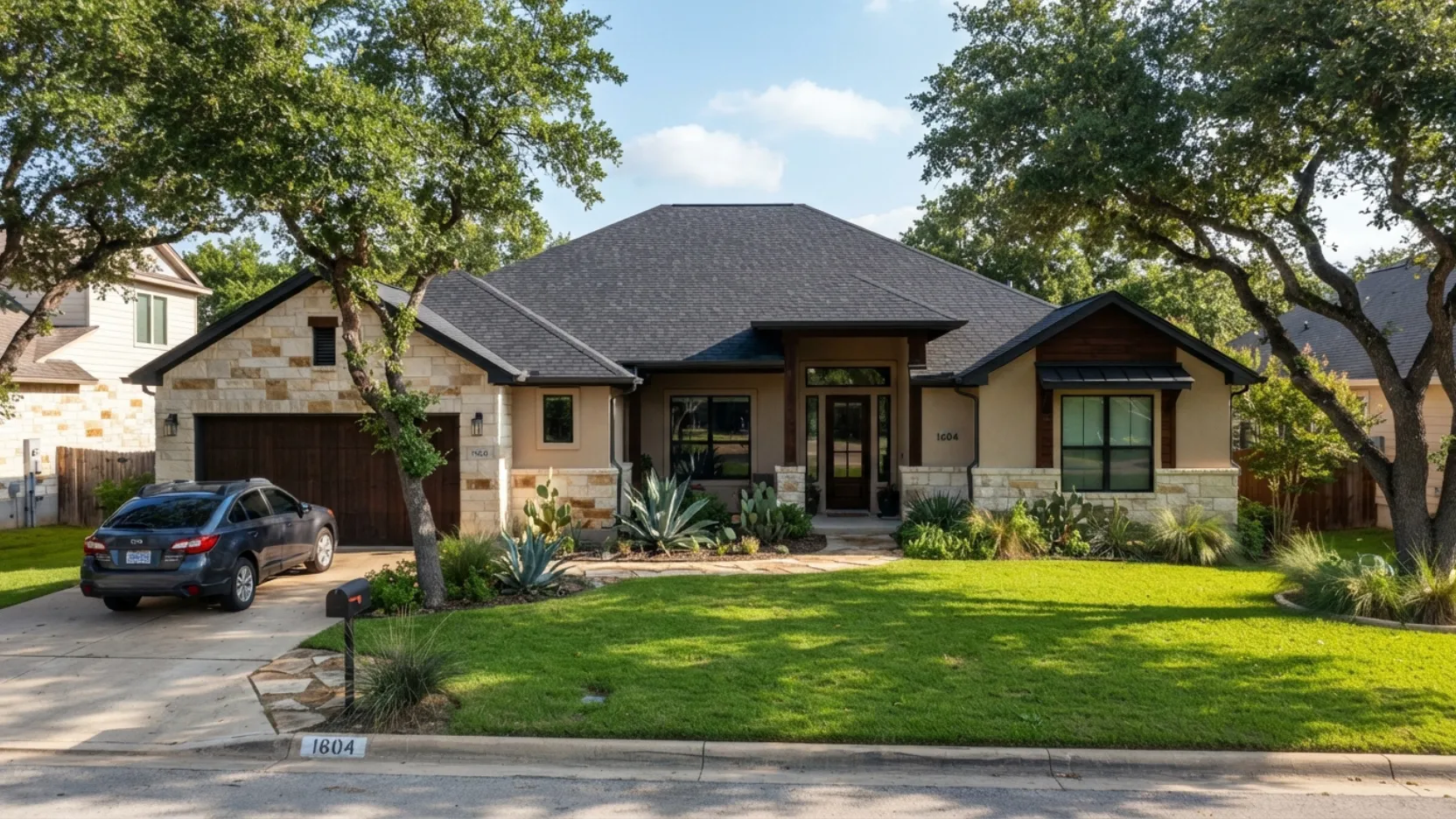
Asphalt shingles are the most commonly installed roofing material in San Antonio, and the most commonly mispriced. This guide breaks down every cost factor that drives your quote up or down, what San Antonio homeowners actually pay in 2026, and the specific moves that let you get a quality roof without overpaying for it.
Ask five San Antonio roofing contractors what it costs to replace your asphalt shingle roof and you will likely get five different numbers. That is not because roofing is mysterious it is because the price of an asphalt roof replacement depends on a specific set of variables that every contractor weighs differently. Knowing what those variables are, how much each one affects your total, and where the real opportunities to save exist puts you in a much stronger position when you are comparing quotes.
This guide covers every factor that influences asphalt roof cost in San Antonio, what different shingle grades actually cost installed in 2026, and the practical strategies that let you get a durable, well-installed roof without overspending on it.
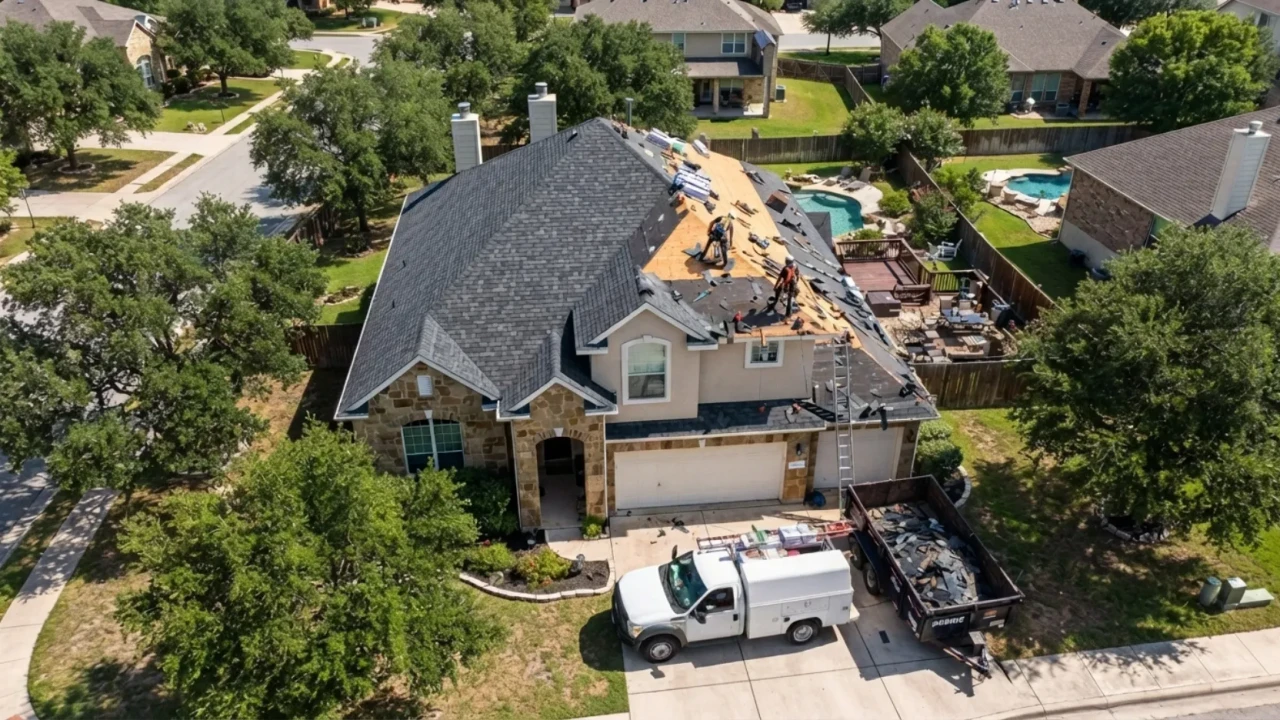
An estimate built without a contractor physically measuring your roof and inspecting the decking condition is not a real estimate it is a marketing number. San Antonio homes with the same square footage can have wildly different roof areas depending on pitch, number of dormers, hip-and-valley complexity, and garage configuration. Any contractor who quotes you a price from your square footage alone is guessing. Always require a written, itemized estimate from a contractor who has measured the actual roof surface before you make any decision.
Size and Complexity
The most important number in any roofing estimate is the actual roof area measured in roofing squares, where one square equals 100 square feet of roof surface. A 2,000 square foot home does not have a 2,000 square foot roof. Pitch, overhangs, dormers, and multiple roof planes all add roof surface beyond what the footprint suggests. A 2,000 square foot single-story home with a 6:12 pitch and simple gable design might have 22 to 24 roofing squares. The same footprint with a steeper pitch, hip ends, and two dormers might measure 30 or more squares.
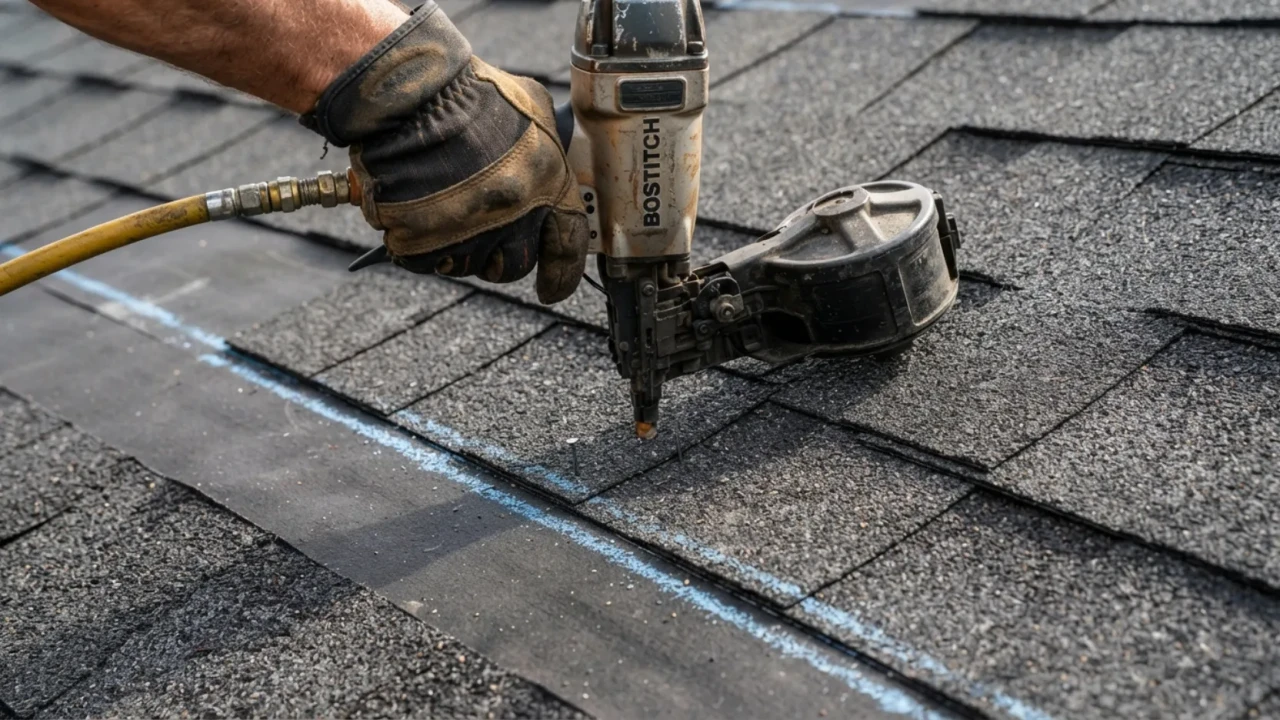
Pitch adds cost two ways. First, steeper pitches mean more actual surface area for the same footprint. Second, steep pitches slow down the installation crew, require additional safety equipment, and raise the contractor’s labor cost. Most San Antonio contractors charge a pitch premium on roofs above 7:12, and a significant premium on anything above 9:12.
Complexity multiplies material and labor cost. Every valley, hip, dormer, chimney, skylight, and penetration requires additional flashing, careful cutting, and more installation time. A simple gable roof with two planes is the least expensive configuration. A roof with six or eight planes, multiple hips, valleys, and penetrations can cost 25 to 40 percent more per square than a simple gable of identical total area.
- How many roofing squares did you measure on my roof?
- Is there a pitch premium in this quote, and what pitch did you measure?
- How many penetrations, valleys, and hips are included in the complexity pricing?
- Is flashing replacement included at every penetration, or is that extra?
- Does your waste factor account for the complexity of my roof layout?
Shingle Grade
Not all asphalt shingles are the same, and the grade you choose has a larger effect on the total installed cost than most homeowners realize. It also has the largest effect on how long your roof lasts in San Antonio’s specific combination of heat, UV exposure, and hail risk. Choosing the wrong grade for a San Antonio property is one of the most common and costly roofing decisions homeowners make.
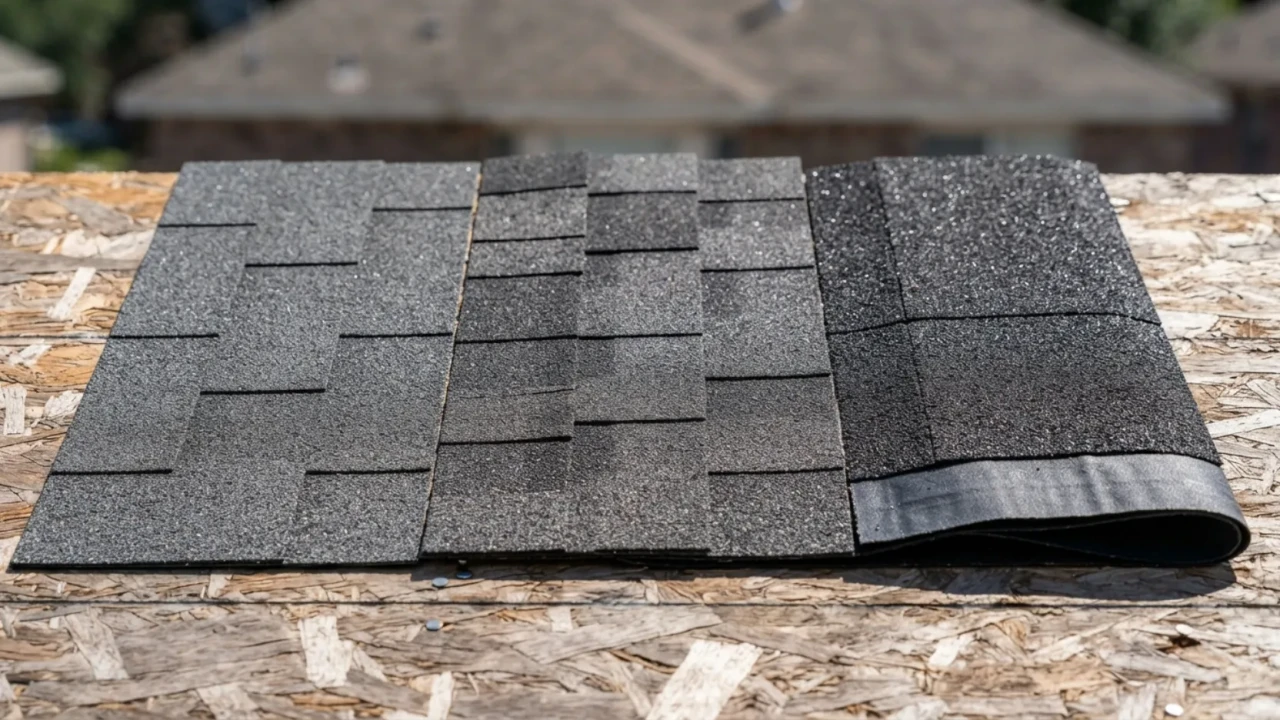
Before choosing a shingle grade, call your homeowners insurance carrier and ask specifically about Class 4 impact-resistant shingle discounts. San Antonio sits in one of the most active hail corridors in the United States. Many Texas insurers offer annual premium discounts of 20 to 35 percent for homes with a qualifying Class 4 shingle roof. On a policy with an annual premium of $3,000, that is $600 to $1,050 per year in savings. The cost difference between standard architectural and Class 4 shingles on a typical San Antonio home is $1,500 to $3,000. The insurance savings alone often recover that difference within two to four years.
- Call your insurance carrier before selecting a grade ask specifically about Class 4 discounts
- Confirm the shingle carries a wind warranty of at least 110 mph standard in San Antonio
- Verify the shingle manufacturer’s warranty covers algae resistance in humid climates
- Ask the contractor which manufacturer and product line they are pricing not just the grade
- Confirm shingle color matches any HOA guidelines before ordering
Tear-Off and Decking
Removing the existing shingles called a tear-off is a necessary cost in most full replacement projects and adds $1.00 to $2.00 per square foot to the total. Some homeowners ask contractors about installing new shingles over the existing layer, known as a re-roof or overlay. Texas building code allows one layer of shingles to be overlaid, but overlays are almost never the right decision for a San Antonio home because they trap heat between layers, prevent proper inspection of the decking, and are not permitted by most manufacturer warranties. A proper tear-off is almost always the better investment.
What happens after the tear-off is where the real uncertainty lives. Once the old shingles are removed, the decking (the plywood or OSB sheathing the shingles attach to) is exposed. Water damage, rot, delamination from previous leaks, and improper original installation are all common in San Antonio homes and none of it is visible until the old roof comes off. Most reputable contractors include an allowance for decking repair in their estimate and price it separately by the sheet or linear foot.
- Confirm tear-off cost is a separate line item in your quote not buried in the per-square price
- Ask how many existing layers the contractor observed or expects
- Confirm the per-sheet rate for decking replacement if damage is found
- Ask whether disposal fees are included in the tear-off price or billed separately
- Confirm the contractor will show you any damaged decking before replacing it
Accessories
Asphalt shingles are only one component of a functioning roof system. The underlayment, flashing, starter strips, ridge cap, drip edge, and ventilation work together with the shingles to protect your home. On a quality installation these components are specified, listed in the estimate, and replaced as part of the project. On a low-bid job they are often reused, skipped, or specified as the cheapest available option. Understanding what belongs in a complete asphalt shingle installation prevents you from accepting a quote that is low because it is incomplete.
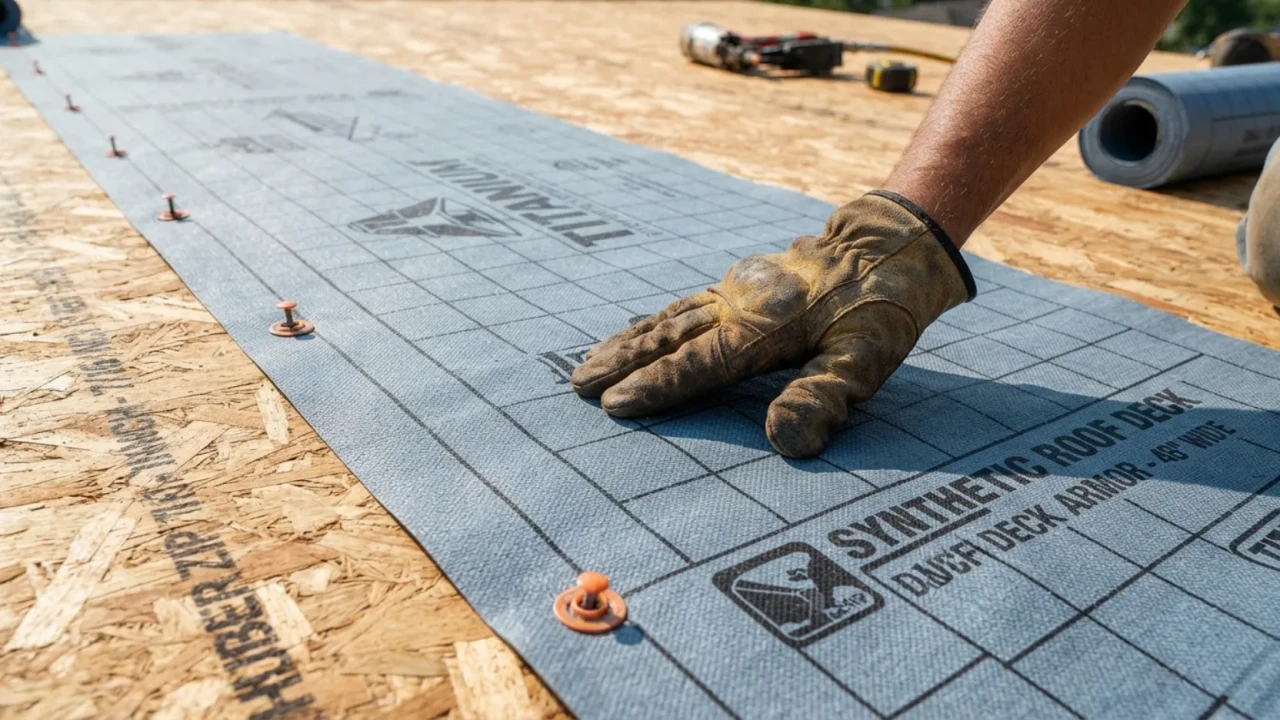
Underlayment: The layer between the decking and the shingles. Felt paper (15 lb or 30 lb) is the minimum code requirement and the least expensive option. Synthetic underlayment is more durable, lighter, and less prone to tearing during installation. In San Antonio’s heat and storm climate, synthetic underlayment is the right call and is standard on most quality installations.
Ice and water shield: A self-adhering waterproof membrane applied at eaves, valleys, and penetrations. San Antonio does not experience ice dams, but ice and water shield serves an important function at valleys and penetrations where wind-driven rain during severe thunderstorms can force water under shingles. It should be included at all valleys and around all penetrations on any quality San Antonio installation.
- Underlayment type specified in the written estimate synthetic vs felt
- Ice and water shield specified at valleys and all penetrations
- New drip edge included at eaves and rakes not reused from old installation
- All valley flashing replaced with new material open metal or woven
- Pipe boots replaced on every vent penetration not patched or reused
- Hip and ridge cap specified as a dedicated product, not cut field shingles
Ventilation
Attic ventilation is the most underappreciated factor in asphalt shingle longevity in San Antonio. Shingles installed over a poorly ventilated attic in a Texas climate age dramatically faster than the same shingles on a properly ventilated roof. Attic temperatures in San Antonio during summer can reach 150 to 160 degrees Fahrenheit in an under-ventilated space. That sustained heat accelerates granule loss, blisters the asphalt coating, and can void the manufacturer’s warranty on your new shingles. It also drives significantly higher cooling costs for the home below.
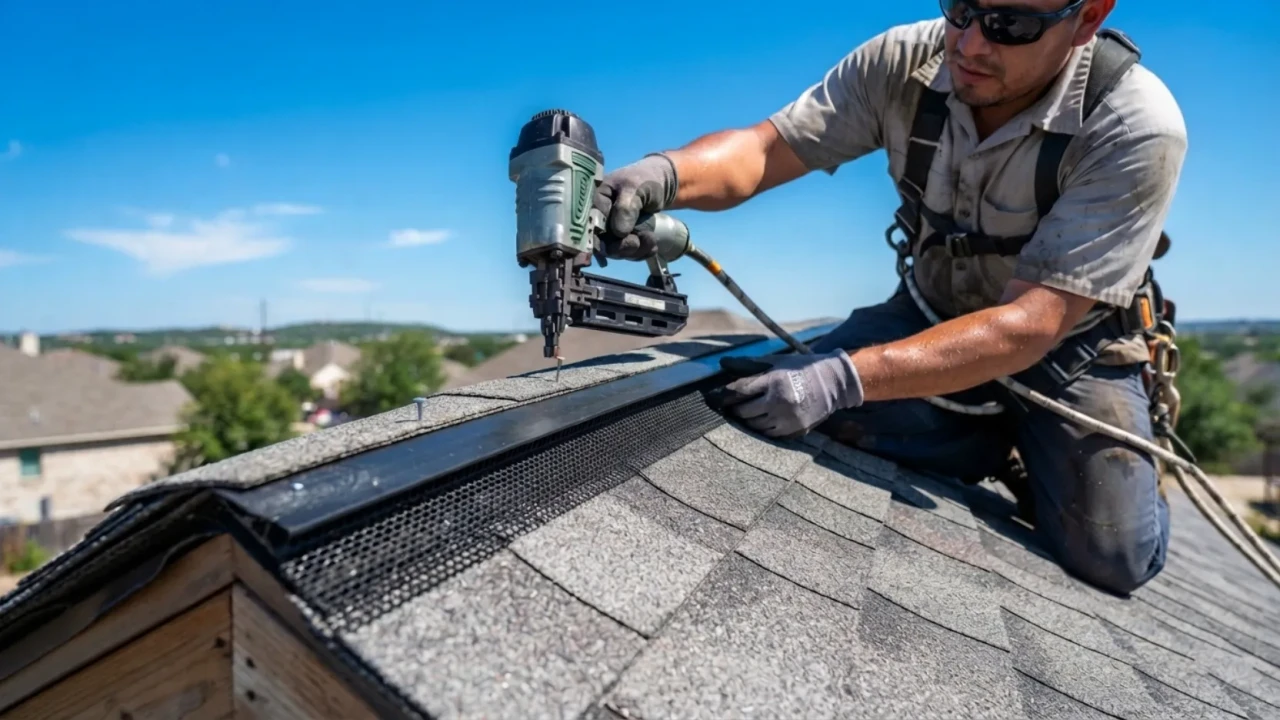
Proper attic ventilation follows a balanced intake-and-exhaust system: soffit vents at the eaves allow cool air to enter, and ridge vents or high exhaust vents allow hot air to escape at the peak. The net free area of intake and exhaust should be balanced at approximately 1 square foot of ventilation per 150 square feet of attic floor area per code. Many San Antonio homes are under-ventilated because the original installation was inadequate or because vents have become blocked over time.
- Contractor evaluates attic ventilation as part of the estimate visit not just the roof surface
- Intake and exhaust ventilation measured and confirmed to meet the 1:150 code standard
- Ridge vent evaluated as the exhaust solution if the existing venting is inadequate
- Soffit vents checked for blockage from insulation inside the attic
- Ventilation improvements included in the written estimate or documented as a separate recommendation
- Manufacturer’s ventilation requirements reviewed failure to meet them can void the warranty
Contractor Selection
After every major hail event in San Antonio, the number of roofing contractors operating in the area multiplies overnight. Storm chasers from out of state, day-labor crews operating without insurance, and door-knockers offering unusually low quotes flood the market and create enormous confusion for homeowners trying to find a qualified contractor at a fair price. Understanding how to evaluate a roofing contractor is as important as understanding what a roof costs.
Three to five years after a cheap roof is installed, many San Antonio homeowners discover the real cost of that low bid: a new roof is leaking around the flashings because they were reused rather than replaced, or the shingles are failing early because the ventilation was never addressed, or the contractor has disappeared and the workmanship warranty is worthless. A quality contractor at a fair price delivers a system that performs for the full expected lifespan. That is where the real savings live.
The most reliable strategy for saving money on a San Antonio asphalt shingle roof is timing, not price shopping. Roofing contractors book heavily during storm season (typically March through July) and charge peak rates when demand is highest. Scheduling your replacement in late summer, fall, or winter when contractor schedules have room often results in better pricing and more contractor attention to your project. A contractor who is rushing between three storm-season jobs is not giving your project the same care as one who is in a slower booking period. Timing your replacement 3 to 6 months after a major hail event, rather than immediately after, can save 10 to 20 percent without sacrificing quality.
- Certificate of insurance verified directly with the carrier not just a copy from the contractor
- Texas contractor license confirmed with the state licensing board
- Local physical address and established business history in San Antonio confirmed
- At least three written, itemized bids collected and compared line by line
- Manufacturer certification status confirmed preferred contractors often extend longer warranties
- Workmanship warranty terms confirmed in writing separate from the manufacturer’s material warranty
- References from recent San Antonio jobs requested and actually contacted
The table below shows the cost contribution of each component in a complete asphalt shingle replacement on a typical San Antonio home (approximately 20 to 25 squares, moderate complexity). Use this as a benchmark when reviewing your own quotes.
| Cost component | Typical range (San Antonio 2026) | Notes |
|---|---|---|
| Shingles (architectural grade) | $2,200 to $4,500 | Material cost only. Class 4 adds $1,200 to $2,500 to this figure. |
| Labor (installation) | $3,000 to $5,500 | Increases for steep pitch, high complexity, or remote access requirements. |
| Tear-off and disposal | $1,000 to $2,500 | Single layer. Double-layer tear-off adds $800 to $1,500. |
| Underlayment (synthetic plus ice and water shield) | $600 to $1,200 | Felt-only reduces cost by $300 to $500 but is not recommended. |
| Flashing replacement (all penetrations and valleys) | $500 to $1,000 | Should not be reused on a full tear-off replacement. |
| Ridge cap, starter strip, and drip edge | $400 to $800 | Dedicated products only not cut field shingles. |
| Ventilation (if upgrade needed) | $300 to $900 | Often omitted from low bids ask specifically. |
| Decking repair (contingency) | $0 to $1,500+ | Priced per sheet at $70 to $100. Cannot be known until tear-off. |
| Permit (Bexar County) | $100 to $350 | Required for full replacements. Some contractors include it; others bill separately. |
Total estimated range for a quality complete replacement on a typical San Antonio home: $8,500 to $18,000, with most mid-size homes landing in the $11,000 to $15,000 range for architectural shingles and a complete accessory package.
There is a real difference between saving money on a roofing project by making smart decisions and saving money by accepting a lower-quality job. The strategies below work because they address real cost drivers, not because they skip components that belong in a complete installation.

| Strategy | Estimated savings | How it works |
|---|---|---|
| Schedule in fall or winter (off-peak) | $500 to $2,000 | Contractor schedules have more room, quotes are more competitive, and your project gets more attention. |
| Choose Class 4 shingles for insurance discount | $600 to $1,200 per year | Annual premium savings often recover the upgrade cost within 2 to 4 years. A net gain over the roof’s lifespan. |
| Get three to five itemized bids | $800 to $2,500 | Creates real competition. Identical scope comparisons reveal which bids are padded and which are lean. |
| Use a manufacturer-certified contractor | $1,000 to $3,000 (avoided repairs) | Certified contractors can extend manufacturer warranties, reducing out-of-pocket cost if materials fail. |
| File an insurance claim if hail was involved | Full replacement cost minus deductible | Many San Antonio full replacements are covered by insurance. Always have a qualified contractor document hail damage before beginning the claims process. |
| Bundle with neighbors (volume discount) | $500 to $1,500 | Some contractors offer reduced pricing when doing multiple roofs in the same neighborhood in the same week. Worth asking about if a neighbor also needs a new roof. |
- Inspect your attic for signs of existing water damage, staining, or daylight through the decking
- Check your current roof from the ground for granule loss, curling shingles, or missing sections
- Call your homeowners insurance carrier and ask whether hail damage is covered and what the Class 4 discount is
- Confirm HOA color and material guidelines if your neighborhood has an HOA
- Ask neighbors for contractor references if anyone recently had their roof done
- Require the contractor to physically measure and inspect the roof before providing a quote
- Request a written, itemized estimate not a single total number
- Verify contractor license and insurance directly, not from a copy they provide
- Ask specifically about shingle grade, underlayment type, and flashing replacement
- Ask about ventilation evaluation any contractor who does not address it should be questioned
- Confirm the square count on every bid and compare them
- Get at least three bids before making any decision
- Confirm shingle manufacturer and product line not just the grade
- Confirm the workmanship warranty period and what it covers
- Confirm the contractor will pull the required permit from Bexar County
- Confirm the per-sheet rate for any decking replacement discovered after tear-off
- Confirm payment schedule never pay more than 10 to 20 percent upfront
- Confirm the contractor will remove and dispose of all job debris
- Walk the perimeter of the home with the contractor and check for missed debris
- Inspect the roof surface before making final payment verify ridge cap and flashing installation
- Obtain copies of all manufacturer warranty documents and the contractor’s workmanship warranty in writing
- Take photos of the completed installation for your records
- Notify your homeowners insurer that the roof has been replaced and provide shingle class documentation
How much does it cost to replace an asphalt shingle roof in San Antonio in 2026?
What is the best shingle to use in San Antonio, TX?
How long do asphalt shingles last in San Antonio?
Will homeowners insurance pay for my roof replacement in San Antonio?
How many quotes should I get for a roof replacement?
How do I know if I need a full replacement or just repairs?
Get a free asphalt roof estimate in San Antonio
Tell us about your home and we will physically measure your roof, walk you through every cost component, and give you a written itemized quote at no cost and no obligation.
[/et_pb_code][/et_pb_column][/et_pb_row][/et_pb_section]