At RRSATX in San Antonio, we’ve inspected and replaced hundreds of roofs affected by sudden Texas freezes and storm-related damage. With hands-on experience in roof ventilation, attic insulation, and storm restoration, we understand how even short cold snaps can create moisture problems.
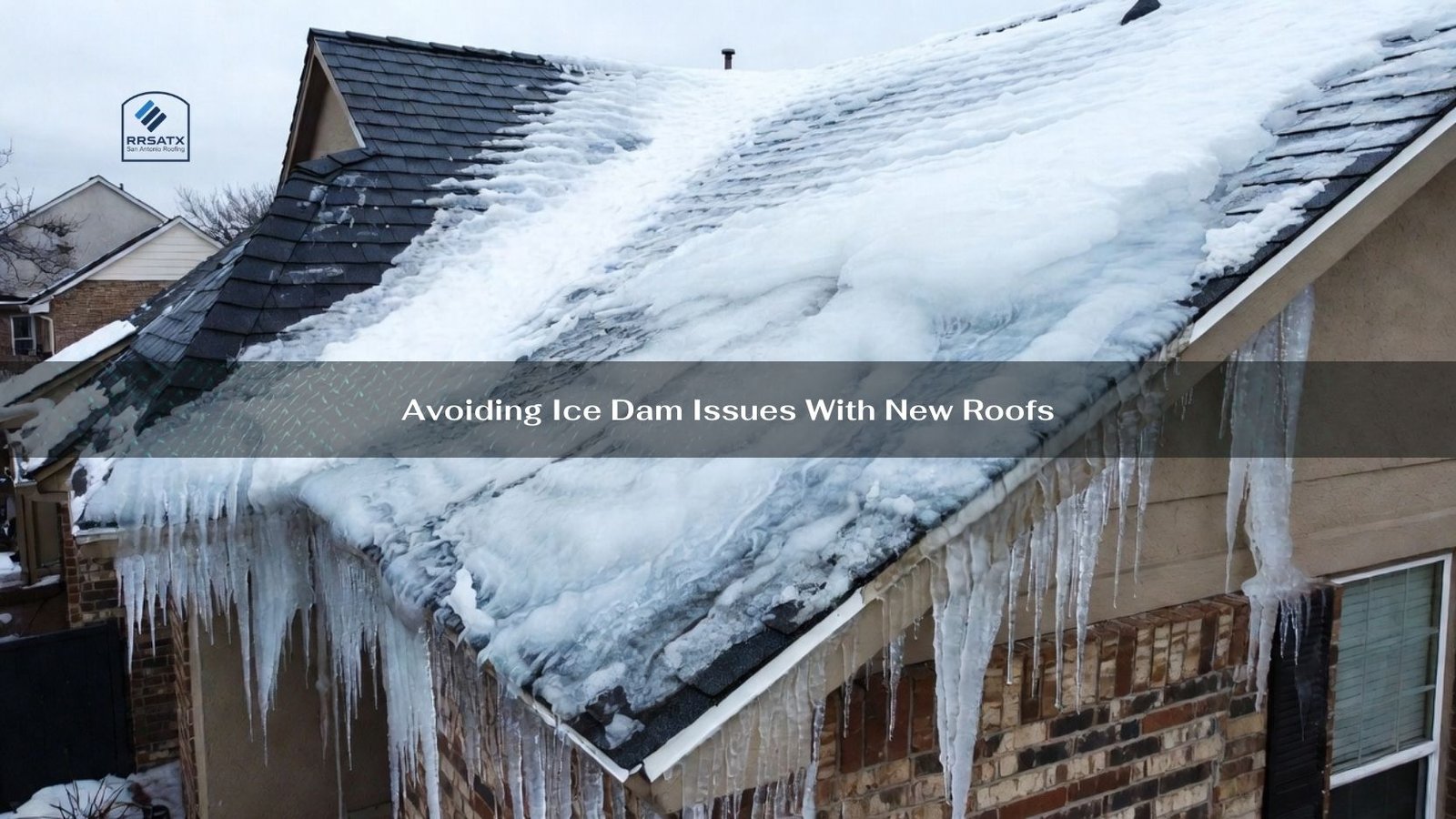
Avoiding ice dam issues with new roofs comes down to three things: proper attic insulation, balanced roof ventilation, and correct flashing and underlayment installation. When warm air escapes into the attic, it melts frost on the roof deck. That water refreezes at the eaves, leading to leaks and interior damage.
What Causes Ice Dams On New Roofs?
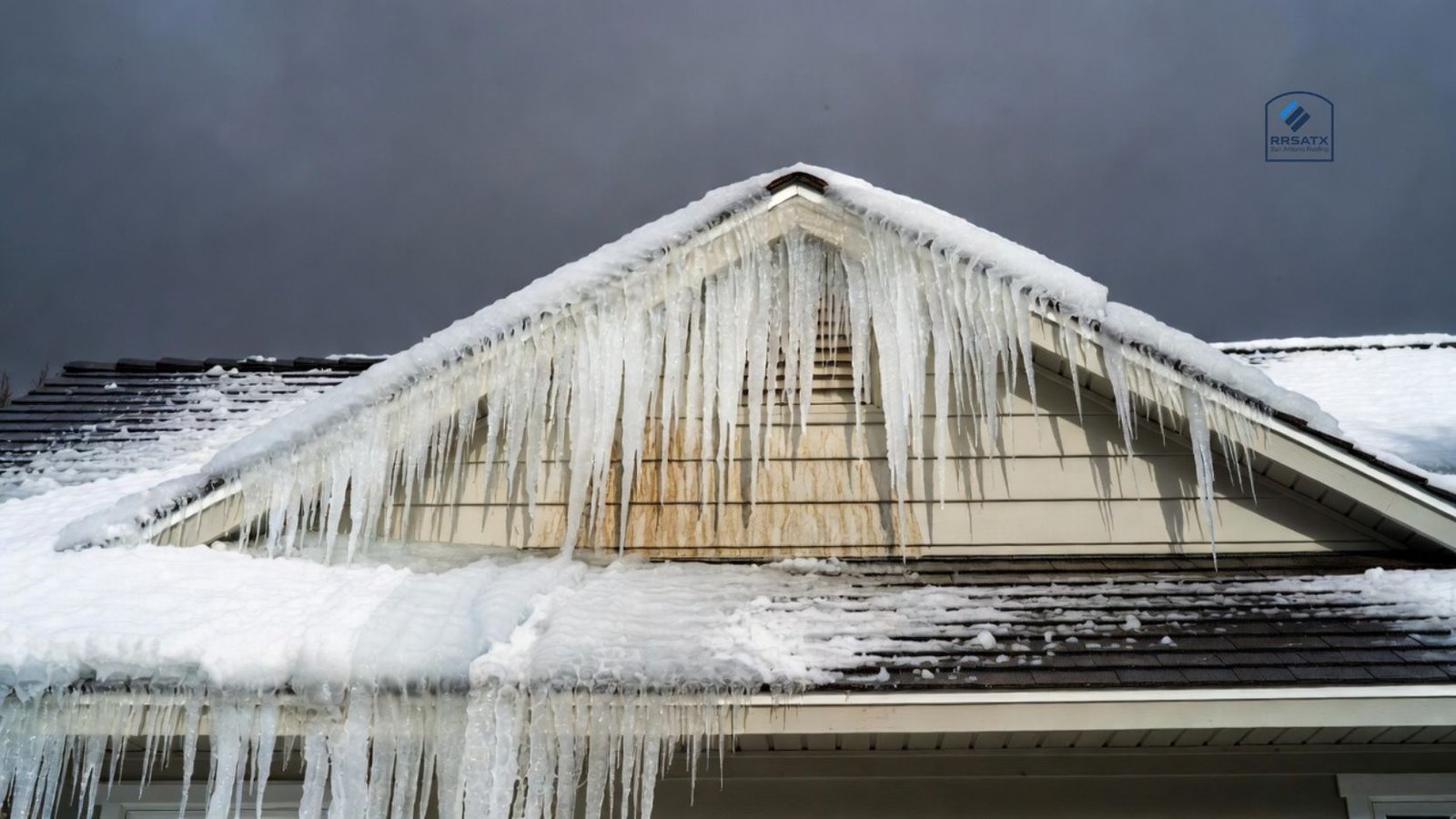
Ice dams form when heat from inside the home melts roof frost, and the water refreezes at colder roof edges.
Even in San Antonio, rapid temperature swings during winter storms can create this cycle.
The Main Causes:
- Inadequate attic insulation
- Blocked or poorly designed roof ventilation
- Improper air sealing around light fixtures and attic hatches
- Low-quality underlayment
- Incorrect flashing installation
Key takeaway: Ice dams are not just a “snow state” issue. They are a heat transfer and moisture control issue.
Can New Roofs Still Have Ice Dam Problems?
Yes. A new roof can still develop ice dams if the attic system is not designed correctly.
Many roofing projects focus only on shingles. However, ice dam prevention depends on the entire roofing system:
- Soffit vents
- Ridge vents
- Insulation depth (R-value)
- Ice and water shield placement
- Sealed roof penetrations
A roof replacement without ventilation upgrades can leave the same problem in place.
How Do You Prevent Ice Dams During A Roof Replacement?
Prevention starts before the first shingle is installed.
1. Upgrade Attic Insulation
Proper insulation keeps warm air inside your living space. In South Texas, attic insulation should typically meet or exceed R-30 to R-38, depending on structure type.
2. Install Balanced Ventilation
Air must enter through soffits and exit through ridge or exhaust vents. Balanced airflow keeps roof deck temperatures stable.
3. Use Ice And Water Shield
Self-adhering waterproof membrane along eaves and valleys protects against water intrusion if ice forms.
4. Seal Attic Air Leaks
Common leak points:
- Recessed lights
- Plumbing stacks
- HVAC penetrations
Key takeaway: Shingles alone do not prevent ice dams. The system underneath does.
What Damage Can Ice Dams Cause?
Even small ice dams can lead to major repairs.
Common Problems:
- Ceiling water stains
- Mold growth in attic insulation
- Wood rot along roof decking
- Gutter damage
- Interior drywall deterioration
For homeowners filing insurance claims, documentation from a professional roof inspection is critical.
Is Ice Dam Prevention Worth It In Texas?
Yes. While rare, Texas freeze events have shown that homes without proper insulation and ventilation are vulnerable.
The February 2021 freeze demonstrated how poorly insulated attics contributed to roof leaks across the state.
Investing in:
- Proper ventilation
- Modern underlayment
- Insulation upgrades
can also improve:
- Energy efficiency
- HVAC performance
- Indoor comfort
- Long-term roof lifespan
Who Should Schedule A Roof Inspection?
Ice dam risk is higher if you:
- Own a roof older than 15–20 years
- Recently experienced freeze-related leaks
- Notice uneven snow or frost melting patterns
- Are buying or selling a home
- Filed a storm-related insurance claim
For homeowners near 4324 Monterey St or 318 E Nakoma Dr in San Antonio, seasonal inspections help identify ventilation or insulation gaps before the next cold front.
What Does A Professional Roof Inspection Include?
A proper evaluation should assess:
- Attic insulation depth
- Vent airflow balance
- Flashing condition
- Underlayment exposure
- Moisture levels in decking
Key takeaway: Ice dam prevention is about thermal balance and moisture control, not just roofing materials.
FAQs
Do Metal Roofs Prevent Ice Dams?
No. Metal roofs shed water efficiently, but they do not prevent ice dams without proper insulation and ventilation.
How Much Insulation Is Needed To Prevent Ice Dams?
Most homes need attic insulation rated between R-30 and R-38 in Texas, but the correct level depends on structure and airflow design.
Can Ice Dams Cause Mold?
Yes. Trapped moisture from leaks can soak insulation and drywall, creating conditions for mold growth.