Replacing your roof is a big investment. Without proper planning, costs can quickly spiral out of control. Homeowners often face unexpected expenses if they don’t budget correctly. Knowing how to plan financially for a new roof can save time, stress, and money.
Understanding Roof Replacement Costs
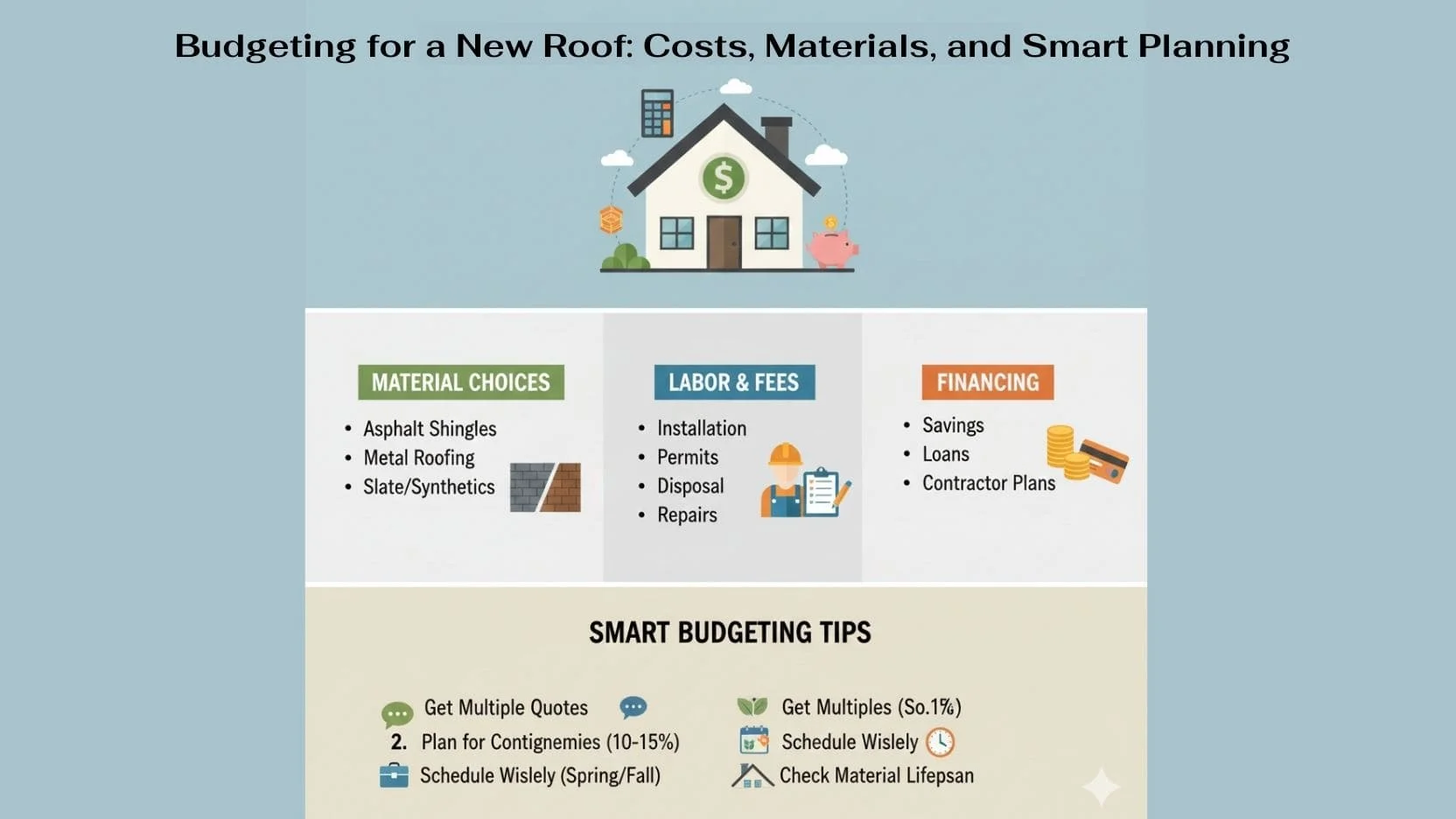
A new roof’s cost depends on your home’s size, complexity, and the materials you choose. Most homeowners spend between $5,000 and $15,000. As one homeowner shared, “I didn’t expect my roof to cost that much, so I wish I’d planned better.” According to HomeAdvisor, asphalt shingles are the most common and budget-friendly, while metal or slate options are pricier.
Choosing the Right Material
Material choice affects both upfront cost and long-term value. Asphalt shingles are affordable and easy to replace, lasting 20–30 years. Metal roofs are more expensive but can last 50 years or more. Slate and synthetic materials are long-lasting but come with higher installation costs. Learning about different options helps homeowners balance cost and durability (Wikipedia).
Labor, Permits, and Hidden Costs
Labor is usually 40–60% of total roofing costs. Permit fees, disposal of old materials, and potential roof deck repairs can increase your budget. One Reddit user noted, “The permit and disposal fees added more than I expected.” Being aware of these hidden costs helps you avoid surprises (Reddit).
Financing Your Roof Replacement
Not every homeowner has thousands saved for a roof. Many use personal savings, home improvement loans, or financing plans offered by roofing companies. One homeowner shared, “I used a short-term loan, which made the project manageable without stressing our budget.” Proper planning ensures you can cover the cost without financial strain (Quora).
Tips for Smart Budgeting
- Get Multiple Quotes: Compare at least 3 contractors to find fair pricing.
- Plan for Contingencies: Set aside 10–15% extra for unexpected repairs.
- Schedule Wisely: Off-peak seasons can save money and give more contractor options.
- Check Materials: Understand lifespan and maintenance to avoid short-term replacements.
Conclusion
Budgeting for a new roof means considering materials, labor, hidden fees, and financing options. Spring and fall may offer better availability and cost-effectiveness. By planning ahead, homeowners can avoid surprises, protect their investment, and ensure a long-lasting roof.