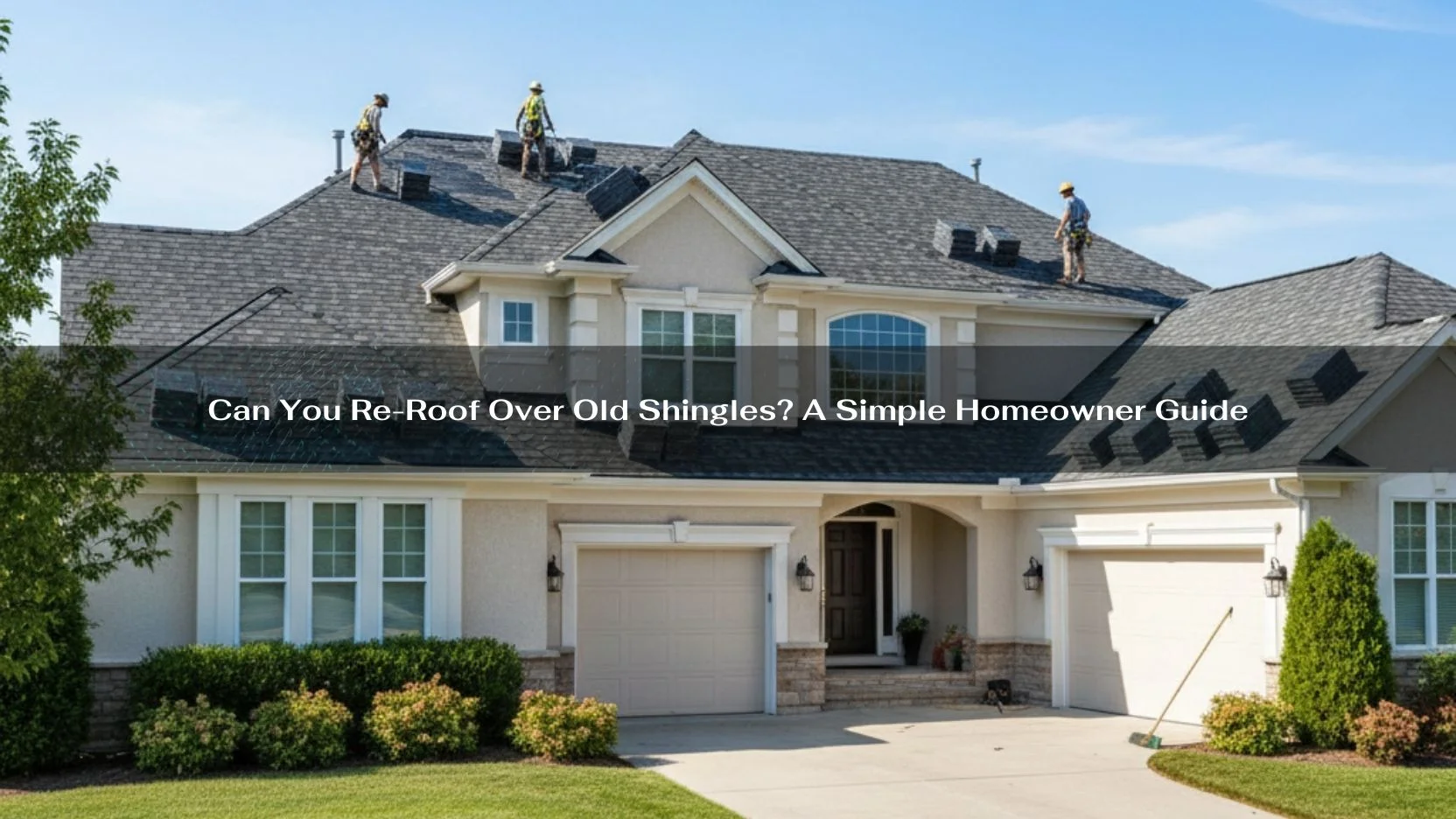
If your roof is starting to look worn or has a small leak, one of the first questions that comes to mind is simple: can you re-roof over old shingles instead of tearing everything off? Many homeowners ask this when they want to fix the problem without spending more than necessary.
“I hear this all the time,” one contractor explained. “People want a solid roof, but they don’t want a full construction zone around their house for a week.”
The short answer is yes—sometimes. But the right choice depends on your roof’s condition, local rules, and your long-term plans for the home. This guide breaks it down in clear, everyday terms so you can make a confident decision.
What Does Re-Roofing Over Old Shingles Mean?
Re-roofing over old shingles is also called a roof overlay. Instead of removing the existing shingles, roofers install a new layer of asphalt shingles directly on top of the old one.
According to asphalt shingle overlay rules explained on Wikipedia, most building codes allow only one additional layer of shingles. If your roof already has two layers, an overlay is usually not allowed.
A roofer put it simply: “An overlay is like putting a new jacket over an old one. It works only if the first layer is still in good shape.”
When Is Re-Roofing Over Old Shingles Allowed?
In many areas, re-roofing over old shingles is allowed when:
- There is only one existing layer of shingles
- The roof deck underneath is solid and dry
- There is no widespread rot, mold, or sagging
- Local building codes permit it
Homeowners often lean toward this option because of cost. Based on roof replacement cost factors shared by HomeAdvisor, skipping tear-off can reduce total roofing costs by roughly 20–30% by cutting labor and disposal fees.
One homeowner shared, “My roof passed inspection, and the overlay saved us a lot of money. That made the decision easier.”
Benefits of Re-Roofing Over Old Shingles
Re-roofing can be a smart choice in the right situation. The main benefits include:
- Lower upfront cost due to reduced labor
- Faster installation, often finished in a day or two
- Less mess around your home since debris is minimal
Guidance on the pros and cons of roof overlays from Angi shows that overlays are especially popular for homeowners who plan to stay in their homes for a few more years but don’t need a long-term roofing solution.
As one homeowner said, “We weren’t planning to move soon, but we also didn’t need a 30-year fix. This worked for us.”
Risks and Downsides Homeowners Should Know
While overlays can save money, they also come with trade-offs.
First, overlays can hide existing problems. Water damage, soft decking, or trapped moisture may go unnoticed. Second, the new roof may not last as long because the surface underneath is uneven.
Many shingle manufacturers also limit or deny warranties when shingles are installed over old layers. Real-world homeowner experiences shared on Quora and roofing discussions on Reddit often mention surprise repairs later because issues were missed during installation.
One homeowner warned, “It looked fine at first, but a year later we found damage that should’ve been fixed during a full tear-off.”
How to Decide What’s Right for Your Home
To decide whether re-roofing over old shingles makes sense, ask these questions:
- How many shingle layers are already on the roof?
- Has a professional inspected the roof deck?
- Do local building codes allow an overlay?
- How long do you plan to stay in the home?
Contractors often suggest a professional inspection before making the call. According to contractor perspectives on re-roofing from HomeAdvisor Pros, overlays work best when the existing roof is flat, dry, and structurally sound.
A contractor summed it up well: “If the base is good, an overlay can work. If not, you’re just delaying bigger problems.”
Conclusion
So, can you re-roof over old shingles? Yes, in many cases it is allowed and can save money. But it is not always the best choice. Overlays work best on roofs with one existing layer and no hidden damage.
For homeowners focused on short-term savings, an overlay may be practical. For long-term durability and peace of mind, a full tear-off is often the safer option. Either way, a professional inspection is the smartest first step before deciding.