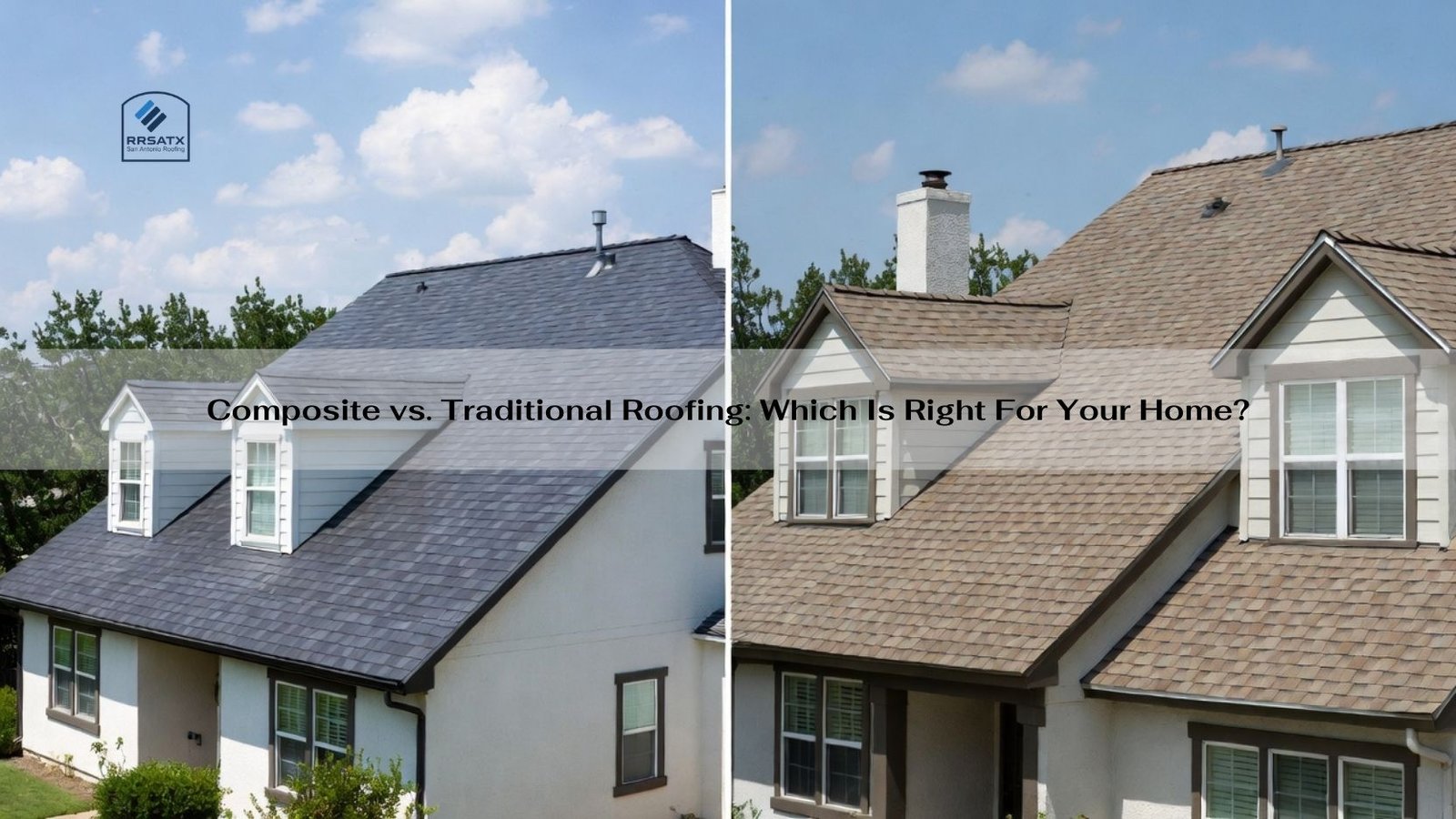
As a roofing expert with over 15 years of experience working in San Antonio, TX, I’ve seen how the roofing industry has evolved. Homeowners often face a tough choice when selecting a roofing material. Composite vs. traditional roofing is one of the most common dilemmas. In this article, we’ll break down both options so you can make an informed decision for your home or business.
What Is Composite Roofing?
Composite roofing is a modern solution made from a mix of materials such as asphalt, fiberglass, and recycled products. It is engineered to offer superior durability, energy efficiency, and a wide range of style options.
Key benefits of composite roofing include:
- Enhanced durability: Composite roofs can last 50+ years, outperforming traditional materials.
- Energy efficiency: They often come with reflective coatings that reduce heat absorption.
- Environmental sustainability: Made from recycled materials, they’re eco-friendly.
- Variety of styles: Composite roofing comes in many shapes and colors to mimic other materials like slate or wood.
Key Takeaway: Composite roofing offers long-lasting durability, energy efficiency, and environmental benefits, making it a popular choice for homeowners in places like San Antonio, TX where weather conditions can be extreme.
Traditional Roofing Materials: The Classic Choice
Traditional roofing typically refers to materials such as asphalt shingles, wood, and slate. These materials have been used for centuries and remain widely popular due to their cost-effectiveness and availability.
Benefits Of Traditional Roofing:
- Asphalt shingles: The most common choice due to low upfront cost, ease of installation, and decent lifespan (15-30 years).
- Wood: Offers a natural aesthetic and is known for its insulation properties.
- Slate and tile: Provide excellent longevity (up to 100 years) but are often heavy and expensive to install.
Key Takeaway: While traditional roofing materials may be cheaper upfront, they can require more maintenance and have a shorter lifespan compared to composite roofing options.
How Durable Are Composite Roofs Compared To Traditional Roofs?
When it comes to roofing durability, composite roofs generally outperform traditional materials. Composite roofs are engineered to withstand harsh conditions, including extreme heat, high winds, and heavy rainfall. Here’s how they compare:
- Composite Roofing: Lasts 50-70 years on average, with minimal maintenance required.
- Traditional Roofing: Asphalt shingles last about 15-30 years, while slate and metal roofs can last up to 50-100 years but come with higher installation costs.
Key Takeaway: If durability is a top concern, composite roofs offer better long-term value, especially in areas with harsh weather like San Antonio, TX.
What Are The Costs Of Composite VS. Traditional Roofing?
Cost is a major consideration for most homeowners. Here’s a comparison of installation costs for both options:
- Composite Roofing: Installation costs range from $5.50 to $10 per square foot depending on the brand and style.
- Traditional Roofing: Asphalt shingles cost $3.50 to $5.50 per square foot, while slate can cost over $15 per square foot due to labor-intensive installation.
Key Takeaway: While composite roofing may have a higher upfront cost, it often saves homeowners money in the long run due to its durability and low maintenance needs.
Which Roofing Material Is More Energy Efficient?
If energy efficiency is important to you, composite roofing could be the better option. Here’s why:
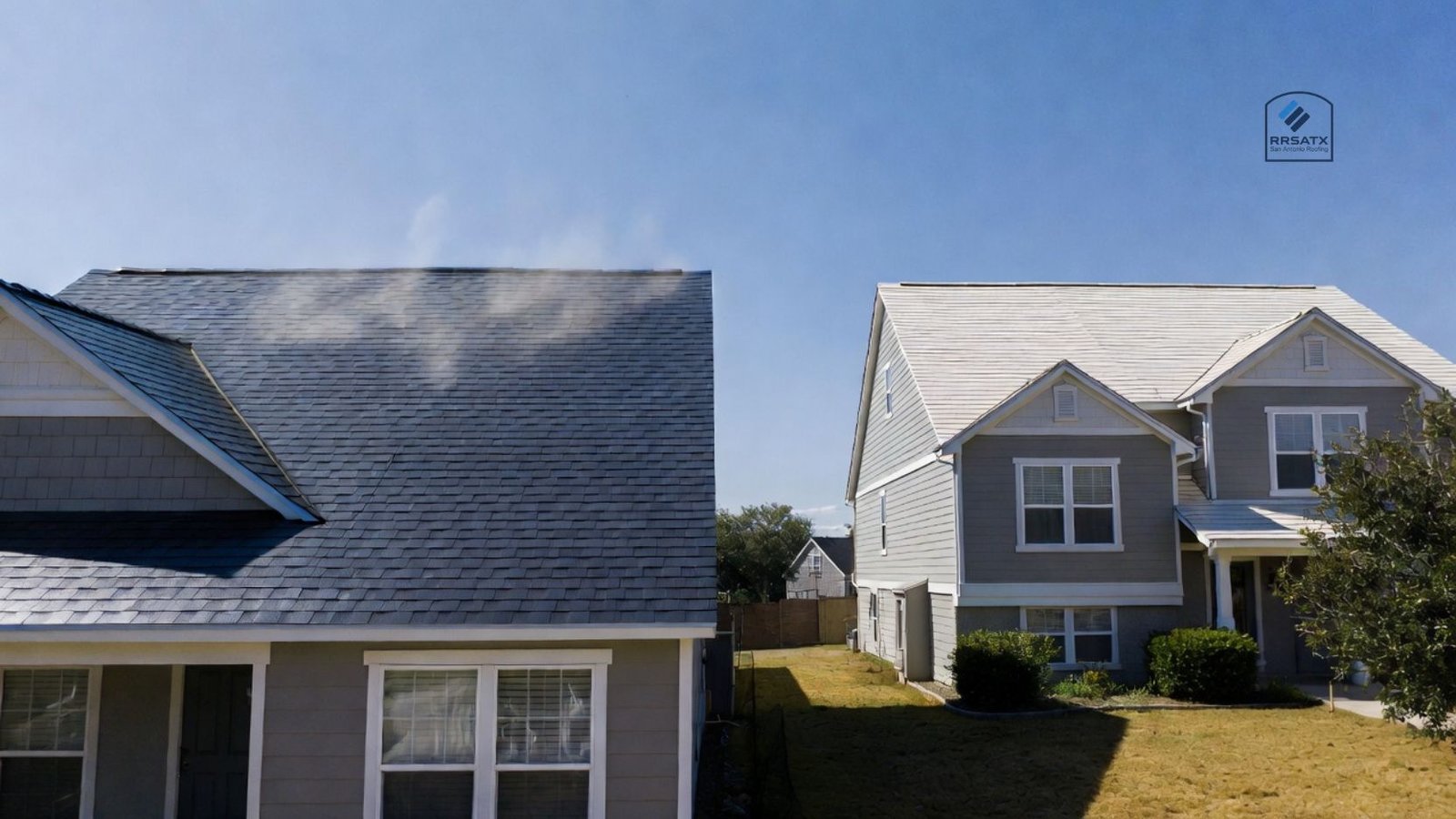
- Composite roofs have reflective coatings that help reduce heat absorption, keeping your home cooler.
- Traditional materials like asphalt shingles can absorb heat, causing higher cooling costs in the summer.
Key Takeaway: Composite roofing is generally more energy-efficient, which is especially valuable in areas with hot climates like San Antonio, TX.
Maintenance: How Does Composite Compare To Traditional Roofing?
Maintenance is crucial when choosing a roofing material. Here’s how composite and traditional roofing stack up:
- Composite Roofing: Requires little to no maintenance. It resists algae, mold, and mildew, making it a low-maintenance choice.
- Traditional Roofing: Asphalt shingles may need replacement of damaged tiles, while wood requires treatment for rot and pests. Slate and tile roofs may need occasional repairs due to cracking.
Key Takeaway: Composite roofing requires less maintenance than traditional options, which could save homeowners time and money over the years.
How Long Do Composite Roofs Last Compared To Traditional Roofs?
Composite roofs have a significantly longer lifespan than traditional materials:
- Composite Roofing: Typically lasts 50-70 years with minimal degradation.
- Traditional Roofing: Asphalt shingles last 15-30 years, while slate and tile may last up to 50-100 years but are expensive to replace.
Key Takeaway: Composite roofing offers a longer lifespan, making it a good investment if you plan to stay in your home long-term.
FAQs
1. Are Composite Roofs More Expensive Than Traditional Roofing?
Yes, composite roofs can be more expensive to install upfront, but they provide better value in the long term due to their durability and low maintenance costs.
2. What Are The Most Common Types Of Traditional Roofing Materials?
The most common traditional roofing materials include asphalt shingles, wood, and slate. Asphalt is the most affordable, while slate offers exceptional longevity but at a higher cost.
3. How Does The Lifespan Of Composite Roofing Compare To Asphalt Shingles?
Composite roofing lasts significantly longer, with an average lifespan of 50-70 years, while asphalt shingles typically last 15-30 years.