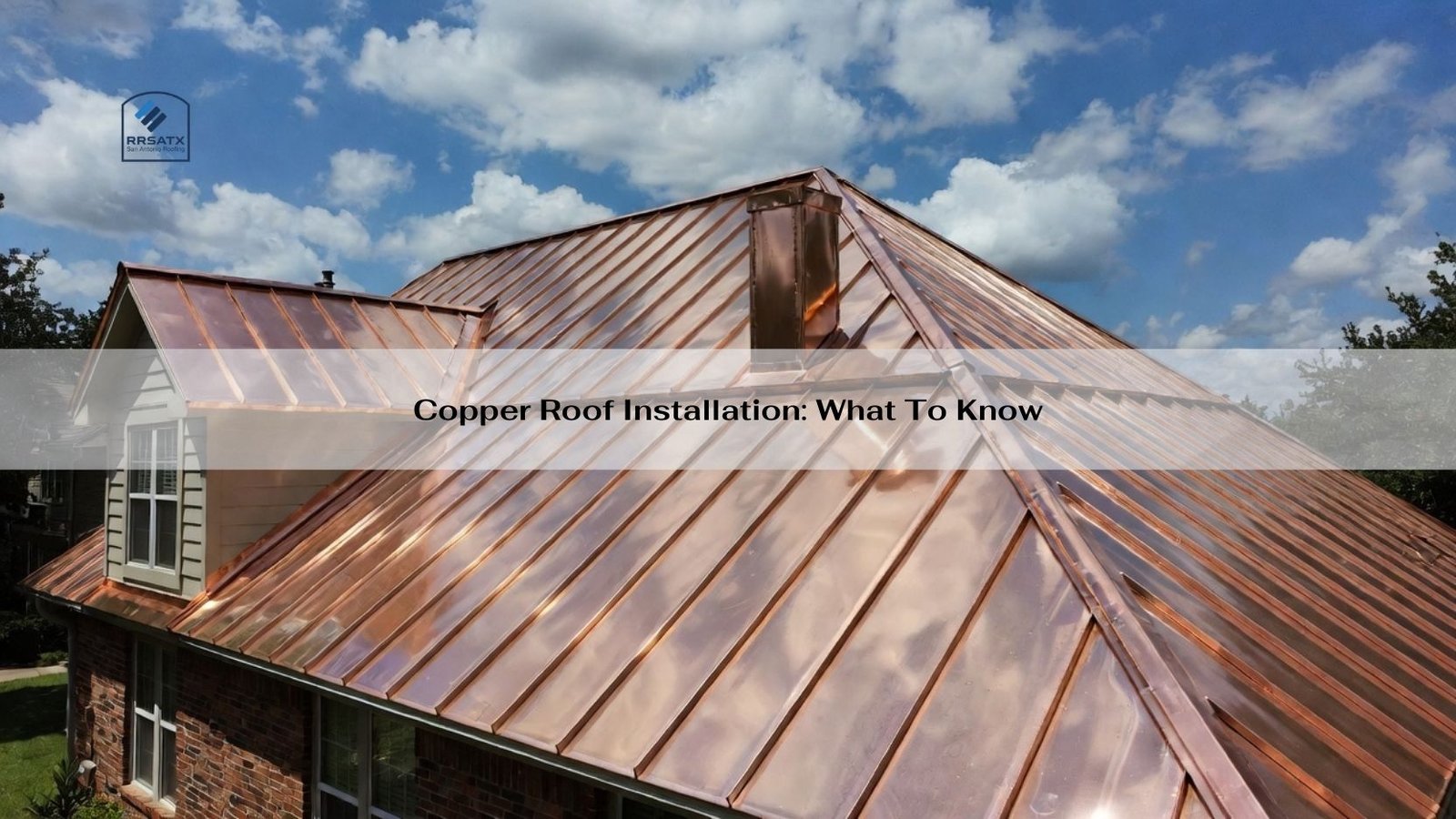
With decades of hands-on roofing experience in San Antonio, we’ve worked on metal roofing systems ranging from standing seam steel to architectural copper accents. Copper is one of the most durable and visually striking roofing materials available but it requires precise installation and planning.
Copper roof installation involves higher upfront costs, specialized craftsmanship, and long-term durability that can exceed 70–100 years when properly installed. It is best suited for homeowners who want longevity, low maintenance, and distinctive curb appeal.
If you’re considering copper roofing near 4324 Monterey St or 318 E Nakoma Dr in San Antonio, here’s what you should understand before investing.
What Makes Copper Roofing Different From Other Metal Roofs?
Copper is a premium metal that naturally resists corrosion and develops a protective patina over time.
Unlike steel or aluminum, copper:
- Does not require paint coatings
- Forms a green patina layer that protects against corrosion
- Expands and contracts significantly with temperature changes
- Is softer and requires skilled fabrication
Key takeaway: Copper roofing is both a structural system and an architectural feature.
How Long Does A Copper Roof Last?
A properly installed copper roof can last 70 to 100 years or more.
Longevity depends on:
- Installation quality
- Proper fastening system
- Expansion allowances
- Flashing design
- Climate exposure
In South Texas, copper performs well because it resists corrosion from humidity and heavy rainfall.
Compared to other materials:
| Roofing Material | Average Lifespan |
| Asphalt Shingles | 20–30 years |
| Steel Metal Roof | 40–50 years |
| Copper Roofing | 70–100+ years |
Is Copper Roofing Worth The Cost?
Copper roofing has one of the highest upfront costs, but one of the longest lifespans.
Cost factors include:
- Material pricing (copper is a premium metal)
- Skilled labor requirements
- Custom fabrication
- Underlayment and flashing integration
While asphalt roofing may cost less initially, copper may reduce long-term replacement cycles.
Key takeaway: Copper is a long-term investment, not a budget roofing option.
How Does Copper Roofing Perform In Storms?
Copper roofs perform exceptionally well in wind and heavy rain when installed correctly.
Advantages in storm-prone areas:
- Interlocking standing seam panels resist uplift
- Non-corrosive surface withstands moisture
- Durable metal resists cracking
However, proper fastening is critical. Copper expands in high heat, and expansion clips must be installed to prevent buckling.
What Does The Copper Patina Mean?
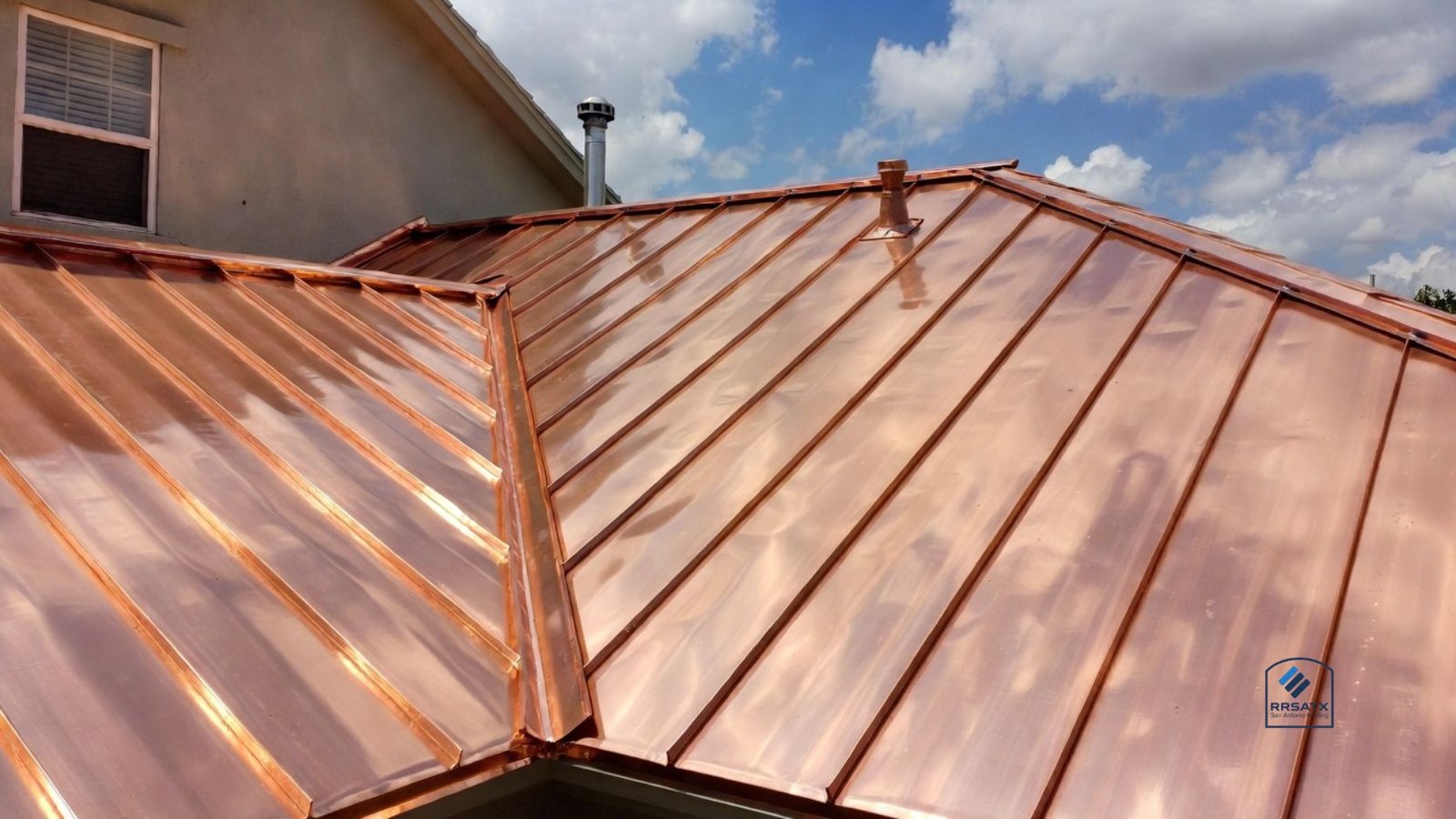
The green patina is a natural oxidation process that protects the metal underneath.
Stages of copper aging:
- Bright metallic finish
- Dark brown tone
- Blue-green patina
This transformation can take years depending on climate exposure.
Some homeowners prefer the original shine; others value the aged appearance.
Does Copper Roofing Require Maintenance?
Copper roofing requires minimal maintenance compared to other materials.
Routine maintenance includes:
- Periodic inspections
- Checking seams and flashing
- Clearing debris from valleys
- Ensuring proper drainage
Unlike steel, copper does not rust. However, improper contact with other metals can cause galvanic corrosion.
Is Copper Roofing Good For Residential Homes?
Copper roofing is ideal for high-end homes, historic properties, and architectural accents.
Common applications:
- Full roof systems
- Bay windows
- Porch covers
- Dormers
- Decorative roof sections
For budget-conscious homeowners, copper may be used as an accent rather than a full replacement system.
What Should Homeowners Know Before Installing Copper Roofing In San Antonio?
Heat expansion and proper underlayment selection are critical in Texas climates.
Important considerations:
- Thermal movement allowances
- High-temperature underlayment
- Secure flashing integration
- Experienced metal roofing installers
Without proper expansion detailing, panels can warp or separate over time.
FAQs
Does A Copper Roof Increase Home Value?
Yes. Copper roofing can increase curb appeal and long-term value due to its durability and premium appearance.
Is Copper Roofing Noisy During Rain?
No more than other metal roofs when properly installed with solid decking and underlayment.
Can Copper Roofing Be Installed Over Existing Shingles?
Typically no. A full tear-off is recommended to ensure proper attachment and ventilation.