After a heavy storm, it’s natural to worry about your roof. Strong winds, hail, and debris can cause hidden damage that may lead to costly repairs later. The good news is that with a careful inspection, you can spot early warning signs before they turn into bigger problems. This guide will show you how to safely check your roof, what to look for, and when it’s time to call a professional.
Start with a Safety Check
Before grabbing a ladder, remember your safety comes first. Wet or damaged roofs can be slippery, and one wrong step can lead to serious injury. “No inspection is worth risking a fall always keep both feet on solid ground,” advises experts from Angi.
Start by walking around your home and inspecting the roof from the ground. Use binoculars if needed to get a better view. According to Owens Corning Roofing, homeowners should never climb onto the roof unless absolutely necessary. Instead, focus on spotting visible signs of damage from below.
Check for Visible Exterior Damage
Once it’s safe to look, examine your roof and surrounding areas for clear signs of storm damage. Missing or cracked shingles, dented gutters, and broken flashing are all red flags. HomeAdvisor notes that even small cracks or dents can lead to leaks later on.
Wind and hail can cause more subtle damage, like granule loss the tiny sand-like particles on shingles that protect them from the sun. If you notice granules collecting in your gutters or around the base of your home, that’s a sign your shingles took a hit. Loose flashing around chimneys or skylights should also be inspected closely since they can quickly turn into leak points.
Inspect the Attic for Water Leaks
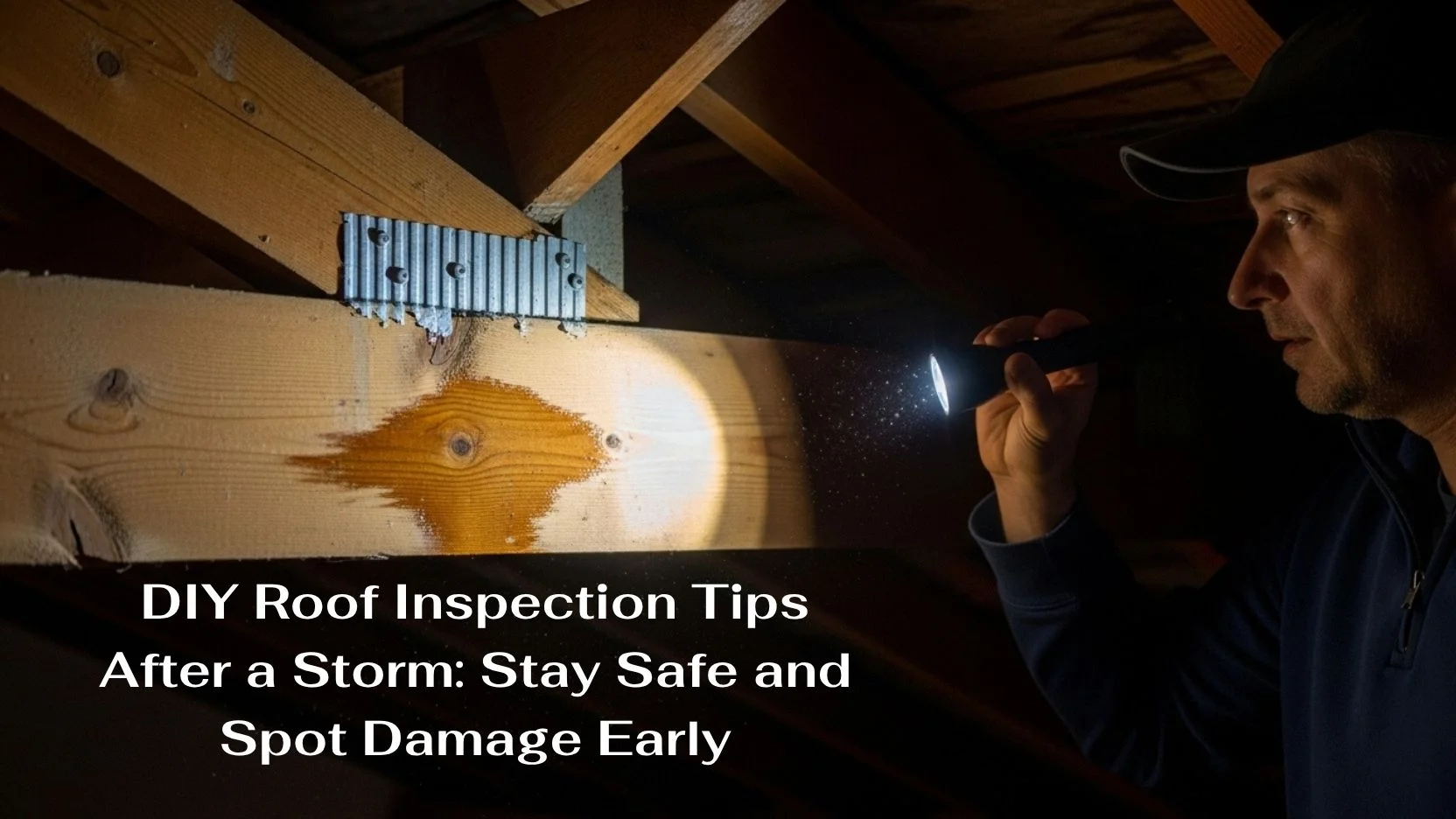
Don’t stop your inspection at the roofline the attic often reveals what’s happening above. Head inside with a flashlight and look for damp insulation, water stains, or dark streaks on the wood beams. The Spruce recommends checking right after a storm while the signs of moisture are fresh and easier to spot.
If you notice any musty smells or dripping water, you may have a leak that hasn’t shown up on the ceiling yet. “Sometimes the first sign of roof damage isn’t what you see outside, but what you feel inside,” says one homeowner featured on a roofing forum. Acting quickly can prevent mold growth and interior damage.
Document Everything for Insurance
Your phone’s camera can be your best tool after a storm. Take clear photos and videos of any visible damage, missing shingles, fallen branches, water stains, or dented gutters. The more evidence you have, the easier it will be to prove your case when filing an insurance claim.
State Farm recommends noting the date and type of storm that caused the damage. “Your camera is your best tool — the more proof you have, the smoother the claim process,” explains an insurance adjuster in one of their homeowner guides. Keep a record of all communication with your insurer, and don’t make permanent repairs until your claim is approved.
When to Call a Roofing Professional
Even if your inspection seems minor, it’s smart to get a professional opinion. Signs like sagging areas, exposed wood, or large leaks mean the structure could be compromised. Owens Corning Roofing recommends scheduling a roof inspection at least once a year and immediately after a severe storm.
Certified roofers can spot issues the average homeowner might miss. They can also provide a written estimate, which is useful when working with insurance companies. Think of it as an investment in your home’s safety and longevity.
Conclusion
A DIY roof inspection after a storm helps you stay proactive and protect your home from long-term damage. Always start with safety, look for visible signs of trouble, and check your attic for leaks. Document every detail for insurance, and when in doubt, bring in a professional.
Regular inspections can help you catch small problems early, save money on repairs, and give you peace of mind knowing your roof is ready for whatever nature throws next.