
[et_pb_section fb_built=”1″ admin_label=”section” _builder_version=”4.16″ global_colors_info=”{}”][et_pb_row admin_label=”row” _builder_version=”4.16″ background_size=”initial” background_position=”top_left” background_repeat=”repeat” global_colors_info=”{}”][et_pb_column type=”4_4″ _builder_version=”4.16″ custom_padding=”|||” global_colors_info=”{}” custom_padding__hover=”|||”][et_pb_code _builder_version=”4.27.6″ _module_preset=”default” hover_enabled=”0″ sticky_enabled=”0″]
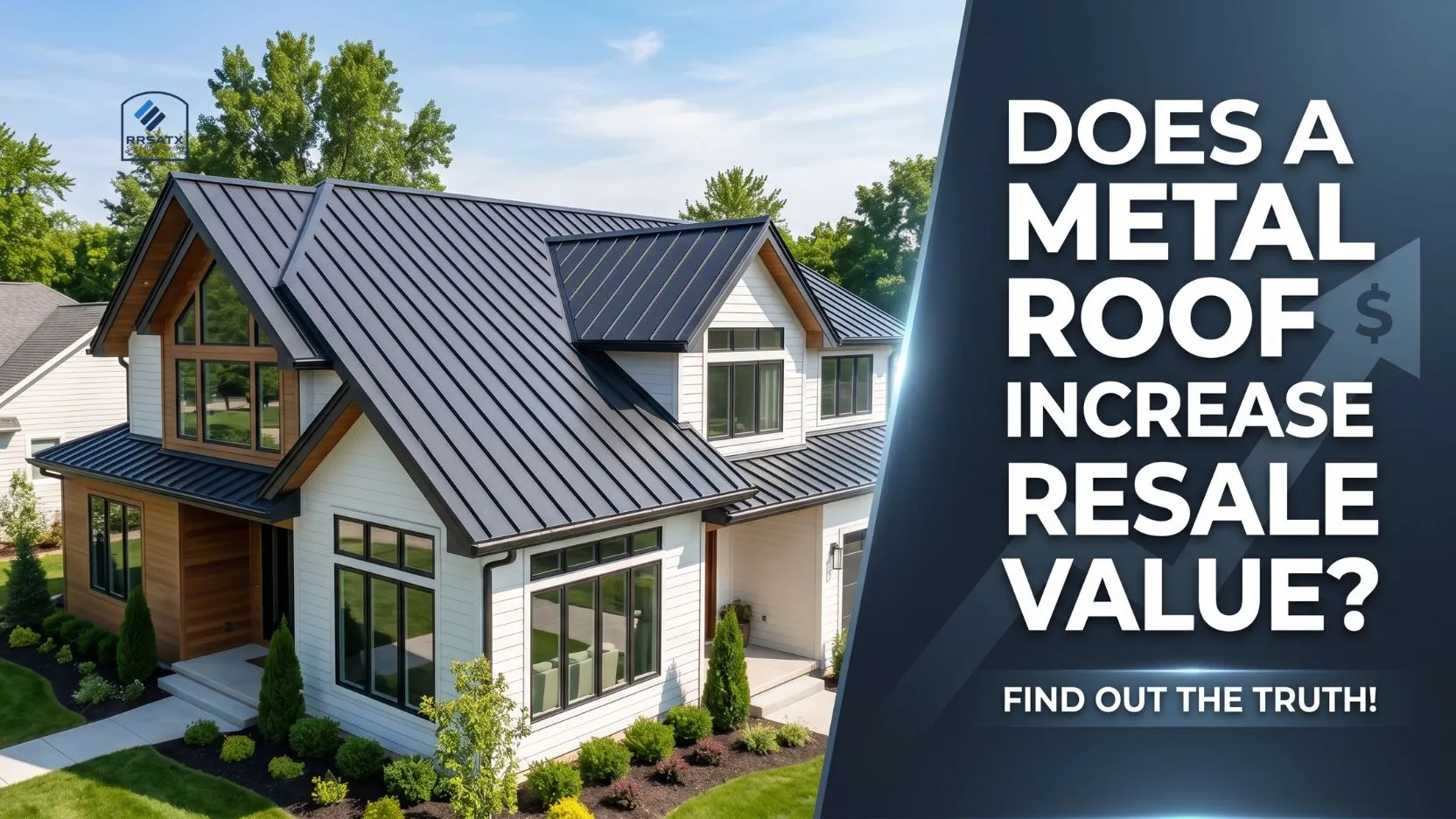
Metal roofs do more than protect your home from Texas weather. This guide explains exactly how a metal roof affects resale value in San Antonio, what buyers and appraisers look for, and how to make sure your roof investment pays off when it is time to sell.
The short answer is yes. A metal roof increases the resale value of a home in San Antonio. But the longer answer matters more if you are trying to decide whether a metal roof is the right investment for your specific property and timeline. The value increase is real, it is documented in appraisal data, and it shows up in buyer negotiations. It is not, however, automatic. The type of metal roof, the quality of the installation, and the condition the roof is in when the home goes on the market all affect how much value it actually adds.
This guide breaks down every factor that determines how much a metal roof affects resale value in San Antonio, what buyers and appraisers look for, how the numbers compare to other roofing materials, and what you need to know before using a metal roof as a selling point.
San Antonio buyers are experienced with roofing costs. A buyer who moves into a home with a 20-year-old asphalt shingle roof knows they are likely looking at a $12,000 to $18,000 roof replacement within the next 5 to 10 years. A buyer moving into a home with a well-maintained 10-year-old metal roof knows the roof has 40 or more years of life remaining with minimal maintenance costs. That difference in expected future spending is what buyers and their agents factor into their offers, and it is the primary reason metal roofs command a price premium in the San Antonio market.
Appraisal Value
When an appraiser values your San Antonio home, the roof is one of the components they evaluate. A metal roof in good condition adds value through two mechanisms: it extends the effective age of the home’s major systems, and it reduces the cost-to-cure adjustments that appraisers apply when other roofing materials are nearing the end of their life.
A home with a 10-year-old asphalt shingle roof may receive a negative adjustment because the roof is half-spent. A home with a 10-year-old metal roof receives no such adjustment because the roof still has 40 or more years of service life remaining. That difference alone can account for several thousand dollars in appraised value on a comparable sale analysis.
| Roof material | Average lifespan | Appraiser adjustment (mid-life roof) | Appraiser adjustment (metal roof at same age) |
|---|---|---|---|
| 3-tab asphalt shingle | 15 to 20 years | Negative: roof nearing end of life within 5 to 7 years | Not applicable |
| Architectural asphalt shingle | 25 to 30 years | Neutral: acceptable remaining life | Not applicable |
| Standing seam metal | 40 to 70 years | Not applicable | Positive: substantial remaining service life, no deduction |
| Corrugated steel panel | 40 to 60 years | Not applicable | Positive: well above average durability for age |
| Stone-coated steel | 40 to 70 years | Not applicable | Positive: premium aesthetic with metal durability, strong buyer appeal |
- Age of the roof relative to its material-specific expected lifespan
- Installation quality: proper fastening, flashing, and sealing visible from the exterior
- Condition: no visible rust, lifted panels, or damaged sections
- Material type: standing seam systems are rated higher than exposed-fastener corrugated panels
- Permits and documentation: a permitted installation with a transferable warranty is more valuable than an undocumented replacement
Buyer Appeal
In the San Antonio real estate market, roof condition is one of the top concerns buyers raise during the inspection period. A standard home inspection that flags a 15-year-old asphalt shingle roof as approaching end of life almost always triggers a buyer request for either a price reduction or a repair credit. Those negotiations can cost a seller $5,000 to $15,000 in concessions, reduced proceeds, or delayed closings.
A home with a metal roof eliminates that negotiation entirely. An inspector who finds a well-maintained 10-year-old metal roof will note it as a positive feature, not a concern. Buyers and their agents cannot use the roof as leverage, and sellers avoid one of the most common price-reduction triggers in a San Antonio transaction.
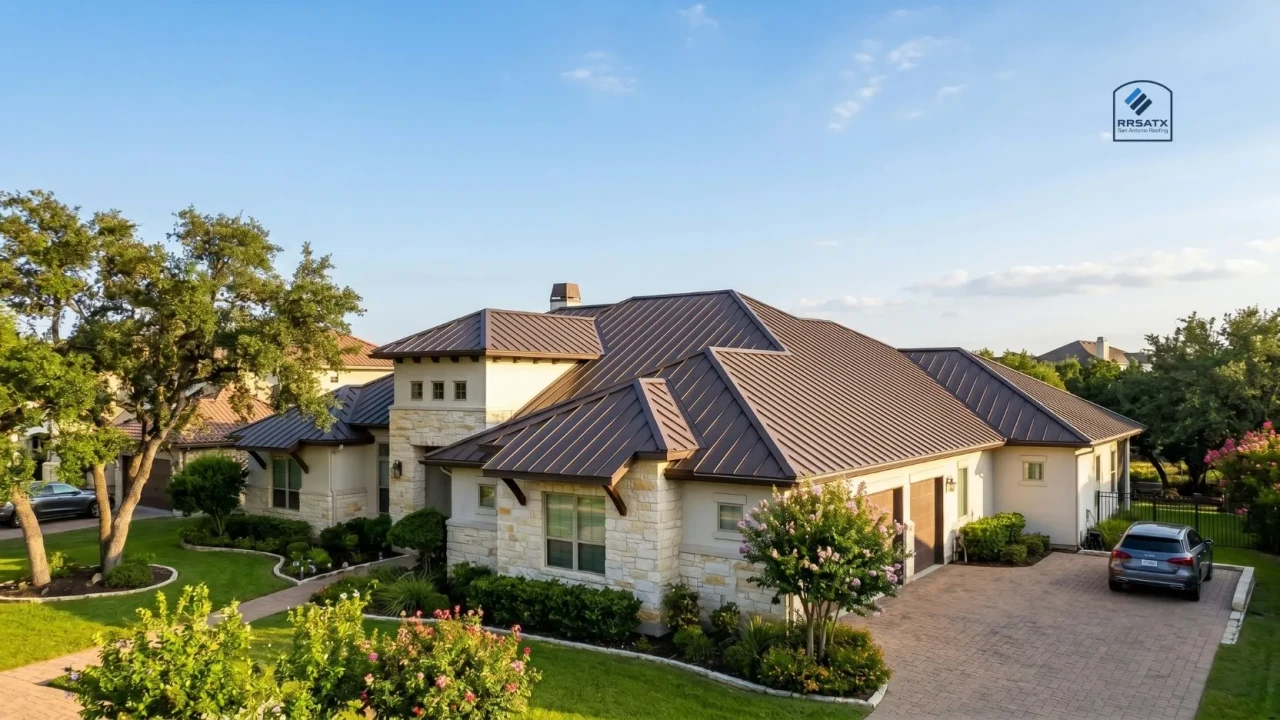
First impression at listing: Standing seam and stone-coated metal roofs photograph well and stand out in listing photos. San Antonio buyers browsing online listings often filter properties specifically looking for updated roofs. A metal roof that is visible in listing photos signals that the home is well-maintained before the buyer ever visits in person.
Inspection period leverage removed: The inspection period is where roof negotiations happen. A metal roof in good condition removes the single largest repair-credit target from the buyer’s inspection list. That protects your net proceeds and keeps the transaction on schedule.
Before listing your San Antonio home, have your metal roof professionally inspected and get a written condition report. A clean inspection report from a licensed roofing contractor is a marketing asset, not just a maintenance document. Providing it to a buyer’s agent before the home inspection eliminates roof-related uncertainty from the negotiation and gives you a stronger position if the buyer’s inspector raises any minor observations. The cost of the pre-listing inspection is typically $150 to $300 and frequently saves sellers multiples of that amount in avoided negotiation concessions.
- Include the installation year, material type, and warranty details in the listing description
- Provide a pre-listing condition inspection report from a licensed San Antonio roofing contractor
- Highlight the estimated remaining service life in listing remarks; buyers and their agents understand the dollar value of that number
- If the roof carries a transferable manufacturer’s warranty, include the warranty documentation in the disclosure package
- Note any insurance savings the buyer will inherit with the metal roof (more on this below)
Insurance Savings
Texas homeowners insurance rates have increased significantly in recent years. San Antonio homeowners with asphalt shingle roofs have seen their premiums rise partly because insurers have taken substantial losses from hail and wind claims across South Texas. Metal roofs change that equation. Because metal roofs are significantly more resistant to hail, wind, and fire damage, insurers offer meaningful discounts to homes with qualifying metal roofing systems.
When a buyer purchases a San Antonio home with a metal roof, they inherit those insurance savings immediately. A buyer who would otherwise pay $3,000 per year in homeowners insurance on a comparable asphalt shingle home may pay $2,000 to $2,400 per year on the metal-roofed home. That $600 to $1,000 in annual savings is a real and ongoing financial benefit that savvy buyers factor into their willingness to pay a premium purchase price.
| Metal roof rating | What it means | Typical insurance discount (Texas) |
|---|---|---|
| Class 4 Impact Resistance | Passed UL 2218 testing at the highest level; withstands 2-inch steel ball dropped from 20 feet without cracking | 15 to 30 percent premium reduction with most Texas carriers |
| Class A Fire Rating | Highest fire resistance classification; metal roofs are non-combustible | 5 to 10 percent additional reduction on top of impact discount |
| Wind Uplift Rating | Panels tested for resistance to specific wind speeds; standing seam systems typically rated at 160 mph or higher | Carrier-specific; reduces wind endorsement premiums |
- Confirm your metal roof has an official Class 4 impact resistance rating from the manufacturer
- Request a written discount confirmation letter from your insurance carrier
- Include the impact resistance certificate and fire rating documentation in your disclosure package
- Advise buyers to contact multiple carriers before closing, as discount amounts vary significantly between insurers
- Note whether the manufacturer’s warranty is transferable, as some carriers factor this into their discount decisions
Energy Savings
San Antonio summers are long, intense, and expensive to air condition. A dark asphalt shingle roof can reach surface temperatures of 150 to 185 degrees Fahrenheit on a hot July afternoon, and a significant portion of that heat transfers into the attic and living space below, forcing air conditioning systems to work harder and run longer. A reflective metal roof with a cool-roof coating can reduce roof surface temperature by 50 to 70 degrees compared to a standard asphalt shingle roof, which translates directly into lower monthly utility bills.
Energy-conscious buyers in San Antonio increasingly ask about utility costs during the home search process. A seller who can demonstrate consistent cooling bill savings from a reflective metal roof has a meaningful advantage in a market where summer electricity costs are a legitimate budget concern.
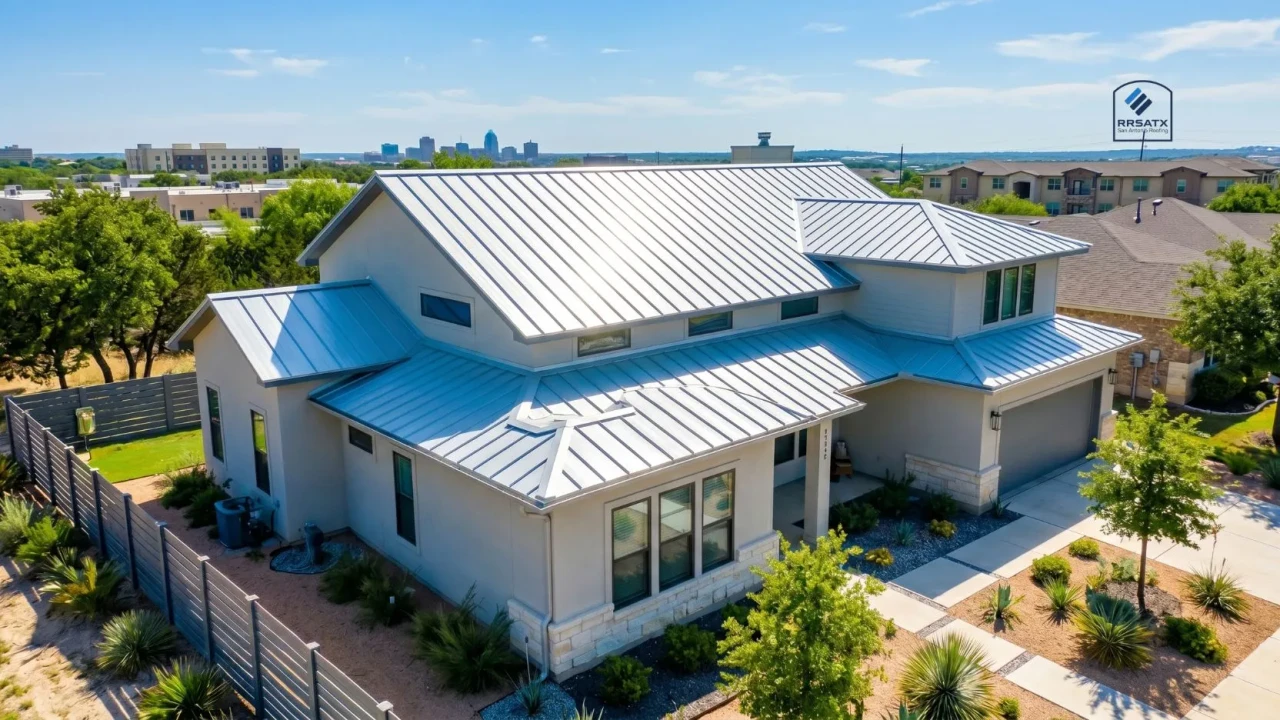
Cool-roof coatings: Metal roofs with Energy Star-rated reflective coatings are designed to reflect solar energy rather than absorb it. In San Antonio’s climate, this can reduce cooling energy use by 10 to 25 percent during peak summer months, according to Department of Energy research on cool roof performance in hot, sunny climates.
Utility bill documentation: Sellers who have owned a metal-roofed home for several years can provide actual utility bills that demonstrate cooling cost differences. This is a powerful and concrete selling point that buyers can verify independently. If you have utility history, pull it before listing and calculate average summer cooling costs to include in your listing package.
If your San Antonio metal roof was installed with a reflective coating, ask the contractor or manufacturer for the roof’s Solar Reflectance Index (SRI) rating. An SRI rating above 78 qualifies the roof as a cool roof under Department of Energy standards. This documentation adds credibility to energy savings claims during the listing process and can support applications for energy efficiency-based financing programs that some buyers use when purchasing well-insulated or energy-efficient homes.
- Locate the manufacturer’s energy performance data for your specific metal roof system
- Pull 12 months of utility bills and calculate average summer cooling costs to include in the listing package
- Confirm whether the roof carries an Energy Star rating and include the certification documentation
- Note any attic insulation improvements made at the time of metal roof installation, as these amplify the energy savings
- Ask your San Antonio roofing contractor for the roof’s Solar Reflectance Index rating in writing
ROI by Type
The resale value impact of a metal roof is not uniform across all metal roofing types. In the San Antonio residential market, buyer perception and appraiser valuations both recognize a clear hierarchy: standing seam systems command the highest premium, followed by stone-coated steel panels, followed by exposed-fastener corrugated systems. The difference in buyer appeal is significant enough that the type of metal roof you install matters when you are trying to maximize resale return.
| Metal roof type | Installed cost (San Antonio avg.) | Estimated resale value added | Buyer perception |
|---|---|---|---|
| Standing seam (steel or aluminum) | $18,000 to $35,000 | $12,000 to $25,000 on a $300K to $500K home | Premium: strongest buyer recognition, cleanest aesthetic, no exposed fasteners to concern buyers |
| Stone-coated steel (e.g., Decra, Gerard) | $15,000 to $28,000 | $10,000 to $20,000 on a $300K to $500K home | Strong: looks like tile or shake, understood as premium by most buyers, very durable |
| Corrugated steel (exposed fastener) | $8,000 to $16,000 | $5,000 to $12,000 on a $300K to $500K home | Moderate: understood as durable but perceived as more industrial; lower premium in upscale neighborhoods |
| Metal shingles (steel or aluminum) | $14,000 to $22,000 | $9,000 to $18,000 on a $300K to $500K home | Strong: mimics traditional shingle appearance with metal durability; broad buyer appeal |
- Match the system to your neighborhood price point: standing seam for homes above $400K, corrugated acceptable for entry-level properties
- Choose colors in the neutral range: charcoal, dark gray, weathered bronze, or slate are the strongest resale performers in San Antonio
- Confirm the manufacturer’s warranty is transferable to a subsequent owner
- Keep all installation documentation including the permit, final inspection, and warranty certificate
- Have your contractor provide a written material specification sheet that future buyers can use to verify the roof’s rating and expected lifespan
The table below is a direct comparison of how each roofing material performs across the factors that drive San Antonio home values. These figures reflect typical San Antonio market conditions in 2026 and are intended as a general reference, not a guarantee of any specific outcome.
| Factor | Metal roof | Architectural asphalt shingle | Advantage |
|---|---|---|---|
| Expected lifespan | 40 to 70 years | 25 to 30 years | Metal by 20 to 40 years |
| Appraisal treatment at 15 years old | Positive: significant life remaining | Neutral to negative: approaching mid-to-end life | Metal significantly |
| Buyer negotiation leverage | Removes roof from negotiation | Frequently used as concession trigger | Metal significantly |
| Insurance premium (annual, typical San Antonio) | $1,800 to $2,400 | $2,400 to $3,500+ | Metal by $600 to $1,100/year |
| Summer cooling cost contribution | Reduces cooling load 10 to 25% | Absorbs and transfers heat into attic | Metal by 10 to 25% annually |
| Hail and wind damage risk | Low: Class 4 impact rated systems | Moderate to high: hail claims common in San Antonio | Metal significantly |
| Maintenance cost over 20 years | $500 to $1,500 (inspections and minor repairs) | $2,000 to $5,000 plus a full replacement | Metal by $10,000 to $20,000+ |
- Original installation permit and final inspection sign-off from the City of San Antonio
- Manufacturer’s product specification sheet showing material rating, impact class, and warranty terms
- Transferable warranty certificate with the transfer process clearly documented
- Insurance premium confirmation letter from your carrier showing the metal roof discount
- Pre-listing condition inspection from a licensed San Antonio roofing contractor (within 12 months of listing)
- 12 months of utility bills if you want to make documented energy savings claims in the listing
- Gutters cleaned and confirmed clear of debris and rust-colored runoff staining
- All fasteners inspected for backing-out or seal failure, particularly on exposed-fastener systems
- Flashings at all penetrations confirmed watertight and free of corrosion
- Ridge caps secured and sealant in good condition
- Any surface rust treated and recoated before the home goes on the market
- Panel surface washed if algae or debris staining is visible in listing photos
- Include the installation year, material type, and remaining estimated lifespan in the listing description
- Note the Class 4 impact resistance rating if your system qualifies and name the insurance savings figure explicitly
- Provide all documentation to the buyer’s agent at the time of the accepted offer, before the inspection period begins
- If the buyer’s inspector notes any minor observations, respond with the pre-listing contractor report to prevent them from being used as negotiating leverage
- Be prepared to explain the warranty transfer process clearly; buyers unfamiliar with metal roofing sometimes do not realize the warranty is transferable
How much does a metal roof increase home value in San Antonio?
Do San Antonio buyers actually pay more for a metal roof?
What type of metal roof adds the most resale value?
Does a metal roof lower homeowners insurance in San Antonio?
Is a metal roof worth it if I am planning to sell in the next few years?
Do appraisers in San Antonio give a higher value to metal roofs?
Get a free metal roof estimate in San Antonio
Ready to install a metal roof that protects your home and increases its resale value? We will inspect your current roof, walk you through your options, and give you a written estimate at no cost.
[/et_pb_code][/et_pb_column][/et_pb_row][/et_pb_section]