When a storm hits and your roof starts leaking, every minute counts. Knowing what to do next can make all the difference between a quick fix and a costly repair. This guide walks homeowners through practical, safe, and effective emergency roof repair steps to protect your home until professional help arrives.
1. Stay Safe First
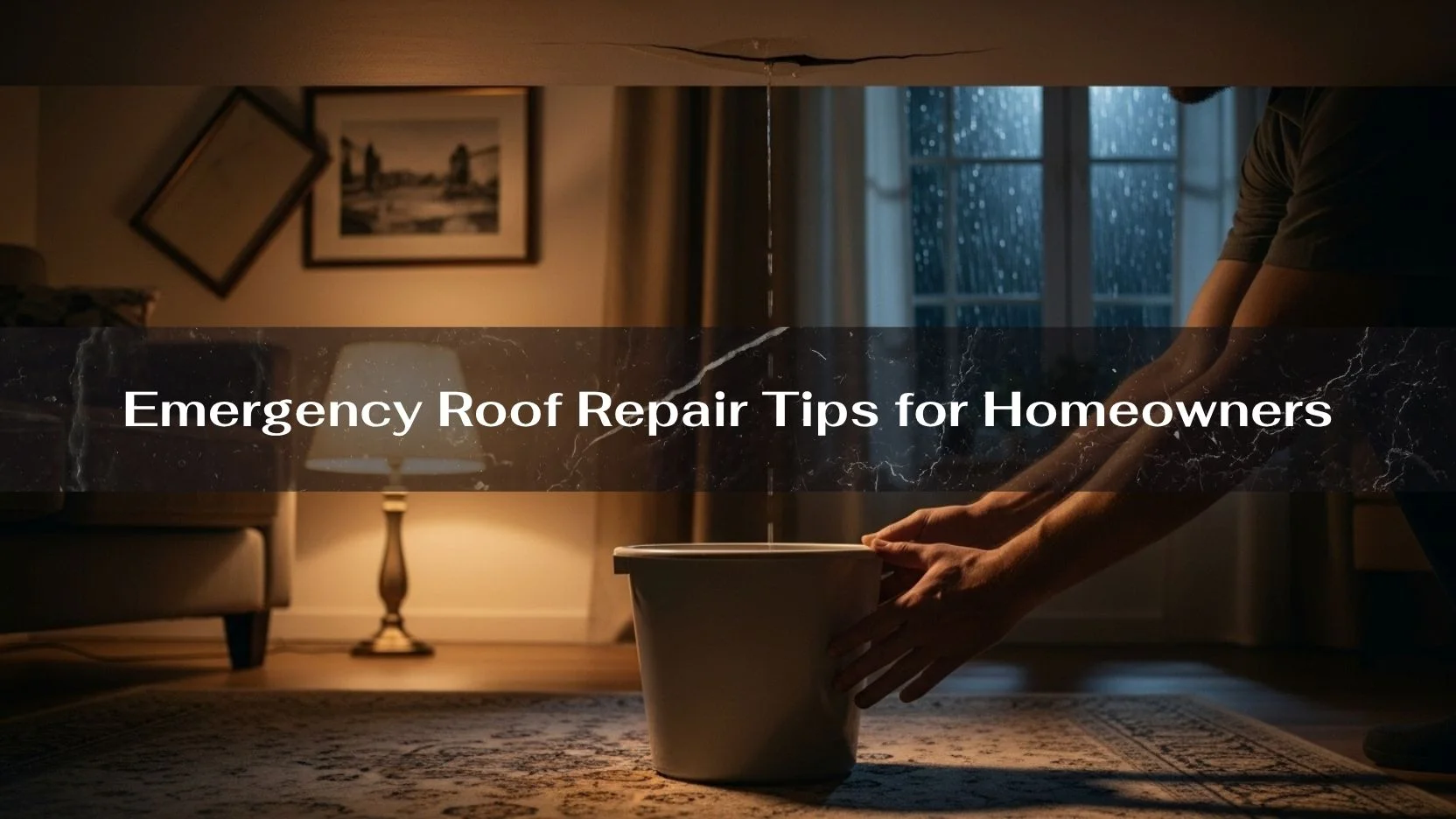
Never climb onto a wet or damaged roof during bad weather. Safety should always come first. Instead, focus on minimizing water damage inside your home. Move furniture, electronics, and valuables out of the affected area, and place a bucket under leaks to catch dripping water.
If water is pooling on the ceiling, use a small screwdriver to puncture a hole in the lowest point. This allows water to drain and helps prevent a total ceiling collapse.
2. Find the Source of the Leak (If You Can)
Sometimes the leak isn’t directly above the wet spot on your ceiling. Water often travels along rafters or beams before dripping down. A flashlight in the attic can help locate the entry point. Look for damp insulation, dark stains, or soft wood.
If it’s safe, mark the affected area for a roofing contractor to inspect later.
3. Temporary Roof Leak Fixes That Work
Until a professional arrives, temporary fixes can prevent further water intrusion:
- Tarp Covering: One of the most common temporary fixes is covering the leak with a waterproof tarp. Use heavy-duty plastic sheeting and secure it with roofing nails or weights. According to HomeAdvisor, this method can protect your roof for several days if done correctly.
- Roofing Tape or Sealant: For smaller leaks or damaged flashing, roofing tape or sealant can offer short-term protection. Products like those found on Angi are designed for emergency patching until permanent repairs are made.
- Roof Cement: This can help patch small cracks or holes in shingles. Apply it carefully using a putty knife and ensure the surface is dry if possible.
Remember, these are only temporary measures. They buy you time but don’t replace professional repair.
4. Document the Damage for Insurance
Take clear photos and videos of all visible damage, both inside and outside. Insurance companies typically require this documentation for claims. Capture the affected areas before any temporary repairs are made.
According to Angi’s guide on roof repairs, thorough documentation can help homeowners receive faster claim approvals and fair compensation.
5. Call a Roofing Professional
Once it’s safe and the storm has passed, contact a licensed roofing contractor immediately. Many companies offer 24/7 emergency roof repair services. Professionals have the tools and expertise to assess structural damage, replace missing shingles, and repair underlayment issues safely.
“Most homeowners think a small leak isn’t urgent,” says a roofing pro quoted on Yelp. “But water damage spreads fast. Even a day’s delay can mean hundreds in extra repair costs.”
6. Prevent Future Roof Emergencies
After your roof is repaired, take steps to prevent future problems:
- Schedule annual roof inspections.
- Clean gutters and downspouts regularly.
- Replace damaged or missing shingles promptly.
- Trim overhanging branches that can cause impact damage.
According to HomeAdvisor’s maintenance checklist, routine inspections can extend your roof’s lifespan by several years and reduce the likelihood of costly emergency repairs.
Final Thoughts
Roof emergencies are stressful, but quick action and proper temporary fixes can prevent major water damage. Always prioritize safety, document everything for insurance, and call a professional as soon as possible. With a clear plan, homeowners can protect their property and avoid long-term issues.