Fire-Resistant Roofing Material Options: A Complete Guide for Texas Homeowners
Wildfires, electrical fires, and airborne embers pose serious threats to homes across Texas. While many homeowners focus on interior fire safety, the roof remains the most vulnerable entry point for flames and heat. Choosing fire-resistant roofing material options can mean the difference between containable damage and catastrophic loss.
This comprehensive guide examines the most effective fire-resistant roofing materials available today, their performance ratings, cost considerations, and practical installation factors. Whether you’re building new construction, planning a roof replacement, or simply evaluating your current fire protection, understanding these options empowers you to make informed decisions that protect your home and family.
Understanding Fire Ratings For Roofing Materials
Before exploring specific materials, understanding how roofing products are tested and rated for fire resistance provides essential context for making informed decisions.
The Class Rating System
Roofing materials in the United States follow a standardized fire classification system established by Underwriters Laboratories (UL) and ASTM International. According to roofing experts at Angi, these classifications measure how roofing assemblies perform when exposed to fire from external sources.
Class A (Highest Protection): Offers the best fire resistance, withstanding severe fire exposure. Materials can endure flames for 2+ hours without significant surface spread, penetration, or flying debris. Most metal, clay, and concrete tiles earn this rating.
Class B (Moderate Protection): Provides moderate fire resistance against moderate exposure. These materials withstand flames for about 1 hour. Some treated wood shakes and composite materials fall into this category.
Class C (Light Protection): Offers light protection against light fire exposure, withstanding approximately 20 minutes of flame contact. Basic asphalt shingles often receive this rating.
Unrated Materials: Some roofing products, particularly untreated wood shingles and shakes, carry no fire rating and provide minimal protection against external fire sources.
What The Ratings Test
Fire ratings evaluate three critical performance factors: surface flame spread (how quickly fire travels across the roof surface), burning brand resistance (ability to withstand falling embers), and flying brand penetration (whether burning debris can penetrate the roof assembly). A truly fire-resistant roof must excel in all three areas.
Insurance And Building Code Implications
Many insurance companies offer premium discounts for homes with Class A fire-rated roofing, particularly in wildfire-prone regions. Some jurisdictions mandate specific fire ratings for new construction or replacements in high-risk zones. Verify local building codes and consult your insurance provider before making material selections.
Top Fire-Resistant Roofing Material Options
Several roofing materials provide excellent fire resistance while offering distinct advantages in aesthetics, durability, and cost.
Metal Roofing
Metal roofing consistently ranks among the most fire-resistant options available, earning Class A ratings when installed over fire-rated underlayment.
Fire Performance: Metal roofing is non-combustible, meaning it won’t ignite or contribute fuel to fires. Steel, aluminum, copper, and zinc roofing all provide exceptional fire resistance. The material reflects heat rather than absorbing it, helping prevent interior temperature spikes during fire events.
Additional Benefits: Beyond fire protection, metal roofing offers 40-70 year lifespans, excellent wind resistance, energy efficiency through reflective coatings, and minimal maintenance requirements. These roofs perform exceptionally well in Texas heat, reducing cooling costs significantly.
Considerations: Initial installation costs run higher than asphalt shingles, though long-term value often exceeds alternatives. Professional installation is essential improper fastening or flashing can compromise both fire ratings and weather protection.
Clay And Concrete Tiles
Clay and concrete tiles have protected homes for centuries, offering timeless aesthetics combined with superior fire resistance.
Fire Performance: Both clay and concrete tiles are inherently non-combustible, naturally achieving Class A fire ratings. The materials won’t burn, melt, or contribute to fire spread. Their thermal mass also provides insulation that slows heat transfer to underlying structures.
Durability and Longevity: Clay tiles can last 100+ years with proper maintenance, while concrete tiles typically provide 50+ year lifespans. Both materials resist rot, insect damage, and weathering exceptionally well.
Regional Suitability: These materials excel in Texas climates, reflecting heat effectively and maintaining their integrity through temperature extremes. However, structural considerations matter tiles are heavy, requiring adequate roof framing support verified by structural engineers.
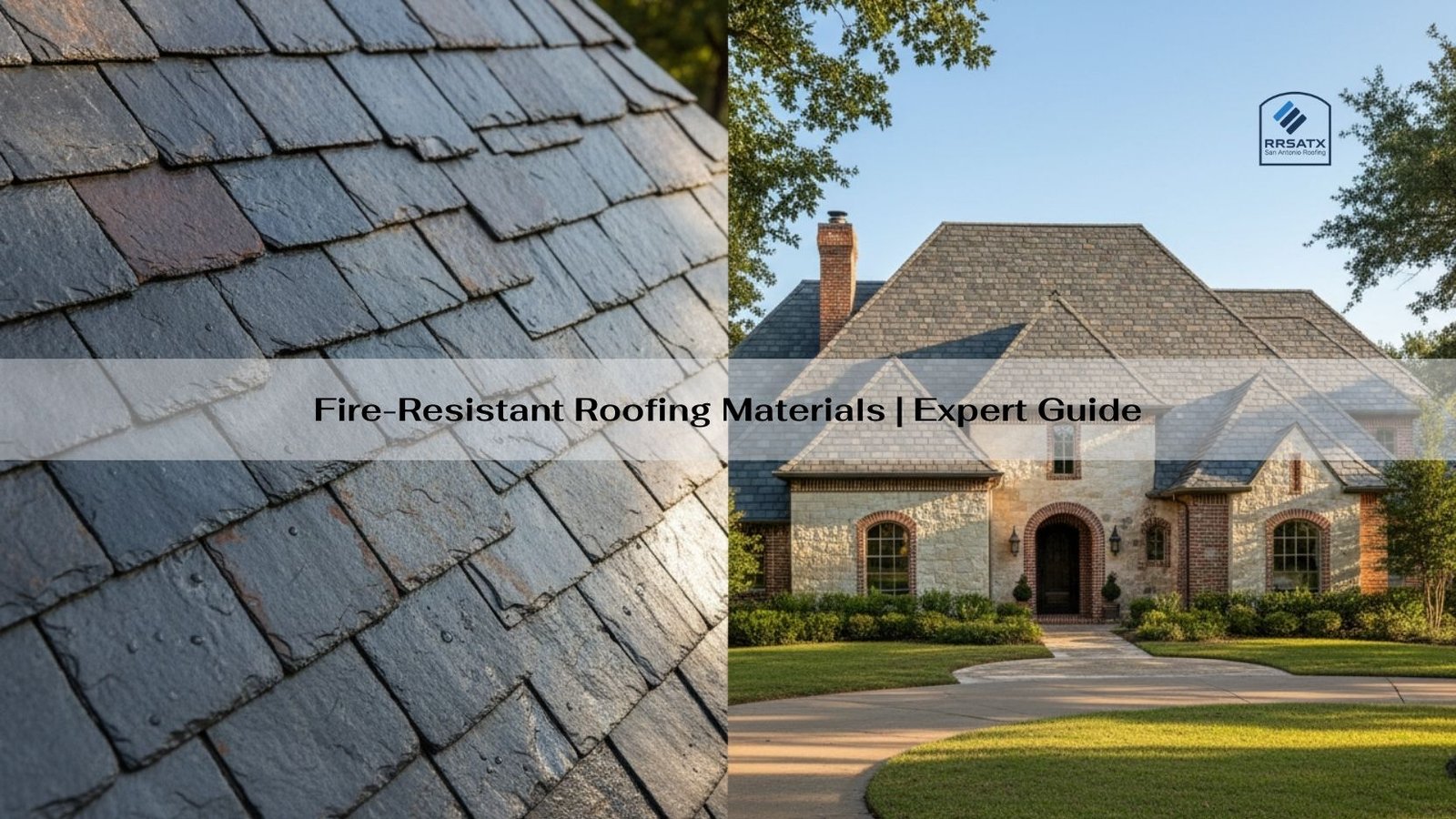
Slate Roofing
Natural slate represents the premium choice in fire-resistant roofing, combining unparalleled fire protection with distinctive beauty.
Fire Performance: Natural stone slate is completely non-combustible, providing Class A fire protection. The material won’t ignite under any circumstances, making it ideal for high-risk areas.
Exceptional Longevity: Properly installed slate roofs routinely last 75-150 years, potentially outliving the structures they protect. This extreme durability makes slate a generational investment rather than a typical roofing purchase.
Cost and Installation: Slate represents the highest-cost roofing option, both for materials and specialized installation. Additionally, slate’s substantial weight requires robust structural support. Despite premium pricing, the century-plus lifespan can justify the investment for permanent homes and historic properties.
Asphalt Shingles (Fire-Rated)
For homeowners seeking fire protection within conventional budgets, premium fiberglass-based asphalt shingles offer practical solutions.
Fire Performance: Standard fiberglass asphalt shingles achieve Class A fire ratings when manufactured with fire-resistant materials and installed over proper underlayment. According to roofing professionals on HomeAdvisor, modern asphalt shingles incorporate mineral granules and fiberglass mats that significantly improve fire resistance compared to older organic-mat products.
Affordability and Availability: Asphalt shingles remain the most economical fire-rated option, costing 50-70% less than metal or tile alternatives. Widespread contractor familiarity ensures easy installation and repair availability.
Limitations: While fire-rated asphalt shingles provide reasonable protection, they don’t match metal or tile performance in extreme conditions. Typical lifespans of 20-30 years require more frequent replacement than premium alternatives.
Composite And Synthetic Materials
Modern engineering has produced composite roofing products that replicate the appearance of wood, slate, or tile while achieving superior fire ratings.
Fire Performance: Quality synthetic products achieve Class A ratings through fire-resistant polymers, recycled materials, and protective coatings. These materials won’t support combustion and resist ember penetration effectively.
Aesthetic Versatility: Composites convincingly mimic premium materials like slate or cedar shake at fraction of the cost and weight. This allows homeowners to achieve desired aesthetics without compromising fire safety.
Emerging Technology: The composite roofing market continues evolving rapidly, with manufacturers developing increasingly sophisticated products. Research specific product certifications and long-term performance data before committing to newer options.
Cost Comparison Of Fire-Resistant Roofing
Understanding both initial investment and long-term value helps homeowners make financially sound decisions.
Material And Installation Costs
Asphalt Shingles (Class A): $3.50-$5.50 per square foot installed. Most affordable fire-rated option with widespread contractor availability.
Metal Roofing: $7-$14 per square foot installed. Mid-to-premium pricing with exceptional longevity offsetting higher initial costs.
Concrete Tiles: $8-$12 per square foot installed. Premium pricing with very long lifespan and minimal maintenance needs.
Clay Tiles: $12-$25 per square foot installed. High-end investment with century-plus durability potential.
Slate Roofing: $15-$30+ per square foot installed. Premium investment requiring specialized installation but offering unmatched longevity.
Composite Materials: $5-$12 per square foot installed. Mid-range pricing with variable quality research specific products thoroughly.
Long-Term Value Considerations
When evaluating costs, consider total lifecycle expenses rather than just initial installation. A $20,000 metal roof lasting 50 years costs $400 annually, while $10,000 asphalt shingles replaced every 25 years cost the same $400 annually before accounting for inflation and disposal costs.
Additionally, factor in insurance premium reductions (typically 5-15% for Class A roofing in fire-prone areas), energy savings from reflective materials, and reduced maintenance expenses for premium materials.
Climate And Regional Considerations
Texas’s diverse climate zones demand materials that handle more than just fire they must withstand intense heat, severe storms, and dramatic temperature swings.
Texas-Specific Performance Factors
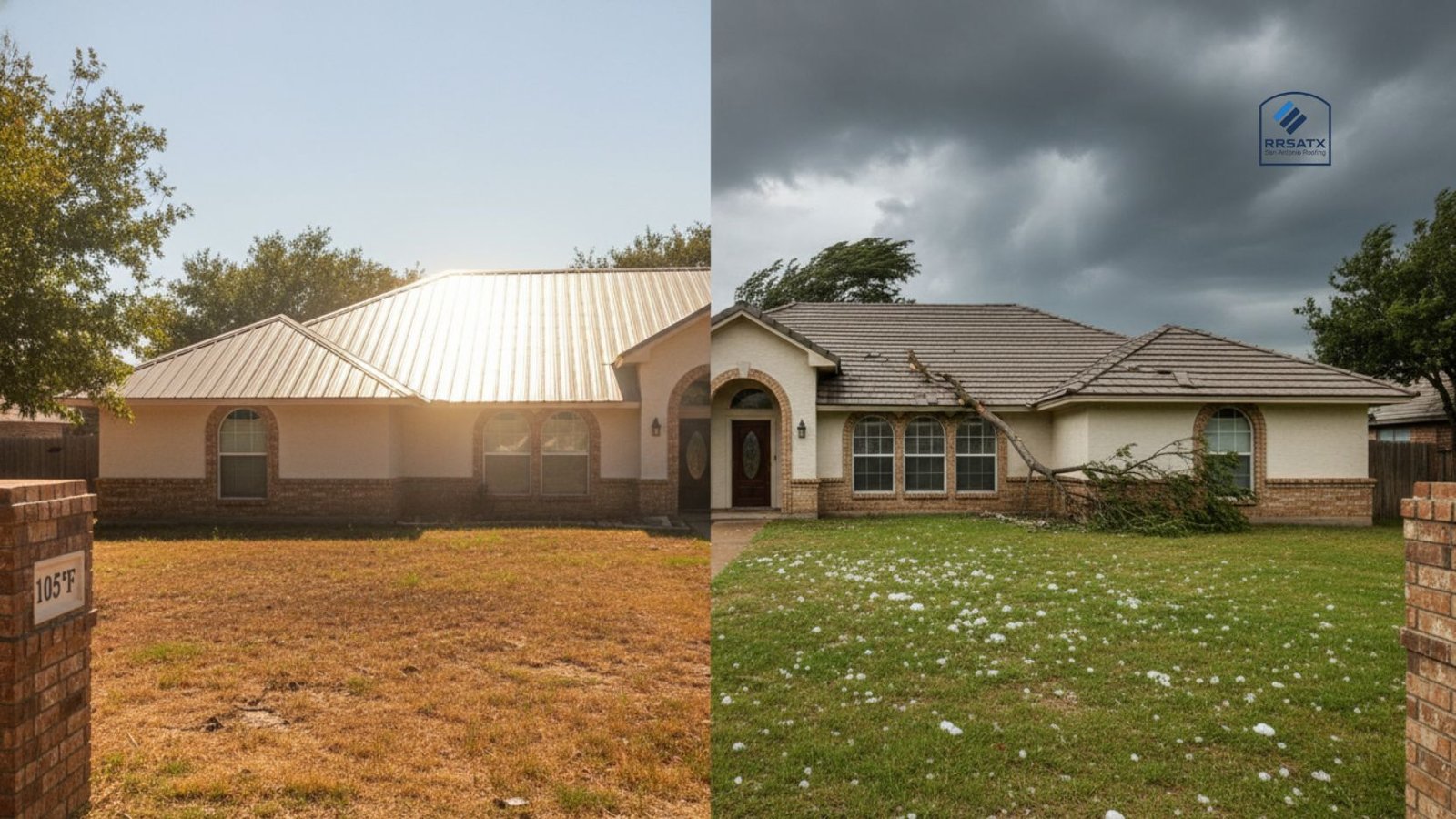
Heat Resistance: San Antonio regularly experiences 100°F+ summer temperatures. Metal roofing with reflective coatings and tile materials that resist heat absorption provide superior comfort and energy efficiency compared to dark asphalt shingles.
Hail Resistance: Many fire-resistant materials also excel at hail protection. Metal roofing (particularly steel), concrete tiles, and impact-rated asphalt shingles withstand Texas hailstorms better than standard materials.
Wind Performance: Fire-rated materials must also resist high winds. Properly installed metal roofing and mechanically attached tiles offer excellent wind resistance for hurricane-prone coastal areas and tornado-susceptible regions.
Wildfire Risk Zones
While urban San Antonio faces lower wildfire risk than rural Hill Country properties, understanding regional fire danger helps inform material choices. Homes near undeveloped land, parks, or greenbelts benefit most from premium fire-rated materials. Additionally, drought conditions can temporarily elevate fire risk even in typically low-danger areas.
Installation And Maintenance Requirements
Proper installation and ongoing maintenance determine whether fire-resistant materials deliver their full protective potential.
Professional Installation Essentials
Fire ratings apply to complete roofing assemblies not just surface materials. Achieving certified performance requires proper underlayment, ventilation, flashing, and fastening according to manufacturer specifications and building codes. Cutting corners during installation can void both warranties and fire ratings.
Metal Roofing: Requires experienced installers familiar with thermal expansion joints, proper fastener placement, and specialized flashing techniques. Poor installation creates leaks and compromises fire protection.
Tile Materials: Demand structural verification before installation to ensure adequate support. Improper battening or fastening allows tiles to shift or break, creating vulnerabilities.
All Materials: Fire-rated underlayment and proper attic ventilation are critical components that contribute to overall assembly ratings.
Ongoing Maintenance
Even fire-resistant materials require periodic attention to maintain optimal performance.
Regular Inspections: Annual inspections identify damage from storms, debris, or wear before small issues become major problems. Professional roofing contractors can spot subtle deterioration that homeowners miss.
Debris Removal: Accumulated leaves, pine needles, and organic matter create fire hazards regardless of roofing material. Regular cleaning, especially around chimneys and valleys, eliminates potential ignition sources.
Damage Repair: Promptly address broken tiles, loose metal panels, or damaged shingles. Even small breaches can allow ember penetration during fire events.
Making The Right Choice For Your Home
Selecting fire-resistant roofing material options involves balancing protection, budget, aesthetics, and long-term value.
Key Decision Factors
Budget Constraints: Determine both available initial investment and long-term financial capacity. Sometimes financing premium materials through longer-term value makes more sense than repeated budget replacements.
Architectural Style: Choose materials that complement your home’s design. Mediterranean homes naturally suit clay tiles, while modern designs often showcase metal roofing beautifully.
Structural Capacity: Verify whether your home can support heavy tile or slate materials. Retrofitting structural support adds significant cost.
Local Regulations: Confirm building code requirements and HOA restrictions before finalizing material selections.
Professional Guidance Matters
Working with experienced roofing contractors who understand fire-resistant materials, local building codes, and regional climate challenges ensures optimal results.
At RRSATX – San Antonio Roofing Company, we’ve spent decades helping Texas homeowners protect their properties with fire-resistant roofing solutions tailored to individual needs and budgets. Our father-son team brings hands-on experience with metal, tile, slate, and advanced composite materials, ensuring your roof delivers maximum protection for generations.
We offer completely free 12-point roof inspections that assess your current fire vulnerability and provide detailed recommendations for improvements. Our transparent pricing, licensed installation teams, and commitment to quality craftsmanship have earned us over 100 five-star reviews from satisfied San Antonio and Houston homeowners.
Whether you’re replacing an aging roof or building new construction, we’ll help you navigate fire-resistant roofing material options, explain the performance differences, and deliver professional installation backed by industry-leading warranties.
Ready to enhance your home’s fire protection? Contact RRSATX today for your free roof inspection and consultation. Call 713-504-2341 or email info@roofrepairsanantoniotx.com. We’re available 24/7 to answer your questions and provide emergency services when you need them most.
Conclusion
Investing in fire-resistant roofing material options provides invaluable protection for your home, family, and financial security. While premium materials require higher initial investment, their superior performance, longevity, and insurance benefits often deliver better long-term value than conventional alternatives.
Whether you choose the proven durability of metal roofing, the timeless elegance of clay tiles, or the budget-friendly protection of Class A asphalt shingles, selecting fire-rated materials significantly reduces your vulnerability to one of homeownership’s most devastating risks.
Don’t wait for tragedy to reveal your roof’s weaknesses. Partner with experienced professionals who understand fire-resistant roofing and can guide you toward the optimal solution for your specific circumstances. Your home deserves the best protection available and fire-resistant roofing delivers exactly that.