
[et_pb_section fb_built=”1″ admin_label=”section” _builder_version=”4.16″ global_colors_info=”{}”][et_pb_row admin_label=”row” _builder_version=”4.16″ background_size=”initial” background_position=”top_left” background_repeat=”repeat” global_colors_info=”{}”][et_pb_column type=”4_4″ _builder_version=”4.16″ custom_padding=”|||” global_colors_info=”{}” custom_padding__hover=”|||”][et_pb_code _builder_version=”4.27.6″ _module_preset=”default” hover_enabled=”0″ sticky_enabled=”0″]
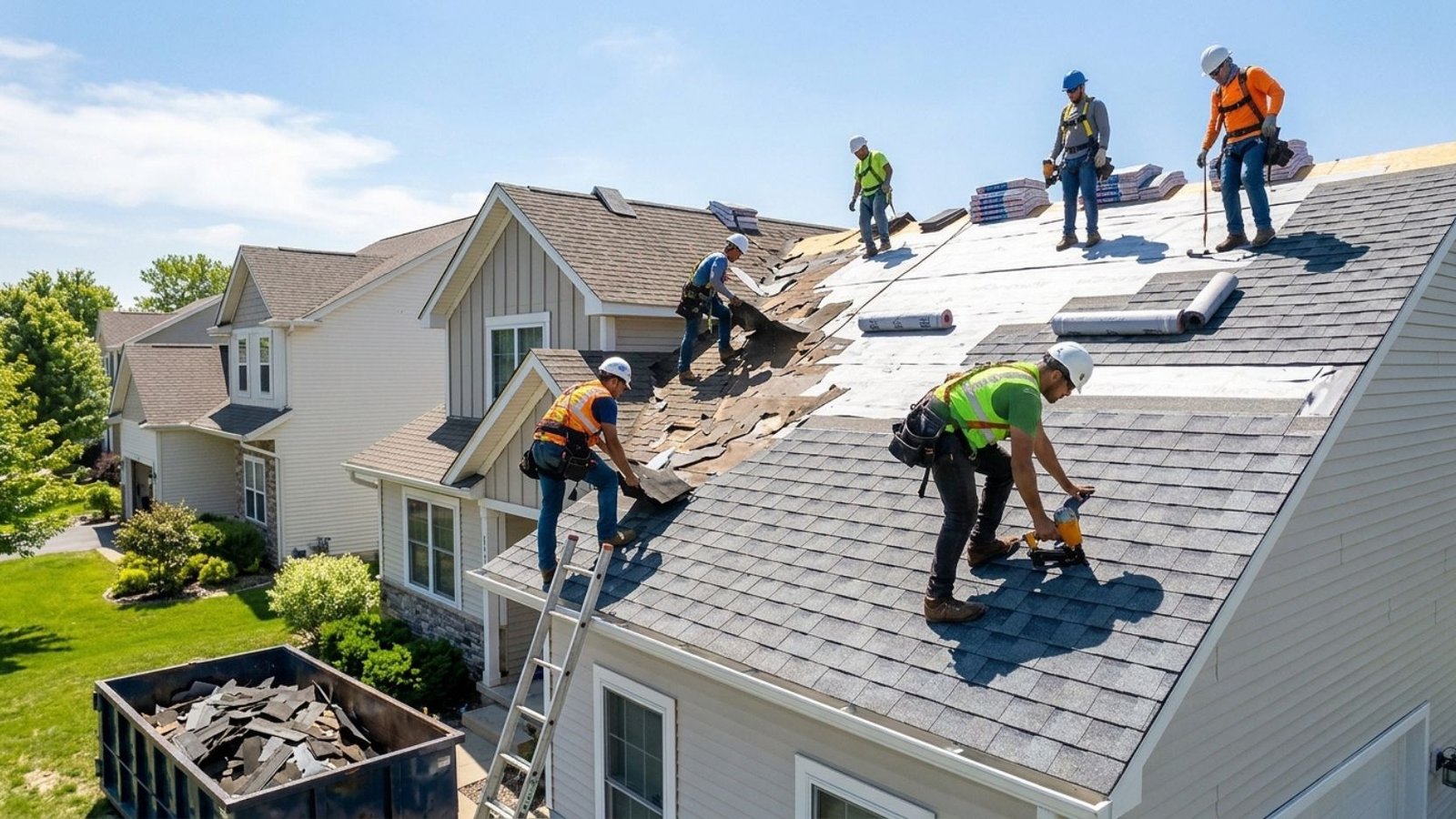
For most San Antonio homes, a full roof replacement takes one to three days. But the actual timeline depends on your roof’s size, the material being installed, the condition of the decking underneath, and what the Texas weather decides to do that week. This guide breaks down every variable so you know exactly what to expect before the first nail is driven.
The question is simple. The honest answer has a few moving parts. A roof replacement on a typical 1,500 to 2,500 square foot San Antonio home with standard asphalt shingles will almost always be done in a single day by a full crew. That is the baseline. From there, the schedule stretches based on the roof’s size, pitch, and complexity; the material being installed; the condition of the decking under the old shingles; and the unpredictability of Texas weather during the job.
This guide walks through every factor that affects your timeline, what happens each day of the replacement process, and what questions to ask your contractor before the job starts so there are no surprises when the crew shows up at 6 AM.
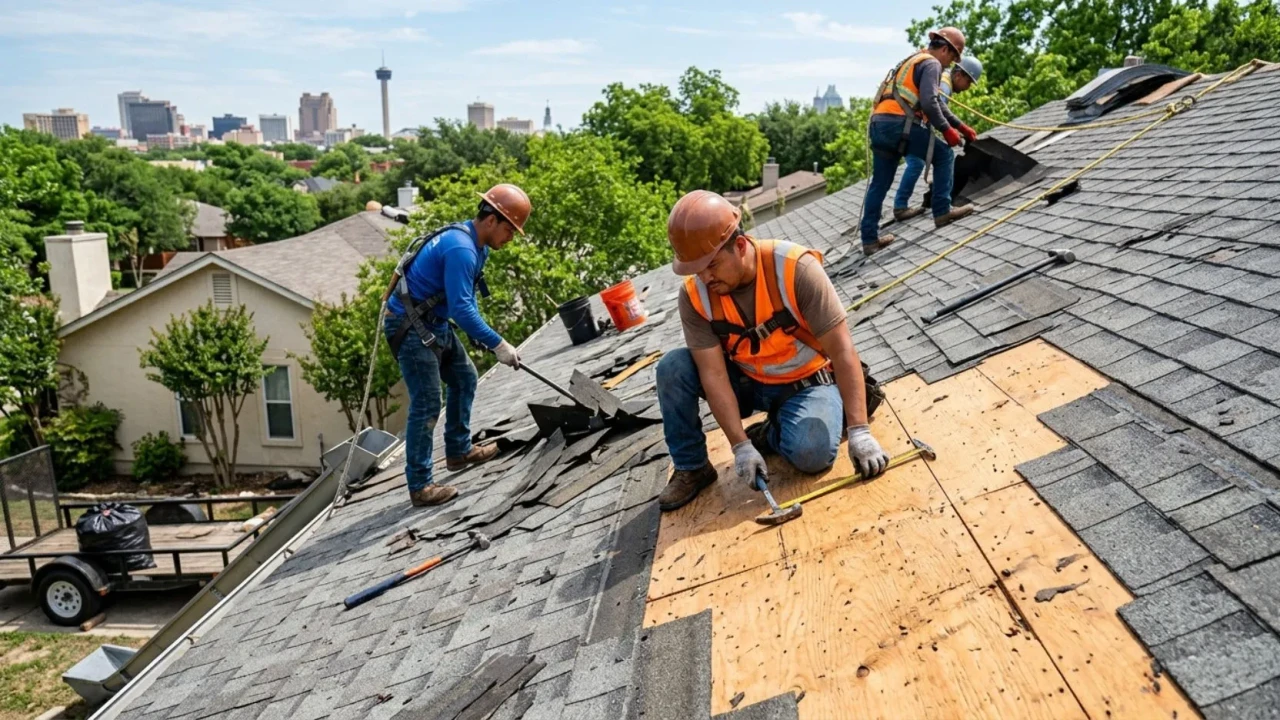
The most common reason a one-day roof replacement turns into a two or three-day job is damaged or rotted decking discovered after the old shingles are torn off. No contractor can see through your existing roof before removal. If your home has suffered moisture intrusion over the years, there is a real possibility that sections of the plywood or OSB decking underneath are soft, warped, or rotten and need to be replaced before new shingles go down. A reputable San Antonio roofing contractor will inspect for this during the tear-off, stop the job, show you what they found, and give you a written scope and price for the additional work before proceeding. Any contractor who skips that step and just keeps going is a contractor to be cautious about.
Size and Complexity
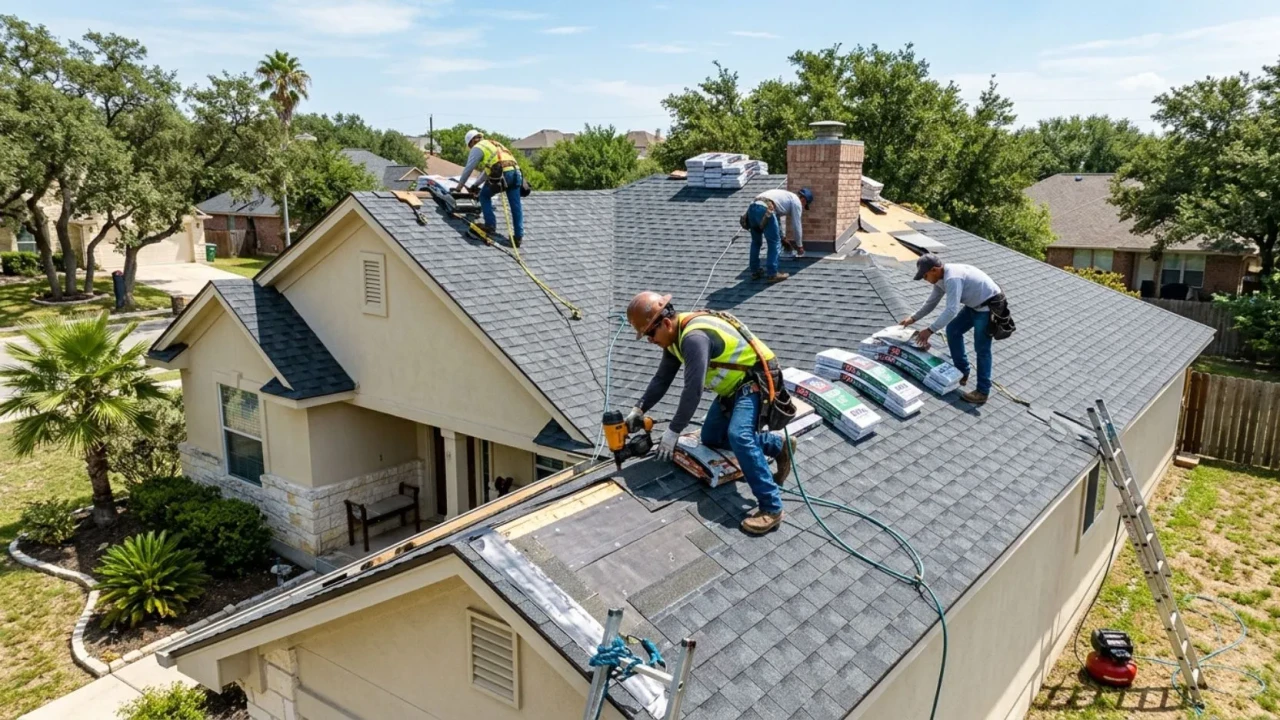
The total square footage of your roof surface is the first number a contractor uses to estimate the timeline, but it is not the whole story. A 2,000 square foot simple gable roof with two slopes takes far less time than a 2,000 square foot roof with six valleys, multiple dormers, a skylight, two chimneys, and a steep pitch. Every penetration, valley, and change of direction adds time because it requires precise cuts, additional flashing work, and more careful installation than a clean, open slope.
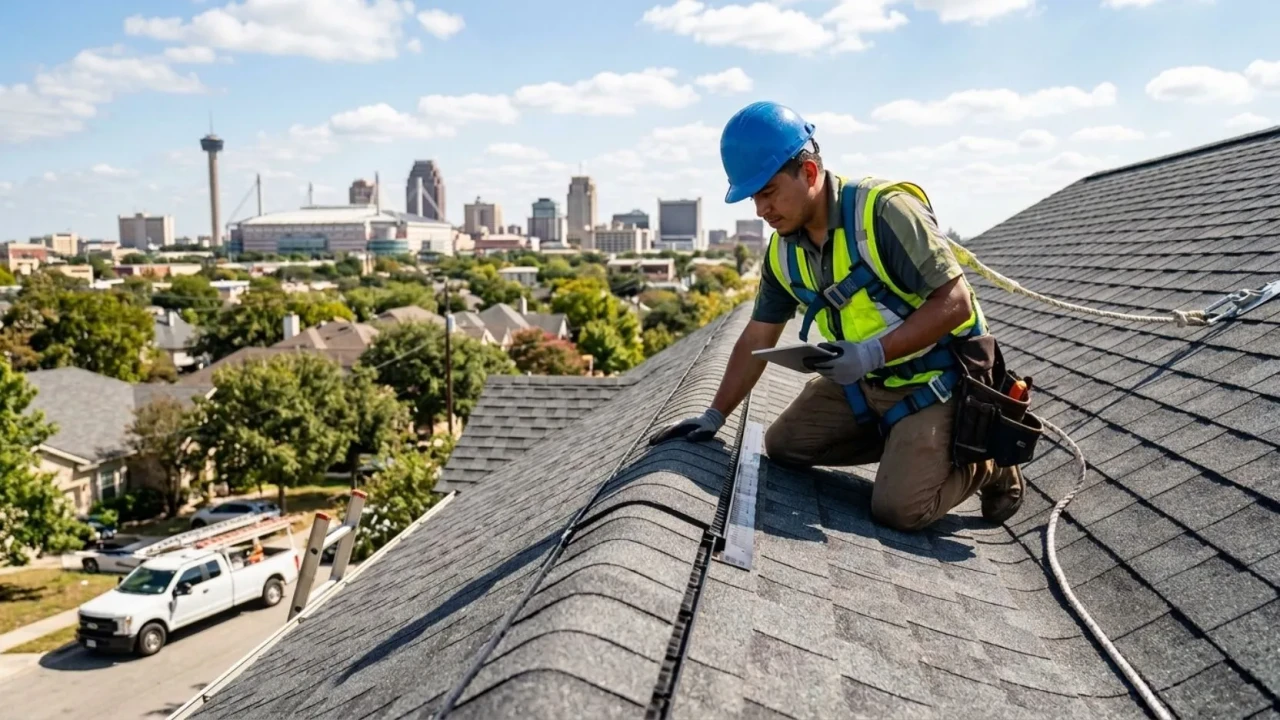
Roof pitch matters too. Steeper roofs require different staging, slower movement across the surface, and more safety equipment. A crew that can replace a low-slope roof at full speed will work more cautiously on a 10:12 or 12:12 pitch, and that caution is appropriate. Do not choose a contractor who rushes steep-pitch work.

Low pitch (under 4:12): Fastest production rates. Crew moves freely and safely across the surface. Common on ranch-style homes and additions throughout Bexar County.
Standard pitch (4:12 to 8:12): The most common pitch range in San Antonio residential construction. Efficient production with standard equipment. Most one-day jobs fall into this category.
Steep pitch (8:12 and above): Requires toe boards, jacks, or scaffolding. Production rate slows significantly. A steep-pitch roof that looks similar in size to a standard-pitch roof will often take 50 to 100 percent longer to replace.
- How many squares is my roof surface, and how does that affect the timeline?
- What pitch is my roof, and does that require any special staging or safety equipment?
- How many valleys, dormers, skylights, and penetrations does my roof have?
- How large is the crew assigned to my job, and is that the standard crew size for a roof this size?
- What is the planned start time, and what time should I expect the crew to be finished on day one?
Material Timeline
The material being installed is the second biggest variable in your replacement timeline. Asphalt shingles are designed to be installed quickly. They are lightweight, they nail in place with pneumatic guns, and an experienced crew can cover a lot of ground in a single day. Premium materials like metal panels, concrete tile, clay tile, and natural slate all take longer per square because they require more precise installation, different fastening systems, and in many cases special handling to avoid breakage or damage during the process.
| Roofing material | Typical timeline (average home) | Why it takes that long | Common in San Antonio |
|---|---|---|---|
| 3-tab asphalt shingles | 1 day | Fastest installation; lightweight, nail-gun compatible, simple layout | Common on older homes and budget replacements |
| Architectural asphalt shingles | 1 day (most homes) | Slightly thicker than 3-tab but same installation method; most popular replacement option | Most common material used in Bexar County replacements |
| Class 4 impact-resistant asphalt | 1 day (most homes) | Same installation as standard architectural shingles; heavier product but same workflow | Increasingly common for insurance discount eligibility |
| Standing seam metal | 3 to 7 days | Panels cut and seamed on site; concealed fasteners require more precision; specialized crew required | Growing in popularity; strong hail resistance |
| Exposed-fastener metal panels | 2 to 4 days | Faster than standing seam but still requires more precision than asphalt; panel layout critical | Common on agricultural and commercial properties |
| Concrete tile | 3 to 5 days | Heavy material requires reinforced decking; tiles must be sorted, stacked, and installed carefully to avoid cracking | Common in upscale Hill Country and Stone Oak neighborhoods |
| Clay tile | 4 to 7 days | More fragile than concrete; mortar-set ridges and hips add significant time; requires specialist crew | Found on Spanish-style and Mediterranean homes throughout San Antonio |
| Natural slate | 5 to 10+ days | Each slate tile must be individually sized, drilled, and nailed; slow installation is mandatory to prevent breakage | Rare in San Antonio; found on high-end custom homes |
If you are getting quotes for a metal roof or tile roof, verify that the contractor has a dedicated crew with specific experience in that material. A roofing company that primarily installs asphalt shingles can technically install standing seam metal, but the learning curve shows up in the timeline and the quality of the finished product. Ask how many metal or tile roofs the contractor’s crew has completed in the past 12 months. A contractor who does two or three of those jobs a year is a different proposition than one whose dedicated crew does two or three per month.
- What material are you proposing, and what is the expected installation timeline for that product on my specific roof?
- Is this a material your crew installs regularly, or is it a specialty that requires subcontractors?
- Does my decking need any reinforcement or modification to support the material you are proposing?
- Will the manufacturer’s warranty be valid with your crew’s installation, or does it require a certified installer?
Day by Day
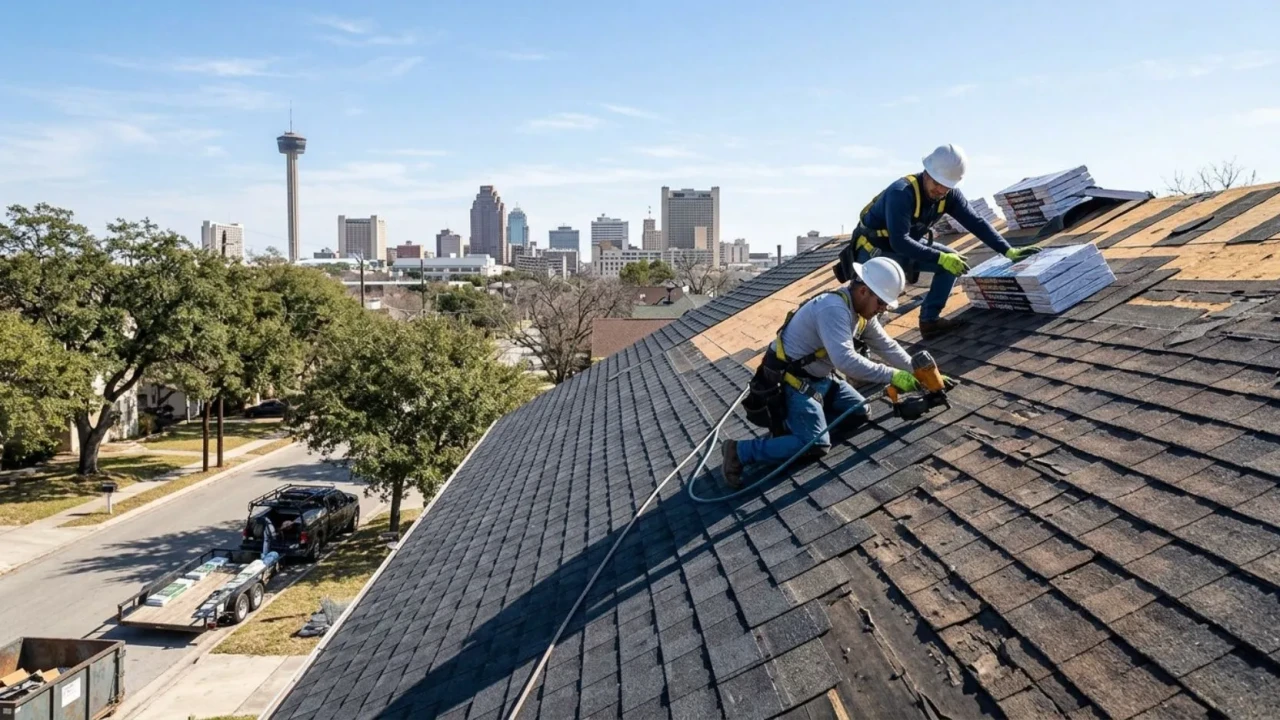
A roof replacement is not just the hours the crew is on the roof. It starts the day before with material delivery and ends a day or two after completion with final inspection and cleanup verification. Here is what the full sequence looks like for a standard single-day asphalt shingle replacement on a typical San Antonio home.
- Vehicles moved out of the driveway the night before material delivery
- Pets secured indoors for the entire workday falling debris and open roof create real hazards
- Delicate outdoor plants, furniture, and decorations moved away from the roofline
- Someone available by phone throughout the day in case the crew needs to reach you about decking findings
- Attic access cleared in case the crew needs to inspect from below
- Yard walked with a flashlight after crew departs to locate any missed nails before morning
Delay Causes
Most delays in a roof replacement fall into one of three categories: weather, hidden conditions found during tear-off, or contractor scheduling and logistics problems. Understanding which category each delay belongs to helps you know whether to be patient, ask questions, or push back.
Weather is the most common unavoidable delay in San Antonio. Roofing work cannot safely continue during rain, and it cannot be rushed to beat incoming weather. A contractor who keeps working through light rain to finish the job faster is compromising both worker safety and the quality of the installation wet underlayment and damp decking create problems that show up months later. If rain stops the job, the crew should cover the exposed deck with tarps before leaving, and they should return the next available dry day. Ask your contractor upfront how they handle weather interruptions and what tarp protocol they follow.
Hidden decking damage is the most common source of cost and timeline surprises. It is not the contractor’s fault. No one can see through a roof that is still in place. What you can control is making sure your contract includes a clear per-sheet price for decking replacement discovered during tear-off, and that your contractor has a protocol for showing you the damage and getting written approval before doing additional work. A contractor who discovers rot and just keeps going without telling you is a problem. A contractor who stops, documents, and consults you is doing the job correctly.
The weeks following a major hail event in Bexar County are the busiest period for every roofing contractor in the market, and that demand creates its own type of delay. Material suppliers run low on popular shingle colors. City inspection departments get backed up with permit requests. And out-of-town storm chasers flood the market with crews that do not know San Antonio’s building codes or permit requirements. If your replacement is triggered by a storm, build extra time into your expectations and be patient with permit and inspection timelines. A reputable local contractor will navigate this for you and keep you informed throughout.
- Contract includes a per-sheet decking replacement price so there are no hidden upcharges mid-job
- Shingle color and product confirmed in stock at the supplier before scheduling the job
- Contractor’s weather interruption and tarp protocol confirmed in writing before start date
- Permit pulled and confirmed before the crew is scheduled do not allow work to start without a permit
- Crew size for your specific roof confirmed in the contract, not left as the contractor’s discretion
- Homeowner phone number shared with the crew lead for day-of communication about any findings
Homeowner Prep
Your job during a roof replacement is mostly to stay out of the way, stay reachable by phone, and handle a short list of preparation steps that make the crew’s job easier and protect your property from incidental damage. Most of what you need to do takes less than an hour the evening before the job starts.
Inside the home: Remove wall hangings and items on shelves near exterior walls. The vibration from nailing, especially during tear-off, can knock pictures off walls and rattle shelf items loose. This is a minor inconvenience to prevent rather than a repair to deal with after.
In the attic: If you have loose insulation or stored items near the attic hatch, move them. Debris from the decking work occasionally falls through, and the crew may need attic access to inspect from below if they find a soft spot.
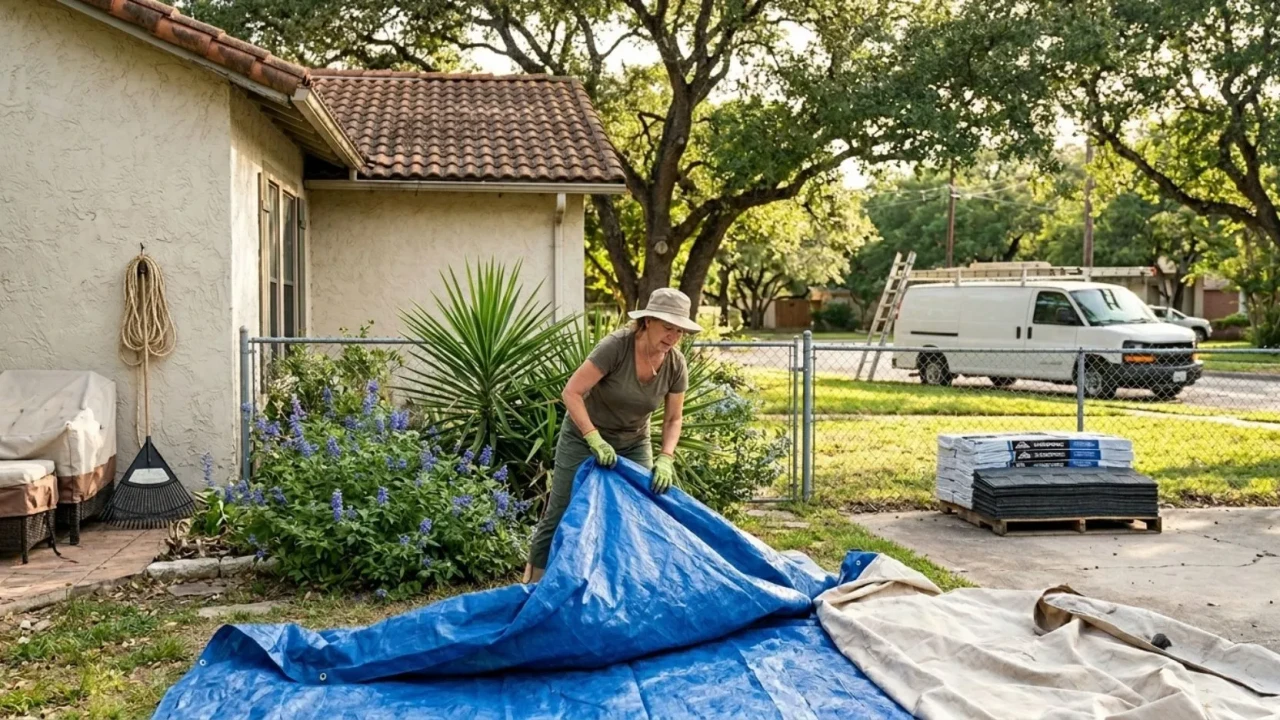
In the yard: Move outdoor furniture, potted plants, grills, and decorative items away from the house perimeter. Tarps will cover most of the immediate drop zone but cannot catch everything. Your car, boat, and any stored items need to be clear of the driveway on delivery day and job day.
During the job, stay inside or away from the perimeter. Falling debris is a real hazard. A stray shingle, nail, or piece of flashing falling from a two-story roofline has enough velocity to cause serious injury. Keep children and pets indoors for the entire workday. If you need to go outside for any reason, let the crew lead know first and stay well clear of any area where work is actively underway above you.
What to watch for when the crew is done: Before you make final payment, walk the perimeter of your home and look for missed debris, nails in the landscaping, and any damage to gutters, fascia, or siding that may have occurred during the job. Check that the ridge cap is complete, that all flashings are fully sealed, and that the drip edge is properly installed and visible along the eaves. Ask the crew lead for a copy of the product warranty documentation and the manufacturer install spec sheet. If a building permit was pulled, confirm the permit card or sticker is still posted and ask when the inspection is scheduled.
- Wall hangings removed from exterior walls inside the home the night before
- Attic hatch area cleared and accessible for potential decking inspection from below
- Outdoor furniture, potted plants, and decorations moved away from the home perimeter
- Vehicles, trailers, and stored items cleared from the driveway before material delivery
- Pets secured indoors with plans to keep them inside for the entire workday
- Homeowner phone available and answered throughout the day for crew communication
- Final walkthrough completed before authorizing the last payment
- Magnetic nail sweep of the yard confirmed with the crew before sign-off

These timelines represent realistic expectations for a full crew working standard San Antonio conditions. Unexpected decking damage, weather interruptions, and specialty material requirements can extend any of these ranges. Every timeline should be confirmed in writing with your contractor before the job starts.
| Roof type and situation | Expected timeline | Key variables | Most likely delay |
|---|---|---|---|
| Small home, asphalt, simple pitch | 1 day or less | Under 1,500 sq ft, gable or simple hip, 4:12 to 6:12 pitch | Hidden decking damage |
| Average home, asphalt, standard pitch | 1 full day | 1,500 to 2,500 sq ft, standard complexity, moderate pitch | Weather or decking damage |
| Large home, asphalt, moderate complexity | 1 to 2 days | 2,500 to 3,500 sq ft, multiple dormers or steep pitch | Complexity underestimated at quote |
| Very large or complex home, asphalt | 2 to 3 days | Over 3,500 sq ft, steep pitch, many valleys or penetrations | Weather, crew size, or material supply |
| Average home, metal (standing seam) | 4 to 7 days | Panel cutting, concealed fasteners, specialized crew required | Crew experience or panel order delays |
| Average home, concrete or clay tile | 3 to 7 days | Heavy material, tile sorting, mortar-set ridges and hips | Tile breakage, decking reinforcement |
| Post-storm rush (hail season) | Add 1 to 3 weeks to scheduling | High demand period for crews, materials, and permits | Material supply and permit backlogs |
| Insurance claim replacement | Add 1 to 4 weeks from approval to start | Adjuster approval, supplement negotiations, material ordering | Adjuster delays and documentation review |
- Written contract received with material specifications, crew size, and expected timeline
- Per-sheet decking replacement price confirmed in writing in the contract
- Building permit confirmed as pulled do not allow work to start without one
- Shingle product and color confirmed as in stock with the supplier
- Contractor’s weather interruption and tarp protocol confirmed in writing
- Certificate of insurance received and verified minimum $1 million general liability
- Material delivery date confirmed; driveway cleared the afternoon before
- Pets secured indoors for the entire workday
- Wall hangings on exterior walls removed to prevent vibration damage
- Homeowner phone available and answered for crew communication throughout the day
- Any decking damage findings reviewed and approved in writing before additional work proceeds
- Children and visitors kept clear of the home perimeter and driveway during active work
- Full perimeter walkthrough completed before final payment is authorized
- Magnetic nail sweep of lawn and landscaping confirmed with crew lead
- Gutters checked for debris and confirmed blown out by the crew
- Ridge cap, all flashings, and drip edge visually inspected for completeness
- Product warranty documentation and manufacturer install spec sheet received
- Building permit inspection scheduled and confirmed with your contractor
- Insurance carrier notified of completed replacement with documentation if applicable
How long does it take to replace a roof on an average San Antonio home?
Can my roof be replaced in one day?
Do I need to be home when my roof is being replaced?
What happens if it rains during my roof replacement?
How long does a roof replacement take when it is an insurance claim?
How much extra time does decking replacement add to a roof replacement?
Get a free roof replacement estimate in San Antonio
Tell us about your home, your current roof, and what you are trying to accomplish. We will give you a clear written estimate with a realistic timeline and no pressure to sign the same day.
[/et_pb_code][/et_pb_column][/et_pb_row][/et_pb_section]