
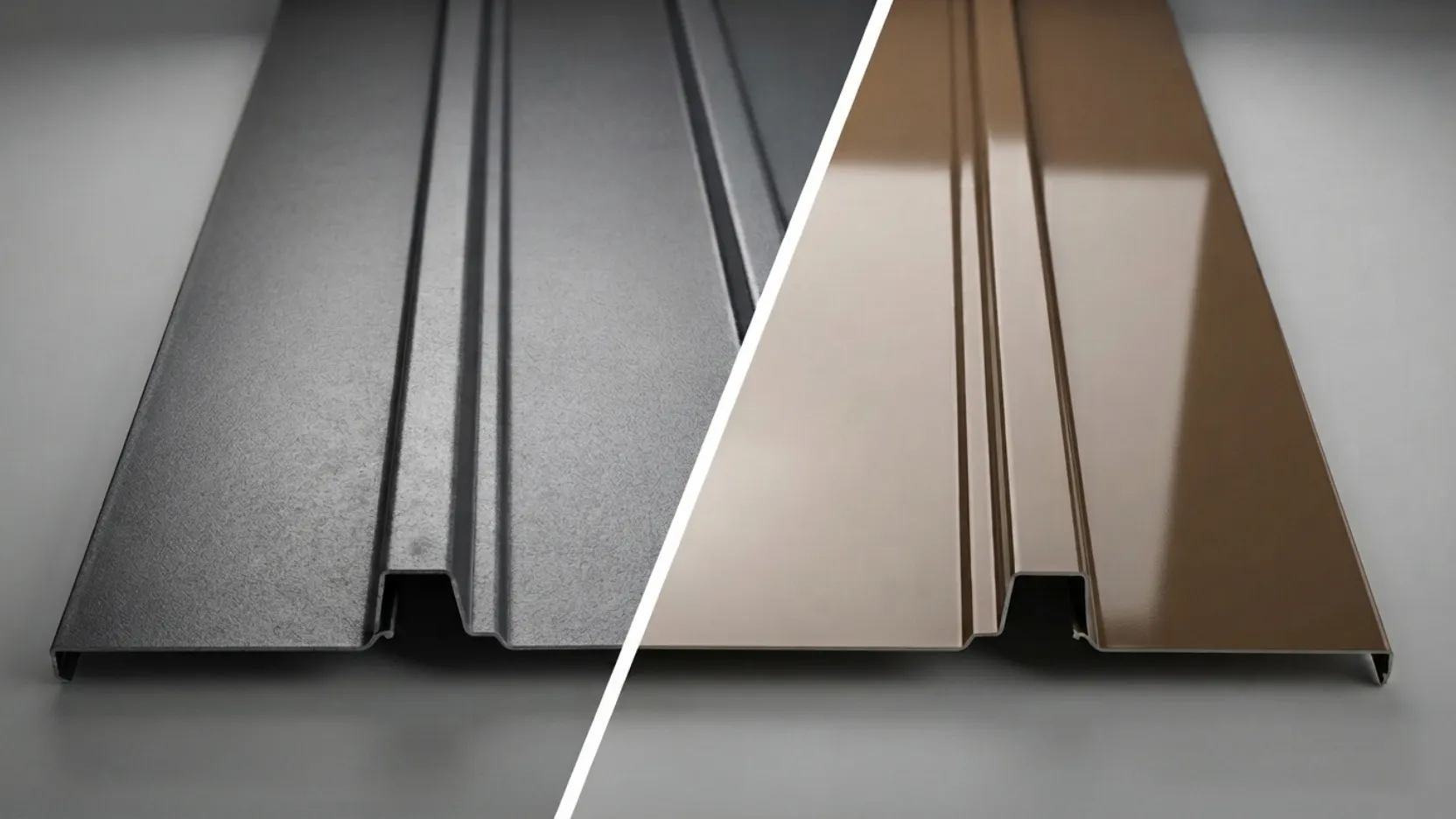
Steel and aluminum are the two metal roofing materials San Antonio homeowners compare most often. Both last decades, both beat asphalt on wind and energy performance, and both show up in local bids—but they are not priced the same, and the performance tradeoffs are real.
Steel usually costs less upfront and resists hail better at common residential gauges. Aluminum costs more, weighs less, and does not rust at the base metal. Because San Antonio sits inland—roughly 140 miles from the Gulf—most homes do not need aluminum’s salt-air advantage, which is why steel remains the default.
The number that matters is not only the day-one quote. It is installed cost plus maintenance and corrosion risk over the years you will own the property. A steel roof at about $4 to $7 per sq ft installed and an aluminum roof at about $6 to $12 look far apart on signing day; they look closer over a 40- to 70-year life if your environment is harsh on coatings.
By the end of this guide, you’ll know material and labor ranges for San Antonio, how corrosion and hail change the math, and which situations still justify paying more for aluminum.
Table of Contents
- Material Cost: Where Steel and Aluminum Differ
- Installed Cost in San Antonio
- Labor and Installation Differences
- Corrosion, Maintenance, and Lifecycle Cost
- Weight, Hail, Wind, and Thermal Movement
- Steel vs Aluminum Cost and Performance Table
- Which Material Fits Your Property
- Common Questions About Steel vs Aluminum Cost
- Next Steps for San Antonio Homeowners
Material Cost: Where Steel and Aluminum Differ
Steel panels are produced in higher volume, so the base metal and supply chain stay more competitive in the San Antonio market. Aluminum costs more to refine and is sold in smaller roofing volumes, so materials alone run higher even before labor.
Typical materials-only ranges locally:
- Galvalume steel panels: about $1.50 to $2.50 per sq ft
- Painted steel (PVDF / Kynar): about $2.00 to $3.50 per sq ft
- Stone-coated steel: about $3.00 to $5.00 per sq ft
- Aluminum corrugated: about $3.00 to $4.00 per sq ft
- Aluminum standing seam: about $4.00 to $6.00 per sq ft
Gauge, profile, and coating quality move every line item. Standing seam costs more than corrugated or exposed-fastener panels in both metals. Always compare equal gauge, equal coating, and equal profile—not “steel” against bargain aluminum or the reverse.
Practical rule: ask every bid to list materials and labor separately. A quote that only shows one blended number hides whether you are paying for thicker panels or thinner ones.
Installed Cost in San Antonio
Complete installed pricing (materials, underlayment, fasteners, flashing, and labor) for most residential projects:
- Steel: about $4 to $7 per sq ft
- Aluminum: about $6 to $12 per sq ft
On a 2,000 sq ft San Antonio roof, that often means roughly $8,000 to $14,000 for steel versus $12,000 to $24,000 for aluminum. Aluminum commonly costs 30% to 70% more installed than a comparable steel system. The gap widens on complex hips, valleys, and dormers and narrows on simple low-slope commercial spans with high material volume.
San Antonio’s metal roofing market is competitive, so these ranges track national averages—but material costs have been volatile since 2022. Treat the figures as 2026 planning ranges and get a current written quote before you budget.
Labor and Installation Differences
Labor for metal roofing here typically runs about $2.00 to $4.50 per sq ft on top of materials. Roof pitch, access, penetrations, and valleys usually matter more than whether the panel is steel or aluminum.
Aluminum is roughly 30% to 40% lighter, which can ease carrying on steep pitches. It is also softer and dents more easily during handling. Steel is more rigid and holds shape better on the job, but heavier gauges take more effort on large commercial roofs. On a typical San Antonio house, the weight difference rarely changes labor by itself.
Simple gable roofs often land near $2.00 to $3.00 per sq ft for labor. Complex hip or multi-plane roofs commonly run $3.00 to $4.50 per sq ft—and can exceed that on extreme pitch or multi-story work. Standing seam takes longer than exposed-fastener panels in either metal.
Corrosion, Maintenance, and Lifecycle Cost
Aluminum does not rust. When it oxidizes, it forms a protective oxide layer. Steel’s corrosion protection comes from coatings—Galvalume, paint, or stone coat—not from the base metal. If coatings are cut, scratched, or worn through, steel can rust.
For most inland San Antonio homes, properly coated Galvalume steel performs for 40+ years with routine care. Salt-air risk is not the primary concern in Bexar County the way it is within about 10 to 20 miles of the Gulf. Aluminum’s premium is easier to justify near salt air, chlorine-heavy pool structures, or aggressive industrial environments.
Maintenance budgets often look like this when averaged over time:
- Aluminum: about $0 to $200 per year in light inspection and cleaning needs
- Steel: about $150 to $500 per year averaged when coating touch-ups and periodic recoating are included
- Full elastomeric recoating on a ~2,000 sq ft steel roof: about $3,000 to $8,000, typically once or twice over a long life
Even with one recoating, inland steel is usually still the lower lifecycle cost for a standard residential roof. Run the comparison over your ownership horizon—not only the install quote.
Weight, Hail, Wind, and Thermal Movement
Approximate panel weights:
- Steel: about 1.0 to 2.5 lb per sq ft depending on gauge
- Aluminum: about 0.5 to 1.0 lb per sq ft (often roughly half steel)
Aluminum helps when older framing has limited dead-load capacity. Steel usually wins on hail at equal thickness; Class 4 impact-rated steel panels are widely available and may support Texas insurance discounts. Wind ratings above 140 mph are achievable with standing seam in either metal when installed correctly—panel profile and fastener pattern matter more than base metal for uplift.
Aluminum expands more per degree of temperature change than steel. San Antonio roof surfaces can swing dramatically between winter mornings and summer afternoons, so aluminum needs floating clips and careful detailing—especially on standing seam.
Steel vs Aluminum Cost and Performance Table
| Category | Steel roofing | Aluminum roofing | Better for most SA homes |
|---|---|---|---|
| Installed cost (per sq ft) | $4 to $7 | $6 to $12 | Steel |
| Material cost (per sq ft) | $1.50 to $3.50 | $3.00 to $6.00 | Steel |
| Weight | 1.0 to 2.5 lb/sq ft | 0.5 to 1.0 lb/sq ft | Aluminum (lighter) |
| Inland corrosion risk | Low with intact Galvalume/paint | Very low (no base-metal rust) | Near tie inland |
| Hail resistance | Stronger at equal thickness; Class 4 common | Softer; dents more easily | Steel |
| Wind (standing seam) | 140+ mph when installed correctly | 140+ mph when installed correctly | Tie (profile-dependent) |
| Lifespan | 40 to 70 years with maintenance | 40 to 70 years with light maintenance | Near tie |
| Thermal movement | Lower; more forgiving | Higher; needs movement allowance | Steel (simpler) |
| Coastal / pool chlorine | Coatings stressed faster | Strong fit | Aluminum |
Practical rule: default to quality painted Galvalume steel for most inland San Antonio homes; choose aluminum when salt, chlorine, or strict weight limits dominate the decision.
Which Material Fits Your Property
- Inland San Antonio, standard budget: steel (Galvalume or painted)
- Within ~20 miles of the Gulf: aluminum is worth serious evaluation
- Older framing / limited load capacity: aluminum
- Hail and insurance discount priority: Class 4 steel
- Long ownership, minimize maintenance: aluminum if the budget allows
- Investment / rental property: steel for lower upfront cost
- Commercial spans: usually steel for cost and panel availability
Ownership horizon changes the math. Selling in 10 to 15 years leaves less time for aluminum’s lifecycle edge to pay back. Holding 30+ years closes more of the gap.
Common Questions About Steel vs Aluminum Cost
How much does a steel roof cost in San Antonio?
Most complete steel installs run about $4 to $7 per sq ft—roughly $8,000 to $14,000 on a 2,000 sq ft roof. Gauge, profile, coating, and roof complexity drive the spread.
Is aluminum worth the extra cost here?
Often no for a standard inland house if Galvalume steel is specified and maintained. Often yes near salt air, pool chemistry, or when weight limits rule out steel.
Which is better for hail?
Steel at common residential gauges usually dents less. Look for Class 4 ratings if insurance discounts matter.
Does a steel roof rust in San Antonio?
Properly coated and maintained steel inland should not develop significant rust for decades. Inspect every 2 to 3 years and treat coating damage promptly.
What is the cheapest metal option?
Corrugated Galvalume steel on an exposed-fastener system can start near $4 per sq ft on a simple gable. Expect more fastener maintenance over the life of the roof than standing seam.
Next Steps for San Antonio Homeowners
Request side-by-side quotes for the same profile in steel and aluminum. Confirm gauge, coating (Galvalume vs galvanized; paint system), wind/impact ratings, and warranty documents in writing. Compare lifecycle cost over 20 and 40 years, not only the install total.
If you want a clear steel-versus-aluminum recommendation for your San Antonio roof, RRSATX can inspect and quote equal systems so the premium—if any—matches your climate and structure. Call 713-504-2341 or schedule online.