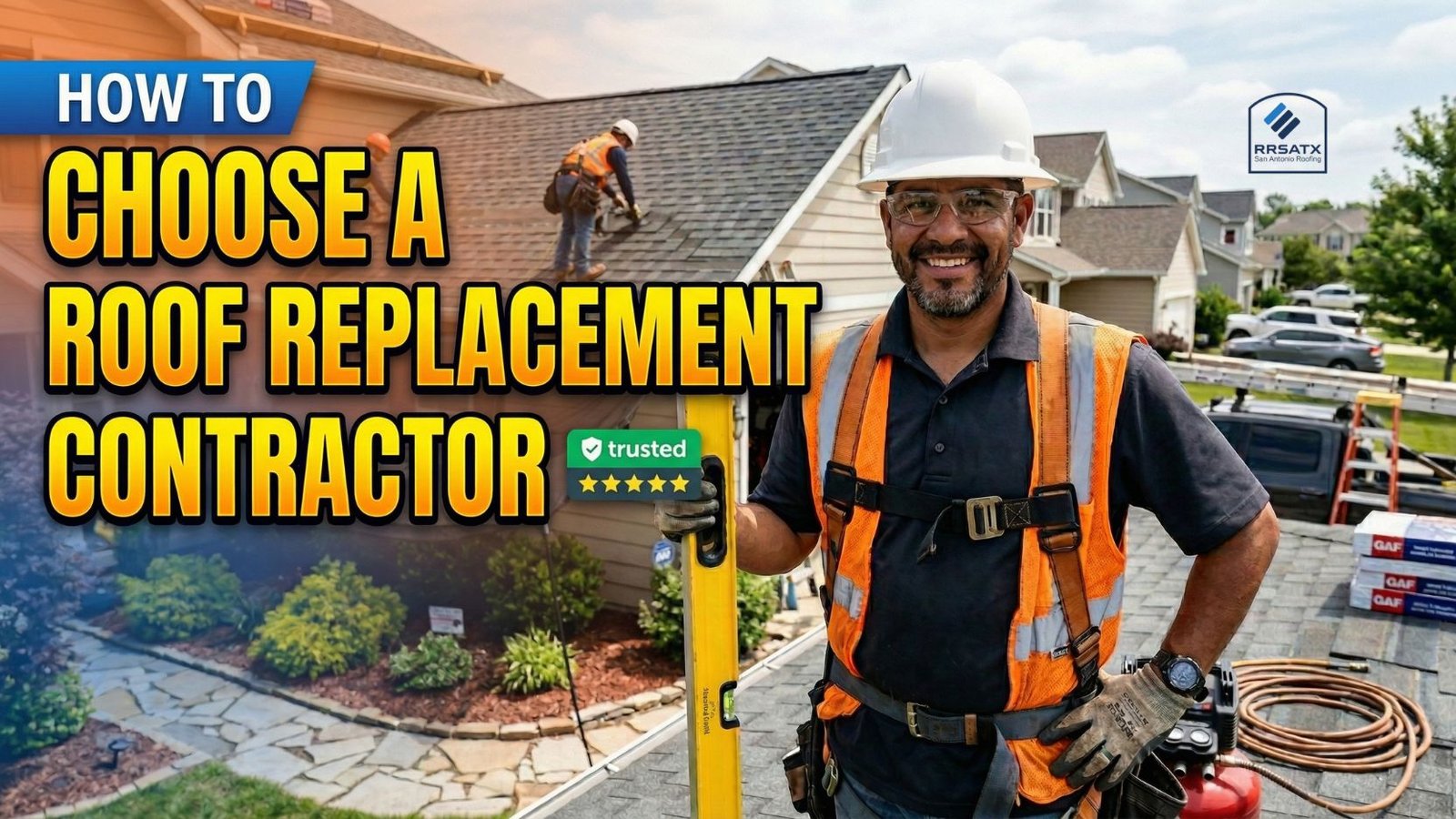
Choosing a roof replacement contractor comes down to this: hire a licensed, insured, well-reviewed contractor who can clearly explain your roof system, provide a detailed written estimate, and show proof of local experience with San Antonio weather, storm damage, and code requirements. The wrong contractor can leave you with poor installation, warranty problems, and insurance claim issues.
This guide is written for San Antonio-area property owners comparing roofers for storm damage, aging roofs, leak issues, or real estate inspections. In South Texas, contractor selection matters because heat, hail, wind, ventilation demands, and insurance paperwork all affect the quality and value of a roof replacement.
What Should You Look For In A Roof Replacement Contractor First?
Start with legitimacy, not price. Before comparing bids, confirm that the contractor is properly insured, established, and able to provide a written scope of work.
Look for these basics first:
- General liability insurance
- Workers’ compensation coverage, if applicable
- A physical business presence
- Recent local references
- Clear written estimates
- Manufacturer-backed product options
- Experience with both repairs and full replacements
- Knowledge of storm damage and insurance processes
A low bid means little if the contractor is uninsured, hard to reach, or vague about materials.
Key takeaway: The best roofing contractor is not the cheapest one. It is the one who gives you the clearest proof of quality, accountability, and local reliability.
How Can You Tell If A Roofing Contractor Is Trustworthy?
A trustworthy roofing contractor is transparent, easy to verify, and consistent in how they communicate. If a company avoids details, pressures you to sign fast, or cannot explain the job clearly, that is a warning sign.
Signs of a trustworthy contractor:
- They inspect the roof before pricing it
- They explain whether repair or replacement makes more sense
- They provide a written proposal, not just a verbal number
- They break down materials, labor, and scope
- They answer questions without being defensive
- They offer references from recent local jobs
- They explain cleanup, timeline, and warranty coverage
Red flags include:
- Demanding large upfront payments
- Going door-to-door right after storms with high-pressure tactics
- Refusing to provide insurance information
- Offering vague “same-day only” discounts
- Avoiding permit or code questions
- Using generic contracts with little detail
In San Antonio, this matters even more after hail or wind events, when out-of-area storm chasers often enter the market.
What Questions Should You Ask A Roof Replacement Contractor?
The best way to compare roofing contractors is to ask the same detailed questions to each one. This reveals who is prepared, who is guessing, and who is just trying to win on price.
Ask these questions:
About The Company
- How long have you been serving the San Antonio area?
- Do you have a local office or service area presence?
- Can you provide proof of insurance?
- Who will supervise the job on-site?
About The Roof System
- What roofing material do you recommend and why?
- Will you replace underlayment, flashing, and ventilation components?
- How will you inspect the decking underneath?
- Are there any code-related upgrades needed?
About The Project
- What is included in the written estimate?
- How long will the project take?
- How do you protect landscaping and clean up debris?
- What happens if bad decking or hidden damage is found?
About Warranties
- What workmanship warranty do you offer?
- What manufacturer warranty applies to the materials?
- What could void the warranty?
About Insurance Claims
- Can you document storm damage for my claim?
- Will you provide estimate support if insurance is involved?
- How do you handle scope differences with an adjuster?
Key takeaway: A qualified roofer should be able to answer these questions clearly and specifically, without vague promises.
Is The Lowest Roof Replacement Estimate Usually The Best Choice?
No, the lowest estimate is often the riskiest choice. A lower price can reflect shortcuts in labor, ventilation, flashing replacement, underlayment quality, cleanup, or warranty support.
Here is what to compare in estimates:
| What to Compare | Why It Matters |
| Roofing material brand and type | Affects lifespan and warranty |
| Underlayment | Impacts water protection |
| Flashing replacement | Critical for leak prevention |
| Ventilation work | Affects attic heat and roof life |
| Decking allowance | Covers hidden wood damage |
| Cleanup and disposal | Prevents surprise charges |
| Workmanship warranty | Protects against installation errors |
Two bids may look similar in total price but be completely different in actual scope.
Key takeaway: Compare what is included, not just the final dollar amount.
Should A Contractor Understand Insurance Claims And Storm Damage?
Yes, especially if your roof damage is related to hail or wind. A contractor does not replace your insurer, but they should know how to document visible storm damage and explain repair scope clearly.
A contractor with claim-related experience can help by:
- Identifying probable hail or wind impact areas
- Providing photo documentation
- Writing an estimate that reflects real replacement needs
- Explaining why code upgrades or accessory items matter
- Helping you understand scope differences if insurance underestimates the job
For homeowners in San Antonio, where severe weather can trigger roofing claims, this experience is practical, not optional.
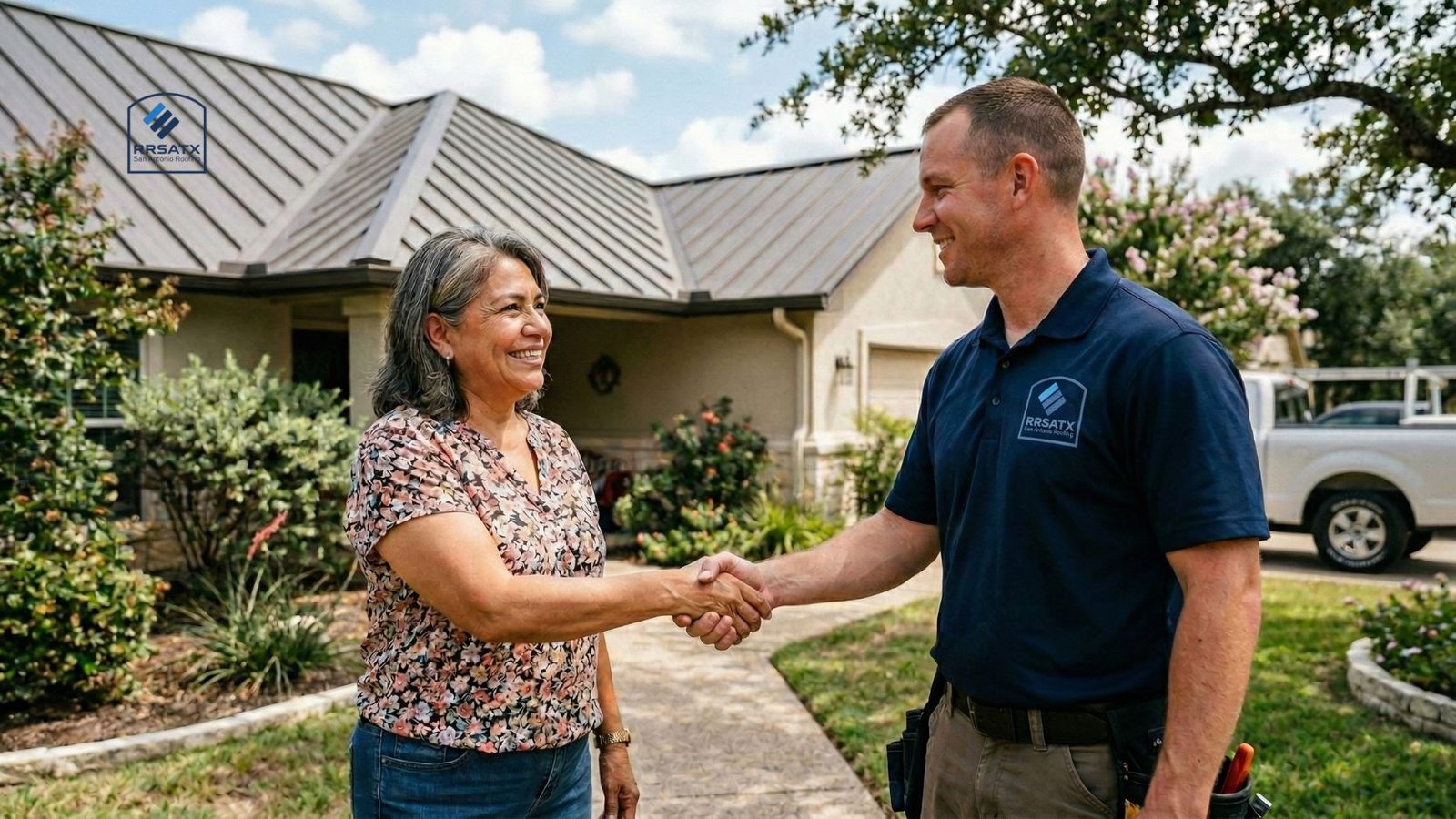
Why Does Local Experience Matter When Choosing A San Antonio Roofing Contractor?
Local experience matters because San Antonio roofs face specific weather and performance issues. A contractor familiar with the area is more likely to recommend materials and installation methods suited to South Texas conditions.
Local knowledge helps with:
- High heat and UV exposure
- Sudden hailstorms and strong wind events
- Ventilation demands in hot attics
- Material choices for long-term durability
- Regional permit expectations
- Faster follow-up service if issues arise later
A contractor with a real presence near locations like Monterey Street or Nakoma Drive is easier to contact for inspections, warranty questions, and future service.
How Do You Compare Roof Warranties The Right Way?
You should compare both workmanship warranties and manufacturer warranties. One covers installation quality; the other covers the roofing product itself.
Here is the difference:
Workmanship Warranty
- Provided by the contractor
- Covers installation-related issues
- Quality depends on the company’s stability and service process
Manufacturer Warranty
- Provided by the material maker
- Covers defects in roofing products
- Terms vary based on product line and installation method
Ask for warranty details in writing. A “great warranty” means very little if the terms are vague.
When Should You Walk Away From A Roofing Contractor?
You should walk away if the contractor creates confusion, pressure, or risk. Roofing is too expensive and too important for guesswork.
Walk away if they:
- Cannot provide proof of insurance
- Refuse a written scope
- Want a large upfront payment before scheduling
- Push you to sign immediately
- Avoid questions about ventilation or flashing
- Cannot explain warranty terms
- Have inconsistent business information or poor local reviews
Trust is built through documentation, not promises.
What Is The Best Way To Choose A Roof Replacement Contractor?
The best way is to shortlist two or three qualified local contractors, ask the same questions, compare detailed written estimates, and choose the company with the strongest mix of transparency, scope, warranty, and local reputation.
Use this simple checklist:
- Verify insurance and local presence
- Read recent reviews and ask for references
- Get a full roof inspection
- Request a written estimate with materials and scope
- Compare ventilation, flashing, cleanup, and warranty details
- Ask how hidden damage and insurance issues are handled
- Choose clarity and accountability over the lowest bid
Key takeaway: A good contractor helps you understand the roof you are buying. A bad one only talks about price.
FAQs
How Many Roofing Estimates Should I Get?
Two to three detailed estimates is usually enough. More than that can create confusion unless the scopes are truly different.
Should I Pay A Roofing Contractor Upfront?
A modest deposit may be normal, but large upfront payments are a red flag. Payment terms should be clearly written into the contract.
Can A Roofer Help With An Insurance Claim?
Yes, many can help document damage and explain scope, but they should not make unrealistic coverage promises.