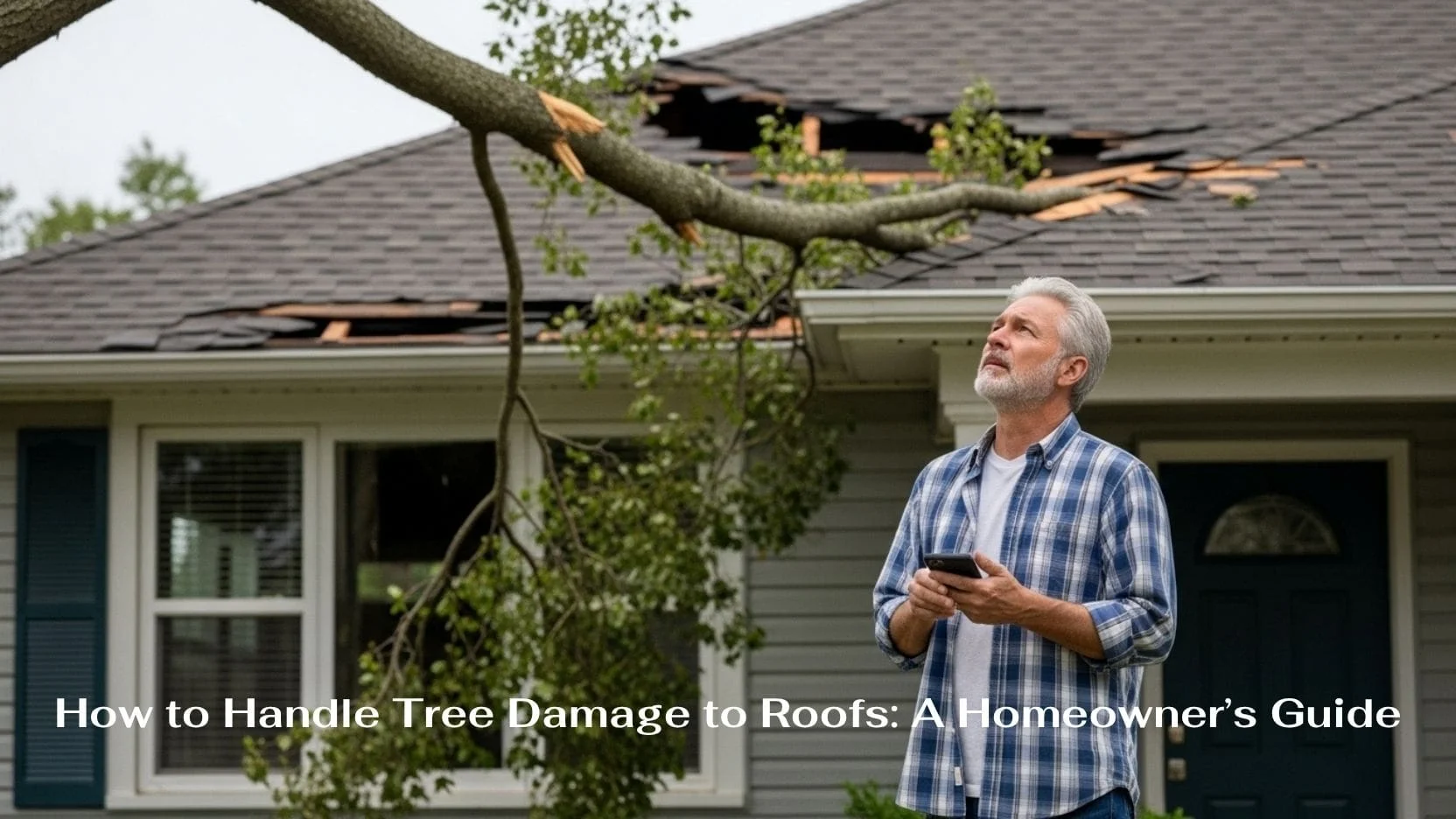
Picture this: a sudden storm sweeps through your neighborhood, and the next morning, you find a large tree branch has crashed onto your roof. Heart racing, you wonder what to do first. Tree damage to roofs is stressful, expensive, and potentially dangerous. But knowing the right steps can save you time, money, and stress. This guide will walk you through handling tree damage safely, efficiently, and smartly.
Stay Safe and Assess from a Distance
The first rule of thumb is safety. Don’t climb onto the roof or approach unstable areas. Falling branches, broken shingles, or damaged roof supports can cause serious injury. As one local roofer shared on Reddit HomeImprovement: “Most homeowners underestimate the risk. Wait for professionals before you do anything.”
If the tree has hit power lines, call emergency services immediately. According to Angi’s storm damage guide, only trained professionals should handle trees near electrical hazards.
Contact Your Insurance Company Immediately
Most home insurance policies cover damage caused by storms or fallen trees. But timing and documentation matter. Take clear photos of the damage and keep notes about when and how it happened. The Insurance Information Institute advises waiting for your adjuster to inspect before starting any major repairs. As one homeowner put it: “Your insurance adjuster is your partner here—give them every detail, and it makes the process smoother.”
Hire Certified Professionals for Cleanup and Repairs
Trying to remove a heavy branch or repair a damaged roof yourself can make the problem worse. Hire certified arborists and licensed roofers to assess and repair the damage. Platforms like HomeAdvisor make it easier to find local professionals with strong reviews. A Reddit user recounted: “I tried to handle the cleanup myself—it made things worse. Calling a pro saved me time and a lot of money.”
Professional inspections ensure that underlying structural damage isn’t missed. Even small leaks can turn into major problems if left unchecked.
Prevent Future Roof Damage
Preventing future issues is easier than dealing with emergencies. Regular tree trimming, especially near your roof, reduces the risk of falling branches. Clean gutters and inspect your roof at least twice a year. Yelp homeowner reviews show that routine maintenance prevents expensive repairs later.
Here’s a simple seasonal checklist:
- Spring: Trim overhanging branches, inspect shingles for winter damage.
- Summer: Clear gutters, remove debris from roof.
- Fall: Trim trees and inspect roof before storms.
- Winter: Check for ice dams and weak spots in shingles.
Conclusion
Tree damage to your roof is alarming, but acting calmly and efficiently makes a big difference. Prioritize safety, document the damage, contact your insurance, and hire certified professionals for repairs. Regular maintenance can reduce the likelihood of future problems. Remember: storms are beyond your control, but your response can protect your home and your peace of mind.