
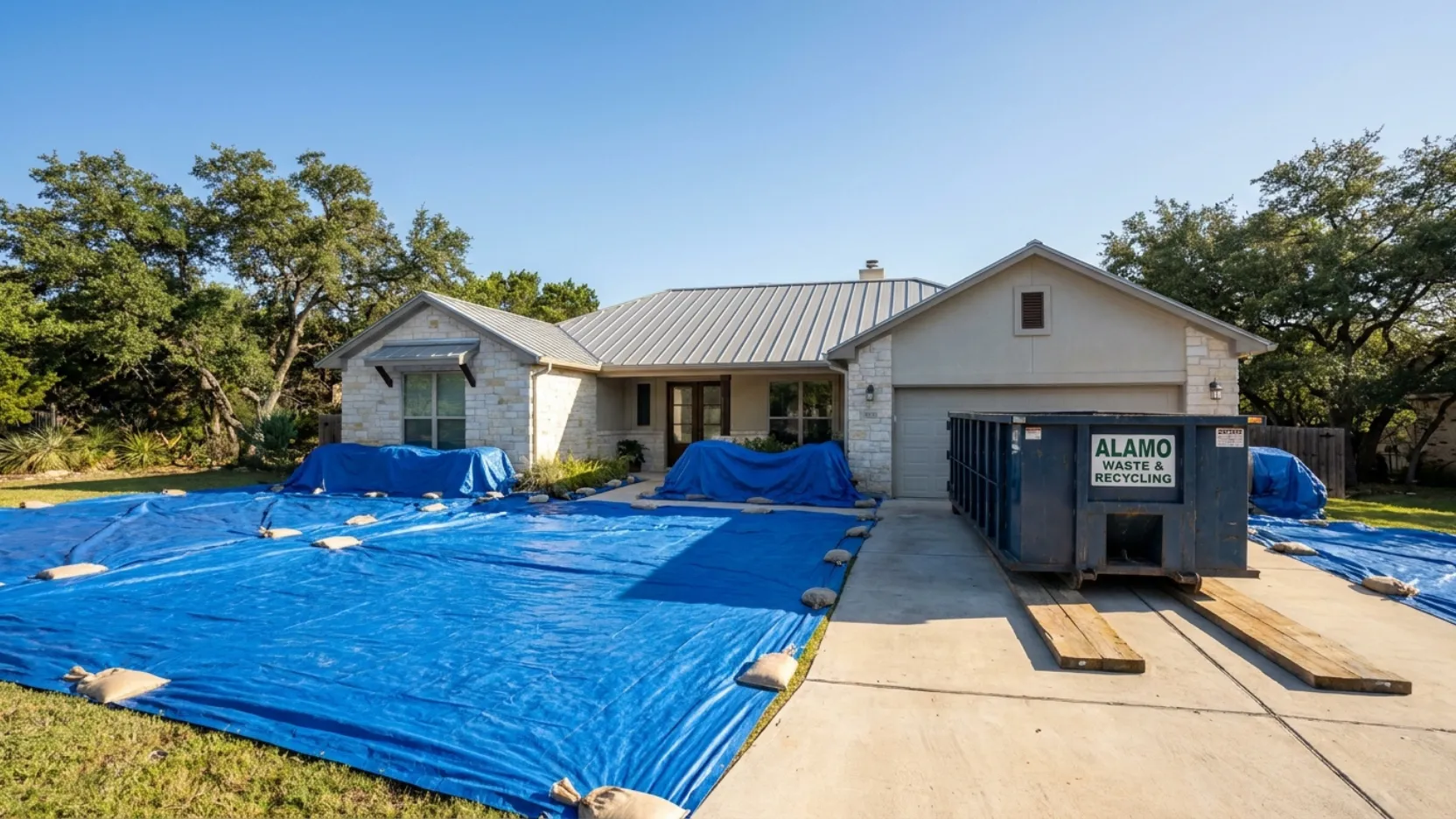
Roof Replacement Checklist, San Antonio TX
Roof replacement day goes smoothly when the house is ready for it. This checklist walks you through exactly what to do in the two weeks before, the day before, and the morning your crew arrives, so your driveway, attic, landscaping, and family are all set for a clean, safe, one-day roof replacement.
Topics: Roof replacement day prep | Homeowner checklist | Before, during and after | Pets, kids and noise
Updated: 2026 | Author: Ted
With over 30 years of residential roofing experience across San Antonio and Bexar County, our crews have walked thousands of homeowners through replacement day, from the first pre-job call to the final magnetic nail sweep. This checklist reflects what we actually ask homeowners to do before our trucks pull up, not generic moving-day advice.
- affordableroofingcontractorssanantonio.com
- Licensed and Insured
- $2M Liability Coverage
- 100+ Five-Star Reviews
Part of our guide: How Much Does a Roof Replacement Cost in San Antonio? →
By the Numbers:
- 1 day: Average time a standard San Antonio roof replacement takes from tear-off to cleanup
- 7-10 days: Recommended lead time to handle permits, HOA approval and delivery scheduling
- 100%: Driveway and yard access your crew needs cleared before the trucks arrive
- 3x: Magnetic nail sweeps a reputable crew runs during and after the job
A roof replacement is one of the more disruptive projects a San Antonio homeowner will schedule, but it does not have to be a stressful day. Most of what makes replacement day chaotic—blocked driveways, spooked pets, rattled picture frames, and last-minute scrambling for permits—is entirely preventable with a little planning in the week or two before the crew shows up.
This checklist covers everything you need to handle before, during, and after your San Antonio roof replacement, organized by timeline so you know exactly what to do and when to do it.
The principle that makes replacement day go smoothly: treat it like a moving day, not a repair visit
A roof repair is a quiet, contained job. A full roof replacement involves a full crew, a dumpster or material trailer parked in your driveway, constant hammering, and vibration that travels through every truss in your attic. Homeowners who prepare the house the way they would before movers arrive, clearing access, protecting fragile items, and planning for noise, get through the day with far less disruption than those who treat it as a minor visit.
Six things every San Antonio homeowner should handle before the crew arrives
Your complete roof replacement day preparation checklist
01. Two weeks before: paperwork, permits and scheduling
The administrative steps that need lead time so nothing delays your start date
Most delays on replacement day trace back to something that should have been handled weeks earlier. Permits, HOA sign-off, and material delivery all take time to line up, and a reputable San Antonio roofing contractor should walk you through each one well before the crew is scheduled.
- Confirm the permit is posted: San Antonio and most Bexar County municipalities require a permit for a full roof replacement. Your contractor should pull this on your behalf and have it posted or on file before work begins.
- Get HOA approval if you have one: If your neighborhood has an architectural review process, submit your shingle color and material selection early. Some HOAs take two to three weeks to approve a request.
Timeline Breakdown:
- 10-14 days out: Confirm permit status and HOA approval. Ask your contractor directly whether the permit has been filed and whether your HOA needs anything from you. Do not assume this is automatically handled.
- 3-5 days out: Confirm material delivery and dumpster placement. Shingles are typically delivered and staged on the roof or in the driveway a day or two before the crew arrives. Ask where the dumpster or trailer will sit so you can plan around it.
- 1-2 days out: Final confirmation call. Get a firm arrival time, confirm the weather forecast still supports the schedule, and ask any last questions about access or logistics.
San Antonio scheduling note: Fall and spring are the busiest seasons for roof replacements in the area, which means material delivery windows and crew scheduling can slip by a few days during peak demand. Confirm your dates in writing and build in a small buffer if your project falls between September and November.
Two-weeks-out checklist
- Permit confirmed as filed or posted with the contractor’s office or job site
- HOA architectural approval submitted and confirmed, if applicable
- Material color, brand and delivery date confirmed in writing
- Dumpster or trailer placement location agreed on with the contractor
- Payment schedule and deposit terms reviewed and understood
- Contact number for the crew lead or project manager saved in your phone
02. The day before: clear the exterior and driveway
Crews need full, unobstructed access to the roof, the driveway and every side of the house
A roofing crew needs room to work: ladders against every side of the house, a staging area for tear-off debris, and a clear path for the material trailer or dumpster. The evening before your scheduled start is the right time to finish clearing the exterior.
- Move every vehicle: Park cars, trucks, boats and trailers on the street or well away from the house. Falling debris and dropped materials are a normal part of tear-off, even with tarps in place.
- Clear the drop zone around the house: Patio furniture, grills, potted plants, garden decor and toys within about 10 feet of the exterior walls should be moved to the garage or a far corner of the yard.
Pro tip: Mark anything the crew cannot see from the ground. Sprinkler heads, low-voltage landscape lighting, and shallow utility lines near the foundation are easy for a crew to miss. Flag them with bright tape or small stakes the day before so nobody has to guess where they are once ladders and debris are covering the yard. If you have a security system with exterior cameras or motion sensors, expect frequent triggers throughout the day. Consider adjusting notification settings the night before.
Day-before checklist
- All vehicles moved off the driveway and away from the house
- Patio furniture, grills and potted plants moved at least 10 feet from exterior walls
- Gates unlocked or access code shared with the crew lead
- Sprinkler heads and landscape lighting flagged near the work zone
- Trash and recycling bins moved away from the driveway and side yards
- Basketball hoops, swing sets and other tall yard structures moved if possible
03. Protect the interior: attic, walls and fixtures
Tear-off sends vibration through every truss in the house, and it will shake loose more than you expect
The hammering and foot traffic during tear-off transmit vibration straight down through the roof trusses into the attic and, in older homes especially, into the walls and ceilings below. Homeowners are often surprised by how much this shakes loose items that seemed perfectly secure the day before.
- Attic storage: Move loose or stacked boxes away from the edges of the attic floor and cover anything valuable with a drop cloth or plastic sheeting. Dust and debris will sift down through decking gaps during tear-off, even with a careful crew.
- Walls and shelving: Take down mirrors, framed photos and anything hanging from a single hook, especially on the top floor. Secure or empty any wall shelving that is not firmly anchored.
Homes over 20 years old are especially prone to shaken loose insulation and small debris settling through can lights and attic access hatches during tear-off. Laying a drop cloth under any attic access point and over furniture on the top floor is a simple step that saves a lot of cleanup afterward.
Interior protection checklist
- Attic boxes and storage moved away from the edges of the attic floor
- Mirrors, framed art and loose shelving items removed from top-floor walls
- Ceiling fan and light fixture mounting checked, especially in older homes
- Attic access hatch and top-floor furniture covered with a drop cloth
- Vehicles in an attached garage covered if the door will be open during the day
- Breakables on top-floor shelves and mantels moved down or padded
04. Protect the yard, pool and outdoor systems
Falling debris and foot traffic can damage landscaping, pool surfaces and AC equipment if they are not covered
A reputable San Antonio roofing crew will lay tarps around the perimeter of the house before tear-off begins, but tarps only cover what is directly below the roofline. Anything farther out, or anything sensitive like a pool or AC condenser, is worth protecting yourself before the job starts.
- Pools and hot tubs: Cover an open pool if it sits near the house. Shingle granules, old nails and small debris can end up in the water even with tarps in place, and cleaning that out afterward is far more work than covering it first.
- AC condensers and outdoor equipment: Cover window units and outdoor condensers with a tarp or plywood sheet if they sit close to the drop zone. Debris and dust can clog the coils.
Pro tip: Ask your contractor about their nail management process before the job starts. A reputable San Antonio roofing crew runs a magnetic roller or push sweeper across the yard, driveway and any grass near the house multiple times.
Yard and outdoor systems checklist
- Pool or hot tub covered if located near the house
- AC condenser units covered or shielded from falling debris
- Flower beds and delicate landscaping near the drop zone tarped or fenced off
- Window screens removed near areas where ladders will be placed
- Outdoor furniture cushions and rugs stored away from the work area
- Magnetic nail sweep process confirmed with the contractor in writing
05. Plan for pets, kids and noise
Tear-off is loud from roughly 7 a.m. to late afternoon, and the yard is not safe to play in during the job
Roof replacement is loud, constant, and unpredictable in a way that is genuinely stressful for animals and unsettling for young kids. It is also a legitimate safety concern: falling debris, nails, and equipment make the yard off-limits for the entire work day.
- Pets: Keep dogs and cats indoors in a room away from exterior walls if possible, or board them for the day if your pet is especially noise-sensitive.
- Kids and napping infants: The hammering typically starts early and runs most of the day. Families with infants who nap on a strict schedule, or kids doing schoolwork at home, often plan to be elsewhere.
Pets, kids and noise checklist
- Pets confined indoors in a room away from exterior walls, or boarded for the day
- Kids and pets kept out of the yard for the entire work day
- Noise-canceling headphones or a white noise machine on hand for sensitive pets or napping kids
- Work-from-home household members plan calls or focus work away from the house if needed
- Neighbors given a heads-up if walls are shared or homes sit close together
- Emergency contact and crew lead’s number saved in your phone for the day
06. What to expect on replacement day itself
A typical San Antonio roof replacement runs start to finish in a single day for most homes
Knowing the general shape of the day helps you plan around it. Most residential roof replacements in San Antonio follow a similar rhythm, though larger or more complex roofs may run into a second day.
- Morning (Tear-off): Crew arrives early (7–8 a.m.). Old roofing material is removed and hauled to the dumpster. Expect the most noise and foot traffic on the roof.
- Midday (Decking check): Decking inspected once exposed. Any rotten or damaged plywood is replaced.
- Afternoon (Install): Underlayment, flashing and new roofing material installed. Noise level drops somewhat, though nail guns continue.
- End of day (Cleanup): Debris hauled away, gutters checked, and the yard swept for nails with a magnetic roller. A final walkthrough happens before they leave.
Weather Note: San Antonio contractors watch the forecast closely and will typically reschedule rather than start a tear-off if rain is likely.
Replacement day checklist
- Someone available by phone, even if not home, in case the crew has a question
- Interior doors and windows near the work area closed to keep dust out
- Final walkthrough scheduled with the crew lead before they leave for the day
- New roof and any replaced decking photographed for your own records
- Written confirmation of any change orders, such as extra decking replacement
- Warranty paperwork and final invoice reviewed before final payment is made
Quick reference by area of the house
Room-by-room and zone-by-zone prep guide. Use this table as a fast run-through the evening before your San Antonio roof replacement.
| Area | Main risk during the job | What to do |
|---|---|---|
| Attic | Dust and small debris sifting through decking gaps | Cover stored boxes and move items away from the floor edges |
| Top-floor walls | Vibration from hammering shakes loose hanging items | Remove mirrors and framed art from exterior walls |
| Driveway | Blocked access for the dumpster or material trailer | Move all vehicles to the street the night before |
| Yard perimeter | Falling debris and nails outside the tarped drop zone | Move furniture, toys and potted plants back from the house |
| Pool or hot tub | Granules and debris landing in open water | Cover it before the crew arrives |
| AC condenser | Dust and debris clogging outdoor coils | Cover or shield units near the work zone |
| Garage | Dust entering through an open door during the day | Cover vehicles if the door will stay open for access |
| Household routine | Noise from roughly 7 a.m. to late afternoon | Plan calls, naps and pet care around the work hours |
Complete roof replacement day checklist for San Antonio homeowners
Run through this full list before, during and after your scheduled replacement
Before replacement day
- Permit confirmed as filed, HOA approval obtained if applicable
- Material delivery and dumpster or trailer placement confirmed with the contractor
- All vehicles moved off the driveway and away from the house
- Attic items, wall art and outdoor equipment protected or relocated
- Pet and childcare plan set for the noise and yard restrictions
During replacement day
- Yard kept off-limits to kids and pets for the entire work day
- Interior doors and windows near the work area kept closed
- Someone reachable by phone in case the crew finds decking damage or has a question
- Change orders, such as extra plywood replacement, confirmed in writing before work proceeds
- Progress photos of decking condition kept for your own records if damage is found
After the crew leaves
- Final walkthrough completed with the crew lead before final payment
- Yard, driveway and flower beds visually inspected and swept for nails and debris
- Gutters checked for shingle granules or debris that may have fallen in during tear-off
- Warranty documents received with the contractor’s contact information and coverage terms
- Follow-up inspection scheduled if a second magnetic sweep is needed after a day or two
Common questions answered (FAQs)
How long does it take to prepare for a roof replacement in San Antonio?
Most of the preparation work happens in two windows: administrative tasks like permits and HOA approval should be handled in the 10 to 14 days before your scheduled start, and the physical prep—clearing the driveway, protecting the attic and yard, moving pets—takes most homeowners a few hours spread across the day before and the morning of the job. Nothing on this checklist requires more than a weekend of effort even if you are starting from scratch.
Do I need to be home during my roof replacement?
You do not need to be home for the entire day, but a reputable contractor will want someone reachable by phone in case the crew finds decking damage that changes the scope of work, or has a question about access. Many San Antonio homeowners stay home for the morning arrival and the end-of-day walkthrough, then run errands or work elsewhere during the middle of the day.
Will roof replacement damage my ceiling or attic items?
A properly run tear-off should not cause structural or cosmetic damage to your ceiling, but the vibration from hammering does travel through the trusses and can shake loose unsecured items like hanging mirrors, loosely stacked attic boxes, or dust sitting on top of can light fixtures. Following the interior prep checklist above prevents nearly all of the minor issues homeowners commonly report.
What should I do with my pets during roof replacement?
Keep pets indoors, ideally in a room away from exterior walls where the hammering is loudest, or board them for the day if your pet is especially anxious around loud, sustained noise. Do not leave pets in a fenced yard, since gates will be open for crew access throughout the day and the ground will have debris and stray nails until the final magnetic sweep is complete.
Do I need to move my car during roof replacement?
Yes. Move all vehicles off the driveway and away from the house the night before your scheduled start. The driveway is usually needed for a dumpster or material trailer, and falling debris during tear-off is common even with tarps in place. Parking on the street, well clear of the drop zone, is the safest option.
What happens if it rains during my scheduled roof replacement in San Antonio?
A reputable San Antonio contractor will not begin a tear-off if rain is likely that day, since an open roof deck cannot safely be left exposed overnight. If rain is in the forecast, expect a reschedule rather than a partial start. If tear-off is already underway when weather moves in unexpectedly, the crew will typically install a temporary dry-in layer and pause the rest of the work until conditions clear.
More from RRSATX: San Antonio Roofing Company
Explore RRSATX roof replacement guides covering costs, timelines, materials, financing, permits, home value, and more for San Antonio homeowners. Visit the Roof Replacement San Antonio service page for professional reroofing solutions tailored to local homes and weather conditions.
- How Much Does a Roof Replacement Cost in San Antonio? →
- How Long Does a Roof Replacement Take in San Antonio? Real Timelines Explained →
- Roof Repair or Full Replacement? How San Antonio Homeowners Can Tell →
- New Roof Installation in San Antonio: The 9-Step Process From Estimate to Cleanup →
- Roof Financing in San Antonio: How to Pay for a New Roof Without Draining Savings →
- How Long Do Roofs Last in Texas? Lifespan by Material in the San Antonio Heat →
- Does a New Roof Increase Home Value in San Antonio? What the Data Says →
- The Best Time of Year to Replace a Roof in San Antonio (and Why Fall Books Fast) →
- Roof Decking Replacement: The Hidden Cost Inside Many San Antonio Reroofs →
- Do You Need a Permit to Replace a Roof in San Antonio? Rules →
- Service page: Roof Replacement San Antonio | RRSATX →
Ready to schedule your San Antonio roof replacement?
Tell us about your roof and your timeline. We will walk you through scheduling, permits, and exactly what to expect on replacement day, with a clear written estimate at no cost.
Get a Free Estimate
Call: 713-504-2341