
Knowing how to repair a hole in roof is critical for protecting your home from water intrusion, structural damage, mold growth, and long-term repair costs. Even a small roof hole whether caused by storm debris, fallen branches, aging materials, or improper installations can quickly turn into a serious problem if left unaddressed.
In San Antonio, roofs endure extreme heat, hailstorms, high winds, and sudden heavy rainfall. These conditions accelerate roof wear and make timely repairs essential. This guide provides a practical, expert-level breakdown of how roof holes form, how to repair them safely, and when professional roof repair is the smarter, more cost-effective solution.
What Causes Holes In A Roof?
Understanding the root cause helps determine the correct repair method and prevents recurrence.
Common causes include:
- Storm damage from hail, wind, or flying debris
- Fallen tree limbs or heavy branches
- Aging roofing materials losing structural integrity
- Improper installation of vents, skylights, or flashing
- Animal damage from raccoons, squirrels, or birds
- Foot traffic damage during inspections or maintenance
According to HomeAdvisor roof repair cost data, storm-related roof damage is one of the most common reasons homeowners seek emergency roofing services.
Is It Safe To Repair A Hole In Your Roof Yourself?
It depends on three critical factors:
- Size of the hole
- Roof pitch and accessibility
- Your experience working at heights
Small punctures or nail-sized holes may be manageable for experienced homeowners. However, larger holes, soft decking, or steep roofs significantly increase safety risks.
Industry insight: Angi roofing professionals consistently warn that improper DIY repairs often worsen damage and void roofing warranties.
If there’s any doubt, professional repair is the safer and more cost-effective choice.
How To Repair A Hole In Roof
This process applies to small to medium-sized holes on asphalt shingle roofs the most common roofing type in San Antonio.
1. Inspect The Damage
Locate the hole from both the exterior and attic if accessible. Check for:
- Soft or rotting decking
- Water stains
- Mold or insulation damage
2. Remove Damaged Materials
Carefully remove broken shingles, loose nails, and compromised underlayment around the hole.
3. Patch The Roof Deck
- Cut a piece of exterior-grade plywood to fit the hole
- Secure it firmly to the rafters or solid decking
- Ensure a flush, stable surface
4. Install Underlayment
Apply roofing felt or synthetic underlayment over the patched area to create a waterproof barrier.
5. Replace Shingles
Install new shingles, align them with the existing pattern, and secure them with roofing nails.
6. Seal The Repair
Apply roofing sealant over nail heads and edges to prevent moisture intrusion.
Roof Hole Repair Methods By Roofing Type
| Roofing Material | Repair Approach | Difficulty |
| Asphalt Shingles | Patch deck + replace shingles | Moderate |
| Metal Roofing | Metal patch + sealant | Moderate–High |
| Tile Roofing | Replace broken tiles + underlayment | High |
| Flat Roof (TPO/Modified Bitumen) | Membrane patch + heat weld or adhesive | High |
Tile, metal, and flat roofs often require specialized tools and materials. Professional repair is strongly recommended.
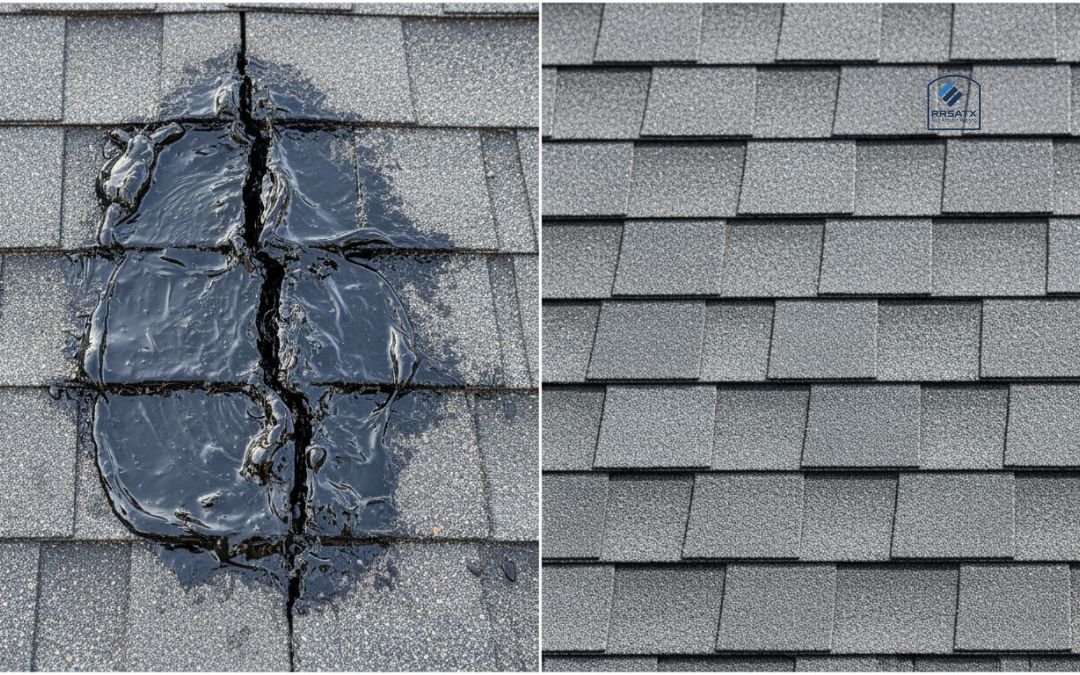
Temporary VS Permanent Roof Hole Repairs
Temporary repairs (roofing tar, plastic sheeting, sealants):
- Useful for emergency leak prevention
- Not suitable for long-term protection
- Can trap moisture if left too long
Permanent repairs:
- Replace damaged decking and materials
- Restore waterproof layers
- Preserve roof lifespan and warranty
According to Angi’s roofing repair guidance, temporary fixes should never replace a full professional repair.
When To Call A Professional Roofer In San Antonio
You should contact a roofing expert if:
- The hole is larger than a few inches
- Water has entered the attic or living space
- Structural decking is soft or sagging
- The damage followed a storm (insurance may apply)
- Your roof is over 15 years old
Why Professional Repair Matters
Improper repairs can:
- Void manufacturer warranties
- Reduce home resale value
- Cause hidden moisture damage
Cost To Repair A Hole In A Roof
Roof repair costs in San Antonio vary by material and damage severity.
Typical price ranges:
- Asphalt shingle repair: $150–$300 per square (100 sq. ft.)
- Metal roofing repair: $500–$800 per square
- Tile roofing repair: $600–$900 per square
A free professional inspection ensures accurate pricing and avoids unnecessary repairs.
Why Homeowners Trust RRSATX
RRSATX: San Antonio Roofing Company has served local homeowners for over 15 years with a reputation built on transparency, quality, and reliability.
What Sets Us Apart:
- Deep understanding of San Antonio weather conditions
- Certified, experienced roofing professionals
- Free roof inspections and honest recommendations
- Affordable pricing with no hidden fees
- Trusted by thousands of local homeowners
We don’t just patch roofs, we restore protection and peace of mind.
FAQs
Can A Hole In The Roof Cause Mold?
Yes. Even small openings allow moisture to enter insulation and framing, leading to mold growth within days.
How Long Can I Wait Before Repairing A Roof Hole?
Delaying repairs increases structural damage risk. Immediate inspection is recommended.
Will Insurance Cover Roof Hole Repairs?
Storm-related damage is often covered. A professional inspection helps document claims accurately.
Schedule A Free Roof Inspection
If you suspect roof damage or want expert confirmation don’t wait until the problem worsens.
Email: info@roofrepairsanantoniotx.com, Call: 713-504-2341, Availability: Open 24 Hours
A fast inspection today can prevent thousands in repairs tomorrow.