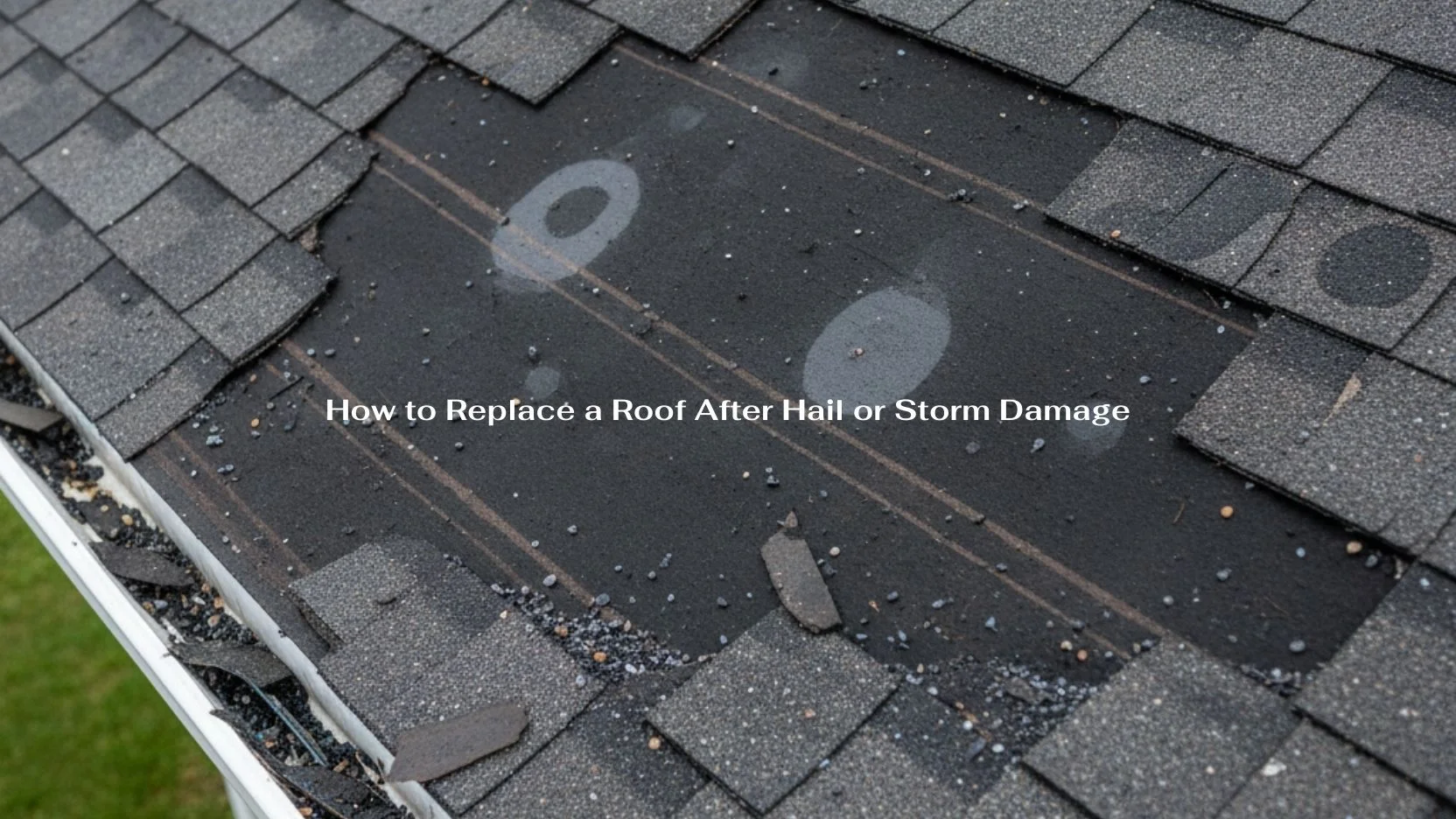
When a big storm hits, your roof takes the hardest blow. Hail, strong winds, and flying debris can damage shingles, loosen flashing, and even cause leaks you won’t notice right away. Many homeowners say the same thing: “It looked fine from the ground, but the roofer found way more damage up close.” That’s why knowing what to do after a storm can save you from bigger problems later.
This guide breaks down what hail and storm damage looks like, what steps to take, and when a roof replacement makes sense.
How Storms and Hail Damage a Roof
Storms can harm a roof in several ways. Hail can leave dents, cracks, and granule loss. Heavy wind can lift or tear shingles. According to the Wikipedia hail damage overview, even small hail can weaken roofing materials over time.
Homeowners often don’t realize how much damage they have. One roofer puts it this way: “Storm damage hides in places most people never look. By the time you see a leak, the problem has already grown.”
Cost reports from HomeAdvisor roof replacement estimates show that early inspections can prevent higher repair costs later.
Signs You Need a Roof Replacement (Not Just Repairs)
Here are common signs that your roof may need more than a quick fix:
- Missing or torn shingles
- Dents from hail
- Bald shingles with heavy granule loss
- Soft or spongy spots
- Water stains on ceilings or walls
- Shingle pieces in the yard or gutters
Contractor feedback from Angi roofing repair reviews shows that many homeowners underestimate storm damage until leaks appear.
As one contractor says, “Most folks think a few missing shingles are no big deal. But that’s exactly how water sneaks in.”
What To Do Right After a Storm
1. Stay Safe
Avoid climbing onto the roof. Storm-damaged surfaces can be slippery or unstable.
2. Document the Damage
Take clear photos from the ground. Include shingles on the ground, dents in gutters, and anything else that looks off.
3. Schedule a Professional Inspection
Storm specialists know what to look for. Many offer free inspections, and according to Yelp storm damage roof services, homeowners appreciate quick responses after major weather events.
4. Get Repair or Replacement Estimates
Use tools like HomeAdvisor roof replacement estimates to compare expected costs.
Working With Roofing Contractors
A good roofer should offer:
- A detailed written estimate
- Photos of the damage they found
- Clear explanations of next steps
- Insurance guidance
One roofer explained, “A proper inspection is the only way to know if the roof can be saved or must be replaced.”
Check Yelp contractor reviews and Angi roofing repair reviews to compare reputation and reliability.
Will Insurance Cover Your Roof Replacement?
Storm and hail damage is often covered by homeowners insurance. But approval depends on documentation and what the adjuster finds.
Homeowners on Reddit home maintenance discussions often say the same thing: “Photos and a roofer’s report made all the difference.”
To improve your chances:
- File the claim quickly
- Provide photos and inspection reports
- Be present when the adjuster visits
Conclusion
Replacing a roof after hail or storm damage can feel stressful, but it doesn’t have to be. The key is knowing what to look for, acting quickly, and working with a trusted contractor. With the right steps, you can protect your home and avoid higher repair costs later.