When a major storm hits, most homeowners rush outside to check their yards, fences, or cars. But the one area that often gets overlooked—the roof—can suffer the most damage. Knowing how to spot roof storm damage early can help prevent expensive repairs and protect your home from leaks and structural issues.
1. Start with a Ground-Level Check
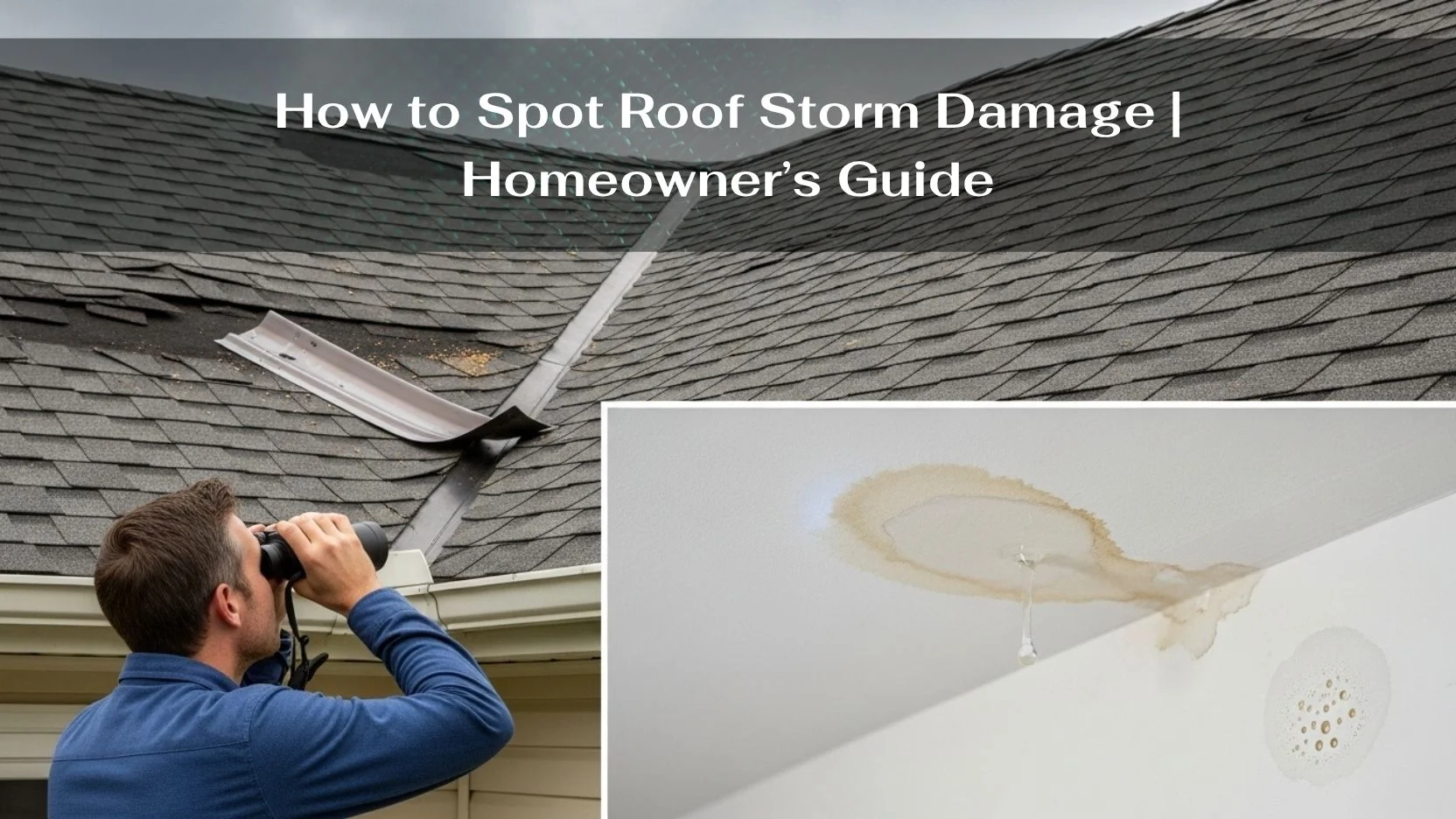
After a storm, safety comes first. Begin by inspecting your roof from the ground. Look for missing shingles, broken gutters, or debris that may have blown onto the roof. You don’t need to climb up—binoculars or a phone camera zoom can help.
“I always walk around my house first after heavy winds—it’s surprising what you can spot from below,” says a local homeowner quoted on Angi’s guide. If you see shingles lying in the yard or flashing hanging loose, it’s time to call a professional.
2. Inspect for Indoor Signs of Leaks
Roof damage isn’t always visible from outside. Go inside and check your attic and ceilings. If you notice water stains, damp insulation, or a musty smell, you may have a leak. According to HomeAdvisor, even a small leak can cause serious problems over time, such as mold or wood rot.
Be sure to check walls and corners for bubbling paint or discoloration—both early signs of water intrusion.
3. Look for Shingle and Gutter Damage
Hail and strong winds can knock off granules from your shingles, leaving bald patches or dents. These small granules protect your roof from sun damage, so when they’re gone, your roof ages faster.
“When granules fill your gutters, your shingles are already wearing out,” explains one homeowner on Quora. Check for clogged downspouts and gutter dents—they often mean your roof took a hit, too.
4. Schedule a Professional Roof Inspection
Even if everything looks fine, it’s smart to get a professional inspection after any major storm. Certified roofing contractors can identify hidden damage, such as cracks or loosened flashing, that’s easy to miss. You can find trusted local roofers through Yelp reviews or homeowner discussions on Reddit’s HomeImprovement forum.
Most pros offer free inspections, and catching damage early can save thousands of dollars in long-term repairs.
5. Prevent Future Damage
Once your roof is repaired, take a few preventive steps. Trim nearby trees to avoid falling branches. Keep your gutters clean and schedule regular maintenance. As Angi notes, inspecting your roof after every major storm helps prevent small problems from turning into big headaches.
Conclusion
Your roof is your home’s first line of defense against the elements. By learning how to spot storm damage early—both inside and out—you can protect your investment and your peace of mind. A quick inspection after each storm can make all the difference.