
[et_pb_section fb_built=”1″ admin_label=”section” _builder_version=”4.16″ global_colors_info=”{}”][et_pb_row admin_label=”row” _builder_version=”4.16″ background_size=”initial” background_position=”top_left” background_repeat=”repeat” global_colors_info=”{}”][et_pb_column type=”4_4″ _builder_version=”4.16″ custom_padding=”|||” global_colors_info=”{}” custom_padding__hover=”|||”][et_pb_code _builder_version=”4.27.6″ _module_preset=”default” hover_enabled=”0″ global_colors_info=”{}” sticky_enabled=”0″]
Many San Antonio homeowners ask the same question before they sign a contract: is a metal roof a tax credit? The honest answer depends on when the roof was installed, what kind of metal roof it is, and whether the panels include a certified solar reflective coating. This guide breaks down exactly what qualifies, what does not, and what changed for 2026.
A new metal roof is one of the largest investments a San Antonio homeowner will make, so it makes sense to ask whether any of that cost comes back through a federal tax credit. The short answer is that it depends. A standard metal roof installed purely for weather protection has never qualified for a federal roof tax credit on its own. A metal roof with a certified solar reflective pigmented coating could qualify under the Energy Efficient Home Improvement Credit, commonly called Section 25C, but only for roofs placed in service on or before December 31, 2025.
That detail matters because the rules changed. Both Section 25C and the Residential Clean Energy Credit, Section 25D, were ended early under recent federal legislation. If your metal roof was installed in 2025 and meets the ENERGY STAR requirements, you can still claim the credit when you file your 2025 return in 2026. If you are planning a metal roof installation for later in 2026 or beyond, the federal credit is no longer available under current law.
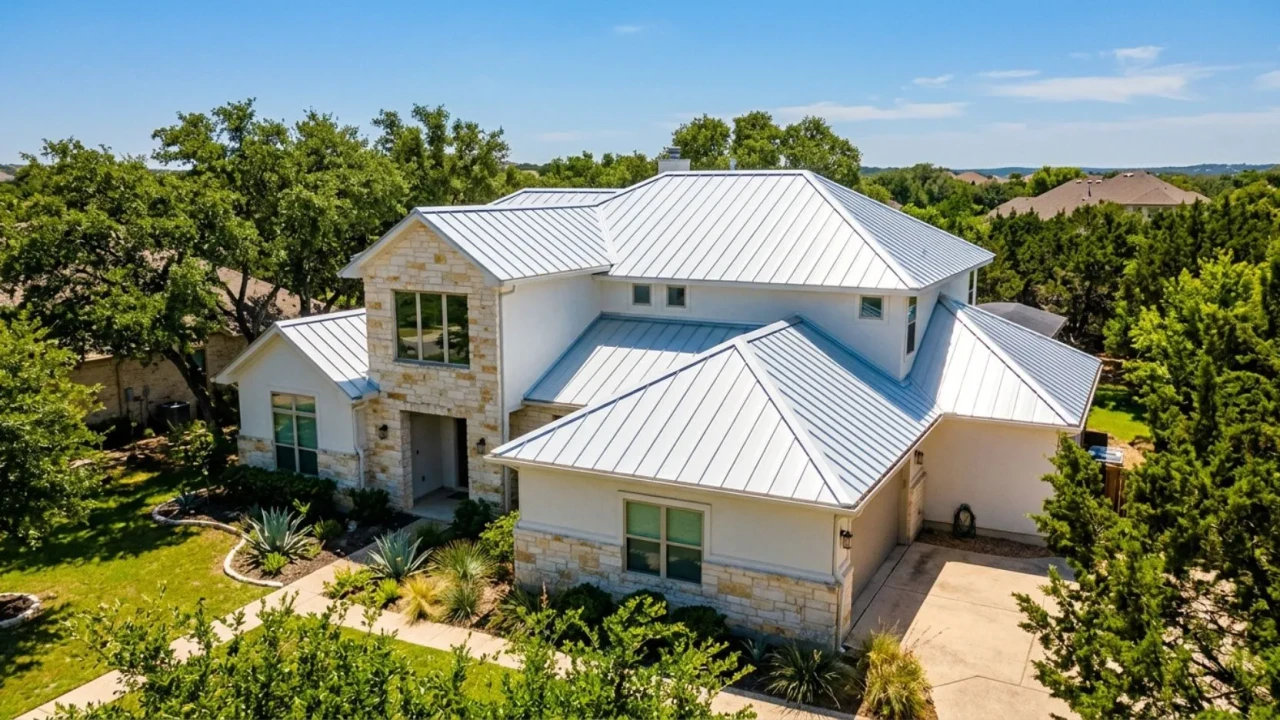
Before assuming your roof qualifies, it helps to understand exactly what the IRS looks for. The credit was never available for the roof structure itself or the labor to install it. It applied only to the cost of the qualifying reflective material, and only when that material carried a manufacturer certification confirming it met ENERGY STAR solar reflectance standards.
The IRS does not give a credit for choosing metal over asphalt. It gives a credit for a specific category of solar reflective roofing material that happens to include certain metal panels. A standard galvanized or painted metal roof, no matter how durable, is treated the same as a basic asphalt shingle roof for tax purposes unless the coating carries the right certification. Always ask your contractor for the ENERGY STAR documentation before assuming any roof qualifies.
Eligibility
Section 25C, the Energy Efficient Home Improvement Credit, allowed homeowners to claim 30 percent of the material cost for a metal roof that carried a pigmented coating or coating system specifically designed and primarily intended to reduce heat gain, and that met ENERGY STAR program requirements. This is sometimes called a cool roof coating. Standing seam metal panels, exposed fastener panels, and stone coated steel panels could all potentially qualify if the finish carried the right certification, but an uncoated or standard painted metal panel did not.
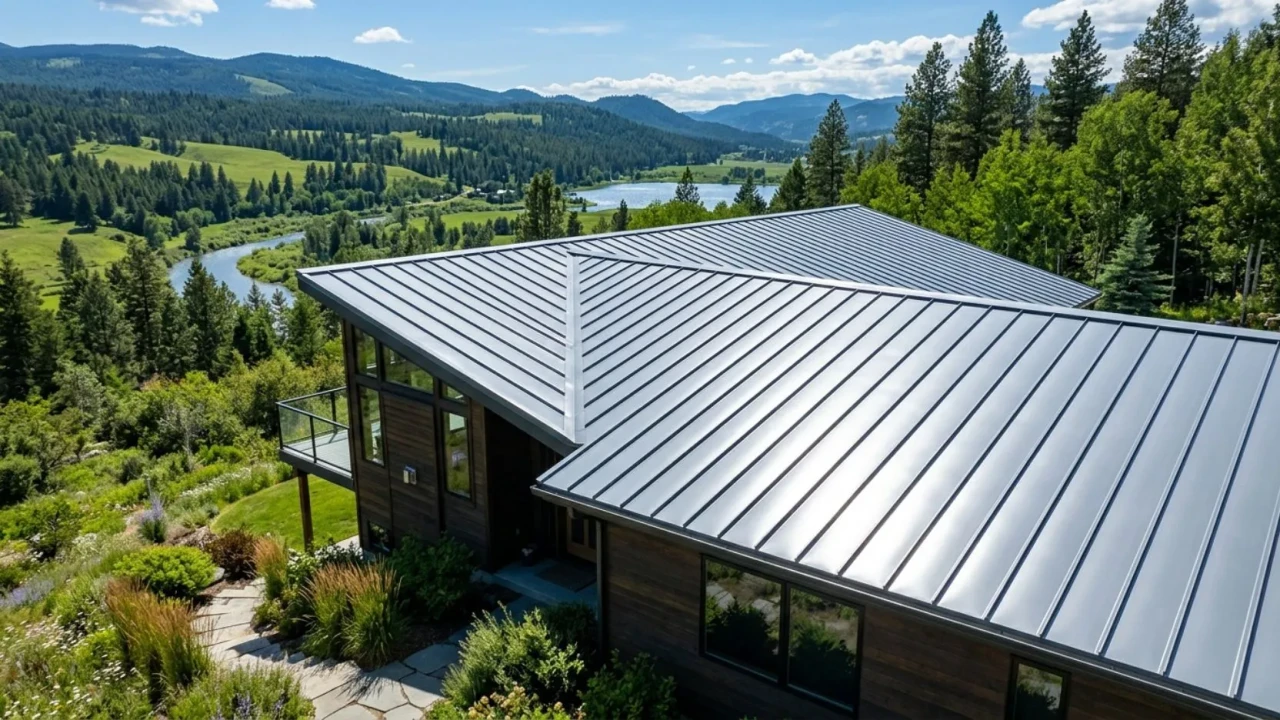
Standing seam panels are the most common style installed for homeowners specifically pursuing energy efficiency, since their concealed fastener design pairs well with high-reflectance coatings and resists the seam separation that can compromise solar performance over time.
Labor costs for installing the roof were never part of the credit. Only the qualifying material cost counted toward the 30 percent calculation, and that amount was combined with other building envelope upgrades, like exterior doors and insulation, under a shared annual cap.
Keep the manufacturer’s certification statement with your tax records, not just the contractor’s invoice. The IRS does not require you to submit the certification with Form 5695, but you should be able to produce it if your return is reviewed. Most reputable metal panel manufacturers publish a certification statement on their website for each ENERGY STAR qualified coating color and product line.
- Roof was placed in service on or before December 31, 2025
- Coating is certified by the manufacturer as ENERGY STAR qualified
- Roof was installed on your primary residence, not a rental or second home
- You kept the material invoice separated from the labor cost on your paperwork
- You have not already used the full annual building envelope credit limit on other upgrades
2026 Update
Under recent federal tax legislation, Section 25C and Section 25D, the Residential Clean Energy Credit, both ended earlier than originally scheduled under the Inflation Reduction Act. Neither credit is available for property placed in service after December 31, 2025. This means a metal roof installed in 2026, even one with a certified cool roof coating, no longer qualifies for a federal tax credit under current law.
The only narrow exception involves solar roofing tiles and solar shingles, which generate electricity and also serve as the roof surface. Those products were treated under Section 25D rather than the standard roofing rule, but that credit has also ended for expenditures made after the same cutoff date. A traditional metal roof, even a highly reflective one, does not generate electricity and would not fall under that exception in any case.

If your metal roof was completed and placed in service in 2025, you are still inside the eligible window and should plan to file Form 5695 with your 2025 federal return. If you are still planning your project and have not yet signed a contract, factor in that the federal credit will not be part of the math for a 2026 installation under the rules in effect today.
Tax Basics
A tax credit reduces what you owe the IRS dollar for dollar. A tax deduction lowers your taxable income, which reduces your tax bill by a smaller amount depending on your bracket. A roof replacement on a primary residence, even one that does not qualify for any credit, is generally treated as a capital improvement rather than a repair. That means the cost can be added to your home’s cost basis, which can reduce the taxable gain when you eventually sell the property.
This matters most for homeowners who expect to be above the capital gains exclusion when they sell, which is currently $250,000 in gain for a single filer or $500,000 for a married couple filing jointly. Keep your roofing invoice and contract with your permanent home improvement records, even if you did not qualify for a credit this year.
| Situation | Tax treatment | Reasoning |
|---|---|---|
| Standard metal roof, installed any year | No federal credit, adds to cost basis | Material was never a qualifying envelope component under 25C |
| ENERGY STAR coated metal roof, installed 2025 or earlier | Eligible for 25C credit | Meets the coating and timing requirements that applied before expiration |
| ENERGY STAR coated metal roof, installed 2026 or later | No federal credit, adds to cost basis | 25C ended for property placed in service after December 31, 2025 |
| Solar roofing tiles or shingles, installed 2025 or earlier | Potentially eligible for 25D credit | Treated as clean energy property because it generates electricity |
| Solar roofing tiles or shingles, installed 2026 or later | No federal credit, adds to cost basis | 25D also ended for expenditures made after the same cutoff date |
| Rental property metal roof, any year | No 25C credit, depreciable instead | 25C applied only to a taxpayer’s primary residence |

Whichever category your roof falls into, the paperwork habit is the same: keep the contract, the itemized invoice separating material and labor, any manufacturer certification, and dated photos of the completed roof. That file protects you whether you are claiming a credit this year or simply documenting a capital improvement for the future.
Filing Steps
If your metal roof was placed in service before the end of 2025 and the coating is ENERGY STAR certified, here is the process most San Antonio homeowners follow when claiming the credit on their federal return.
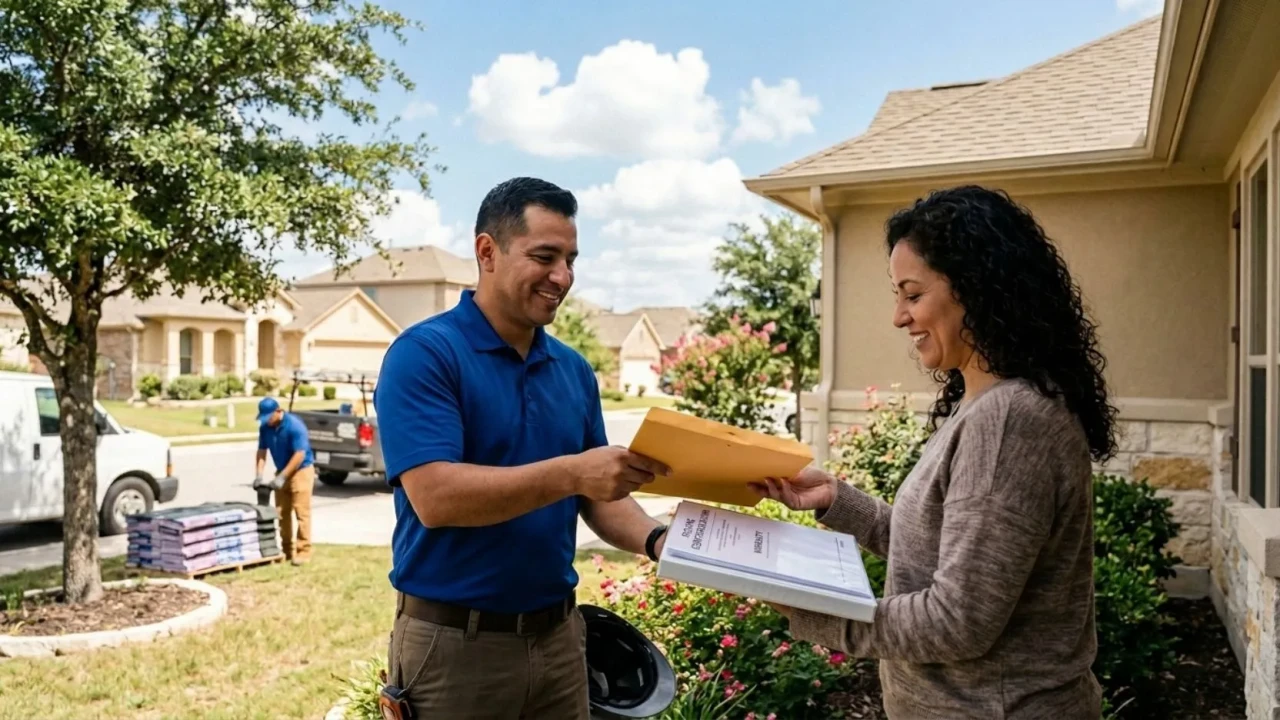
Confirm certification first. Ask your contractor or the panel manufacturer for the written ENERGY STAR certification for the exact coating and color used on your roof. Without this document, you do not have a basis to claim the credit if the IRS asks for support.
Separate material from labor. Your invoice needs to break out the cost of the qualifying coated material from the labor and any non-qualifying components, since only the material cost counts toward the credit.
- Signed roofing contract showing the project completion date
- Itemized invoice separating qualifying material cost from labor
- Manufacturer ENERGY STAR certification statement for the coating used
- Photos of the completed roof with a visible date stamp
- Copy of the filed Form 5695 with your tax return for that year
- Ask the contractor directly whether the proposed panel and coating are ENERGY STAR certified
- Request the manufacturer certification statement in writing, not just a verbal assurance
- Confirm the planned completion date and how it lines up with the December 31, 2025 cutoff
- Get an itemized quote that separates material cost from labor cost
- Ask your tax professional whether the credit fits your overall tax situation before relying on it
- Keep the final invoice with material and labor costs clearly separated
- Save the manufacturer’s ENERGY STAR certification document with your tax files
- Photograph the completed roof and note the in-service date
- Confirm the roof is your primary residence, not a rental or secondary property, if claiming 25C
- Complete IRS Form 5695 with your material cost and certification information
- Apply the 30 percent rate to the qualifying material cost only, not the full project cost
- Check whether the $1,200 combined building envelope cap has already been used elsewhere
- Keep all documentation for at least three years after filing
- Confirm with a tax professional if your roof was placed in service near the December 31, 2025 deadline
Is a metal roof a tax credit in 2026?
What kind of metal roof qualified for the tax credit before it expired?
How much was the metal roof tax credit worth?
Can I still claim the credit if I installed my metal roof in 2025?
Does a metal roof still help me at tax time without the credit?
Are solar metal roof panels treated differently for tax purposes?
Get a free metal roof estimate and ENERGY STAR coating guidance
Tell us about your project, and we will walk you through which metal roofing options carry ENERGY STAR certification, what they cost installed, and what documentation to keep for your tax records.
[/et_pb_code][/et_pb_column][/et_pb_row][/et_pb_section]