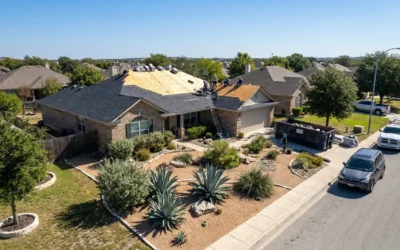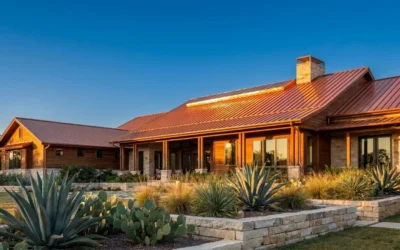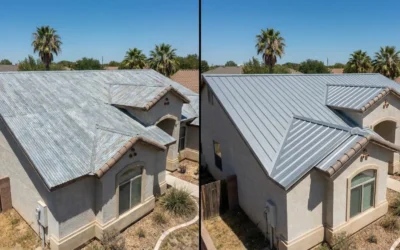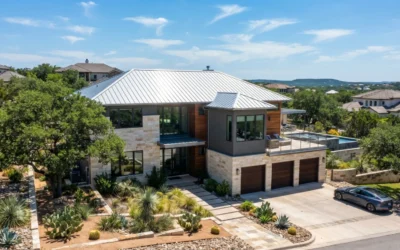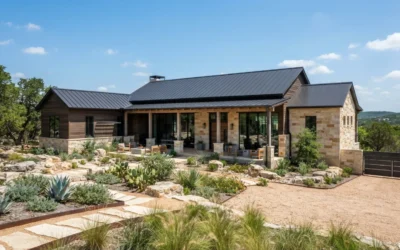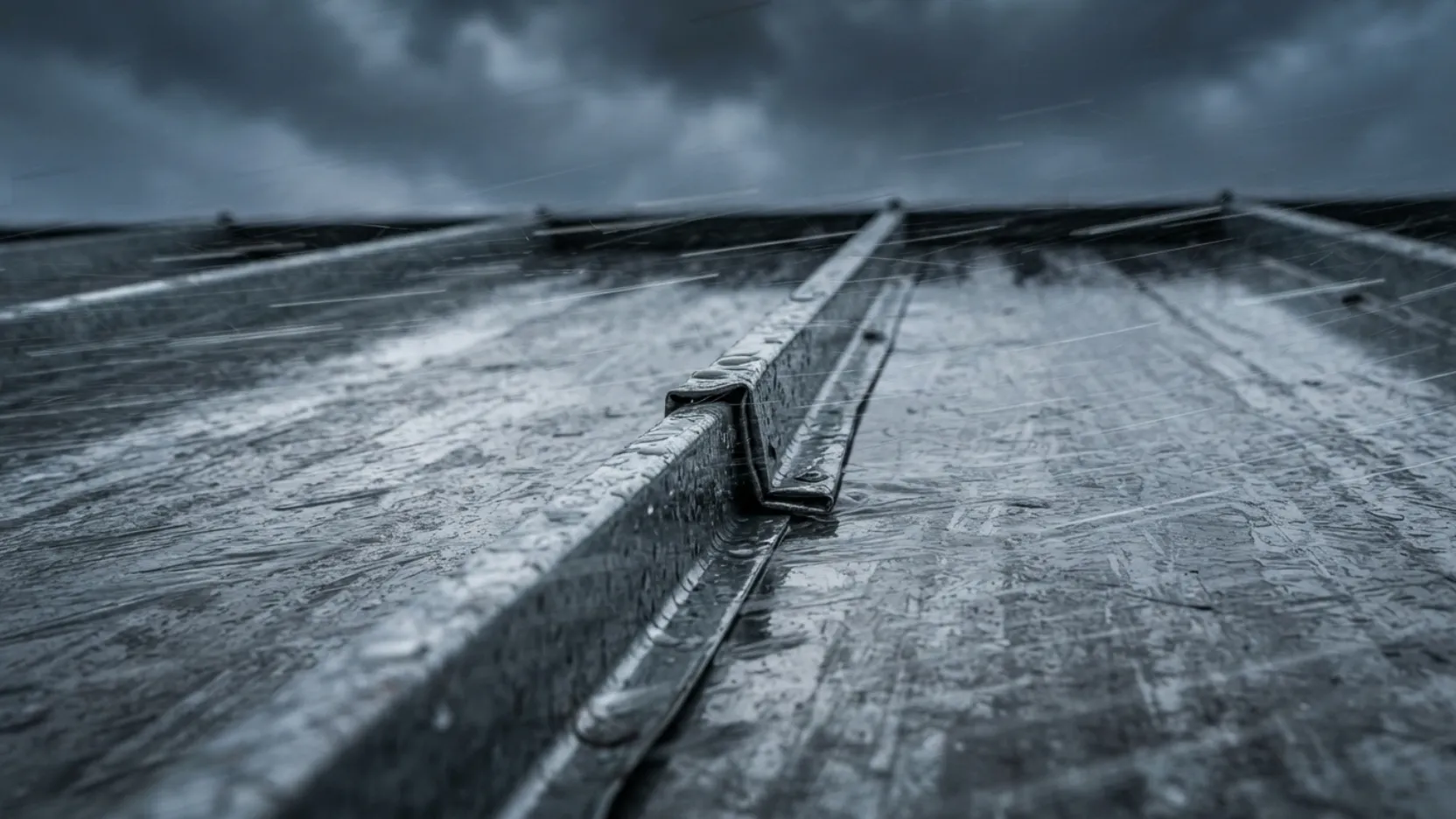
San Antonio homeowners deal with serious wind events every year. This complete guide covers exactly how metal roofing performs against high winds, which panel types hold up best, what wind speed ratings actually mean, how metal compares to asphalt shingles, and what you need to know before choosing a metal roof in a high-wind area of Texas.
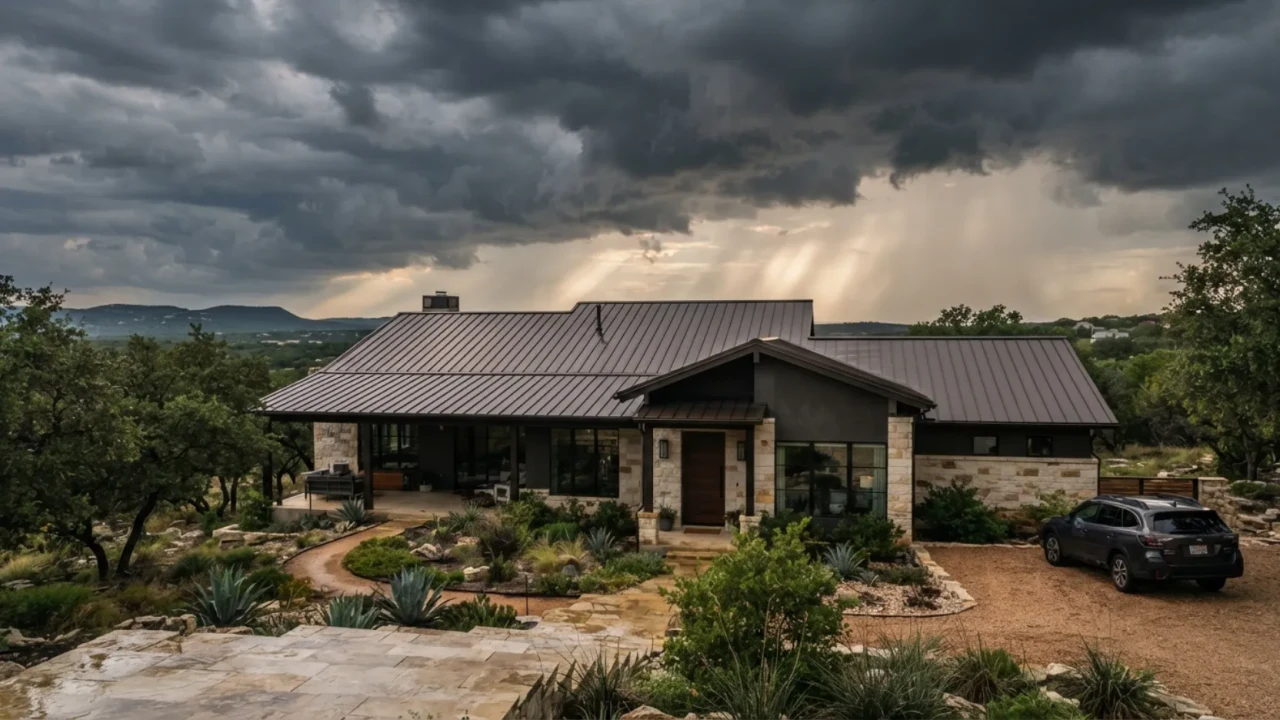
If you live in San Antonio or anywhere in South Texas, you already know that wind is not a rare event. Severe thunderstorms, derecho wind events, hurricane remnants, and straight-line winds over 70 miles per hour are a regular part of life in Bexar County. After every major storm, the same question comes up again and again: would a metal roof have survived that better than asphalt shingles?
The short answer is yes. Metal roofing significantly outperforms asphalt shingles in high-wind conditions. But the longer answer matters more for homeowners making a roofing decision: not all metal roofing performs equally in the wind. The panel type, the installation method, the fastener pattern, and the roof pitch all affect how well a metal roof holds up when winds climb above 60, 80, or 100 miles per hour. This guide covers everything you need to understand to make an informed decision for your San Antonio home.
A premium standing seam metal roof installed by an undertrained crew with incorrect fastener spacing is more likely to fail in high winds than a modest corrugated panel system installed by an experienced contractor who knows Texas weather. Wind performance is a function of both the product and the installation. This guide covers both sides of that equation so you know exactly what to look for before committing to a metal roof for your San Antonio home.
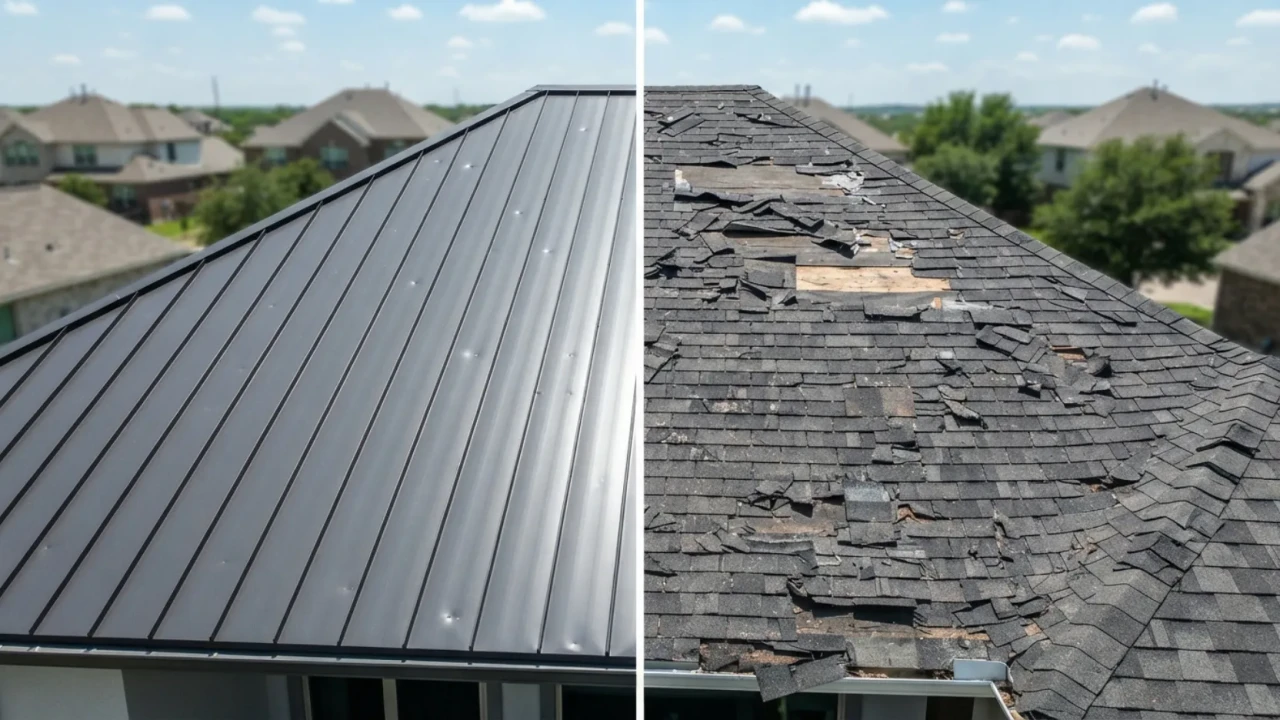
Asphalt shingles are installed as individual overlapping pieces, each held down by a strip of adhesive sealant along the bottom edge plus roofing nails. When wind gets underneath the leading edge of a shingle tab, it creates an upward force called wind uplift. At sustained speeds above 60 miles per hour, that uplift force can overpower the adhesive strip, causing the tab to lift, crack at the nail holes, and ultimately peel away from the deck. Once even a few shingles are missing, the exposed deck is vulnerable and adjacent shingles begin to fail rapidly.
Metal roofing works differently at a mechanical level. Panels span the full length of a roof slope from ridge to eave in most residential applications, leaving no individual tabs to peel up. The panels interlock at the seams, and in a standing seam system, the fasteners are completely hidden inside the seam, meaning wind has no leverage point on the fastener head. The result is a roofing system that resists uplift forces in a fundamentally different way than shingles.
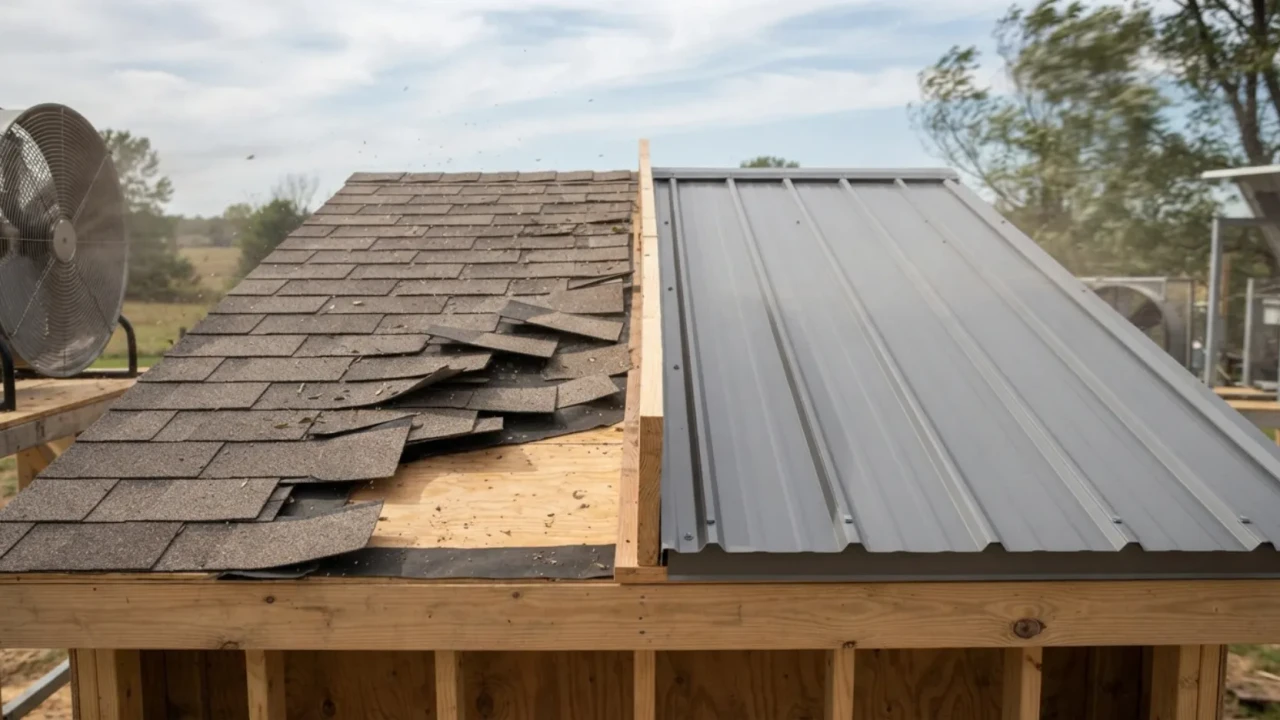
Wind uplift pressure: Roofing products are tested under ASTM D3161 and FM 4475 standards for wind resistance. Asphalt shingles rated for 130 miles per hour still rely on that adhesive strip holding in real-world conditions that include thermal cycling, UV degradation, and poor ventilation. Metal systems rated to 140 miles per hour retain that rating across decades of service when properly installed.
Continuous attachment: Metal panels are fastened to the roof deck in a pattern engineered for local wind uplift loads. In San Antonio, that means Bexar County wind exposure requirements under the Texas Residential Code must be met at a minimum, and a qualified installer will exceed those minimums in areas with known wind exposure history.
- No individual tabs or pieces to peel away at the leading edge under uplift pressure
- Panels rated to 130 to 160 mph depending on profile and installation method
- Uplift resistance maintained over decades, not degraded by UV and thermal cycling the way adhesive strips are
- Concealed fastener systems (standing seam) eliminate the primary mechanical failure point in wind events
- Interlocking panel seams prevent cascade failure when one area is stressed
- Lower insurance premiums available in Texas for metal roofs meeting wind resistance specifications
The most important distinction for San Antonio homeowners evaluating metal roofing for wind resistance is the difference between a standing seam system and an exposed-fastener system. Both are metal. Both will outperform asphalt shingles. But they handle wind very differently, and the price difference between them is real and worth understanding before you commit to a system.
A standing seam roof uses hidden clips that attach to the roof deck and allow the panel to float slightly with thermal expansion. The panel seams are raised and snap or mechanically lock together, covering those clips entirely. There are no exposed screws anywhere on the panel face. Wind cannot grip a fastener head, cannot work a screw loose, and has no low point on the seam where uplift pressure can get under the panel. This is the highest-performing metal roofing system for wind resistance and is what most building scientists recommend for high-wind zones.
Standing seam systems are also the most forgiving in terms of long-term maintenance because they eliminate the EPDM washer failure mode entirely. On a 20-year-old exposed-fastener roof, every screw is a potential water entry point. On a 20-year-old standing seam roof, there are no exposed fasteners to fail.
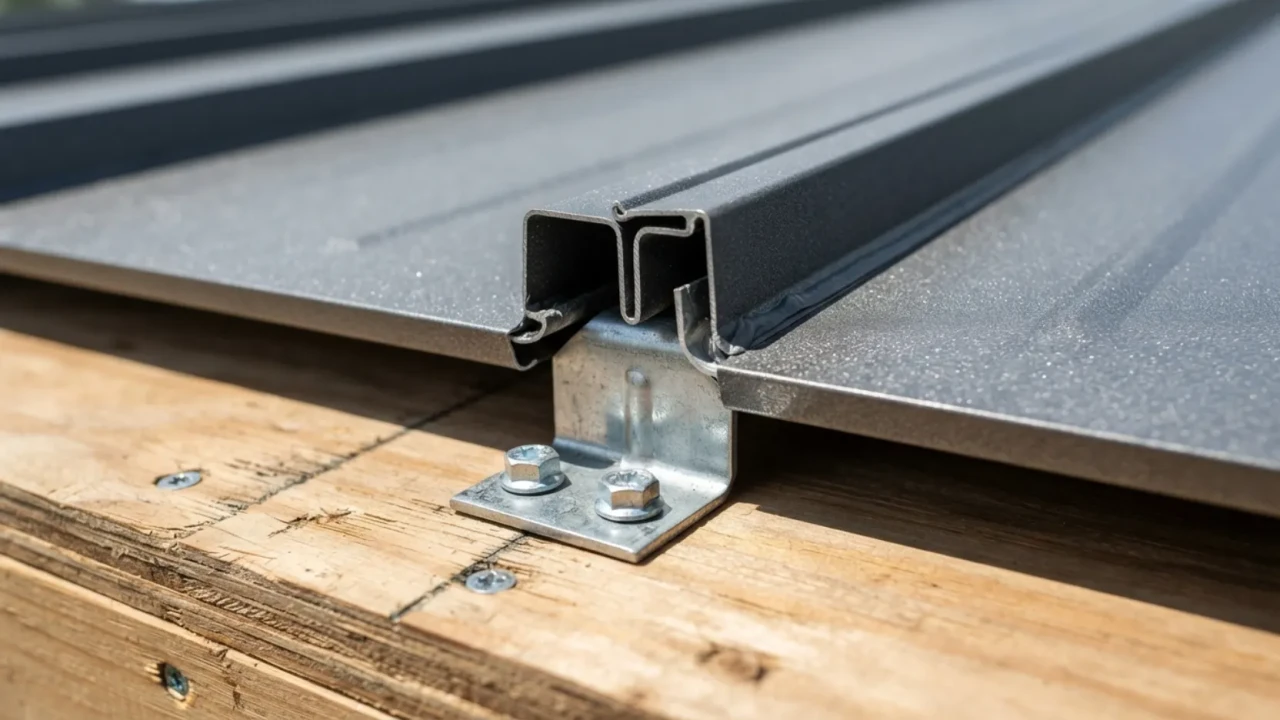
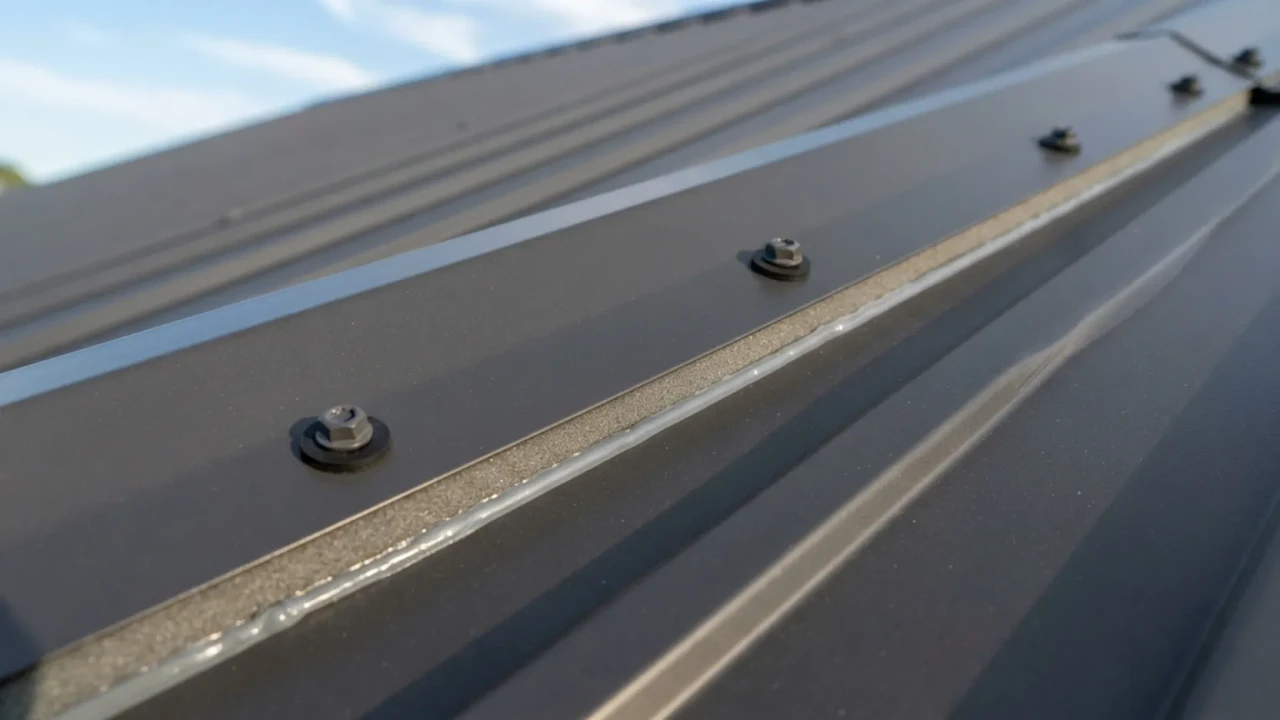
Corrugated metal panels and R-panel screw-down systems use screws driven directly through the face of the panel into the roof deck. Each screw has a rubber EPDM washer that seals the penetration. These systems are less expensive than standing seam and still dramatically outperform asphalt shingles in wind uplift resistance when properly installed. The fastener pattern is critical: panels in high-wind applications need closer fastener spacing, particularly along eaves and at panel edges where wind uplift forces are highest.
The limitation of exposed-fastener systems in long-term wind resistance is that the screws can back out over time due to thermal expansion and contraction cycles. A screw that has backed out halfway loses much of its withdrawal resistance. This is why exposed-fastener metal roofs require more regular maintenance inspections than standing seam systems, and why fastener condition should be checked after any significant wind event.
| Feature | Standing Seam | Exposed-Fastener (Corrugated / R-Panel) |
|---|---|---|
| Wind uplift rating | Up to 140 to 160 mph when properly installed | Up to 130 mph with correct fastener pattern |
| Fastener exposure | None clips fully concealed inside seam | Exposed screws with rubber EPDM washers |
| Thermal movement | Floating clip allows expansion without stress | Panel moves against fixed screw, fatiguing hole over time |
| Long-term maintenance | Lower no fastener heads to back out or washers to fail | Higher screws must be inspected and re-tightened periodically |
| Cost (installed) | $10 to $16 per sq ft in San Antonio | $5 to $9 per sq ft in San Antonio |
| Best application | Primary residence, high-wind exposure, long-term ownership | Secondary structures, budget-conscious residential, commercial spans |
If you are choosing between a standing seam system and an exposed-fastener system for a primary residence in San Antonio, the long-term math almost always favors standing seam. The cost premium at installation is real, but you recover it through lower maintenance costs, potentially lower insurance premiums, and a roofing system that will not require a fastener replacement pass at year 15. If budget requires the exposed-fastener route, ask your installer specifically about the fastener pattern used along eaves and edges, where wind uplift forces are concentrated in Bexar County storm events.
- Is the system standing seam with concealed clips, or exposed-fastener with through-panel screws?
- What is the documented wind uplift rating for the specific panel product being installed?
- What fastener spacing is being used along eaves, edges, and at the ridge?
- Does the installation meet or exceed Bexar County wind uplift requirements under the Texas Residential Code?
- Does the standing seam clip float for thermal expansion, or is it fixed?
- What is the gauge of the metal panel, and is it appropriate for the span between purlins or deck supports?
Wind testing of metal roofing products is conducted under controlled laboratory conditions. A panel rated for 140 miles per hour is tested with a specific fastener pattern, a specific deck type, and a specific installation procedure. When a crew installs that same panel with wider fastener spacing, into a soft deck, or with incorrect overlap at eave edges, the real-world wind resistance can fall well short of the rated value. Installation quality is not a minor variable. It is what converts a product specification into an actual storm-resistant roof on your San Antonio home.
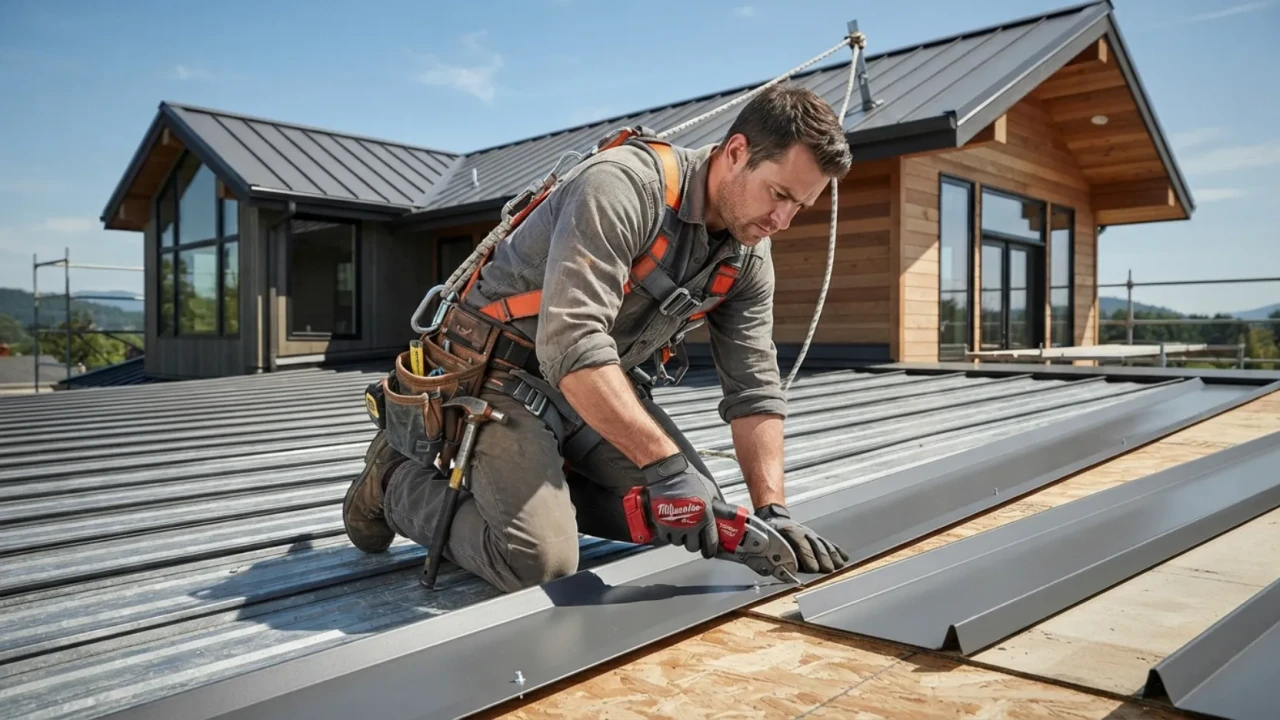
Eave and edge fastening: Wind uplift forces are highest at the corners and edges of a roof. The fastener pattern along the eave and at the rakes (the sloped edges) needs to be denser than in the field of the roof. Many installation failures in Texas wind events trace back to the same issue: field fastener spacing used at the edges where closer spacing was required.
Deck condition: Metal panels fastened into deteriorating OSB or plywood sheathing will pull through in a major wind event even if the panel itself is intact. A proper metal roof installation over an existing deck includes an assessment of deck condition, and a reputable San Antonio contractor will flag soft spots and areas of delamination before proceeding.
Ridge cap installation is one of the most commonly skimped steps on metal roof installations in San Antonio. The ridge cap sits at the highest point of the roof and faces the highest wind velocity. A ridge cap that is only sealant-attached without mechanical fasteners through into the ridge board, or one that is fastened with too few screws, is the single element most likely to lift in a wind event. After most San Antonio windstorms, lifted ridge caps are the most common metal roof damage report we receive, and in the majority of cases, the cause is installation rather than product failure.
- Fastener type and spacing specified in writing for field, edges, and ridge cap separately
- Deck condition assessed before installation begins soft spots and delaminated sheathing documented
- Ridge cap mechanically fastened into ridge board, not just sealant-bonded
- Eave flashing and drip edge properly integrated with panel to prevent wind-driven rain entry
- Panel overlap at side laps and end laps meets manufacturer specification for wind exposure class
- Installation method documented as meeting Bexar County wind code requirements
When a metal roofing manufacturer says their product is rated for 140 miles per hour, that number refers to a specific laboratory test under controlled conditions. Understanding what that test does and does not measure helps you make a better decision when comparing products and installation proposals in San Antonio.
These are the standard wind resistance tests for asphalt shingles and are also referenced for some metal products. ASTM D3161 tests shingles at 60 mph airflow for two hours and checks for tab lifting. ASTM D7158 tests at higher speeds in three classes: Class D (90 mph), Class G (120 mph), and Class H (150 mph). When a contractor says a product is rated to 150 mph under ASTM D7158 Class H, that is the most demanding shingle classification available. Most metal panels exceed these thresholds under the same testing framework.
The FM 4475 standard is used in commercial metal roofing and some high-end residential systems. FM-approved products are tested under uplift pressure using air pressure chambers that simulate real storm conditions more thoroughly than simple airflow tests. FM ratings are expressed as 1-60, 1-90, 1-120, and so on, referring to the uplift pressure in pounds per square foot the assembly can resist. A 1-90 FM-rated roof assembly can resist 90 pounds per square foot of uplift, which corresponds to approximately 130 to 140 mile per hour wind loads in most exposure categories.
San Antonio sits in a wind exposure zone where building codes require roofing systems to handle significant uplift loads. The Texas Residential Code references ASCE 7 wind maps, and Bexar County falls in a zone with a basic design wind speed of approximately 115 miles per hour for residential construction. That is the code minimum. Experienced San Antonio metal roofing contractors who have seen post-storm damage on improperly installed systems typically install to at least a 130 mph standard and recommend standing seam products with FM-approval documentation where budget allows.
Ask any metal roofing contractor for the specific product data sheet on the panel they are proposing. The data sheet should list the wind uplift rating, the test standard used to verify it, the fastener pattern required to achieve that rating, and the panel gauge. If a contractor cannot produce a product data sheet, they are selling you a specification that cannot be verified. This is especially important when comparing bids at different price points a lower-cost panel installed to specification may outperform a higher-rated panel installed incorrectly.
- Product data sheet requested and reviewed for the specific panel being installed
- Wind uplift rating and test standard (ASTM or FM) both confirmed in the data sheet
- Fastener pattern required to achieve the rated wind uplift confirmed in writing from the installer
- Panel gauge confirmed thicker gauge panels resist denting and deformation better in wind-driven debris events
- Local code compliance confirmed: installation meets or exceeds Bexar County requirements under ASCE 7
- Insurance discount eligibility verified: Texas insurers offer premium reductions for qualified wind-resistant metal roofing
Choosing a metal roof for wind protection in San Antonio is the right decision in almost every case where the budget allows. But several practical questions come up regularly from homeowners who are ready to move forward. This section covers the most common ones our San Antonio crews encounter in the field.
Yes, significantly. Wind uplift forces vary by roof pitch. Low-slope roofs (under 3:12 pitch) actually experience higher uplift pressures at the leading edges because wind flows more directly across the surface. Metal roofing on a low-slope application requires a different panel system (typically a standing seam system with a sealant-filled seam rather than a snap-lock seam) and a tighter fastener pattern. Steep-slope roofs (above 6:12) experience lower direct uplift but higher wind-driven rain exposure at panel edges and ridges. Neither is a reason to avoid metal roofing, but both affect how the system should be specified and installed.
In many cases, yes. Texas insurers including State Farm, USAA, and several regional carriers offer discounts for homes with impact-resistant and wind-rated roofing systems that meet specific standards. A standing seam metal roof with a UL 2218 Class 4 impact rating (the highest) and a documented wind uplift rating of 130 miles per hour or better typically qualifies for meaningful premium reductions in Bexar County. The savings vary by carrier and policy, but homeowners report premium reductions of 15 to 30 percent in some cases. Always confirm the specific product certification with your insurance agent before installation not all metal panels qualify for all discounts.
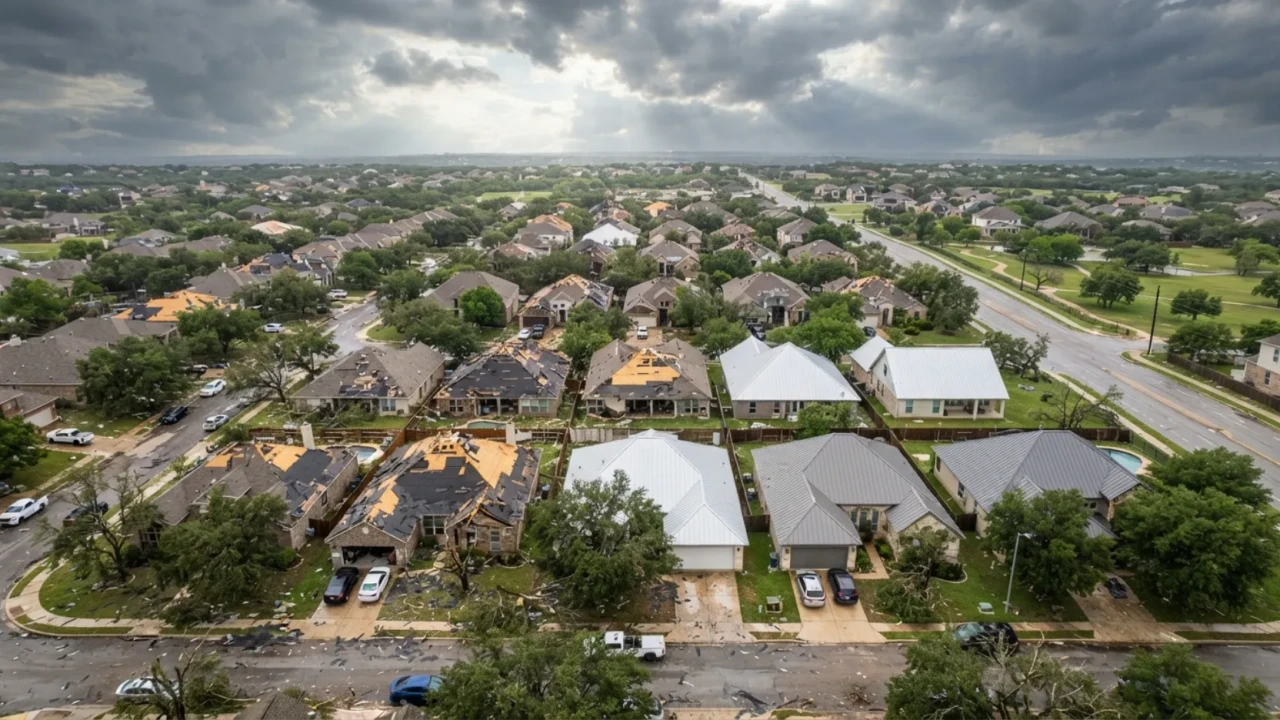
Metal roofs require post-storm inspection just like any other roofing system, but what you are looking for is different. The checklist below covers the key items for San Antonio homeowners. The most important thing to understand is that a metal roof that looks intact from the ground after a wind event may have sustained ridge cap loosening, flashing separation, or panel seam opening that will not show up as interior damage until the next rain event. A roof inspection after any storm with sustained winds above 60 miles per hour is always worth scheduling, even if nothing is visibly wrong from the street.
San Antonio gets both, often in the same storm event. The combination of hail impact and high wind is the most demanding condition for any roofing system. Metal roofing holds up better than asphalt shingles in combined wind and hail events for one primary reason: hail that chips or dents a metal panel does not create an immediate leak path the way a cracked or displaced shingle does. A metal panel with hail damage still has structural integrity. A shingle that has taken significant hail impact loses its ability to shed water and becomes a leak risk, especially when wind-driven rain follows the hail in the same storm cell.
- Ridge cap inspected for lifting, separation, or displaced sealant at cap ends
- Panel edges at eaves and rakes checked for any sign of uplift or separation from deck
- Flashing at all penetrations checked for gaps or lifted edges that could allow wind-driven rain entry
- Panel seams inspected for any evidence of separation at laps along the rake edges
- Gutters inspected for debris that may have been driven under eave panels during the event
- Attic inspection completed to confirm no water intrusion occurred during the storm even without visible exterior damage
This comparison covers the most relevant wind performance factors for San Antonio homeowners in 2026. The goal is not to sell you on either system but to give you the honest numbers and real-world context to make the right decision for your home and budget.
| Factor | Standing Seam Metal | Exposed-Fastener Metal | Architectural Asphalt Shingles |
|---|---|---|---|
| Wind uplift rating (maximum) | 140 to 160 mph | 110 to 130 mph | 110 to 130 mph (ASTM D7158 Class H) |
| Real-world performance vs. rated value | Very close to rated value; concealed fasteners don't degrade | Can decline over time as screws back out and washers fail | Often lower than rated value after 7 to 10 years as adhesive strip degrades |
| Failure mode in high winds | Ridge cap or flashing separation; panel itself rarely lifts | Screw back-out, panel edge lifting at eaves | Tab lift, adhesive strip failure, shingle loss from nail holes |
| Performance after hail impact | Structural integrity maintained; cosmetic denting only | Structural integrity maintained; coating may chip | Cracked mat, granule loss, compromised water shedding ability |
| Wind-driven rain resistance | Excellent locked seams and concealed fasteners seal the system | Good when properly lapped and sealed; requires maintenance | Fair relies on adhesive strips that degrade with UV and heat |
| Insurance discount eligibility (Texas) | Yes qualifies for UL 2218 Class 4 and wind uplift discounts | Yes most qualify for impact and wind discounts | Only Class 4 rated products qualify; standard shingles do not |
| Installed cost range (San Antonio 2026) | $10 to $16 per sq ft | $5 to $9 per sq ft | $3 to $5 per sq ft |
| Expected service life | 50 to 70+ years | 40 to 60 years | 20 to 30 years |
- Panel type confirmed: standing seam for primary residence; exposed-fastener acceptable for secondary structures and tighter budgets
- Wind uplift rating documented: 130 mph minimum, 140 mph or higher preferred for Bexar County exposure
- Product data sheet reviewed: test standard (ASTM or FM), fastener pattern required, and gauge all confirmed
- Impact rating confirmed if insurance discount is a priority: UL 2218 Class 4 is the highest available
- Metal type specified: Galvalume steel or painted Galvalume for coastal proximity areas; aluminum where salt air exposure is a concern
- Fastener type and spacing specified separately for the field, the eaves, the rakes, and the ridge cap
- Ridge cap mechanical fastener schedule confirmed in writing not just sealant attachment
- Deck condition assessment included in the scope of work before panels are installed
- Panel overlap and seam sealant requirements reviewed with the installer for your specific panel profile
- Eave flashing and drip edge integration specified so wind-driven rain cannot get behind the panel at the eave
- Permit pulled if required by City of San Antonio or Bexar County for the installation
- Contractor holds an active Texas roofing license and general liability insurance certificates provided
- Installer has documented experience with the specific panel system being installed, not just generic metal roofing
- References provided for metal roof installations completed in San Antonio or Bexar County within the last three years
- Manufacturer's warranty only available through certified installers confirm installer certification with the panel manufacturer if applicable
- Workmanship warranty provided separately from the product warranty, in writing
- Insurance carrier contacted before installation to confirm discount eligibility for the specific product and certification level
- Post-installation inspection scheduled 30 days after completion to confirm fastener torque and sealant condition
- Biennial inspection schedule established for ridge cap condition, flashing sealant, and exposed fastener condition if applicable
- Storm inspection protocol in place: know to call for an inspection after any sustained wind event above 60 mph even without visible damage
Get a free metal roof consultation in San Antonio
Ready to talk about a wind-rated metal roof for your San Antonio home? We will walk your roof, assess your current system, and give you a clear written estimate for a metal roof installation built to Texas wind code at no cost.